
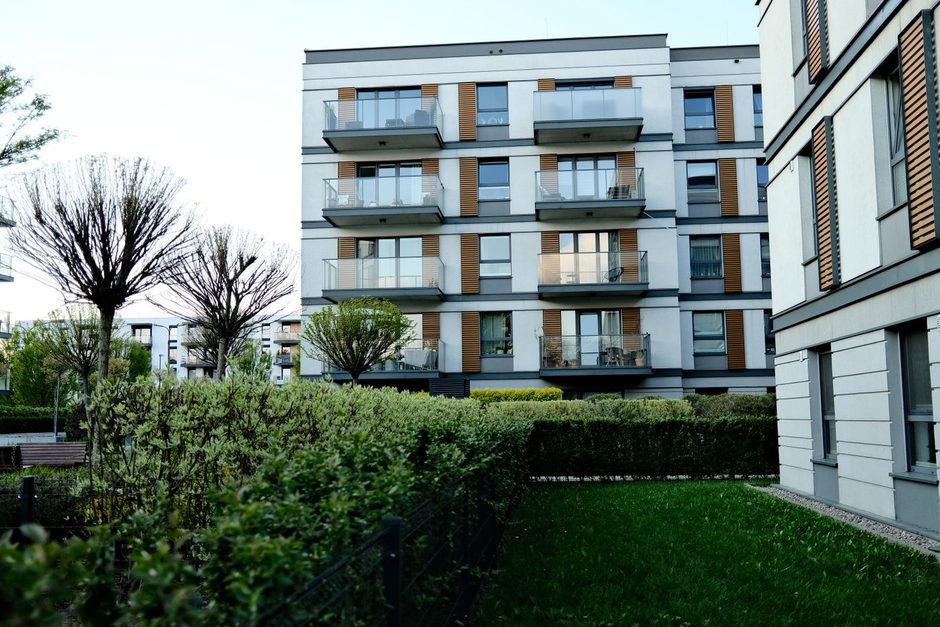
A board president in a 180-unit Dallas mid-rise finishes a contentious annual meeting and opens Google before the elevator hits the lobby. The query is blunt: HOA management company near me. She is not browsing lifestyle content. She wants a firm that has handled special assessments, vendor disputes, and reserve studies for buildings like hers, and she will shortlist two or three names before breakfast.
That is the buyer reality for strata and body corporate operators in the US, where the work shows up as community association management, condo association management, and HOA management. Organic demand is local, high-stakes, and slow to forgive weak proof. When local SEO for strata and body corporate companies is working, those searches turn into discovery calls and RFP invites. When it is not, you still get traffic, just the wrong kind: single-family landlords, one-off maintenance shoppers, and tire-kickers who never sit a board.
This piece is a benchmarks and ranges guide, not a vanity ranking report. The numbers below are directional operating ranges from how these programs actually run in markets like Houston, Phoenix, Atlanta, and Chicago. Use them to pressure-test your own funnel, not to chase a fake industry average.
What “healthy” organic demand looks like for US association managers
Start with intent, not session volume. For most mid-size association management firms, a useful organic month is not “more traffic.” It is a steady trickle of board-level inquiries: management transition quotes, takeover assessments, and “replace our current manager” conversations. In many US metros, that can look like 25-80 qualified organic inquiries per month once local visibility is real, depending on service radius, portfolio mix, and how tightly pages match association language. Firms that only track total form fills often celebrate volume while sales keeps rejecting landlord and handyman leads.
Response speed still decides who wins the shortlist. Boards and board presidents often contact two firms the same evening. Directionally, first meaningful reply inside 15-30 minutes during business hours (and a same-morning callback for after-hours web forms) keeps consultation booking rates in a workable band. Let a lead sit overnight and you will feel it in no-shows. A practical target many operators aim for is a 35-55% book-a-call rate on qualified web inquiries when the offer is clear and the calendar is friction-light. If you are under ~25% on clearly qualified association leads, the leak is rarely “SEO volume.” It is proof, speed, or a form that asks for a novel.
Cost and quality filters matter even on organic. Organic is not free once you count content, technical work, and sales time. Treat cost per qualified consultation (not cost per raw lead) as the number that keeps finance calm. Directionally, well-aligned local SEO programs for this niche often support a lower blended cost per qualified conversation than cold paid search in competitive metros, but only after 4-9 months of compounding entity and page work. Early months look expensive if you judge them like a Google Ads dashboard. Judge them like pipeline contribution from association-intent queries, not like last-click ROAS cosplay.
One more range worth writing on the whiteboard: share of organic leads that match ICP. Healthy programs commonly land in the 50-70% “right buyer” band once location pages, service pages, and Google Business Profile categories stop speaking generic property management. Below ~40%, you are probably ranking for broad “property manager” terms that invite the wrong phone calls. That is not a traffic problem. It is an intent-cluster problem.
Where local SEO quietly fails for HOA and condo management firms
The common failure mode is ranking for the market and still missing the board. US searchers use HOA management, condo association management, community association manager, and “replace HOA management company” language. If your site still leads with apartment leasing energy, “we manage properties,” and citywide property management fluff, Google may send you volume while boards bounce. You will see impressions on soft head terms, thin engagement on service pages, and a CRM full of contacts who never controlled a master deed or CC&Rs.
Local pack and Maps visibility make this worse when the profile is lazy. Association buyers still check Google Business Profile before they trust a website. Missing service areas, categories that read like residential rentals, photo sets of random exteriors, and review replies that never mention onboarding or board reporting all depress conversion even when you appear. In competitive pockets of Los Angeles, Miami, or New York suburbs, sitting outside the local pack for your core city + HOA management variants often means you are invisible at the exact moment urgency peaks, right after a bad board meeting or a failed annual audit conversation.
Post-click, the leak is predictable. Homepages try to speak to investors, HOAs, and commercial owners at once. Forms ask for unit counts before you have earned trust. There is no plain-English proof of transition process, financial reporting cadence, or vendor oversight. Mobile pages crawl. You get the click from a Phoenix board member on a phone at 9pm, then lose them in a PDF-heavy site built for desktop RFPs. Traffic does not convert, so leadership concludes “SEO does not work for us,” when the channel did its job and the handoff did not.
Tracking gaps seal the misread. If calls from the GBP listing, contact forms, and “request a proposal” buttons are not tied back to landing page and query theme, marketing optimizes for sessions while operations starves. You need call tracking on local pages, unique thank-you paths, and a simple qualified-lead definition sales will actually use (for example: association board or manager, 50+ doors, in-service geography, timeline under 6 months). Without that, every benchmark discussion turns into opinion.
If you already suspect the site is winning clicks and losing boards, a focused SEO audit that pairs rankings with lead quality usually surfaces the break faster than another round of generic blog posts.
Intent clusters, entity signals, and the ranges that actually book work
Build the program around a few intent clusters, then measure each on its own. Cluster one is replacement and transition: HOA management company near me, replace condo association manager, community association management firm + city. Cluster two is evaluation: reserve study partners, board reporting, onboarding timeline, fee structure explainers. Cluster three is proof and risk: reviews, case-style writeups of transitions, insurance and compliance language without turning the site into a law firm brochure. High-intent replacement queries should convert to consultations at a higher rate than educational content. Directionally, many firms see service and location pages in the 3-8% visitor-to-inquiry range when proof is strong, while broad blog posts sit well under 1% and still earn their keep as supporting entity content.
Entity SEO is not academic here. Google needs to understand you as a community association management company in specific metros, not a vague property brand. That means consistent NAP data, service-area pages that name real municipalities without doorway spam, leadership bios with association credentials, and on-page language boards actually use (special assessments, management transition, board packets, vendor RFPs). In multi-market operators, separate location entities and unique operational detail beat cloning the same “we love HOAs” paragraph across Dallas, Houston, and Austin.
Content that ranks and converts in this niche is oddly specific. Pieces on how a management transition works in the first 60 days, what boards should ask in an RFP, or how financial reporting should look month one outperform generic “benefits of professional management” posts. After Google’s recent quality shifts, thin AI filler is everywhere (a large share of top-ranking pages across the open web now contain AI-assisted copy), so information gain matters more than word count. If your article could sit on any property site in America, it will not move boards in Atlanta.
Publishing cadence is a benchmark too. Most association firms cannot staff a newsroom. A sustainable range is often 2-6 niche-and-region articles per month plus steady updates to money pages, not 30 generic posts that never mention unit-count thresholds or transition checklists. HeyLead’s Auto Blogger fits when you need region- and niche-aware articles on a reliable cadence under human strategy, without hiring a full in-house writing desk. The KPI is not “posts shipped.” It is whether association-intent pages gain impressions, and whether assisted pipeline from organic grows over two to three quarters.
For operators who want the full niche frame in one place, HeyLead’s Strata and Body Corporate marketing page maps how search demand ties to booked management conversations across this vertical.
Get a free marketing audit - we review your search, ads, and landing pages and send back what to fix first.
Get a free audit

Landing page proof, review velocity, and on-site ranges after the click
Organic traffic only pays when the page finishes the sale the SERP started. For association management, proof beats poetry. Boards look for transition process steps, sample reporting cadence, the types of associations you already serve (high-rise condo, townhome HOA, master-planned community), and reviews that mention communication with board presidents, not just “great property managers.” Directionally, pages that put proof above the fold and keep the primary CTA to one clear action (book a discovery call / request a management proposal) tend to outperform long brochure pages with six competing buttons.
Review presence is a conversion range, not a vanity score. Many local buyers treat a thin review profile as risk. A practical operating target in competitive US metros is a steady monthly review flow (even 3-8 genuine association-related reviews per active market per quarter can matter more than a stale 4.9 with no recent activity), plus public replies that show you understand board life. Star rating still matters, but recency and specificity convert. “They cleaned up our vendor mess in Q2” beats “excellent service!” nine times out of ten.
Technical experience sits underneath trust. Only a bit more than half of origins pass all three Core Web Vitals in recent CrUX data, so mediocre mobile performance is still common and still costly. Association decision-makers compare you on a phone between meetings. If tap delay, layout shift, or a heavy hero video stalls the first screen, your content quality never gets a fair trial. Aim for fast LCP on location and service templates, stable forms, and no mystery PDF downloads as the only next step.
When inquiry rate stalls despite rankings, stop guessing scroll depth in a meeting. Session recordings and heatmaps show whether boards ever reach fee clarity, whether the form is abandoned at unit count, and whether the CTA is ignored because the proof block is weak. HeyLead Insights is built for that on-site behaviour read: where attention drops, where clicks cluster, and which modules leak intent after organic traffic arrives. Pair that with GA4 landing-page reports filtered to association query themes, and you will usually find one concrete fix (form fields, proof order, mobile speed, or offer clarity) that moves booking rate more than another month of keyword tinkering.
A simple scorecard many marketing leads use quarterly: local pack presence on core city terms, organic inquiry volume, % ICP fit, median time-to-first-response, consultation show rate, and closed management agreements influenced by organic. If rankings rise while ICP fit or show rate falls, you optimized the SERP and broke the funnel.
Two US scenarios: the benchmarks that changed the pipeline
Scenario one: a multi-site association management firm covering Phoenix and Tucson had solid citywide rankings for “property management” and a full calendar of the wrong calls. Sales was spending mornings declining single-family rental owners. The mechanism was blunt. Money pages targeted rental property language, GBP primary category leaned residential, and blog content chased volume topics. The fix was not “more SEO.” They rebuilt three service pages around HOA and condo association management, rewrote GBP categories and services, added a transition timeline module with a single proposal CTA, and disavowed internal linking equity from rental-focused posts to the association money pages.
Within roughly one quarter, the mix shifted. Raw organic leads dipped slightly, then ICP-fit inquiries rose into a healthier band. Consultation rate on the new HOA pages moved from about 4.2% to roughly 11% as board-specific proof replaced generic stock trust badges. They tracked one primary number weekly: qualified association conversations from organic, not sessions. The operational lesson: if your benchmark is volume, you will keep buying the wrong visibility.
Scenario two: a Chicago-area community association team ranked in the local pack for several suburbs but converted poorly after 8pm mobile visits. Recordings showed users opening the fees FAQ, then abandoning a seven-field form that demanded gate codes and unit counts up front. They cut the first-step form to name, email, phone, community name, and approximate doors; moved detailed intake to a calendar confirmation email; and added two short board-president quotes naming reporting cadence. Show rate on booked calls climbed, and median response time dropped under 20 minutes by routing web leads to a duty manager instead of a shared inbox checked twice a day.
Steps other teams can copy without copying the whole stack:
-
Split association intent from general property management in navigation, GBP, and landing URLs.
-
Define a qualified organic lead with sales in one sentence, then report that number weekly.
-
Put transition process, service geography, and recent association reviews above the first form.
-
Measure page success as inquiry-to-consultation, not bounce rate alone.
-
Refresh money pages when offer, markets, or proof changes; do not let them age into brochures.
Neither scenario needed a mythical “73% industry conversion rate.” They needed clearer intent, faster response, and proof that matched how US boards buy management services.
Patterns we see in audits
The short quotes below are illustrative composites drawn from patterns in account reviews. They are not quotes from named clients.
“We were proud of ranking for property management across Houston until sales showed us the call log. Almost none of it was boards. Once we rebuilt pages around HOA and condo association language, qualified consults mattered more than the traffic chart.” - Head of Marketing, community association management
“The ranking report looked fine. The recordings did not. Boards hit the form, saw seven fields, and left. We cut the form and answered web leads inside 20 minutes. That did more than another month of blog posts.” - Founder, condo association management firm
Action checklist

Free tools
DIY free tools for this playbook
Run these on the pages and campaigns this article covers, then fix what they flag before you scale spend or content volume.
Run these on this playbook
If the checklist shows a leak you cannot close in-house, request a free marketing audit.
Frequently asked questions
How long before local SEO produces association-management leads in the US?
Plan on meaningful movement in 3-6 months for tightened location and service pages in secondary metros, and often 6-9+ months in crowded coastal markets when you are rebuilding entity signals from a generic property-management past. Earlier wins usually show up as better query mix and local pack stability before closed contracts spike.
What organic conversion rate should we expect on HOA management service pages?
Treat 3-8% visitor-to-inquiry as a realistic band for well-matched service or location pages with strong proof and a simple CTA. Below ~2% with decent traffic, inspect offer clarity, mobile speed, form friction, and whether the page still reads like general property management. Blog content will sit much lower and should be judged on assisted pipeline and entity support.
Should we still invest if AI Overviews and zero-click search are rising?
Yes, but change the scoreboard. Impressions, branded search, local pack presence, and qualified inquiries matter more than clinging to old CTR assumptions on every informational query. Win the high-intent association terms and Maps visibility where clicks still become conversations, and make pages clear enough to convert the clicks you do get.
How many markets should we target at once on a mid-size site?
Fewer than your sales deck wants. Most teams do better fully arming 2-5 priority metros or suburban clusters with unique proof, GBP hygiene, and response coverage before cloning thin city pages nationwide. Thin expansion inflates index bloat and tanks trust.
What is a practical content cadence without a large editorial team?
Two to six substantive, association-specific pieces a month plus ongoing updates to money pages is enough for many firms when topics map to real board questions. Consistency and specificity beat bursts of generic AI posts that never mention transitions, reserves, or board reporting.
Putting it to work
Pull the last 90 days of organic landings on your main HOA, condo, and community association pages and score each inquiry as ICP or not with sales sitting next to you. Write down response times, consultation book rate, and the one page with the worst proof-to-form path. That single worksheet will tell you whether you have a visibility problem, a message problem, or a speed problem before you spend another dollar on tactics.
When you want a partner to own the messy middle of local SEO for strata and body corporate companies in the US, from association-intent page structure and Google Business Profile entity work through content cadence and the on-site proof that turns board clicks into discovery calls, HeyLead runs that program as ongoing marketing operations rather than a one-off ranking project. Reach out at [email protected].
Free marketing audit, or reach Martin directly:
Get a free audit Chat with us on WhatsApp · [email protected]