
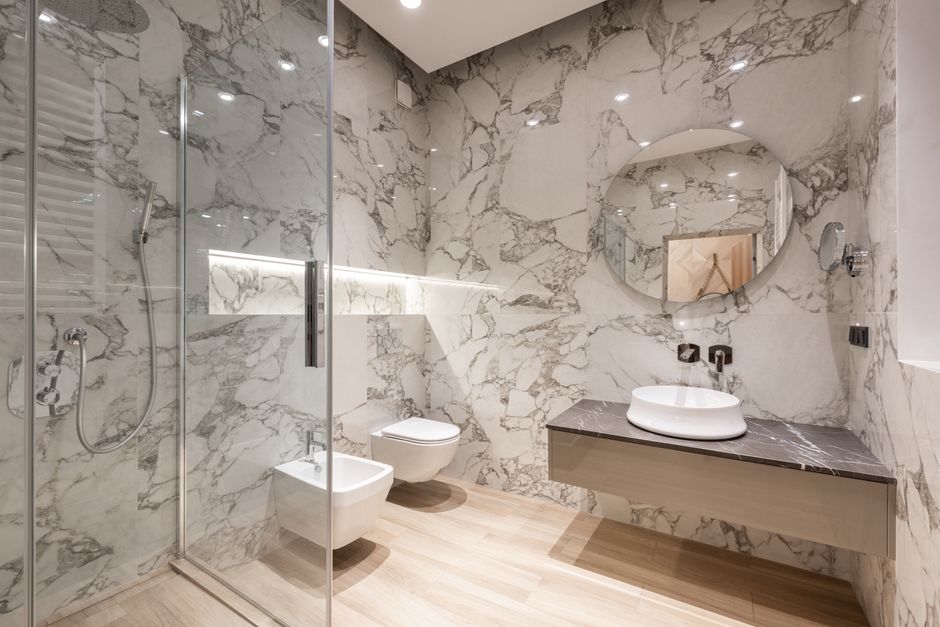
A homeowner in a 1990s ranch outside Phoenix finally opens the master bath after a second leak under the vanity. They are not browsing inspiration boards for fun. They type “bathroom remodel near me,” “walk-in shower install cost,” or “tile shower renovation [city]” and expect three things fast: a clear price band or process, recent local photos, and a contractor who answers the same day. That is the organic demand window bathroom renovation companies actually live in across the US.
If your SEO program cannot translate rankings into estimate requests and booked design visits, the “traffic” number is theater. This piece is a benchmarks and ranges guide for owners, founders, and marketing leads running digital marketing for bathroom renovations companies: what healthy organic performance tends to look like, how to read the ranges without fake studies, and the SEO playbook that keeps high-intent clusters converting while AI Overviews and zero-click search keep thinning the SERP.
What US bathroom remodel buyers search when the leak or resale clock starts
Bathroom renovation demand is local, project-shaped, and uneven through the year. Spring and early summer push full gut remodels and walk-in conversions. Winter skews toward smaller wet-area fixes that still search like “bathroom renovation” when mold or failed caulk shows up. Buyers hop between informational queries (“how much does a bathroom remodel cost in Texas”) and transactional ones (“bathroom remodeler Dallas,” “licensed bathroom contractor near me”) in the same session.
Intent clusters that matter for organic booked work usually fall into four buckets. Local service intent: city + remodel / renovation / bathroom contractor. Problem-triggered: leak, mold, outdated master bath, accessibility (walk-in tub, curb-less shower). Spec and material: tile shower, double vanity, heated floor, waterproofing. Trust and proof: reviews, before-after galleries, licensing, warranty language. Ranking for pure inspiration terms without a path to a quote form burns crawl budget and confuses GA4.
Directional ops ranges you can use as sanity checks (not national guarantees): many US remodel shops treat a “good week” as a handful of qualified estimate requests that fit their ticket size, not dozens of tire-kickers. Response speed still decides who books the site visit. Teams that call or text back inside 5-15 minutes during business hours consistently keep more of the organic lead than teams that batch callbacks next morning. Form-to-booked-design-visit rates vary wildly by ticket and market, but if fewer than roughly one in four serious estimate requests ever becomes a walkthrough, the leak is usually proof, pricing clarity, or speed - not “SEO volume.” Cost per organic lead is not free: content, photos, GBP hygiene, and technical work still cost real dollars. Judge organic against cost per booked job and close rate, not against zero CPC.
Zero-click pressure is real. Early 2026 signals showed a large share of US Google searches ending without a click, and AI Overviews reaching huge monthly audiences. That means impression share and entity presence matter more than last year’s CTR targets. You still need the click when the buyer is ready to shortlist three remodelers. Your pages have to answer cost, timeline, and process questions tightly enough to earn the visit - and then convert it.
Where bathroom renovation SEO fails before a crew is ever scheduled
The common failure mode is ranking for vanity city terms while the money pages are thin, slow, or generic. A Phoenix or Atlanta shop might sit on page one for “bathroom remodel [city]” with a homepage carousel, three stock photos, and a contact form that asks for square footage but never shows waterproofing standards, typical project timelines, or real job photos from that metro. Traffic arrives. Phone rings less than expected. Sales blames “lead quality.” Marketing blames “seasonality.” Nobody owns the handoff from SERP snippet to booked walkthrough.
Second failure: Google Business Profile and site entity signals disagree. NAP mismatches, service categories that read like general contractor soup, and review replies that never mention bathrooms or neighborhoods leave the local pack unstable. Homeowners comparing three map packs will skip the listing with sparse photos of actual showers and toilets.
Third: content cadence dies after a burst of blog posts about “trends.” Bathroom buyers need process pages (demo sequence, waterproofing, inspection readiness), city and neighborhood pages with real job proof, and FAQ blocks that match how people ask about permits and cost bands. Publishing once a quarter does not keep up with competitors who refresh galleries and service pages monthly. A heavy gallery page that fails INP on mobile will quietly tax conversion on the exact devices remodel shoppers use on-site at the showroom or on the couch after work.
Tracking gaps finish the damage. If organic sessions are not tied to call tracking, form events, and “estimate booked” outcomes, you will optimize for rankings while sales optimizes for referrals. Last-click will over-credit branded search. You will cut the blog that assisted the multi-touch remodel research path. That is how digital marketing for bathroom renovations companies stalls even when Search Console looks fine.
If your money pages need a harder look from a specialist team, skim how we approach SEO for trades that live and die on local intent - then come back to the ranges below before you rebuild everything at once.
Get a free marketing audit - we review your search, ads, and landing pages and send back what to fix first.
Get a free audit
SEO benchmarks and ranges: how to read the numbers for remodel shops
Use ranges as directional gauges. Markets differ (Los Angeles CPCs and competition are not the same as a secondary Midwest metro), and ticket sizes change what “good” CPL means. Read each metric with the job it is supposed to do.
Organic visibility and traffic. For a single-location bathroom renovator, healthy growth often looks like steady month-over-month gains in branded plus non-branded local queries, not a viral spike. If non-branded local service queries are flat while branded grows, you are riding reputation, not expanding demand capture. Track share of voice on a fixed set of 30-50 money terms (remodel, renovation, walk-in shower, tile shower, accessible bath) by city. Impressions rising while CTR falls can mean AI Overviews or map packs ate the click - fix snippet clarity and GBP before you rewrite the whole site.
CTR and SERP reality. Industry-wide median organic CTRs vary wildly by vertical. For local home services, treat your own Search Console baselines as truth. If position 1-3 local pack presence is strong but website CTR from classic blue links is weak, titles and meta descriptions are probably vague (“Quality Remodeling Since 1998”) instead of outcome-led (“Walk-in shower remodels in North Dallas - free on-site estimate”).
Conversion rates on service pages. Dedicated bathroom remodel landing or service pages with proof, process, and a single primary CTA often outperform the homepage. Directionally, many trades see form or call conversion in the low single digits on cold organic traffic; strong pages with local photos and clear next steps can sit meaningfully higher. If you are under ~1% on a high-intent service URL with decent traffic, fix message match and friction before buying more content. Pair SEO with on-page behaviour evidence: scroll depth, rage clicks on galleries, and form abandon show where proof fails. HeyLead Insights is built for that post-click diagnosis without guessing.
Lead quality filters. Count estimate requests that match service area, project type (full bath vs vanity only), and budget band. A useful internal filter: percentage of organic leads that sales marks “fit” within 48 hours. If fit rate sits under roughly half, your copy is attracting DIY or out-of-area traffic - tighten geo and ticket language, add disqualifiers, and prune informational content that ranks but never books.
Response and booking ops. Organic leads behave like paid leads when the buyer is ready: slow response kills them. Benchmark your median first-response time and the share contacted inside 15 minutes. Booking rate from qualified organic lead to on-site estimate is the metric that should sit next to rankings in the monthly review.
Technical and content quality floor. Aim for CWV passes on money templates. Treat thin city pages as liabilities. In 2026, a large share of top-ranking pages include AI-assisted content; that does not mean dump generic AI on your domain. Remodel E-E-A-T still needs named crews, real job photos, permits talk, and human review. Information gain beats word count after recent core updates - one waterproofing process page with original photos beats five recycled trend posts.
Audit scorecard
Action checklist
- Money-term mapList 30-50 bathroom remodel queries by intent (local service, problem, spec, trust). Tag each with the URL that should win. Note where the homepage is forced to rank for everything.
- Local pack and GBPCheck categories, services, photo freshness (real showers, not stock), Q&A, and review velocity. Compare NAP to footer and citation sources in your top metros (Dallas, Houston, Chicago, Miami, etc.).
- Service page proof densityScore each remodel URL for process steps, timeline ranges, financing or payment clarity if you offer it, licensing, warranties, and before-after sets from the same metro.
- CWV on templatesRun money templates through field data mindset: LCP on hero galleries, INP on mobile menus and forms. Heavy sliders are a frequent remodel-site tax.
- Snippet and title honestyTitles should name the job and geo. Metas should set expectation on estimate process, not slogans.
- Conversion eventsConfirm call clicks, form submits, chat starts, and “book estimate” events fire in GA4 with UTMs preserved from organic landing paths.
- Fit-rate loopEvery week, sample 20 organic leads. Mark fit / not fit with one reason. Feed reasons back into page copy and FAQ schema.
- Content vs revenue pagesSeparate educational URLs from quote URLs. Educational pages should internal-link hard to the remodel service page, not strand the reader.
The organic playbook that turns remodel rankings into estimates
Build the site around booked design visits, not blog vanity. Start with one definitive bathroom renovations service page per primary market, then supporting pages for high-ticket scopes (walk-in shower conversions, full gut master baths, accessibility remodels) when you truly sell them. Each page needs a short cost or process framing that matches how US buyers shop, a photo set from real jobs, trust marks, and a form that asks only what sales needs to schedule.
Entity and local SEO: keep GBP services explicit (bathroom remodeling, not only “general contractor”). Upload project photos with neighborhood context. Reply to reviews with specifics (“tile shower waterproofing in [suburb]”) so the profile language reinforces the niche. On-site, use consistent organization schema, LocalBusiness where appropriate, and FAQ schema for permit, timeline, and dust-control questions homeowners actually ask.
Content system: you do not need a newsroom. You need a cadence of niche, region-aware articles and refreshes - process explainers, neighborhood project stories, material guides that earn internal links into money pages. HeyLead Auto Blogger exists for teams that must keep publishing bathroom- and metro-aware pieces under human strategy without hiring a full editorial staff. Pair that with human editing for E-E-A-T: crew notes, real measurements, and photos beat pure machine draft every time.
DIY playbook
Action checklist
- Console queries for 90 days. Tag bathroom remodel money terms vs noise (DIY grout, product SKUs you do not sell).
- Pick one primary service URL per core city you serve. Rewrite H1, first 100 words, and CTA around estimate booking, not brand story.
- Add 6-12 authentic project images with alt text that names room type and city, not “image1.”
- Build a 8-12 question FAQ block from sales call notes (permits, HOA, timeline, living in home during work).
- Wire call tracking and GA4 events; test on mobile with a real submit.
- Run CWV and fix the worst template issue (usually hero video or uncompressed galleries).
- Align GBP categories, services, and photos the same week as the page launch.
- Publish or refresh two support articles that link into the money page with descriptive anchors.
- Set a weekly 30-minute fit-rate review with whoever answers the phone.
- Only then expand to a second city page or scope page - do not clone thin pages across 40 suburbs.
Free tools - try these yourself
For a deeper niche frame on offers, creative, and full-funnel demand, see HeyLead’s Bathroom Renovations marketing overview - then keep SEO tied to the booking metrics above.
Two US remodel scenarios: same channel, different scoreboards
Houston multi-crew shop. Organic sessions looked “healthy” at a few thousand a month. Fit rate was poor: half the forms were vanity-only or outside the service radius. The fix was not more blog posts. They collapsed thin suburb clones into one strong Houston remodel page, added a clear service-area list, put waterproofing and timeline FAQs above the fold, and forced internal links from cost guides into that URL. Call tracking showed after-hours mobile traffic. They added SMS-friendly response in the morning block. Qualified estimate requests rose even while total form volume dipped slightly - sales stopped treating SEO as junk.
Chicago design-build bathroom team. Rankings for “bathroom remodel Chicago” were unstable. GBP photos were mostly kitchen work from a prior brand era. They relaunched the profile around bath-only proof, refreshed title tags toward walk-in shower and full bath language, and fixed LCP on the gallery template. They used a simple content brief process for two process articles per month, human-edited, scheduled so the site never went dark for eight weeks. Search Console showed recovering clicks on non-branded terms within a quarter. The operational win was pairing every new ranking URL with a same-day response SLA so the SEO lift did not rot in the inbox.
Both cases share one mechanism: the scoreboard moved from sessions to fit leads and booked walkthroughs. Rankings were the means.
Patterns we see in audits
The short quotes below are illustrative composites drawn from patterns in account reviews. They are not quotes from named clients.
“We were celebrating page-one for ‘bathroom remodel’ until we sampled the forms - half were outside our drive time. Tightening the service-area copy and GBP services did more than another round of blog posts.” - Owner, bathroom renovations, Sun Belt metro
“Mobile gallery pages failed INP and people bounced before the estimate form. Fixing the template moved call clicks more than chasing two more city keywords.” - Head of Marketing, home services group, Midwest
FAQs
What SEO metrics matter most for bathroom renovation companies?
Prioritize non-branded local service impressions and clicks, GBP actions, service-page conversion rate, median response time, fit rate, and organic-sourced booked estimates. Rankings alone are incomplete.
How long before bathroom remodel SEO shows booked jobs?
Technical and GBP fixes can move calls in weeks. Competitive metro terms often need a few months of consistent proof, content, and reviews. Treat 3-6 months as a realistic program horizon for durable non-branded gains, not a promise of overnight page one.
Should we still blog if AI Overviews reduce clicks?
Yes, if posts create information gain and route to money pages. Thin trend content is a waste. Process, cost-context, and project stories that earn citations and internal links still support entity strength and assisted conversions.
What is a sane content cadence for a single-location remodeler?
Many teams sustain two to four strong pieces a month plus ongoing page refreshes and photo updates, not daily publishing. Consistency and local proof beat volume. Managed cadence tools help only when a human owns strategy and quality.
How do we benchmark against competitors without obsessing over their traffic?
Compare share of local pack presence, review velocity, service-page depth, and CWV on their money URLs. Steal structure and proof patterns, not their vanity traffic estimates.
Putting it to work
This week
-
Pull 90 days of Search Console queries and mark bathroom money terms vs noise.
-
Score your primary remodel URL on proof, FAQ, CTA, and mobile speed.
-
Run the Core Web Vitals checker and local SEO checklist on that URL and GBP.
-
Sample 20 recent organic leads for fit and response time; write the failure reasons on one page.
-
Fix titles/metas on the top three landing URLs with the title tag checker.
Next 30 days
-
Ship one rebuilt service page with real metro photos and FAQ schema validated in the schema markup validator.
-
Align GBP services and photo set to bathrooms only.
-
Stand up or tighten a publishing cadence (in-house or via Auto Blogger under editorial control) aimed at support content that links to the money page.
-
Instrument estimate-booked events and a simple weekly fit-rate huddle.
-
Re-check competitor gaps with SEO competitor analysis and close one content hole that blocks a high-intent cluster.
When the bottleneck is the full loop from bathroom intent clusters and local entity SEO through proof-heavy pages, publishing cadence, and attribution to booked estimates, a partner like HeyLead can run that organic program end to end so you are not stitching freelancers and one-off posts together every quarter. If you want a straight conversation about your markets and ranges, email [email protected].
Free marketing audit, or reach Martin directly:
Get a free audit Chat with us on WhatsApp · [email protected]