
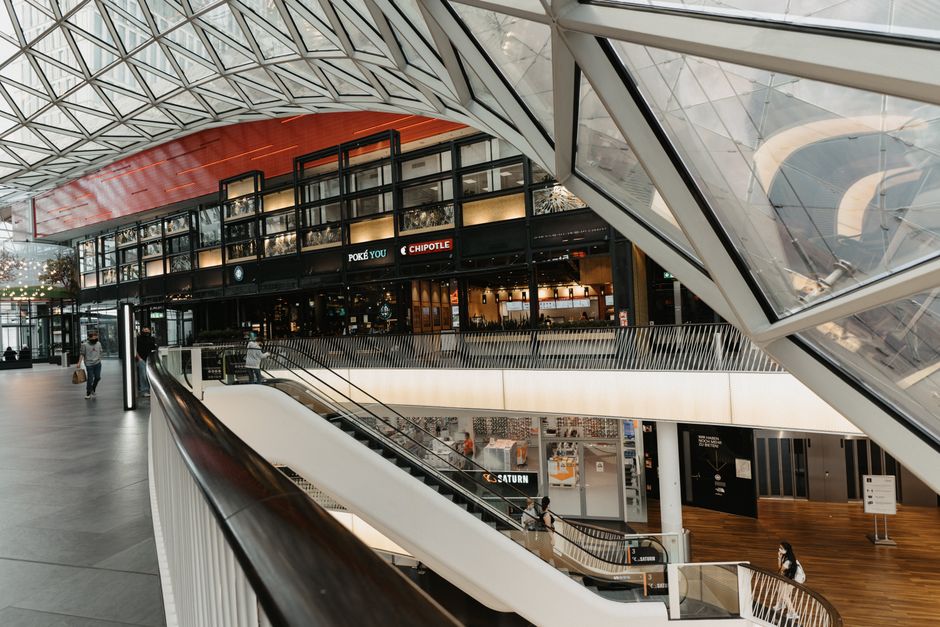
Saturday morning in a Phoenix open-air center. The parking deck is full by 10:15. Food-court lines look healthy. Instagram still gets plenty of story tags. And yet the leasing coordinator’s calendar has three open tour slots next week, and the atrium event holds for March are thin. Foot traffic is not the same thing as booked commercial work. Shoppers browsing and operators booking tours, pop-ups, and event space are different search problems, and Google Ads only helps when you treat them that way.
For US shopping mall marketing leads, the job is rarely “more awareness.” It is filling a real book: retail and F&B leasing tours, short-term pop-up applications, community and brand activation holds, seasonal experiences that need deposits. High-intent search is one of the few channels that shows up when a brand manager types “event space for product launch Dallas mall” or a multi-unit operator searches “inline retail space for lease Houston.” This playbook is about building SEM / Google Ads so those clicks become confirmed holds, not vanity form dumps.
Busy concourses, empty tour slots: where mall search spend quietly fails
Most mall accounts we audit start the same way. Someone layered branded terms, a handful of “shopping mall near me” keywords, and a broad set of “retail space for lease” phrases into one or two campaigns. Traffic looks respectable. Cost per lead looks tolerable on the dashboard. Sales and leasing still say the inbox is full of students asking about holiday hours, shoppers wanting store directories, and tire-kickers who never meant to book a tour.
That mismatch is the core failure mode. Shopping malls attract mixed intent on the same SERP. A parent searching “kids play area [city] mall” is not a leasing prospect. A local searching “Black Friday hours” will never hold your grand court. If those queries share budget with “inline retail space for lease [market]” and “pop up shop application [mall name],” smart bidding learns the wrong success pattern. It chases cheap form fills. Your cost per booked tour creeps up while CPL looks fine.
Landing pages make it worse. Ads often point at the corporate homepage or a generic “Leasing” PDF dump. The message in the ad promised available square footage, co-tenancy, or event specs. The page opens on a brand film and a buried contact form. On mobile, which still drives most paid search clicks, the leasing CTA sits below the fold under a slow hero. Response speed finishes the leak. A tour request that sits until Monday morning after a Thursday evening click is usually already talking to another center in the MSA.
You also see dayparting ignored. Leasing and event teams work business hours. The account still spends hard at 1am on broad match “retail space.” Calls go to a general mall line that rings the security desk. Forms route to a shared inbox. Nobody owns speed-to-lead, so Google keeps optimizing for whoever converted once, even if that conversion never became a calendar hold. Until you separate intent, match the post-click proof, and measure booked work, paid search just rents expensive curiosity.
Build campaigns around booked holds, not “mall traffic” keywords
Start with intent clusters that map to calendar outcomes, not vanity visits. For most US centers the commercial clusters look like this: permanent leasing (inline, endcap, pad, food hall), temporary and pop-up retail, event and activation space (atrium, grand court, community rooms), and sometimes specialty programs (seasonal experiences, vendor markets). Give each cluster its own campaign or tightly themed ad groups. Do not mix “stores at [mall]” navigational queries with “retail space for lease [submarket].”
Keyword work stays practical. Exact and phrase on the money phrases: retail space for lease near [landmark or district], inline shop for rent [city], food hall stall available, pop up retail application, brand activation space [city] mall, event venue inside shopping center. Use broad only where you have strong negatives and clean conversion signals, and watch search terms weekly. Match types still matter even as Google pushes signals. You are not running a DTC sneaker brand. You are buying sparse, expensive B2B-ish and mid-market commercial intent inside local markets like Dallas, Atlanta, Chicago, and Los Angeles.
Negatives are half the account. Build shared lists early: hours, map, parking, movie times, jobs, career, black friday, coupon, thrift, outlet directions, free wifi, lost and found, and every major tenant name you do not want to bid on as a proxy. Add “DIY,” “square footage calculator,” and student project language if those show up.
Ads should sound like operations, not lifestyle copy. Lead with what is bookable: available SF ranges when you can, tour CTAs, pop-up duration options, load-in facts, co-tenancy highlights, and response expectations (“leasing team replies same business day”). Use call assets during staffed hours and form or calendar links when the team can actually follow up. Track calls and forms as separate conversion actions. Then define the primary optimization event as close to a booked tour or signed hold as your stack allows: calendar confirmation, qualified stage in the CRM, or a manually imported offline conversion when the tour is set. Vanity CPL is how malls overspend. Cost per booked job (tour held, event deposit, pop-up application accepted) is the number leasing leadership trusts.
If you need a tighter brief for how this sits next to organic and on-site work, the industry view on Shopping Malls marketing is a useful companion without turning search into a generic “full funnel” lecture.
Get a free marketing audit - we review your search, ads, and landing pages and send back what to fix first.
Get a free audit
Landing proof, dayparting, and the weekly numbers that actually matter
Every ad group needs a landing experience that continues the promise in the RSA. Leasing traffic should hit a dedicated page with submarket context, sample floor plates or typical bay sizes, tenant mix, audience demographics the center can stand behind, photos of real corridors (not only dusk exteriors), and a short form: name, brand or concept, target SF, desired open date, phone. Event and activation traffic needs ceiling heights, load-in routes, blackout dates, starting rates or “from” packages where legal, and a clear hold request. Sending everything to the homepage is still the fastest way to burn a strong Quality Score story.
Speed and clarity beat clever design. Mall corporate sites are often heavy. If paid landing templates crawl on mobile, you pay twice: higher CPC from poor experience signals and lower conversion after the click. Watch form fields. Six fields that leasing truly uses beat twelve fields someone copied from a corporate RFP. When traffic arrives but tours do not, stop guessing from heatless analytics alone. A short pass in HeyLead Insights (session recordings, heatmaps, scroll depth, rage clicks, form abandon) usually shows the break: proof buried below a looping video, a sticky promo covering the CTA, or shoppers tapping store maps on a page meant for brokers.
Daypart and geo like an operator. Bid up during leasing office hours in your primary MSA. Pull back overnight unless a true national leasing team covers the phones. Use radius and zip overlays around the trade area you can actually serve, plus conquest only where you can win on access, parking, or co-tenancy, not pure vanity against a trophy center you cannot beat on rent. Schedule call extensions when a human who can book will answer. After hours, prefer forms with an honest SLA (“we respond by 10am next business day”) over a dead ring to security.
Weekly measurement should fit on one page. Spend, qualified inquiries, booked tours or holds, show rate, and cost per booked hold by cluster. Add search term harvests, negative additions, and top RSA asset combinations. Glance at impression share lost to budget only after quality is stable. Ignore raw “leads” if leasing will not put them on the calendar. When attribution gets noisy (and it will), offline import of “Tour Booked” and “Event Deposit Received” keeps Smart Bidding pointed at revenue work instead of brochure downloads. Clean conversion setup is not bureaucracy. It is how you stop automated bidding from optimizing for the wrong cheap actions.
Two US centers where search stopped feeding the wrong inbox
A regional lifestyle center outside Houston had been buying “shopping center near me,” tenant brand names, and a loose “retail space” theme into one Performance Max-plus-Search mix. Monthly form volume looked fine at roughly 90. Leasing said maybe six were real concepts. The fix was mechanical, not magical. They split permanent leasing from pop-ups, added a negative list heavy on hours, movies, jobs, and directions, and rebuilt RSAs around SF ranges and tour CTAs. Paid clicks landed on a one-purpose leasing page with trade-area stats and a five-field form. Calls only rang the leasing mobile during staffed hours.
Within one billing cycle the search terms report stopped reading like a concierge desk. Qualified concepts rose even as total forms dropped into the 40s. Booked tours moved from about 6 a month to 14, and cost per booked tour fell enough that leadership stopped asking for “more leads” and started asking for more afternoon tour coverage. The single mechanism that mattered was refusing to let consumer navigational queries train the account.
In the Chicago suburbs, an enclosed mall’s marketing team was tasked with filling the grand court and two smaller activation pads for Q4 brand takeovers. Prior ads pushed “holiday events at [mall]” and collected consumer RSVPs. Sponsors never appeared. They rebuilt around commercial language: brand activation space, product launch venue, mall atrium takeover, sampling event permit. Landing pages showed load-in photos, amp power notes, and past activation stills with permission. Forms asked for brand, agency contact, preferred dates, and rough footprint.
They dayparted toward weekday business hours when agency producers actually search and call. A simple SLA went on the thank-you screen: event sales replies within one business day. Two holds that had been stuck in email tag with another center closed after the team answered a Google-ads-sourced call in 12 minutes with a clear rate card range. Sponsors care less about your lifestyle reel than whether the space is real, bookable, and responsive. Search only works when the post-click path feels like operations, not a brand campaign.
If your own account still sends every dollar to a homepage carousel, fix that path before you scale budgets. The creative and keyword work cannot outrun a page that hides the tour button.
Patterns we see in audits
The short quotes below are illustrative composites drawn from patterns in account reviews. They are not quotes from named clients.
“We cut ‘near me’ and store-directory terms out of the leasing campaign and our form volume fell by about a third. Booked tours still went up because the calendar finally matched what Google was charging us for.” - Director of Marketing, regional shopping center group
“The break was not CPC. It was the atrium page with no load-in facts. Agencies bounced in under 20 seconds until we put power, access hours, and a hold request above the fold.” - Head of Leasing Marketing, mixed-use retail destination

Free tools
DIY free tools for this playbook
Run these on the pages and campaigns this article covers, then fix what they flag before you scale spend or content volume.
Run these on this playbook
If the checklist shows a leak you cannot close in-house, request a free marketing audit.
Frequently asked questions
Should shopping malls use Performance Max for leasing and events?
Use it carefully, and not as a substitute for clean Search on high-intent commercial queries. Performance Max can support remarketing and broader discovery once your conversion signal is “tour booked” or “hold requested,” not raw forms. Keep core leasing and activation keywords in Search where you control negatives and query themes. If PMax starts harvesting consumer mall traffic, constrain assets, feeds, and audience signals, and watch search themes weekly.
What is a sane way to judge cost per lead for mall Google Ads?
Do not benchmark against ecommerce CPL. Judge cost per booked tour, cost per qualified concept, or cost per event hold against the value of a signed lease or a sponsored activation. A $180 qualified leasing inquiry that becomes a tour is often cheaper than a $40 consumer lead that never belongs in the CRM. Set targets with leasing leadership from closed deals, not from a generic industry CPL chart.
Call extensions or forms for mall leasing campaigns?
Both, with rules. Calls during staffed leasing hours with a tracked number that reaches someone who can book. Forms nights and weekends with a published response SLA. Score them separately. If calls convert to tours at a higher rate, feed that back into bid adjustments and ad copy. Never point call assets at a general mall operator line that cannot discuss SF or rates.
How tight should geo targeting be for a single center?
Start with the true trade area you sell to tenants and sponsors, not a whole state. Layer radius and key zips, then expand only when search terms and tour show rates stay clean. National brand tenants may search from HQ cities; for those campaigns, use separate ad groups with HQ-city language and a landing page that still proves the local center’s traffic and co-tenancy.
How fast do we need to respond to paid search inquiries?
Same business day is the floor; under an hour during work hours is better when multiple centers are pitching the same concept. Build routing before you raise budgets. Fast creative tests will not save slow follow-up when a pop-up calendar is competitive across an MSA.
Putting it to work
Pull the last 60 days of Google Ads search terms for any campaign touching leasing, pop-ups, or events, and tag each query as consumer, commercial, or ambiguous. Pause or negative the consumer cluster out of commercial campaigns, point the surviving themes at a dedicated landing page with proof and a short form, and redefine the primary conversion as a booked tour or hold rather than a raw submit. That single pass usually surfaces whether you have a media problem or a match-and-response problem.
When you want a partner to own that ongoing loop (query hygiene, ad-to-page match, call and form tracking, and optimization to cost per booked hold rather than vanity CPL), HeyLead runs Google Ads programs for US shopping centers with that operating standard. Reach out at [email protected].
Free marketing audit, or reach Martin directly:
Get a free audit Chat with us on WhatsApp · [email protected]