

Friday night in Phoenix. A group of four leaves a downtown restaurant at 11:40 p.m., phones out, searching “taxi near me now” because rideshare surge pricing just hit $48 for a 12-minute trip. In Dallas, a hotel desk rings a local cab line at 5:55 a.m. for three airport runs that need to clear security by 7:10. In Chicago, a hospital discharge coordinator needs a wheelchair-accessible vehicle in under 40 minutes. Those searches are the whole business in miniature: high intent, short fuse, and zero patience for a form that asks for a company name.
For taxis and hackneys operators in the US, Google Ads is not a brand exercise. It is how you show up when someone is already choosing a car. Done well, PPC for taxis and hackneys companies books paid jobs. Done poorly, it buys clicks from people comparing fares, hunting free shuttles, or typing the wrong city. The difference is almost never “more budget.” It is match quality between the query, the ad, the landing page, and how fast a dispatcher actually answers.
This piece walks through failure modes and real operating scenarios you can pressure-test against your own account: negatives, call-first conversion paths, dayparting against fleet capacity, and cost per booked job instead of a vanity cost per lead.
When “taxi near me” traffic looks busy and still starves the fleet
Most taxi Google Ads accounts start the same way. Someone turns on Search, bids on “taxi,” “cab,” “airport taxi,” and a handful of city names, then points everything at the homepage. The dashboard fills with clicks. The phone may even ring. What does not show up is a clean story of booked revenue by campaign, hour, and vehicle type.
The waste is predictable. Broad match without aggressive negatives pulls “how to get a taxi license,” “taxi medallion for sale,” “Uber vs taxi cost,” school project queries, and job seekers. Airport terms mix true outbound travelers with people looking for long-term parking rates or free hotel shuttles. Mobile drives most of the clicks (paid search is heavily mobile), yet many sites still open with a desktop-era menu, a map widget that loads slowly, and a “Contact us” form buried under fleet photos. You pay for the tap. The rider abandons before the first ring.
Response speed is the silent margin killer. A searcher who needs a car in 15 minutes will not wait for a callback tomorrow. If your ad promises “book in minutes” and the only conversion is a web form that emails a shared inbox, you trained Google’s bidding to optimize for form fills that never become jobs. Smart bidding then chases more of the same. Owners feel CPC pressure and flip back to manual bids, which can help on brand-new accounts, but it does not fix the underlying problem: you optimized for the wrong event.
Another US-specific trap is treating every metro the same. A New York black-car style query behaves differently from a Houston medical transport request or a Miami hotel transfer. If one campaign dumps all cities and intents into a single ad group, Quality Score and message match collapse. You end up paying elevated CPCs for generic traffic while the high-margin airport and corporate jobs get diluted.
If your account still sends paid clicks to a generic homepage, treat that as the first red flag, not a minor CRO polish later. Dedicated pages that mirror the ad’s city, vehicle type, and call path are table stakes for serious SEM / Google Ads work in this niche.
A practical Google Ads playbook built around booked jobs
Start with intent clusters, not a giant keyword dump. Separate brand, “near me / taxi / cab” local demand, airport and station transfers, accessible or larger-vehicle requests, and corporate or account work if you actually sell it. Write ads that name the city and the outcome: pickup window, 24/7 dispatch, fixed airport rates if you offer them, or wheelchair-capable fleet if that is real inventory. Do not invent claims your drivers cannot keep; policy and review risk is not worth a temporary CTR bump.
Negative keywords are not a one-time cleanup. Expect 20-30% of a loose SEM budget to leak into irrelevant queries when negatives and landing pages are neglected. Build shared negative lists for careers, licensing, DIY, competitor app names you do not want, fare-comparison research, and non-service cities. Review search terms on a fixed cadence, but do not thrash structure daily. Constant rebuilds reset learning and make automated bidding look worse than it is.
Conversion setup has to match how taxis actually sell. For most fleets, the primary conversion is a connected call of meaningful length, not a newsletter signup. Use call extensions and call-only or call-focused ads where capacity exists, track call duration thresholds that correlate with a booked ride, and keep forms only for advance airport jobs or corporate inquiries. Pass offline or dispatcher outcomes back when you can so bidding sees booked work, not just ring noise. Clean conversion signals matter more than ever when privacy tools and ad blockers strip a chunk of web events.
Dayparting and geo should follow fleet reality. If Friday 10 p.m.-2 a.m. is when you have cars and surge-sensitive riders, fund it. If Tuesday 2 p.m. leaves half the fleet idle but still burns budget on low-value browsing, cut or throttle. Bid modifiers by device only after you know mobile call completion rates. Pair every ad group with a landing page that repeats the promise in the first screen: city, vehicle type, prominent tap-to-call, short proof (years in market, airport permits, review snippets), and almost no navigation detours.
When post-click behavior is a mystery, watch sessions instead of guessing. Tools like HeyLead Insights show scroll depth, rage taps on non-clickable phone numbers, and form fields people abandon. That evidence beats another opinion about button color. Operators who run Taxis and Hackneys marketing as a full loop treat ads, pages, and dispatch SLAs as one system, not three vendors arguing over whose metric is “right.”
Get a free marketing audit - we review your search, ads, and landing pages and send back what to fix first.
Get a free audit
Atlanta airport transfers: wrong conversion event, then a call-first rebuild
An independent taxi owner covering Hartsfield-Jackson ran Search on “Atlanta airport taxi,” “ATL cab,” and “airport transportation Atlanta.” Monthly spend looked disciplined. CPL from form fills sat in a range the owner liked. Dispatch told a different story: many forms were fare quotes with no pickup time, spam, or people shopping three companies. Drivers sat while the CRM counted “leads.”
The break was mechanical. Ads pushed “Get a quote,” the landing page led with a six-field form, and call tracking was installed but never used as the primary optimization event. Google learned to buy cheap form traffic. Airport intent at 4 a.m. does not want a quote PDF. It wants a human who can confirm a curbside window.
The fix sequence was deliberately narrow:
-
Split airport brand-plus-generic terms into their own ad group with copy that led on phone and pickup confirmation.
-
Rebuilt the landing page above the fold: large tap-to-call, plain-English fixed-rate notes where true, third-party review strip, and a short secondary form only for flights more than 24 hours out.
-
Set the primary conversion to calls over a minimum duration that matched real bookings in the dispatch log; demoted micro form fills to secondary.
-
Added negatives for parking, jobs, and “cheap uber to airport” research phrasing that never converted to taxi jobs.
-
Aligned ad scheduling to outbound bank peaks and late inbound banks when drivers were actually staged.
Within a few weeks the account looked “worse” on raw lead count and better on jobs. Cost per booked airport run became the scoreboard. The owner stopped arguing with the dashboard and started staffing the hours the bids were buying. That is the mechanism: change the event Google is paid to find, then make the page and the phone path keep the promise.
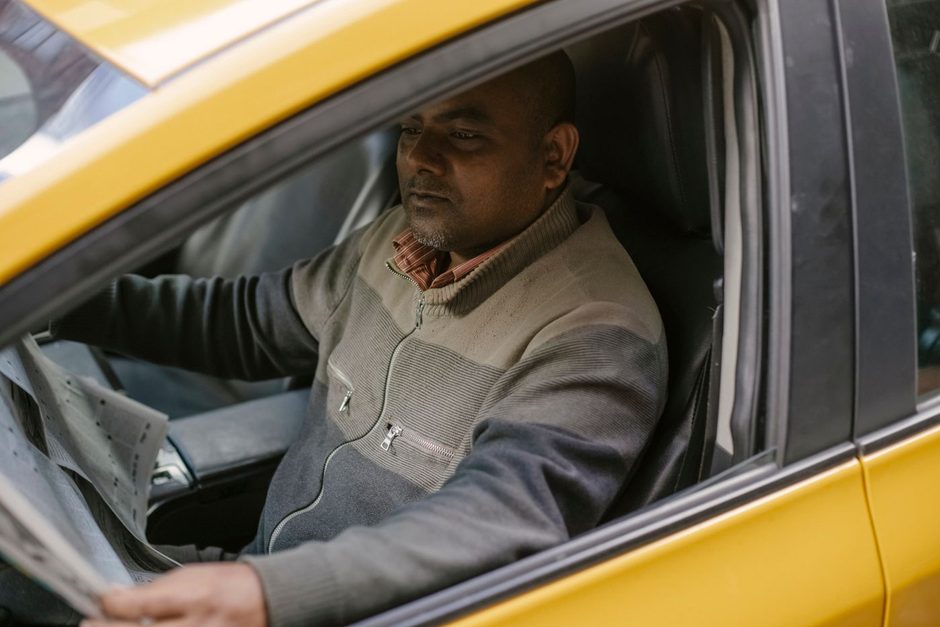
Houston medical and event surge: dayparting against real car availability
A multi-car hackney-style operator in Houston mixed medical transport daytime work with weekend event and bar district demand. One campaign ran 24/7 on “taxi Houston,” “cab near me,” and a few hospital names. CPCs were tolerable on paper. Drivers hated the account. Mid-morning clicks often needed wheelchair-accessible vans that were already on hospital runs. Saturday midnight produced more demand than cars, so unanswered calls trained riders to competitors and trained Google that your number fails.
Here the failure was capacity blindness. Paid search will happily buy demand you cannot serve. Every missed call is paid waste plus a review risk. The team mapped dispatcher logs for two weeks: which hours produced booked revenue by vehicle class, which ZIP clusters converted, and where hold times blew past two minutes.
They rebuilt around three practical moves. First, separate ad groups for accessible or larger vehicles with honest ad text and a page that stated vehicle counts in plain language. Second, bid schedules that raised spend when spare cars existed and cut it when the board was full, instead of a flat daily budget that vanished by noon on busy Fridays. Third, call-only push during peak nightlife hours so the path was one tap, while daytime medical kept a short form plus phone for facilities that book ahead.
They also stopped sending “cab near me” traffic to a citywide homepage with twelve service blurbs. Each major intent got a thin, fast page: one primary CTA, proof that matched the query, and no blog chrome. Mobile load and tap targets mattered more than brand storytelling. After the change, fewer total clicks produced more completed jobs because the auction was no longer buying phantom capacity. The lesson travels: in taxis, Google Ads is a dispatch problem as much as a media problem.
Patterns we see in audits
The short quotes below are illustrative composites drawn from patterns in account reviews. They are not quotes from named clients.
“We were celebrating a $18 form CPL on airport terms until dispatch showed most of those forms never got a car. Switching the primary conversion to qualified calls cut lead volume and raised booked ATL runs in the same month.” - Owner, airport taxi fleet, Southeast US
“Saturday night bids used to empty the budget by 9 p.m. while half our cars were still on the road. Dayparting to when we actually had spare sedans stopped us from paying for unanswered rings.” - Operations lead, multi-car hackney service, Texas

Free tools
DIY free tools for this playbook
Run these on the pages and campaigns this article covers, then fix what they flag before you scale spend or content volume.
Run these on this playbook
If the checklist shows a leak you cannot close in-house, request a free marketing audit.
Frequently asked questions
Should taxis prioritize call ads or lead forms in Google Ads?
Default to calls for immediate “near me” and late-night demand. Use short forms for advance airport, medical, and corporate jobs where a dispatcher needs flight or pickup details. Optimize bidding to the action that historically becomes a paid trip, not whichever event is easiest to track.
What is a sensible way to judge PPC for taxis and hackneys companies?
Track cost per booked job and revenue per booked job by campaign and hour. CPL and CTR are diagnostics. If you cannot tie spend to dispatch outcomes, you are flying blind even when ROAS screenshots look fine in-platform.
How aggressive should negative keywords be?
Aggressive enough that careers, licensing, pure fare research, wrong cities, and non-taxi transport modes stop eating budget. Review search terms regularly. Do not wait for monthly reporting to discover you funded someone else’s business plan research.
Is Performance Max a fit for local taxi demand?
It can help when conversion tracking is clean and you have creative plus strong location assets, but many fleets still need tight Search control for call-heavy, geo-precise intent. Do not hand the whole budget to automation before call quality and landing-page match are solid.
Why do mobile clicks convert worse even when most searches are mobile?
Riders are in a hurry, on flaky connections, and intolerant of slow pages or hidden phone numbers. If the first screen does not offer an obvious call path and local proof, they bounce. Fix the page and dispatch speed before you assume the auction is “too expensive.”
Putting it to work
Pull the last 14 days of Google Ads search terms next to your dispatch log and mark which queries produced a real booked job versus a dead ring or quote-only form. Kill or negative the clusters that never book, and make the top revenue intents open with tap-to-call on a page that matches the ad line for line.
If you want a partner to own the messy loop between query intent, call tracking, landing-page proof, and dayparting against real fleet capacity, HeyLead runs that Google Ads operating work for taxi and hackney teams so you are not stuck babysitting wasted spend after midnight. Reach us at [email protected].
Free marketing audit, or reach Martin directly:
Get a free audit Chat with us on WhatsApp · [email protected]