
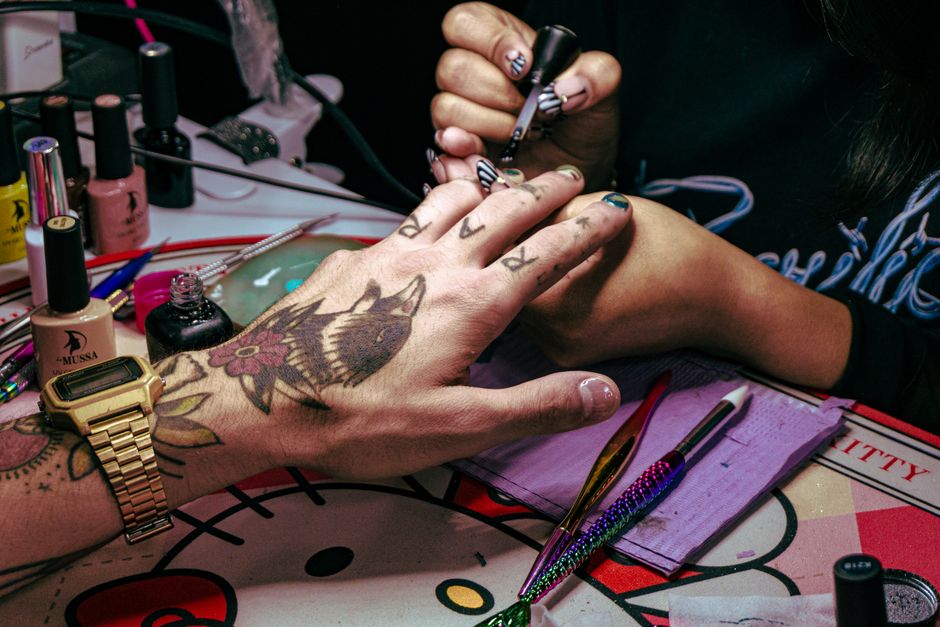
Saturday at 10.41am, a search for “gel fill near me” is not a brand moment. It is a woman on her phone, 18 minutes from a brunch, comparing two salons that both claim “same-day” and a third that still sends her to a homepage with a 14MB hero video. For nail salon companies, Google Ads is not a brand awareness channel. It is a booking engine for fills, acrylic repairs, pedicure packages, and bridal parties that will not wait for your organic rankings to catch up.
That is the problem this piece is about, and how salon marketers actually run paid search without feeding every “nail art ideas” browser.
Where salon search waste actually starts (and it is not always CPC)
Owners often blame the auction first. High CPC pressure is real, and plenty of new accounts get shoved back into manual bidding because Smart Bidding looks “expensive” in week one. The quieter leak is query mix. “Nail salon” is a walk-in phrase. “SNS dip overlay same day [neighborhood]” is a job. “How to do chrome nails at home” is a YouTube session. If those three sit in one campaign, your cost per booked appointment is a blended fiction.
Mobile conversion rates still lag desktop by 30-40%. That gap is not “people browse on phones.” It is tap targets, click-to-call buried under Instagram embeds, and booking widgets that ask for a full account before showing Saturday availability. A salon page that fails INP on a mid-range Android will look fine in your office Chrome session and still dump paid traffic.
Privacy and ad blockers strip 20%+ of conversion data. Smart bidding then optimizes to the leftover pixels: newsletter signups, “contact us” clicks from job seekers, or “gift card” views that never become a fill. Last-click also double-counts when the same guest hits Maps, a branded search, and a Performance Max asset. You do not need a 40-slide attribution manifesto. You need one conversion that means “appointment requested or call over 45 seconds,” plus Enhanced Conversions so Google is not flying half-blind.
If your agency (or your intern) still “just sends traffic to the homepage,” stop. Dedicated pages for gel fills, acrylic sets, pedicure packages, and group bookings should match the ad, show price ranges, staff photos, and a form or scheduler above the fold. HeyLead Insights is useful here for seeing where guests stall: heatmaps on the booking widget, form abandon after the phone field, scroll depth that never reaches reviews. One sentence of proof on the page beats another $400 on a generic “best nails in town” keyword.
If the account is already messy, a focused Google Ads program that rebuilds structure around appointment types is cheaper than another month of blended CPL dashboards.
A campaign structure that books fills, not mood boards
Think in appointment products, not in “the salon brand.” Separate Search campaigns (or tightly themed ad groups if spend is thin) for: gel/acrylic fills, new sets, pedicure and spa add-ons, bridal and group, and branded. Keep Display and demand-gen out of the Search budget until Search is profitable. Performance Max can drive bulk later, but only after you have conversion quality. “PMax drives the bulk now” is true in many accounts. It is also how you fund “nail inspiration” traffic if your asset groups are a dump of every service photo.
Keywords still matter even as Google pushes signals. Use exact and phrase on money terms: gel fill, dip powder, acrylic repair, Russian manicure, pedicure with gel, kids nails (if you want that volume), and neighborhood modifiers. Broad can work with strong negatives and clean conversions. Without those, broad is how 20-30% of spend evaporates. Broad match paired with Smart Bidding can deliver lower CPCs than tight exact-match campaigns in mature accounts-Google’s own data cites 15-20% more conversions at similar CPA-but only when conversion signals are clean. Treat that as a test, not a religion. If automated bidding inflates spend without better booked-job quality, you pause it. You do not “trust the algorithm” while walk-in no-shows pile up.
Negatives are the unglamorous half of Google Ads for nail salon companies. Add: DIY, at home, kit, course, school, jobs, salary, near me cheap only if you are not competing on price, Amazon, YouTube, ideas, Pinterest, acrylic nails designs (informational), and competitor brand terms you are not willing to pay for. Review search terms twice in the first two weeks, then weekly. Constant structure changes reset learning. Do not rebuild the account every Monday because one weekend looked soft.
Ads should name the appointment and the constraint: same-day fills until 6pm, parking, walk-ins vs booking only, “no drill” if that is the offer, bridal party rooms. RSA assets that only say “luxury nails” lose to the salon that writes “gel fill from $X, 45-minute slots, book on this page.” Extensions: call, location, sitelinks to fills / pedicures / groups, price if policy allows, and structured snippets for services. Match the landing H1 to the query cluster. Use a SERP snippet preview before you waste a week on titles that truncate on mobile.
Audit scorecard
-
Intent inventory
Export 90 days of search terms. Tag each as bookable job, price shopper, DIY/info, employment, or competitor. Pause or negative anything that is not a bookable job unless branded.
-
One conversion that equals a chair
Count appointment requests, completed online bookings, and qualified calls. Do not optimize to page views, Instagram clicks, or gift-card page visits. Turn on Enhanced Conversions.
-
Service-matched landing pages
Gel, acrylic, pedi, bridal. Each page: price band, duration, photos of that service, staff, hours, map, book CTA. No homepage dump.
-
Mobile booking path
Tap-to-call in the first screen, scheduler that shows real slots, no 8-field forms. Check Core Web Vitals on a real phone, not Lighthouse vanity scores only.
-
Geo that matches drive time
Radius around the salon, not the whole metro. Exclude ZIP codes you never serve. Location bid modifiers on the 10-minute drive, not 40 minutes of highway.
-
Ad-to-page message match
If the RSA says same-day gel fill, the page H1 cannot say "welcome to our spa." Mismatch is how you buy clicks that bounce in 4 seconds.
-
Negatives as a living list
DIY, kits, courses, jobs, salary, wholesale, training, "at home." Add every junk query once. Do not wait for month-end reporting.
-
PMax only after Search is clean
Feed PMax with conversion-qualified audiences and service assets. Brand exclusions if PMax cannibalizes cheap branded Search.
Get a free marketing audit - we review your search, ads, and landing pages and send back what to fix first.
Get a free audit
Landing pages that turn a $4 click into a Saturday fill
Paid search for salons fails after the click more often than in the auction. The guest already decided they want a fill. Your page has to prove you can do it today, at a price they will accept, with a human they trust. In documented CRO tests, adding above-the-fold social proof to service landing pages has lifted conversion rates by 8-15 percentage points. You do not need that exact lift. You need recent fill photos, Google review snippets that mention gel and pedicures, and a booking module that does not require creating an account mid-commute.
Speed is part of the offer. If the page fails LCP or INP, Google still charges you for the click. Run a Core Web Vitals check, then strip autoplay video, uncompressed PNG menus, and third-party chat widgets that block the book button. Pair that with an H1 checker and meta description checker so the ad and the page say the same service. Competitive gaps on those pages show up fast in a SEO competitor analysis even when the channel is paid: rivals rank and advertise on “dip powder [area]” with dedicated URLs while you still use one mega-menu site.
Scenario: a multi-location operator in a dense suburb was paying for “acrylic nails” and landing everyone on a brand story. Calls were high. Booked fills were not. The fix was not a new bidding strategy. They split acrylic new-set vs fill, put duration and starting price on the fill page, and moved the scheduler above Instagram. Cost per booked fill dropped because the junk queries were still there, they just stopped converting into fake “leads.” One number that mattered: fill-page conversion went from 2.1% to 6.8% in 11 days. That is the mechanism. Structure plus page, not a mystery ROAS guarantee.
UTM every ad group so the front desk can see source without a science project. Use the UTM link builder once, then lock the convention. If front desk still writes “Google” on every walk-in, your smart bidding is guessing.
Action checklist
- Map four money pages: gel fill, acrylic/new set, pedicure package, bridal or group. Write H1s that include the service and city or neighborhood.
- Put starting prices, slot length, and "book / call" in the first viewport. Hide the brand manifesto below the fold.
- Fire one primary conversion: booking submit or call ≥45 seconds. Enable Enhanced Conversions. Kill secondary goals from bidding.
- Build Search first with phrase/exact on fills and sets. Add a shared negative list before you turn on broad or PMax.
- Geo-fence drive time. Exclude campuses if you do not want $18 student fills crowding Saturday.
- Review search terms after 48 hours of spend, then weekly. Do not rebuild campaigns daily.
Free tools - try these yourself
Bidding, learning, and why “set and forget” burns Saturday inventory
New accounts often cannot feed Smart Bidding enough booked appointments. If you have 12 conversions a month, Maximize Conversion Value will chase whatever crumbs exist, including fake form spam. Start with a daily cap you can lose without hurting payroll, manual or Maximize Clicks with a tight CPC cap until you have 30+ qualified conversions in a 30-day window, then move to Target CPA based on a real cost per booked fill, not a cost per “lead.”
Do not promise a specific ROAS or CPL before the account, pages, and unit economics are in view. A $55 fill with 35% product and labor leftover cannot pay a $28 CPC at a 4% conversion rate. Math first. Then bids. Realistic paid programs take 3-6 months of iteration, not a viral week.
AI Overviews now sit on a large share of queries and can cut CTR sharply even when impressions look healthy. For salons, many money queries are still local and commercial (“gel nails open now”). Those still click. Informational design queries increasingly do not. Keep budget on commercial intent. Zero-click search is a content problem, not a reason to abandon Search Ads for fills.
Reporting should be weekly and boring: spend, qualified bookings, cost per booked appointment, show rate, and which service pages converted. Monthly vanity decks bury the weekend you wasted on “nail art” queries. Who manages the account matters. If the answer is a rotating junior and a dashboard, you will get structure churn and learning resets. Fewer campaigns, broader targeting inside a service, clean conversion setup: that is the 2026 version of control, not 14 ad groups of two keywords each.
Common patterns we see in salon accounts
Multi-location groups often optimize to form fills from a homepage. Half of those contacts can be people asking if the salon hires nail techs. Cost per actual Saturday gel fill only makes sense after services are split and bidding counts bookings, not contacts.
Independent studios frequently see PMax look cheap until brand is excluded and fill vs new-set mix is reviewed. The bulk of conversions can be people who already knew the salon. Search on neighborhood fill queries is usually what actually fills new chairs.
FAQs
Should nail salon companies use Performance Max from day one?
No. Get Search converting on fills and sets with clean conversion tracking first. Then add PMax with service-specific assets and brand controls so it does not eat cheap branded clicks.
What is a sane starting daily budget?
Enough to generate a handful of commercial clicks per location per day without blowing the week’s labor plan. If CPC is near $3 and you convert 5% of qualified clicks to bookings, model cost per booked fill before you scale. Do not copy a national average ROAS.
Do we still need keywords if Google wants signals?
Yes. Signals (Enhanced Conversions, first-party booking data) improve bidding. Keywords and negatives still decide whether you pay for DIY chrome tutorials. “Signals over keywords” is incomplete without a query filter.
Why do mobile ads look fine but bookings stay low?
Conversion rates often lag desktop by 30-40% when the book path is slow or hidden. Fix tap-to-call, slot visibility, and Core Web Vitals before you raise bids.
Can anyone guarantee a cost per fill before seeing the account?
No. Anyone who does has not seen your pages, show rate, or geo. Demand a plan for negatives, landing match, and conversion quality instead of a promised CPL.
Putting it to work
Execution sprint
This week
- Pull 30-90 days of performance for nail salon (Search Console, ads, CRM, or call logs - whatever you have).
- Flag the top leak: wrong intent, weak page, slow response, or dirty conversion tracking.
- Ship one fix on the highest-traffic money path (page, campaign split, or response rule).
- Run the free tools below on that same URL or account and log the findings.
Free tools for this sprint
Next 30 days
- Expand the fix to the next one or two money paths only after the first one shows cleaner bookings.
- Align creative, keywords, or content with the same offer the page now states.
- Review booked outcomes weekly; cut anything that still only produces unqualified volume.
This week
-
Export search terms and negative every DIY, jobs, and “at home” query.
-
Confirm the primary conversion is a booking or qualified call, not a generic form.
-
Point the highest-spend ad group at a service page, not the homepage.
-
Run Core Web Vitals and fix the booking widget on a real phone.
-
Tag ads with locked UTMs so the desk can mark source.
-
Write one RSA that names gel fill, hours, and the book CTA.
Next 30 days
-
Split fill vs new-set campaigns if volume supports it.
-
Add location extensions and sitelinks to each money service.
-
Test Target CPA only after 30+ qualified conversions.
-
Decide if PMax is additive or just recapturing brand.
-
Reconcile booked appointments in the scheduler against Google’s conversion count.
Pull last 60 days of booked fills by query theme and kill the clusters that never sit in a chair. If the grind you do not want is the ongoing mix of negatives, service-page testing, and conversion hygiene that keeps Google Ads for nail salon companies from funding mood-board traffic, HeyLead can run that search-to-booking loop so you stay on chair utilization and staffing. Chat with us on WhatsApp
Free marketing audit, or reach Martin directly:
Get a free audit Connect on WhatsApp · [email protected]