
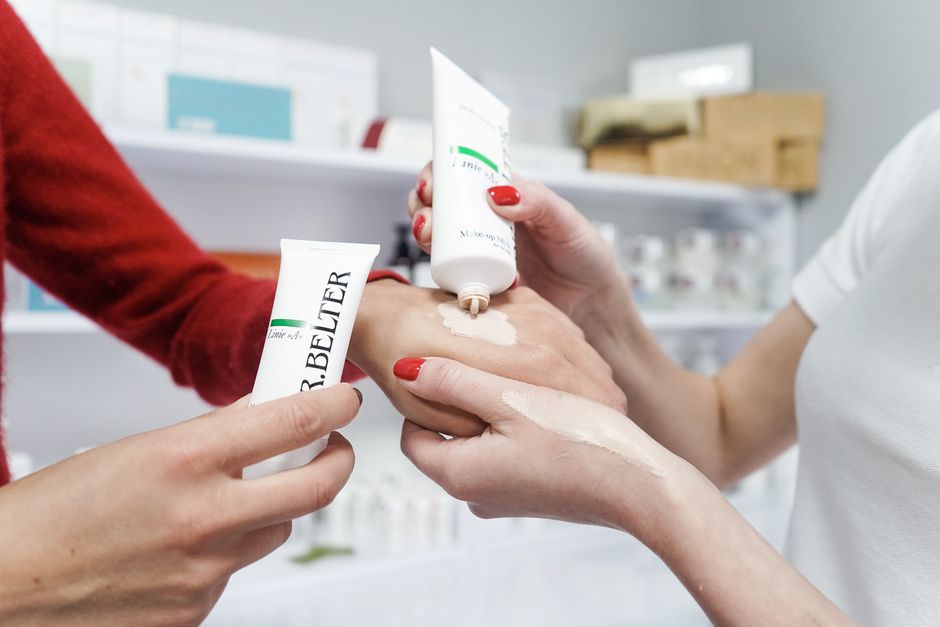
How many of the five-star reviews sitting on your practice’s Google profile right now would survive a second look from the FTC? Most practice owners have never had to ask, because the reviews are doing exactly what they’re supposed to: filling the Botox calendar and talking a worried patient into a mole check before they Google their symptoms into a panic.
Here’s the part that costs real money. Run one Google Ads account and one Meta pixel across the whole practice, and you get the worst of both services under your roof. Cosmetic ad spend ends up subsidizing medical-intent clicks that were never going to pay cash for filler. A skin-check campaign sends an anxious patient straight to a landing page full of Botox before-and-after photos, and she bounces before she finds the biopsy page she actually needed. Add up the no-shows, the three-minute calls that go nowhere, and the Instagram DMs nobody answers before lunch, and that’s real revenue leaving the building every month, not a line item buried in a dashboard.
The fix isn’t a bigger budget or a prettier homepage. It’s treating the practice as the two businesses it actually is: a medical side that runs on insurance, referrals, and trust in a diagnosis, and a cosmetic side that runs on proof, urgency, and an injector calendar that can’t sit half-empty on a Tuesday. Most dermatology marketing never makes that split, and that single decision is where almost everything downstream goes sideways.
Why one Google Ads account can’t sell a skin check and a Botox appointment the same way
Walk into most dermatology accounts and you’ll find one campaign structure trying to do two jobs. A patient searching “suspicious mole” and a patient searching “lip filler near me” land in the same conversion funnel, get served the same ad copy, and sometimes even get routed to the same intake form. That’s not an efficiency win. It’s a mismatch that shows up first as rising cost per click and only later as a thinner appointment book, by which point the owner is already blaming the agency instead of the account structure.
Search CPC averaged $2.96 in 2026, up 12% year over year, and dermatology keywords run well above that blended average because the specialty sits at the intersection of high-value medical care and elective cosmetic spend. “Mohs surgery,” “melanoma screening,” and “psoriasis specialist” compete against every other healthcare advertiser bidding up medical intent. “Botox near me” and “laser hair removal cost” compete against every medspa and injector in a ten-mile radius. Blend those into one set of campaigns with shared budgets and shared negative keywords, and you’re almost guaranteed to waste a chunk of it. Industry benchmarks put typical SEM waste from irrelevant queries and mismatched landing pages at 20 to 30% of spend, and a dermatology account that hasn’t split medical from cosmetic intent is a textbook case of exactly that.
The two sides also behave differently by channel, which most practices never account for. Google Ads tends to carry the medical side well, because patients searching for a biopsy or a rash they can’t identify are already in problem-aware, high-intent mode; 2026 benchmarks put average Google Ads ROAS around 4.2x across industries, and dermatology’s insurance-backed procedures tend to sit near or above that once tracking is clean. Meta tends to carry cosmetic demand better, because nobody searches for a jawline contour before they see one on their feed; Meta’s average sits closer to 2.8x, lower on paper, but it’s doing a different job entirely, introducing a want the patient didn’t know they had rather than answering a question they already typed into Google. Judge both channels against the same target and you’ll pull budget from the one that’s actually working.
What the FTC’s 2024 rule on fake reviews and testimonials means for your before-and-after wall
The Federal Trade Commission’s rule on the use of consumer reviews and testimonials, finalized in 2024, isn’t background noise for a dermatology practice. It’s directly in your lane. Cosmetic dermatology sells trust through reviews and before-and-after photos more than almost any other healthcare category, which means a practice that’s been loose with how it collects, filters, or displays that proof is sitting on more exposure than it realizes.
The rule bans fabricated or fake reviews, bans buying positive reviews or paying for reviews without disclosing the exchange, and bans suppressing negative reviews while selectively surfacing only the glowing ones. It also targets insider reviews, where an employee, a doctor’s spouse, or an injector posts a testimonial without disclosing the relationship. None of this is new in spirit, the FTC has gone after deceptive endorsements for years, but 2024 turned the principles into an explicit rule with real penalty authority, and healthcare marketing gets scrutinized more than most verticals because the stakes for a patient making a treatment decision are higher.
For a practice, this changes how review collection and before-and-after galleries get built, not whether you do them at all:
-
Ask every patient for a review after a visit, not just the ones you’re confident were thrilled. Selective solicitation is the exact pattern the rule targets.
-
If you offer any incentive for leaving a review, that connection has to be disclosed, both to the patient and in how the review appears publicly.
-
Don’t filter or hide negative reviews from your site or listings while only pushing the five-star ones into ads and landing pages. Address the negative ones; don’t bury them.
-
Get documented, specific consent for every before-and-after photo, tied to the exact procedure, and avoid implying a guaranteed or typical result without disclosing the range of outcomes patients actually see.
-
If a nurse injector, aesthetician, or front-desk staffer posts a testimonial, disclose the employment relationship. An undisclosed insider review is the single clearest violation pattern the FTC has called out.
None of this slows down review velocity if you build the habit correctly. Practices that ask consistently, every patient, every visit, tend to out-rank and out-convert practices that only chase reviews after a great cosmetic result, because consistent review flow reads as more credible to both patients and to Google’s local ranking signals than a pile of five-star reviews that all arrived the same week after a promotion.
Get a free marketing audit. We review your search, ads, and landing pages and send back what to fix first.
Get a free audit
Building a dermatology marketing program around two patient journeys, not one
Once the medical and cosmetic sides are treated as separate businesses on paper, the marketing work gets a lot more specific, and a lot more doable. This is where the actual campaign structure, the landing pages, and the tracking get built.
Playbook: separating the two journeys
- 1Split your Google Ads account into separate campaigns for medical and cosmetic intent from day one, with separate budgets, separate negative keyword lists, and separate conversion goals. Don't let them share a daily budget pool.
- 2Build keyword themes around real search behavior: "mole check," "psoriasis treatment," "eczema specialist," and "skin cancer screening" on the medical side; "Botox cost," "filler before and after," "chemical peel," and "HydraFacial near me" on the cosmetic side.
- 3Build at least two dedicated landing pages, one per journey, with proof that matches the ad: insurance acceptance and physician credentials for medical, galleries and pricing transparency for cosmetic. Never send a medical click to the cosmetic homepage.
- 4Use call tracking numbers or tagged forms per journey so every lead in the CRM is marked medical or cosmetic at the source, not guessed at later by whoever answers the phone.
- 5Set up the FTC-compliant review workflow described above as a standing process, not a one-time cleanup, with a text or email request going out after every visit regardless of how it went.
- 6Adjust seasonally by what actually drives the specialty: skin cancer screening demand climbs through the summer and around May's Skin Cancer Awareness Month, while cosmetic demand tends to spike before wedding season and again in January around resolution-driven bookings. Shift budget toward the side that's in season rather than running flat spend year-round.
- 7Check who's legally allowed to perform what in your state before a claim goes live. Scope-of-practice rules for nurse injectors versus physician-only procedures vary by state, and an ad implying a treatment level your licensed staff can't legally deliver is a compliance problem waiting to surface, separate from the FTC issue entirely.
- 8Set different success metrics for each side. Medical visits often carry lower ticket value but higher lifetime recurrence through annual skin checks and chronic condition management; cosmetic visits are often higher ticket but one-off or membership-driven. A single blended cost-per-lead target hides which side is actually healthy.
Picture a two-location practice running one blended Google Ads account for both offices. Every click, medical or cosmetic, landed on the same homepage with a hero image of a laser facial. Skin-check searches had a 70%+ bounce rate, while the practice’s injector calendar still had open slots most weeks, because the cosmetic ad spend was propping up a page that medical patients took one look at and left. Splitting the account into two campaigns, building a dedicated medical intake page, and tagging leads by source didn’t require new spend, just a rebuilt structure, and the practice could finally see which side was actually converting instead of guessing from a blended number.
Where the appointment actually gets booked or lost usually comes down to what happens on the page itself, not the ad that got someone there. This is where HeyLead Insights earns its keep for a dermatology practice: watching where a mole-check visitor scrolls, where they hesitate on an insurance question, or where a cosmetic visitor abandons a booking form right before the price field tells you exactly what to fix next, instead of leaving you to guess from a conversion rate that only shows you the outcome, not the reason.
A handful of free tools make the audit work easier before you touch a campaign budget. Run your medical and cosmetic landing pages through the Core Web Vitals checker to catch load issues that quietly tax mobile patients booking from a parking lot. Check your title tags and headers with the H1 checker and the title tag checker to confirm each page is actually targeting the keyword theme it’s meant to carry. Pull a SEO competitor analysis on the medspas and dermatology groups ranking above you locally, and run your Google Business Profile and citations against the local SEO checklist to make sure your name, address, and phone number match everywhere a patient might find you before they ever hit your site.
If the bigger gap is organic visibility rather than paid structure, that’s worth a conversation with a digital marketing partner who runs SEO as an ongoing program rather than a once-a-year audit, since dermatology SEO competes against both local medspas and national health content sites in the same search results.
What dermatology practice managers say about the leads that go nowhere
“We used to run one landing page for everything. Then I looked at our call tracking and realized half the calls asking about insurance coverage were hitting a page covered in laser before-and-afters. It wasn’t that the ad was bad, it just sent the wrong patient to the wrong proof.” - Practice manager, two-location dermatology group
“Our injector calendar would go soft for two weeks and nobody could say why until we actually split the reporting by service line. Once medical and cosmetic had their own numbers, it was obvious the cosmetic side needed fresh creative, not more budget.” - Owner, solo dermatology practice
FAQs
Do before-and-after photos need patient consent for dermatology ads? Yes. Beyond standard HIPAA consent for using patient images, you need documentation tied specifically to marketing use, and the result shown should reflect what patients typically experience, not an outlier best case presented as standard.
Can we offer a discount in exchange for a review under the FTC’s 2024 rule? You can offer an incentive for leaving a review, but you cannot condition it on a positive review, and the incentive has to be disclosed. An undisclosed “leave us a 5-star review for $20 off” offer is exactly the pattern the rule targets.
Should medical and cosmetic services share one landing page to save on web design costs? It saves money upfront and costs you conversions every month after. A combined page forces every visitor to wade through proof meant for someone else, and it makes your tracking nearly impossible to read by service line.
How fast should a cosmetic consult inquiry get a response? Cosmetic leads are comparison shopping against medspas that often respond within minutes. A same-day response is the baseline; same-hour is what actually protects the booking from going to a competitor’s calendar instead.
Does the FTC’s testimonial rule apply to a small, single-location practice, or just large chains? It applies regardless of size. A solo practice with an active Instagram and a Google review strategy carries the same exposure as a multi-location group; enforcement risk doesn’t scale down with revenue.
Putting it to work
Execution sprint
This week
- Pull 30-90 days of performance for dermatologists (Search Console, ads, CRM, or call logs - whatever you have).
- Flag the top leak: wrong intent, weak page, slow response, or dirty conversion tracking.
- Ship one fix on the highest-traffic money path (page, campaign split, or response rule).
- Run the free tools below on that same URL or account and log the findings.
Free tools for this sprint
Next 30 days
- Expand the fix to the next one or two money paths only after the first one shows cleaner bookings.
- Align creative, keywords, or content with the same offer the page now states.
- Review booked outcomes weekly; cut anything that still only produces unqualified volume.
Start this week by pulling the last 60 days of inquiries, calls, and form fills, and tagging each one as medical or cosmetic, then noting which landing page it actually hit. Give yourself thirty minutes with the call log and your ad platform side by side. You’re looking for the mismatches: a skin-check click landing on a cosmetic gallery, a cosmetic inquiry buried in a form built for insurance intake. That single exercise usually surfaces the exact leak costing you the most booked appointments right now.
Separating a dermatology practice’s medical and cosmetic marketing into two real systems, with compliant review collection, dedicated landing pages, and tracking that actually tells you which side is working, is the kind of ongoing build most in-house teams don’t have the bandwidth to run alongside patient care. HeyLead can take that specific split off your plate: rebuilding the campaign structure, the landing pages, and the attribution so you can see medical and cosmetic performance clearly, separately, and compliantly. Chat with us on WhatsApp.
Free marketing audit, or reach Martin directly:
Get a free audit Connect on WhatsApp · [email protected]