
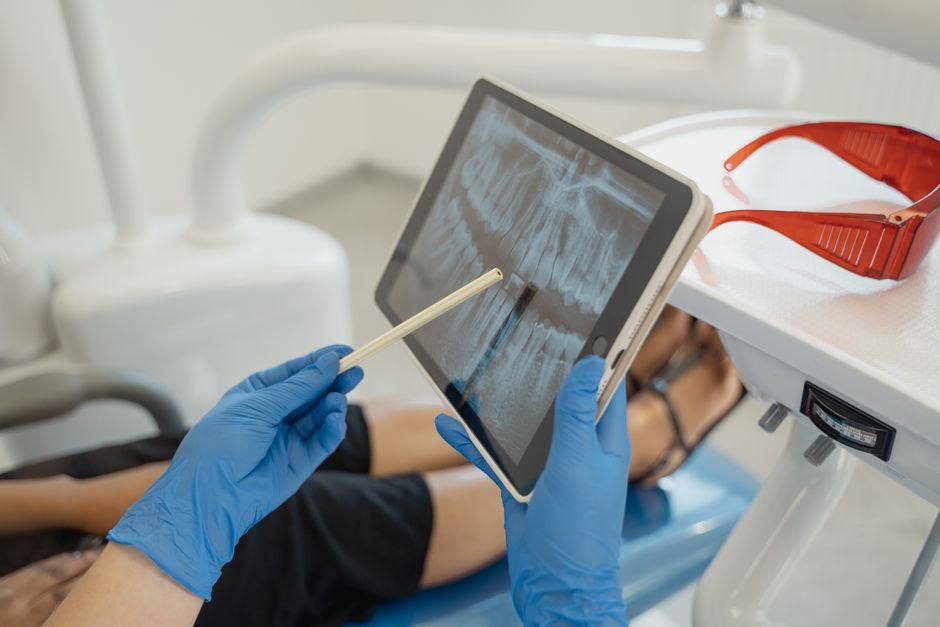
A new patient call hits the line at 5:47 p.m. in a suburban Atlanta practice. The front desk has already gone home. By 8 the next morning that same person has booked three other offices from Google, left one review request unanswered, and forgotten your name. The hygiene column is full through next month. The implant and Invisalign chairs are not. That gap is not a staffing problem first. It is an acquisition problem: the wrong searches, soft offers, slow follow-up, and tracking that counts form fills instead of kept appointments and production.
Digital marketing for dental practices in the US has to respect how people actually choose a dentist. They search with urgency or with a high-ticket treatment in mind. They judge trust in seconds. They ghost if nobody answers. Generic local-service playbooks that push “dentist near me” volume will keep the schedule busy and the production number flat. What follows is how owners and marketing leads build a system that fills the right chairs.
Dental practices that treat patients in Honolulu can take the digital marketing framework in this article and apply it to new patient exams, emergency visits, and cosmetic consults in their community. Search, Maps, and tracked booking forms work the same way regardless of the market. Target location: Honolulu. Owners who run this trade there can use the Honolulu clinics page for market notes that reflect local patient behavior and competition.
Which dental searches fill production chairs instead of discount cleanings
Not every click is equal in a dental practice. Someone typing “teeth cleaning near me” in Chicago is often price shopping or checking insurance. Someone typing “dental implants cost Dallas” or “Invisalign consult near me” is closer to a five-figure case. Emergency intent sits in its own lane: “toothache emergency open now,” “cracked tooth same day,” “wisdom tooth pain Houston.” Those queries convert fast when you can take them, and they vanish when you cannot.
Map your services to intent clusters before you spend another dollar. High-intent treatment terms usually include the procedure plus a city or neighborhood: implants, All-on-4, clear aligners, veneers, root canal, crown replacement, sedation dentistry. Local modifiers matter in multi-office groups. A Phoenix practice competing on “dentist near me” alone will pay for a lot of cleaning shoppers. Layer in treatment keywords, insurance-related phrases only when you truly accept those plans, and negative keywords that strip out jobs, schools, and DIY content (“salary,” “hygienist school,” “how to whiten at home”).
Organic and paid should not chase the same vanity head terms. SEO still wins long-term visibility for condition and treatment education pages that answer real patient questions with clinical clarity. Paid search captures the moment of decision when someone is ready to book. Growing AI Overview presence is pushing casual informational clicks down in many categories; dental practices should assume the traffic that does reach a landing page carries higher intent and design accordingly (local and map-pack results have shown more resilience than organic blue links). So the traffic you do get has to land on pages built for one job: book a consult or call now. If your content ranks but sends people to a generic homepage, you paid for education and handed the appointment to a competitor with a clearer offer.
Run a simple audit of the last 90 days of calls and form submissions by query theme where you have call tracking. Tag each as cleaning or hygiene, emergency, restorative, cosmetic, or implant/ortho. You will usually find a small set of themes driving most production. Protect budget and content effort around those themes first. Expand only after response speed and landing pages can handle more volume without drowning the front desk in unqualified noise.
60-day audit exercise: Pull the last 60 days of new-patient enquiries and tag each by source and treatment intent: emergency, hygiene, restorative, cosmetic, implant or ortho. Note which ones booked, showed, and turned into accepted treatment where you can see it. That single sheet will show you whether you have a traffic problem, a landing-page problem, or a response-speed problem before you touch another bid.
Google Ads for dental practices: campaign structure that protects case value
Dental Google Ads accounts bleed money in predictable ways. Broad match without tight negatives pulls student research and out-of-area browsers. Location settings that include “interest” instead of physical presence inflate spend in tourist-heavy markets like Miami and Los Angeles. Ad copy that leads with “new patient special $49 exam” trains the market to expect a discount and attracts patients who never accept a full treatment plan. None of that is mysterious. It is just easy to miss when the dashboard only shows cost per lead.
Structure campaigns around treatment value and appointment type, not around every service line on the website. Separate emergency and same-day availability from planned implant or aligner consults. Use ad extensions for call, location, and sitelinks that jump to the exact treatment page. Call-only or call-focused ads still matter because a large share of high-intent dental traffic is mobile, and conversion rates on mobile often lag desktop when the page is slow or the click-to-call path is buried. If Core Web Vitals are weak, you are paying Google more for worse results. Fix load and interaction delay on the money pages before you scale bids.
Smart bidding only works when conversion signals are clean. If “conversion” means any form submit, including “ask a question” and spam, the algorithm will buy you more of the same. Define primary conversions as booked consults, confirmed calls over a minimum duration, or CRM stages that mean a real appointment. Enhanced conversions and server-side or CRM feedback help when browser tracking drops. Practices that skip this step complain that automated bidding “inflates budgets.” What usually inflated was the definition of success.
Local Services Ads and Google Business Profile work as a parallel lane for practices that want phone-ready demand with review proof visible in the unit. Keep categories accurate, hours true (especially evenings and Saturdays), and photos current. Fake or stale hours destroy trust faster than a weak ad. For multi-location groups in markets like Dallas-Fort Worth or the Atlanta suburbs, each location needs its own presence, reviews, and landing path. Shared numbers and one national page make attribution and reputation management harder than they need to be.
Illustrative example based on client work: “We cut ‘dentist near me’ spend by about 40% and moved it into implant and emergency terms. Lead count dropped, but kept consults for higher-value cases went up and the front desk stopped drowning in $99 cleaning shoppers who never accepted a plan.” - Owner, multi-location dental group, Texas
Get a free marketing audit - we review your search, ads, and landing pages and send back what to fix first.
Get a free audit

Dental landing pages that convert anxious browsers into booked consults
Patients are not buying a commodity. They are deciding who gets near their mouth, often after pain, embarrassment, or a long delay. A brochure-style homepage with stock smiles, a buried phone number, and a contact form that asks for a novel’s worth of fields will lose to a focused page that answers three questions fast: Can you help my problem? Can I trust you? How do I book without friction?
Build treatment-specific landing pages aligned to the ad or organic query. An implant page should show the process in plain language, who performs the surgery, financing options in USD, before-and-after proof with real case context, and a single primary action: schedule a consult or call. Put the phone number sticky on mobile. Keep the form short: name, phone, preferred time, and one treatment interest field. Every extra field is a quiet no. Social proof belongs above the fold in dental: star rating, review count, and two or three short quotes that mention the same treatment the visitor searched for. Generic five-star blurbs help less than “got my implant same week after a broken tooth” from a local patient.
Trust signals that matter in US dental markets include provider credentials, sedation options if you offer them, insurance and financing clarity without promising coverage you cannot verify, and office photos that look like the real place. Video of the doctor explaining a procedure in simple terms outperforms another carousel of white coats. If you run paid traffic to the homepage because “that is where everything is,” stop. That habit is one of the fastest ways to waste media budget in this niche. Dedicated pages let you match message, measure conversion by treatment, and fix weak offers without redesigning the whole site.
Speed and clarity beat clever copy. If the page takes too long on a phone in a parking lot outside a competitor’s office, you already lost. Test one change at a time: headline that names the treatment and city, proof block, form length, or click-to-call prominence. Practices that treat the landing page as a permanent brochure never learn which objection actually blocks the book button. For teams that want a partner built around this niche end to end, Dental Practices marketing is the lane where channel work, creative, and conversion pages stay tied to chair time rather than vanity leads.
Illustrative example based on client work: “Our ads were fine. The page asked for eight fields and buried the phone number. We shortened the form, put click-to-call sticky on mobile, and same-week booked calls jumped without raising budget.” - Marketing director, private dental practices, Midwest
The response window that decides whether a new patient books you or the next listing
Lead quality dies in the handoff. A high-intent implant enquiry that sits in a shared inbox overnight is not a marketing win. It is a missed production day. Front desk reality in busy US practices is noisy: check-ins, insurance calls, same-day emergencies. Without a simple routing rule and a response standard, marketing spends money to create work nobody owns in the first ten minutes.
Set a clear path for paid and high-intent organic leads. Calls during open hours should ring a live person with a short script that books the right appointment type, not a generic “we will call you back.” After-hours and overflow need a recorded line, answering service, or on-call protocol that at least captures the case type and promises a morning callback with a real time window. Forms should trigger an immediate SMS or email confirmation and an internal alert, not a once-a-day batch check. Speed-to-lead in dental is not a nice-to-have KPI. Patients in pain or comparison-shopping will keep calling down the SERP until someone answers.
Qualify without interrogating. The goal of the first contact is a kept appointment matched to the right provider and length, not a full clinical history. Confirm the chief concern, insurance or financing interest at a high level, and urgency. Flag no-show risk early: new cosmetic consults and heavily discounted new-patient specials often need reminders, deposits, or two-way text confirmation. Track show rate by source. If one campaign books plenty of appointments that never walk in, your cost per kept patient is the real number, not cost per form.
Close the loop with the clinical team. Marketing should know which lead sources produce accepted treatment plans, not only scheduled exams. A monthly review that stops at “52 new patient forms” hides the fact that half were cleanings already covered by another office’s recall system. Share a simple production view: source, appointment type, show rate, and treatment acceptance where the practice management system allows export. That is how you decide whether to raise bids on implant terms or cut a Meta campaign that only fills hygiene.

Action checklist
Action checklist for dental practices in the US
Use this as a working checklist for dental practices in the US - specific steps you can run this week, not theory.
- Audit the last 60-90 days of enquiries for dental practices in the US by source and by job or case type that actually produces revenue.
- Pick the single highest-ROI channel for your US market (search, local SEO, paid social, or referral content) and put 70% of near-term effort there.
- Build or fix one landing path that matches that channel's intent with a short form and live response plan.
- Set a speed-to-lead standard the front desk or sales team can keep (minutes during open hours, morning callback window after hours).
- Track booked outcomes, show rate, and accepted work by source - not form fills alone.
- Kill or pause any campaign or content cluster that drives volume without booked work.
- Schedule a monthly review that decides what to scale, fix, or stop based on those outcomes.
Free tools - try these yourself
If the checklist shows a leak you cannot close in-house this month, request a free marketing audit - we will prioritize SEO, ads, and landing pages around the same outcome metrics above.
Frequently asked questions
How much should a dental practice spend on digital marketing in the US?
There is no single right number, but the spend has to match treatment mix and capacity. Single-location practices investing in implant or cosmetic cases typically spend $3,000-$8,000/month on paid search alone in mid-size US metros; DSO groups running 10+ locations often allocate $15,000-$40,000/month across locations. These are starting points - CPCs for implant terms in competitive markets like Miami or Los Angeles can run $18-$35 per click, so volume expectations must be tied to your case fee and acceptance rate. A single-location practice with open implant and cosmetic chair time can often start paid search in a focused way and expand when show rate and acceptance justify it. Multi-location groups usually need more budget for location coverage and creative testing. Judge spend on cost per kept, qualified appointment and contribution to production, not on a fixed percentage of revenue copied from another industry. If the schedule cannot absorb more new patients this month, fix operations before you scale media.
Is SEO still worth it when patients mostly call from Google Ads?
Yes, for different jobs. Ads capture demand that is ready now. SEO builds durable visibility for treatment education, condition pages, and local brand searches so you are not renting every click forever. In a world with more AI answers and fewer casual clicks, the pages that still earn visits need clear expertise and a direct path to book. Practices that only buy ads and neglect the site often pay rising CPCs with nowhere strong to send the traffic.
Should we promote new-patient specials in ads?
Use them carefully. A steep exam-and-cleaning special can spike volume and wreck average production if it becomes your only message. If you run a special, send it to a page that still introduces higher-value services and sets expectations about comprehensive exams. Many practices get better economics leading with the problem and treatment (“same-day emergency,” “implant consult”) and using a modest offer as a secondary line rather than the headline.
What should we track besides cost per lead?
Track call quality or duration, booked appointments by treatment type, show rate, and, when possible, treatment acceptance or first-90-day production by source. Platform dashboards will disagree with your practice management system. Plan for that. Weekly operational reporting beats a glossy monthly PDF that hides which campaigns create no-shows.
How long before digital marketing feels predictable for a dental office?
Expect a learning period while tracking, landing pages, and response handling stabilize. Many practices see directional signal within weeks on paid search if the offer and phone path are clean, while organic gains compound over months. Anyone promising a fixed ROAS or cost per patient before seeing your market, fees, and capacity is selling comfort, not a plan. Sustainable systems usually take a few cycles of creative, bid, and page tests, not one campaign launch.
Putting it to work
Execution sprint
This week
- Pull 30-90 days of performance for dental practices in the US (Search Console, ads, CRM, or call logs - whatever you have).
- Flag the top leak: wrong intent, weak page, slow response, or dirty conversion tracking.
- Ship one fix on the highest-traffic money path (page, campaign split, or response rule).
- Run the free tools below on that same URL or account and log the findings.
Free tools for this sprint
Next 30 days
- Expand the fix to the next one or two money paths only after the first one shows cleaner bookings.
- Align creative, keywords, or content with the same offer the page now states.
- Review booked outcomes weekly; cut anything that still only produces unqualified volume.
Next 30 days
- Expand the fix to the next one or two money paths only after the first one shows cleaner bookings.
- Align creative, keywords, or content with the same offer the page now states.
- Review booked outcomes weekly; cut anything that still only produces unqualified volume.
Next 30 days
- Expand the fix to the next one or two money paths only after the first one shows cleaner bookings.
- Align creative, keywords, or content with the same offer the page now states.
- Review booked outcomes weekly; cut anything that still only produces unqualified volume.
Free marketing audit, or reach Martin directly:
Get a free audit Chat with us on WhatsApp · [email protected]