
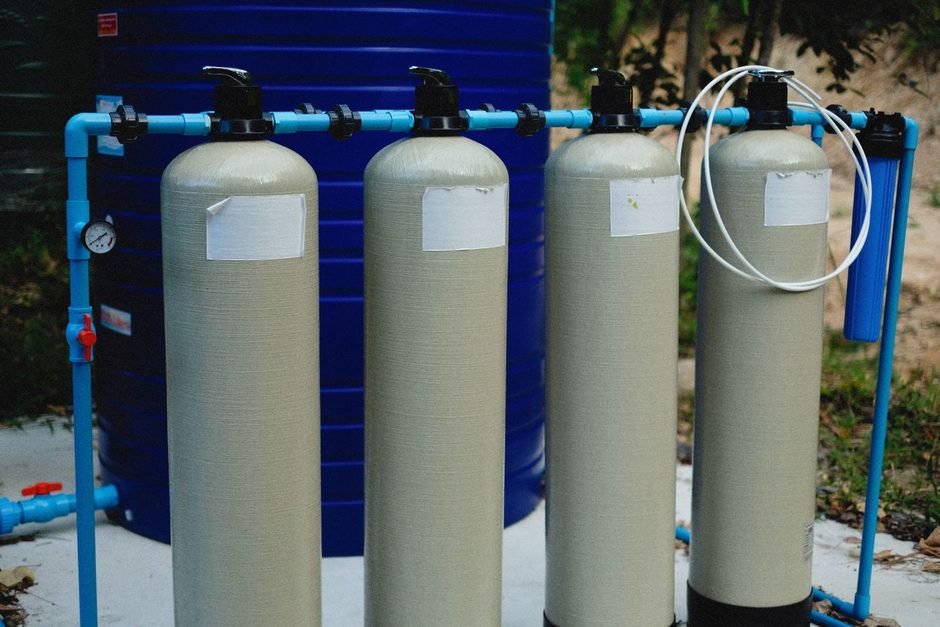
Someone in a Phoenix suburb opens Google at 7:40 a.m. because the kitchen tap smells like a pond and the well pump kicked on twice overnight. They are not browsing brands. They type “well pump repair near me,” “water softener install cost,” or “iron filter for well water,” then call the first shop that looks local, licensed, and available today. That is the buying moment search ads are supposed to catch for Water Treatment and Well Pumps companies across the US.
Owners who live this week know a “good week” is not a fat lead spreadsheet. It is booked diagnostics, softener installs, reverse-osmosis jobs, and emergency pump swaps that the truck can actually run. Paid search can fill that calendar when the query, the ad, the page, and the phone handoff all match. It burns cash when they do not.
This guide is an explainer for owners, founders, and marketing leads who run or buy PPC for water treatment and well pumps companies. We will walk how US buyers search and decide, what “good demand” looks like in dollars and booked work, and what has to be true before you scale spend. Primary focus stays on Google Ads and paid search: high-intent queries, negatives, call versus form, landing-page match, cost per booked job, and dayparting against real response capacity.
Water treatment and well pump companies serving Atlanta will see the metro mentioned in this guide, and the search ad advice applies directly to their territory. Well pump emergencies and whole-home filtration upgrades attract very different intent, so separate campaigns pay off. Target location: Atlanta. The Atlanta local firms page is the location overview for firms in Atlanta.
How US water and well buyers actually search before they hire you
Homeowners and property managers rarely start with your brand name. They start with a symptom or a system. Hard water scale on fixtures. Brown iron staining. Low pressure after a storm. A pump that hums but will not prime. A failed water test for a rental turnover. In markets like Dallas, Houston, Atlanta, and the Midwest freeze belt, season and weather spike those queries hard: summer irrigation load, freeze damage, drought-driven well issues, HOA water-quality notices.
Intent clusters matter more than a giant keyword dump. Emergency and failure language (“no water well pump,” “well pump not working,” “water softener leaking”) behaves like true demand. Problem-plus-solution language (“best water softener for well water,” “iron bacteria treatment,” “sediment filter whole house”) is still commercial, but the buyer may be price shopping two or three companies the same afternoon. Research language (“how does a water softener work,” “well vs city water hardness”) can educate, yet it rarely books a same-week job if you bid on it like it were emergency intent.
Decision criteria are blunt. Local presence and service radius. License and insurance signals. Reviews that mention well systems, not just “great plumber.” Clear offer: free water test, diagnostic fee that applies to install, same-day pump service, financing for whole-home treatment. Proof that you handle wells, not only municipal soft water. Property managers and multi-unit owners add another layer: after-hours response, invoice clarity, and one point of contact. Your ads and landing pages should speak that language, not generic “quality water solutions” copy.
Mobile carries most paid search clicks in home services. People standing at a sink or in a pump house want a tap-to-call path first. Forms still convert for planned softener replacements and multi-quote projects, especially in the evening. If your account only optimizes for form fills, you will underweight the jobs that start with a phone call and overpay for tire-kickers filling the same form on three competitor sites.
Good demand, in operational terms, is a lead your dispatcher can place on a route within your SLA, with enough job detail to send the right tech and parts.
Vanity CPL that ignores no-shows, wrong ZIP codes, and “just checking prices for a friend” is how water treatment PPC accounts look busy and still miss revenue targets.
Where PPC for water treatment and well pumps companies quietly fails
The failure mode is familiar if you have opened a Search terms report after a busy month. Broad or loosely themed campaigns pull in pool chemical shoppers, aquarium filter research, DIY softener salt deliveries, municipal water quality news, and “how to replace a well pump yourself” clicks. In this niche the leak is worse when one campaign tries to cover softeners, RO, UV, iron filters, and pump repair with one set of ads and a homepage destination.
Another break is metric choice. Teams celebrate a $45 CPL while booked-job cost sits north of what a diagnostic-plus-install can carry. Call tracking is missing or calls are not marked as conversions. Forms fire on “submit” even when the only field filled is a fake phone number. Smart bidding then optimizes toward cheap, low-intent conversions. In competitive water and well markets - Houston, Phoenix, Atlanta - CPCs for failure-intent queries routinely run $10-$25+, and broad softener terms aren’t cheap either. Rising CPC is structural, not seasonal, so every wasted click hurts more than it did two seasons ago.
Landing-page mismatch is the third killer. The ad says “same-day well pump repair in Houston.” The click lands on a brochure homepage with six service lines, a slow hero video, and a contact form buried under brand story. Mobile conversion already lags desktop by a wide margin in many accounts; a heavy page and vague proof make that gap worse. Most home-service pages fail at least one Core Web Vital - usually LCP or INP - because of unoptimized gallery images and map embeds.
Response capacity is the fourth. You bid into evening “no water” queries with no on-call tech. Leads stack in a shared inbox. By morning the homeowner already booked someone else. Dayparting and ad schedules that ignore crew availability turn high-intent traffic into expensive voicemail.
If your account still sends every water treatment click to the homepage, fix that before you raise budget. Dedicated message match beats more keywords. For a channel partner view of how paid search should sit next to the rest of demand gen, see HeyLead’s SEM / Google Ads work.
Get a free marketing audit - we review your search, ads, and landing pages and send back what to fix first.
Get a free audit
A practical Google Ads playbook built around booked jobs
Start with structure that mirrors how buyers talk and how your trucks run. Separate emergency pump and “no water” intent from planned treatment installs (softener, carbon, iron, RO). Keep whole-home treatment distinct from point-of-use if your margins and sales process differ. Geo-target real service ZIPs, not an entire MSA you cannot cover by 5 p.m. Use location exclusions for lakes, industrial parks, or neighboring counties you refuse.
Build negatives like a dispatcher, not like a thesaurus. Common drains: DIY, YouTube, salary, jobs, wholesale, parts only (unless you sell parts), pool, aquarium, coffee machine, refrigerator filter, “city water report,” free government programs you do not offer, and competitor pure brand terms you cannot win profitably. Review search terms weekly at first, then on a steady cadence once waste stabilizes. Ask any agency the same question buyers already ask in plain language: how do you handle negative keywords, and how fast do new junk terms get blocked?
Ad copy should promise the job, not a lifestyle. Lead with the system (well pump, iron filter, water softener for well water), the proof (licensed, local reviews, water testing), and the next step (call now, book diagnostic, schedule free hardness test). Sitelinks to specific services beat a single vague “Services” link. Call assets matter; make sure the number is tracked and that after-hours routing is honest in the ad schedule.
Bid and budget with capacity in mind. If two techs handle pump emergencies, do not run max conversion bidding into a Saturday night spike you cannot staff. Daypart around dispatch hours for emergency SKUs; keep broader hours for planned treatment quotes if evening form volume still books. New accounts under CPC pressure sometimes need tighter manual or portfolio controls until conversion volume supports smart bidding. Clean conversion setup beats clever bid strategies: primary conversion = qualified phone call over a minimum duration and/or form that sales marks as real opportunity. Enhanced conversions and consistent offline import of booked jobs protect signal quality when browsers and ad blockers drop 20%+ of noisy web conversions.
Landing pages must continue the ad. One primary offer, service-area clarity, well-versus-city proof, photo of real installs (not stock glass of water only), review snippets that name softeners or pumps, financing or diagnostic fee terms, and a short form plus sticky click-to-call. Match headline to the query theme. If you discuss Instant Forms versus full pages, remember: Instant Forms can raise volume and lower quality unless questions filter service type, water source (well vs city), and ZIP. Full pages win when you need proof and education for multi-thousand-dollar treatment systems.
When traffic still does not book, stop guessing from aggregate GA4 alone. Watch session recordings and heatmaps to see where homeowners stall on warranty fine print, long forms, or weak “well water” proof. HeyLead Insights is built for that post-click view so you fix the leak instead of pouring more CPC into it.
DIY playbook
-
Export the last 30-60 days of search terms. Tag each row emergency pump, treatment install, research/DIY, or irrelevant. Pause or negative anything that never produces a booked route.
-
Split campaigns or ad groups so well pump repair, water softener/well treatment, and iron/sediment/RO do not share one budget and one RSA set.
-
Write one landing page per major intent with headline match, well-water proof, ZIP or city list, and dual CTA (call + short form).
-
Implement call tracking with a minimum talk-time threshold and push qualified calls into the same conversion action used for bidding.
-
Align ad schedule to real on-call coverage for emergency terms; keep planned-install campaigns open where evening quotes still close.
-
Define cost per booked job: ad spend divided by jobs that reached a completed diagnostic or signed install in the CRM, not form count.
-
Add negatives weekly from junk themes (DIY, pool, jobs, wholesale) until waste search terms drop and stabilize.
-
Run page speed and CWV checks on every PPC URL; fix INP and load issues on mobile before scaling.
-
UTM every campaign and ad group so Google Ads, GA4, and the CRM tell the same story on source of booked work.
-
Only then raise budgets on the intent cluster with the best cost per booked job, not the lowest CPL.
Free tools - try these yourself
Niche teams that want channel work tied to water treatment and well pump growth programs can also review HeyLead’s Water Treatment and Well Pumps marketing page for how paid search sits inside a fuller home-services engine.
Two US scenarios where one PPC fix changed booked work
Here’s a pattern we see repeatedly in accounts like this: A well-pump company outside Houston ran a single Search campaign on broad match themes around “water” and “well.” CPL looked acceptable. Dispatch complained that half the calls were softener shoppers and DIY parts questions. The fix was mechanical: carve a pump-emergency campaign with exact and phrase themes on failure language, heavy negatives on softener and filter retail terms, call-only emphasis during crew hours, and a bare landing page with pump brands serviced, after-hours policy, and click-to-call. Softener demand moved to its own campaign with a treatment page and form-first path. Within six weeks, cost per completed pump diagnostic dropped from about $310 to $180. The owner stopped judging the account on blended CPL and started watching cost per completed pump diagnostic. The mechanism that mattered was not a new bid strategy. It was stopping two different jobs from competing inside one budget.
Here’s another composite pattern from accounts like this: A water treatment firm in the Phoenix metro spent into “water softener” terms that mixed city-water condo shoppers with well owners who needed iron and sediment stages first. Ads were generic. The page showed a smiling family and a softener tank, no well-water lab photos, no mention of pump pressure requirements. They rebuilt one well-water treatment page: source questions on the form (well vs city), expected hardness/iron ranges, photo proof of iron filter installs, and a booked water-test offer. Ads mirrored “softener for well water” and iron language. Qualified form submissions rose about 40% while raw lead volume fell roughly 15%, because sales stopped burning evenings on city-only price shoppers outside the service model. One concrete page-and-query match change did more than another month of keyword expansion.
Across both stories the pattern holds: PPC for water treatment and well pumps companies pays when structure, creative, page, and phone capacity describe the same job. In well-run accounts we’ve seen, cost per booked job - not blended ROAS - is the number that tells you whether to scale. Performance Max and broader automated surfaces can help once conversion quality is clean; they amplify mess when the only signal is a cheap form fill.
Patterns we see in audits
The short quotes below are illustrative composites drawn from patterns in account reviews. They are not quotes from named clients.
“We cut blended CPL in half once and still missed revenue, because half those forms were city softener tire-kickers. Cost per booked well job was the first metric that matched what the trucks actually did.” - Owner, water treatment company, Southwest US
“Search terms were full of DIY pump videos and pool filter junk. Weekly negatives and a call-length conversion finally stopped smart bidding from chasing the wrong wins.” - Marketing lead, well pump and treatment services, Texas
FAQs
What should we optimize for first: calls or forms?
Optimize for the path that books the job type. Emergency pump and no-water demand usually needs qualified calls with a minimum duration. Planned softeners, RO, and multi-stage well treatment often book through forms if the form asks water source, ZIP, and problem type. Track both, but set primary bidding conversions to the actions that become scheduled routes.
How tight should geo-targeting be for well and treatment ads?
Match the radius your techs can hit with honest ETAs. Wide MSA targeting looks like volume and produces out-of-area leads you will decline. Use radius or ZIP lists, exclude zones you do not serve, and say the service area on the landing page so paid clicks self-qualify.
When does Performance Max make sense in this niche?
After Search terms are clean, landing pages match intent, and offline or CRM-qualified conversions feed the account. PMax can drive strong ROAS in optimized accounts, but it will spend into shopping and display-like inventory that does not fit emergency pump work if your signals are weak. Keep high-intent Search intact for failure queries.
What is a sane way to judge CPC inflation?
Judge CPC against close rate and average job gross margin, not against last year’s CPC alone. Rising CPCs are common; accounts survive when negatives, page speed, and booked-job tracking improve conversion enough to carry the click. If CPC rises and booked-job cost rises with no close-rate plan, pause expansion and fix the funnel.
Should we use Google’s lead form extensions instead of our site?
They can work for simple quote requests if you add qualifying questions and fast follow-up. For complex well systems, a dedicated page with proof and clear diagnostic terms usually protects close rates better. Test with separate conversion actions so you can see booked-job rate by lead source.
How much should a water treatment company spend on Google Ads?
Plan on roughly $1,500-$3,000 per month as a minimum viable budget to get statistically meaningful data in a mid-size market. Below that, competitive CPCs for failure-intent and softener terms make it hard to learn which clusters actually book jobs before you cut or scale. Larger multi-crew markets often need more to cover both emergency pump and planned treatment intent without starving one budget.
Should we use Local Services Ads alongside Google Search?
For many local water and well companies, yes - LSA and Search work as a pair, not a substitute. LSA can capture high-trust “Google Guaranteed” demand for service calls when you meet the category and screening requirements; Search still wins for specific system queries (iron filter, softener for well water, RO, brand-plus-repair) and for markets or job types where LSA coverage is thin. Run them with shared negative discipline and the same cost-per-booked-job scoreboard so one channel does not quietly subsidize junk the other already filtered out.
Putting it to work
Execution sprint
This week
- Pull 30-90 days of performance for US water treatment & well pump (Search Console, ads, CRM, or call logs - whatever you have).
- Flag the top leak: wrong intent, weak page, slow response, or dirty conversion tracking.
- Ship one fix on the highest-traffic money path (page, campaign split, or response rule).
- Run the free tools below on that same URL or account and log the findings.
Free tools for this sprint
Next 30 days
- Expand the fix to the next one or two money paths only after the first one shows cleaner bookings.
- Align creative, keywords, or content with the same offer the page now states.
- Review booked outcomes weekly; cut anything that still only produces unqualified volume.
This week
-
Pull 30-60 days of search terms and mark waste versus pump emergency versus treatment install.
-
Add a first negative list for DIY, pool, jobs, wholesale, and off-niche filter queries.
-
Confirm call tracking and form goals fire only on qualified actions; remove page-view “conversions.”
-
Point your top spend ad group at one intent-matched landing URL, not the homepage.
-
Run the Core Web Vitals checker on that URL and fix the worst mobile issue.
-
Write cost per booked job on a simple sheet: spend / jobs sold from paid search.
Next 30 days
-
Split emergency pump and treatment campaigns with separate budgets and schedules.
-
Launch or refine one well-water-specific treatment page with source qualification on the form.
-
Import offline booked-job results into Google Ads on a weekly rhythm.
-
Review dayparting against real on-call coverage after two payroll cycles of data.
-
Scale only the cluster with stable cost per booked job; hold or cut the rest.
Use the free UTM, snippet, and CWV tools above if you want a clean DIY pass first. When the bottleneck is the full loop from high-intent water and well queries through negatives, call quality, and landing-page proof, a partner like HeyLead can run that SEM program against booked jobs rather than vanity CPL. Call us.
Free marketing audit, or reach Martin directly:
Get a free audit Chat with us on WhatsApp · [email protected]