
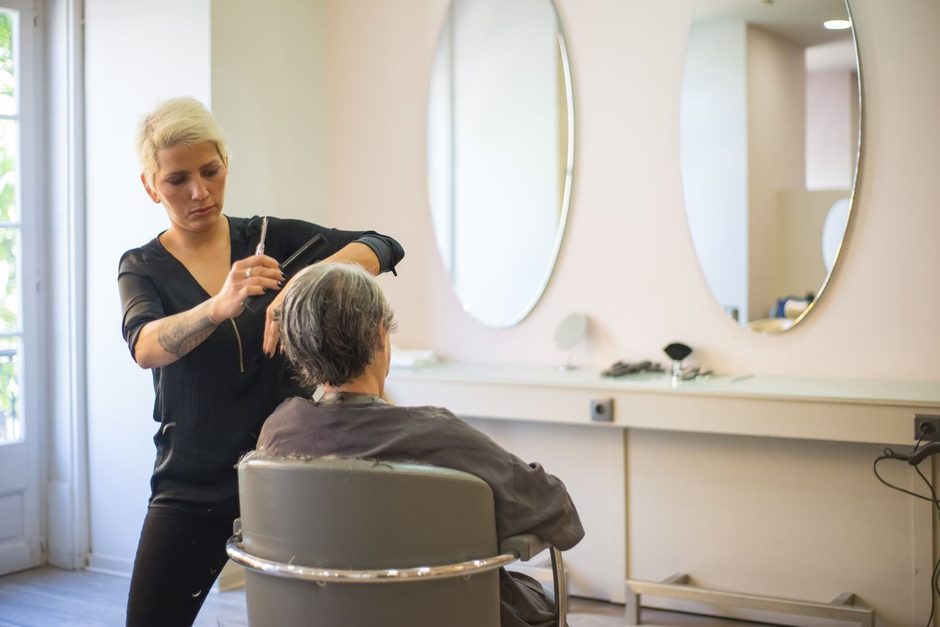
A color client in Dallas opens Google on a Tuesday evening, types “balayage near me open Saturday,” and picks from three map pins before she ever hits a website. That is the real buying path for most US hair salons: local, mobile, high intent, and impatient. The people who find you are not browsing for entertainment. They need a cut, color, extensions, or a bridal party slot, and they will book the salon that looks closest, most proven, and easiest to reach.
Local SEO for salons is not a content hobby. It is the system that decides whether those map-and-search moments land on your chair or your competitor’s. Done well, it fills the book with services you actually want. Done poorly, it burns budget on vanity rankings, thin blog posts, and forms nobody answers. This piece separates the two.
When high-intent salon searches stall before the book button
US salon demand clusters around a short list of intents: “hair salon near me,” neighborhood plus service (“keratin treatment Scottsdale”), stylist or specialty terms (“curly cut,” “silk press,” “men’s fade”), and occasion searches (“bridal hair trial,” “prom updo”). Those queries convert because the searcher already decided they need the service. The failure is almost never “we need more traffic.” It is that the traffic hits a weak local presence, a slow site, or a page that does not prove the service they asked for.
You will usually find the leak in one of three places. First, Google Business Profile is incomplete or stale: wrong hours, missing services, old photos, review replies that stopped six months ago. Second, the website treats every service like a paragraph on a homepage instead of a dedicated page with pricing cues, before-and-after proof, and a clear booking path. Third, response time kills the lead. A form or call after 9pm that sits until Monday morning is not a lead. It is a lost appointment that booked elsewhere by brunch.
Salon owners feel this as empty midweek chairs and a weekend book that fills only from Instagram DMs and walk-ins. Marketing leaders feel it as rising organic sessions with flat booked appointments. The metric that matters is not “keywords in position 1-3.” It is cost per booked service from organic: how many color consultations, cuts, and treatments came from search last month, at what effective cost in time and agency fees. If you cannot answer that, SEO is operating as a vanity channel even when the rankings look fine.
Zero-click search makes this sharper. A large share of Google searches end without a site visit, and map packs plus AI summaries pull attention before your homepage loads. That does not kill local SEO. It raises the bar on entity clarity: your NAP consistency, service categories, reviews, and on-page proof have to win the impression you do get. Ranking without converting is how budget disappears quietly.
SEO spend that looks productive and still wastes the budget
Plenty of salon SEO retainers still optimize for the wrong scoreboard. Ranking for “best hair salon” in a metro like Los Angeles or Chicago feels good in a monthly deck. It rarely fills a four-chair color bar if the page has no service menu, no stylist bios, and a generic contact form. Broad head terms attract tire-kickers, students doing research papers, and people outside your drive-time radius. You pay for content and links aimed at authority theater, then wonder why the phone stays quiet on Tuesdays.
Another common drain is blog volume without local service intent. Posts like “10 hair trends for summer” can rank and still produce zero appointments if they never connect to a bookable service, a city landing page, or a clear next step. The share of top-ranking pages using some form of AI-assisted writing has climbed sharply - information gain, not volume, is now the differentiator. Shipping more generic posts is not a moat. A Phoenix salon that publishes a real guide to color correction after Arizona sun damage, with process photos, pricing bands, and the stylist who owns that work, beats ten recycled trend lists.
Technical busywork also burns cash. Agencies will rebuild sitemaps, chase exact-match citations, and “optimize” title tags weekly while Core Web Vitals drag on mobile. As of 2024, Google’s CrUX data shows roughly 56% of origins pass all three Core Web Vitals (Google Chrome UX Report). Salon booking widgets and appointment plugins are frequent offenders on mobile. Salon traffic is heavily mobile. If your booking widget janks on a mid-range Android in Houston traffic, you are paying for clicks that bounce before the calendar loads. That is not an SEO win. It is paid-for friction.
Tracking gaps finish the waste cycle. If organic calls are not tagged, form submissions are not tied to service type, and “leads” include spam and job seekers, the team keeps funding pages that look busy. Wait too long to reallocate and the cost is quiet but real: months of content against keywords that never book color, extensions, or bridal work. For a practical view of how SEO should connect rankings to booked work rather than report theater, the channel work has to start from service intent and close the loop to the chair.
Get a free marketing audit - we review your search, ads, and landing pages and send back what to fix first.
Get a free audit

The local SEO stack that actually books hair services
What works for US salons is unglamorous and specific. Start with Google Business Profile as a booking asset, not a listing. Primary category and secondary categories should match what you sell. Services should list the real menu: women’s cut, men’s cut, balayage, highlights, silk press, locs maintenance, keratin, extensions, bridal trial. Photos need weekly freshness: chair work, color bowls, finished looks, the front desk, parking if it matters. Review velocity beats perfect 5.0 scores with three reviews. Reply to every review with something concrete, not “thanks for coming in.”
Build service-plus-location pages that match how people search. One page for “balayage in Atlanta Midtown” is more useful than a single Services page with eight H2s. Each page needs proof: 3-5 before-and-after sets, who performs the service, time-in-chair expectations, starting price or range in USD, and a single primary CTA (book online or call). Mention nearby landmarks and neighborhoods sparingly and naturally. Fake city pages with spun paragraphs get filtered. Real pages for real chairs you staff do not.
Entity consistency still moves local pack visibility. Same name, address, phone across site footer, GBP, Apple Business Connect, Yelp, and major directories. Schema markup helps machines parse what you actually sell: LocalBusiness for the salon entity, Service (with name, serviceType, areaServed, and priceRange) for each bookable offer, and FAQPage for pre-book questions you already answer on-site. Most salon booking platforms - Vagaro, Booksy, and similar plugins - either omit this structured data or emit conflicting markup that competes with your own. Check the rendered HTML for duplicate LocalBusiness nodes, missing serviceType values, and stale priceRange fields after every platform update. Internal links should push authority toward money pages, not the blog archive. If you run multiple locations in markets like Miami and Chicago, each location needs its own GBP, its own landing page, and its own review stream. Shared “locations” pages with a map embed are not enough.
Content cadence matters once the foundation is solid. You do not need a newsroom. You need a sustainable rhythm of pages and posts that answer real pre-book questions: how long does a full highlight take, what to expect at a curly cut consult, how bridal trials work, how to prepare for a silk press in humidity. HeyLead’s Auto Blogger is built for that kind of niche-and-region publishing under human strategy, so a salon group can stay visible without hiring a full-time writer for every market. The win is not more URLs. It is steady coverage of the intents that already convert for your chairs.
After the click, proof and speed decide the appointment. Session recordings and heatmaps show where people stall: buried prices, a book button that competes with three popups, a form asking for too much before they know the deposit. Tools like HeyLead Insights make those leaks visible so you fix the page instead of guessing. Pair that with call tracking on organic landing pages and a same-day reply standard for web leads. Local SEO that stops at rankings leaves money on the map pack.
Two US salon scenarios and the one change that moved the book
A four-chair color salon in Houston was ranking for “hair salon near me” and still watching midweek color chairs sit empty. Traffic looked healthy in Analytics. Booked color consultations did not. The mechanism was blunt: every high-intent keyword pointed at the homepage, which opened on a full-bleed brand film, a vague “Book a look” button, and no starting prices. Mobile users scrolled past lifestyle shots, never found balayage or highlights as distinct offers, and left. The fix was three dedicated service pages (balayage, full highlights, gloss) with before-and-afters from their own chairs, a $185+ starting cue on balayage, and a sticky “Book color consult” CTA. Salons that make this change typically see booked consults double within a quarter - the mechanism is a clearer landing path, not a rankings jump. Rankings barely changed. The landing path did.
Steps they actually ran:
-
Mapped the top 20 converting queries from Search Console and call notes, then assigned each to one service page.
-
Pulled 12 real client photo sets with written permission and tagged the stylist on each page.
-
Added GBP services and weekly photo uploads so map pack clicks matched on-site messaging.
-
Routed organic forms to a shared inbox with a 2-hour daytime SLA and after-hours auto-text.
A multi-location group across Phoenix and Scottsdale had the opposite problem: lots of blog output, thin local entity strength. They published three posts a week on trends and celebrity cuts. Organic sessions climbed. Appointments from search stayed flat. The waste was clear once they filtered by landing page. Trend posts drove 70%+ of sessions and almost no bookings. Money pages for extensions and keratin sat on page two with thin copy and one stock image. They paused trend volume, consolidated overlapping posts, and rebuilt two location hubs plus four service pages with neighborhood proof and review embeds. Publishing dropped to two deep pieces a month plus ongoing GBP work. Booked extension consults from organic rose meaningfully over the following quarter while content cost fell - intent coverage replaced volume as the operating metric. Volume was the wrong metric. Intent coverage was the right one.
If you want a channel partner already inside this niche, HeyLead’s Hair Salons marketing work is built around booked services, not vanity traffic reports.
Action checklist
Action checklist for hair salons
Use this as a working checklist for hair salons - specific steps you can run this week, not theory.
- Map the last 90 days of Search Console queries for hair salons into intent clusters that match how buyers actually book (high-intent service terms vs pure DIY research).
- Pick one money page that should own the primary commercial query in your US market. Demote or 301 any blog that outranks it for that term.
- Rewrite that page with a single primary CTA, proof above the fold, financing or pricing clarity where relevant, and a short form (name, phone, need, preferred time).
- Align Google Business Profile categories, services, hours, and real photos with the same money services (every location if multi-site).
- Add internal links from the top 5 support URLs into the money page with descriptive anchors.
- Track calls and forms by landing page for two weeks before you fund more content volume.
- Only then brief one support article that answers a pre-purchase question and links back to the money page.
Free tools - try these yourself
If the checklist shows a leak you cannot close in-house this month, request a free marketing audit - we will prioritize SEO, ads, and landing pages around the same outcome metrics above.
Common questions on local SEO for US hair salons
How long before local SEO fills the appointment book?
Expect meaningful movement in 3-6 months if GBP, service pages, reviews, and tracking are in place. Faster claims usually mean temporary map boosts or paid traffic mislabeled as organic. Salons with clean NAP and strong review velocity often see call lift earlier than big content wins.
Should we chase citywide “best salon” keywords or neighborhood service terms?
Lead with service-plus-neighborhood and “near me” coverage tied to real chairs. Citywide vanity terms can support brand later. They are a poor primary bet when you need balayage, cuts, and bridal trials on the books this quarter.
Is blogging still worth it for a single-location salon?
Only when posts answer pre-book questions and route to a service page with proof and a CTA. Generic trend content rarely pays. Two solid local pieces a month beat eight thin posts.
What should we track beyond rankings?
Organic calls, form-to-book rate by service, show rate, and revenue from first-time guests who came from search. If you cannot separate organic booked color from Instagram walk-ins, you cannot manage the channel.
Do we need a different site for each location?
Not always a separate domain, but each location needs its own GBP, landing page, reviews, and service proof. Shared thin location blocks underperform in competitive metros like New York, Los Angeles, and Miami.
Putting it to work
Execution sprint
This week
- Pull 30-90 days of performance for hair salons (Search Console, ads, CRM, or call logs - whatever you have).
- Flag the top leak: wrong intent, weak page, slow response, or dirty conversion tracking.
- Ship one fix on the highest-traffic money path (page, campaign split, or response rule).
- Run the free tools below on that same URL or account and log the findings.
Free tools for this sprint
Next 30 days
- Expand the fix to the next one or two money paths only after the first one shows cleaner bookings.
- Align creative, keywords, or content with the same offer the page now states.
- Review booked outcomes weekly; cut anything that still only produces unqualified volume.
Next 30 days
- Expand the fix to the next one or two money paths only after the first one shows cleaner bookings.
- Align creative, keywords, or content with the same offer the page now states.
- Review booked outcomes weekly; cut anything that still only produces unqualified volume.
Next 30 days
- Expand the fix to the next one or two money paths only after the first one shows cleaner bookings.
- Align creative, keywords, or content with the same offer the page now states.
- Review booked outcomes weekly; cut anything that still only produces unqualified volume.
Free marketing audit, or reach Martin directly:
Get a free audit Chat with us on WhatsApp · [email protected]