

The listing agent already has three stagers on her shortlist. She is not browsing a mood board. She is typing “vacant home staging near me,” “furniture rental for listing photos,” and “model apartment styling for a 2-bed in [neighborhood]” because the photographer is booked for Thursday and the seller wants the first open house to look lived-in, not leftover. If your firm is not the page that answers those jobs with proof, you are not in the comparison. You are the PDF she never opened.
SEO for home staging and styling companies is not a blog about throw pillows. It is how you show up when a realtor, developer, or landlord needs a room-by-room plan, a furniture inventory, and a crew that can install and reverse without wrecking the calendar. Paid search can fill gaps.
This piece is a working map: which queries actually book installs, how to structure pages so Google (and AI Overviews) can cite you, the measurement that still matters when 68% of searches end without a click, and a checklist you can run without rebuilding the whole brand site.
The queries that book installs, not “interior inspiration”
Home staging firms lose rankings when they write like magazines. “Five spring color palettes” does not match “stage a vacant 3-bed before listing photos.” The buyer is a marketing decision-maker at a brokerage, a new-build sales office, or a property team that owns absorption. They search like operators: city plus service, property type plus deadline, “occupied staging vs vacant,” “rental furniture for MLS,” “model unit styling,” “declutter and style before open house.”
Map intent in three buckets. High intent: “[city] home staging company,” “vacant home staging,” “apartment staging for sale,” “model home styling,” “listing photography staging.” Mid intent: “how long does staging take,” “staging cost per room,” “furniture rental vs buy for listings.” Low intent: trend pieces that never mention a crew, a reverse date, or a before/after of a real listing. You still need a few of those for information gain: recent core updates have rewarded information gain over thin trend content - a pattern Google has signaled will continue. Volume is a dead metric. The pages that move the needle add facts a realtor cannot get from a Pinterest board: install windows, typical reverse time, what happens if the first offer falls through.
AI Overviews now appear on more than 20% of queries in the US, according to SEMrush and BrightEdge tracking. Ranking without being citable is a vanity win. Write the answer in the first 80 words: who you stage (vacant, occupied, new-build models), typical turnaround, service area, and what the agent gets (styled rooms, inventory, photo-ready timeline). Then prove it with a named property type, not a stock living room.
If they say they will “just send traffic to the homepage,” you already know how that ends. A homepage that mixes commercial styling, color consulting, and a shop-the-look catalog splits relevance. Dedicated service URLs win the comparison: one for vacant listings, one for occupied homes, one for model apartments, one for furniture rental packages. Match H1 and title to the job. “Home staging for vacant listings in [metro]” beats “Our services.”
Soft check: pull Search Console for 90 days, filter queries that contain stage, staging, styling, vacant, occupied, model, MLS, listing, realtor. If the money terms land on a generic About page, that is the leak, not “algorithm volatility.”
Pages, proof, and speed that survive zero-click search
Staging sites fail INP because galleries of 4K room shots load as one dump, and the quote form sits below a 40MB carousel. Mobile is most of the realtor’s research. If Interaction to Next Paint stalls while they pinch a kitchen photo, they bounce to the next firm. Compress, lazy-load below the fold, and keep the primary CTA (request a walkthrough, send listing address, book a 20-minute consult) in view without waiting for masonry to settle.
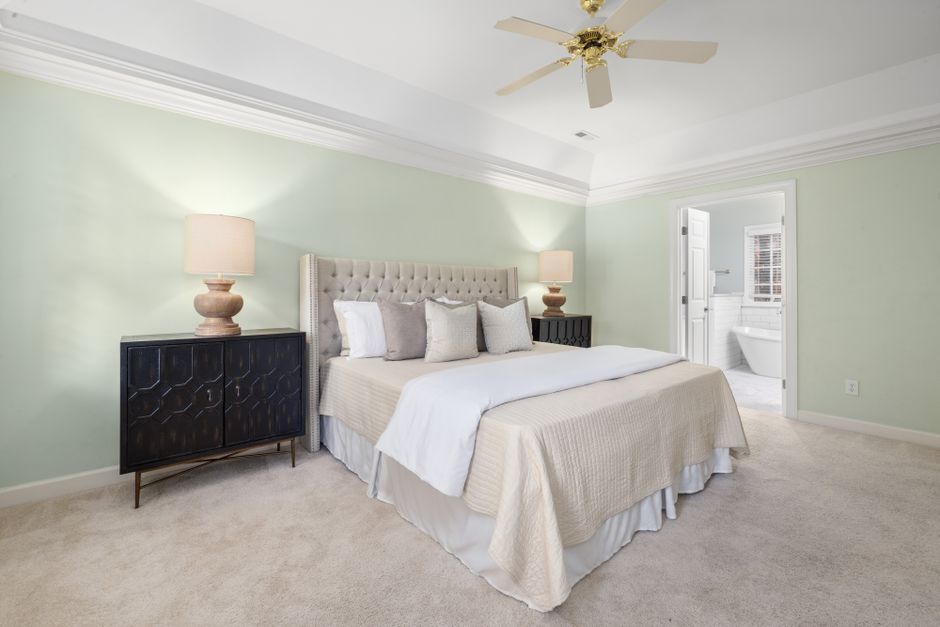
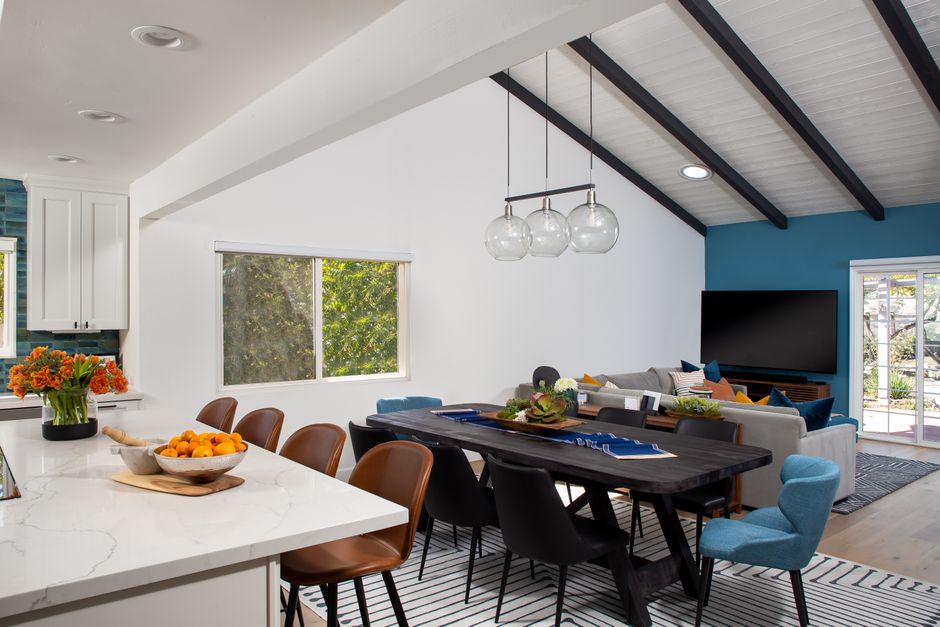
Proof has to be operational. Before/after of a 1,140 sq ft condo with the same camera angle. A line on how many rooms you staged in 48 hours. Inventory notes: sofa scale for a 12-foot wall, kids’ rooms you can neutralize without looking sterile. Agents compare “will this photograph” not “do they have a nice logo.” Schema for LocalBusiness, Service, FAQ, and ImageObject on the before/after set helps both classic blue links and generative answers. Generative copy is now common even on top-ranking pages - which makes original operational detail the actual differentiator. That is not a license to publish slop. Human perspective (what broke on a reverse, which rooms agents always under-stage) is what gets cited.
Watch form friction the same way you watch rankings. If the walkthrough request asks for square footage, listing date, occupied vs vacant, and photos, you will lose the agent who has 11 minutes between showings. Capture address and property type first. Use HeyLead Insights on the service pages to see where they stop scrolling: usually the inventory grid with no prices, or a contact form that demands a full design brief before anyone will talk.
If organic traffic hits a homepage that does not match the query, paid will not save you either. Align the landing experience to the keyword cluster. When you are ready for a partner to own that SEO-to-page loop, HeyLead SEO services are built around those service URLs, not a single brochure site.
Audit scorecard
-
Intent inventory
Export 90 days of queries. Tag vacant, occupied, model unit, furniture rental, city modifiers, and “near me.” Count how many of those URLs are unique service pages versus blog posts.
-
Title and H1 match
Each money URL should name the job and the business type (staging company, styling firm). Run a title tag and H1 pass so “staging” is not buried under a brand slogan.
-
Photo proof that ranks
File names, alt text, and captions should include property type and room, not “IMG_4402.” Pair each gallery with the listing outcome you can legally share (days on market is optional; photo-ready date is not).
-
Core Web Vitals on gallery templates
Test the heaviest before/after template, not the homepage. INP and LCP on that template decide whether a realtor stays long enough to request a walkthrough.
-
Local pack and GBP categories
Primary category should match how agents search (home staging service). Photos on the profile should be installs, not studio portraits. Posts should announce capacity for the next two weekends of listing photography, not generic tips.
-
FAQ that AI can lift
Answer cost ranges as ranges, reverse timelines, occupied-home rules, and what the agent must provide. Mark them up. Vague “it depends” blocks do not get cited.
-
Internal links from listings you already staged
Case URLs should link to the matching service page and city page. Orphan galleries waste equity.
-
Index and canonical hygiene
Filter pages, tag archives, and duplicate city copies should not compete. Confirm indexation on the money URLs only.
Get a free marketing audit - we review your search, ads, and landing pages and send back what to fix first.
Get a free audit
A staging-firm SEO playbook you can run without a 40-page deck
Treat this as an operating sequence, not a philosophy. You are building a small set of pages that can earn walkthrough requests, then feeding them with content that has information gain: real constraints, real rooms, real calendars.
Action checklist
- Pick four money pages: vacant listing staging, occupied home styling, model apartment / new-build staging, and furniture rental packages. One H1 each. One primary city if that is 80% of jobs.
- Write the first 80 words as the answer an AI Overview would quote: who, where, turnaround, what the agent receives. Then the gallery and a short process (walkthrough, proposal, install, reverse).
- Add 6-8 FAQs per page using language from real RFPs: kids’ rooms, pets, HOA rules, same-week photography, partial staging of kitchen and living only.
- Create two comparison pieces that still name the business: occupied vs vacant for listing teams, staging vs interior design for brokerages that confuse the two. Do not write consumer “should I stage my house” copy as if you were coaching homeowners.
- Ship one project URL per month with the same camera angle, room labels, and a note on install hours. Link it to the matching service page.
- Fix the template that hosts galleries first. Recheck Core Web Vitals after compression, not before.
- Track walkthrough requests and booked installs as conversions, not newsletter signups. If 20%+ of conversion data is missing to blockers and privacy, you will train the wrong story in GA4. Use server-side or enhanced conversions where you also run ads.
- Keep publishing cadence on those four clusters. Thin weekly posts about “trends” dilute the site. Depth on the jobs you sell beats a 40-URL graveyard.
Free tools - try these yourself
Need a publishing engine once the four money pages exist? HeyLead Auto Blogger is the managed cadence layer for region- and niche-aware articles under human strategy, so you are not asking a stylist to also be a weekly editorial team.
A regional firm we see often had “portfolio” as one infinite scroll. Vacant condos, luxury occupied homes, and a commercial lobby shared one URL. Rankings sat on branded queries only. Splitting vacant vs occupied, rewriting titles to name staging companies (not “for staging”), and cutting the hero video that delayed INP moved walkthrough form starts in 11 days. The mechanism was relevance plus speed, not a new brand film.
What to measure when last-click and AI Overviews both lie
Last-click will credit the branded search after the agent already saw you in Maps, an Overview, and a project URL. That is not a reason to abandon SEO. It is a reason to stop arguing about which session “owned” a $4,800 vacant package. Track assisted walkthroughs, branded vs non-branded landing, and whether non-brand pages still earn impressions when CTR falls because the Overview ate the click.
Search Console’s generative surfaces matter more than a vanity CTR target. Impression share on “vacant home staging [city]” with a falling CTR can still be a win if you are the cited brand. Pair that with CRM stages: inquiry, site visit, proposal, install. Quality leads, not more leads, is the language staging owners already use when a DIY blog floods them with homeowners who wanted a $200 color consult.
Do not promise a ranking date. Honest SEO for this niche is a 3-6 month compounding program: pages, proof, speed, local pack, then content that adds information gain. Guaranteeing position one before you have seen the gallery template is the same empty promise as guaranteed ROAS on a cold Google Ads account.
When paid is in the mix, keep landing pages identical in message. Organic and paid fighting over the same homepage burns budget regardless of your ROAS target. Organic should occupy the same intent so you are not renting every “staging company” click forever.
What we see repeatedly in audits
Firms ranking for “interior design ideas” wonder why listing agents never call. The moment vacant staging sits on its own URL, the walkthrough form starts filling. Gallery pages fail INP on mobile, so agents never reach the quote fields. Compressing the before/after set does more than another month of blog posts. That is the pattern we see repeatedly in HeyLead audits: split the job onto a dedicated service URL, make the gallery fast enough to use, and stop sending high-intent queries to a mixed homepage.
FAQs
Should staging companies still invest in SEO if AI Overviews steal clicks?
Yes, if you write to be cited. Overviews reduce clicks even when visibility rises. The firms that show up in the answer, the local pack, and the first organic result still take the walkthrough. Pages that only chase volume without facts get summarized and skipped.
Is keyword research in Ahrefs enough, or do we need an SEO program?
Research tools find gaps. They do not compress galleries, write occupied-home FAQs, fix canonicals, or ship monthly project URLs. The program is the pages, proof, speed, and measurement. Tools are the inventory step.
How many location pages should a staging company publish?
Only metros where you actually install and reverse. Thin city copies with the same three paragraphs get filtered. One strong city page plus service pages beats ten ghost towns.
What conversions should we send to GA4?
Walkthrough requests, listing-address submits, and booked installs. Not “time on page” and not a general contact form that mixes vendors, job seekers, and agents.
Where does content cadence fit once the service pages exist?
One deep project or comparison piece in the four clusters beats five trend posts. Keep human edits on anything that claims timelines or costs. AI draft plus stylist review is fine. Unedited AI on pricing is how you lose trust with brokerages.
Putting it to work
Execution sprint
This week
- Pull 30-90 days of performance for home staging and styling (Search Console, ads, CRM, or call logs - whatever you have).
- Flag the top leak: wrong intent, weak page, slow response, or dirty conversion tracking.
- Ship one fix on the highest-traffic money path (page, campaign split, or response rule).
- Run the free tools below on that same URL or account and log the findings.
Free tools for this sprint
Next 30 days
- Expand the fix to the next one or two money paths only after the first one shows cleaner bookings.
- Align creative, keywords, or content with the same offer the page now states.
- Review booked outcomes weekly; cut anything that still only produces unqualified volume.
This week
-
Export Search Console queries that contain stage, staging, vacant, occupied, model, or MLS.
-
List which of those land on a unique service URL versus the homepage.
-
Rewrite one H1 and title so it names staging companies and the job (vacant, occupied, or model).
-
Run the heaviest gallery template through a Core Web Vitals check and compress what fails LCP or INP.
-
Add three agent-language FAQs to that URL and validate FAQ schema.
-
Set walkthrough request as a conversion if it is still a generic “contact.”
Next 30 days
-
Split vacant vs occupied if they still share one page.
-
Publish one project URL with matching internal links.
-
Align Google Business Profile photos and categories to installs, not studio shots.
-
Reconcile organic landing pages with any Search campaigns so you are not paying for the same mismatch.
-
Review impression vs CTR on money terms after Overview presence, not CTR alone.
Start by tagging 90 days of queries against those four jobs (vacant, occupied, model, rental furniture) and fixing the first URL that is doing two jobs at once. If you want a partner to own the clustering, service-page SEO, gallery performance, and the content cadence that keeps staging firms visible when agents search under deadline, HeyLead will take that specific program off your plate. Chat with us on WhatsApp
Free marketing audit, or reach Martin directly:
Get a free audit Connect on WhatsApp · [email protected]