
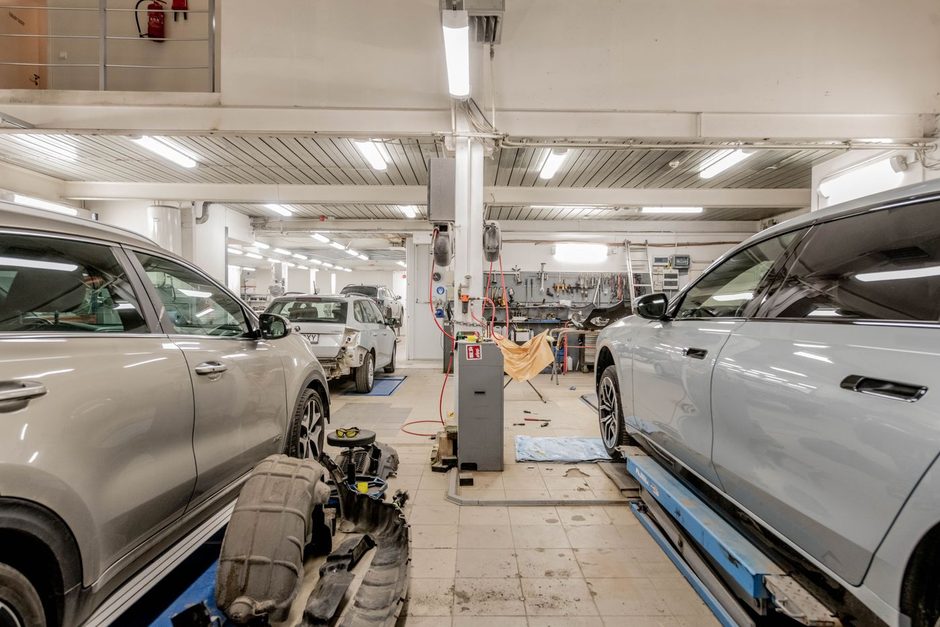
By 8.12am the workshop WhatsApp already has bumper photos from a PIE scrape, a side-mirror hanging off a Grab car, and a cash customer asking for a same-day spray in Tampines. None of those people typed your brand. They typed “panel beating near me”, “car accident repair Singapore”, or a Mandarin query your English homepage never answers. SEO for body shops in Singapore is not a blog calendar. It is the fight to be the workshop that shows up when the owner is still at the scene, insurance details half-remembered, and the bay calendar still has holes.
Organic, treated like a booking system, owns the same intent at lower cost. A typical Singapore body shop does not have a SaaS-style funnel. You win or lose on whether organic listings, the map pack, and the first mobile page match cash jobs versus insurer jobs.
This piece is for marketing owners at body shop companies, panel beaters, and accident repair centres operating in Singapore: English and Chinese search, HDB car parks, insurer panels, and walk-ins who still call from the hard shoulder. You will get a working page map, a measurement loop that counts booked repairs, and a sprint you can start without another strategy deck.
Cash jobs versus insurer jobs: two Singapore searches that look identical
A “Honda Fit bumper repair Jurong” query can be a $180 cash spray or a full insurer claim with a surveyor photo set. Google does not split those for you. If your title tags all say “auto body shop Singapore”, you rank for both and your estimator spends the afternoon quoting jobs you cannot take because the car is not on panel, or because the owner wanted a cheap colour-match and you priced a structural repair.
Walk the last 90 days of inbound calls and WhatsApp threads. Tag each one: cash, insurer, fleet, or tyre-kicker. You will usually find cash jobs cluster around neighbourhood language (Tampines, Woodlands, Ang Mo Kio, “same day”, “walk in”) while insurer jobs cluster around “accident”, “claim”, “surveyor”, “repairer list”. Rankings that mix those intents fill bays with the wrong mix. Volume is a dead metric here. Information gain is whether the page tells the searcher, in the first screen, whether you take their job type.
AI Overviews now sit on a large share of generic “car repair” questions and cut click-through when the answer is a bland list of workshops. Google AI Overviews reach on the order of 2 billion monthly users globally. Your pages need specifics Singapore searchers can use: waiting time for a loan car, whether you handle pickup from an HDB multi-storey, whether you work with their insurer, whether you quote from photos on WhatsApp. Thin “we care about your car” paragraphs will not be the thing that gets cited. Oddly specific process copy will.
Zero-click search is real (a large share of US searches ended without a click in early 2026; Singapore follows the same SERP furniture). Treat impression share and map actions as leading indicators, then force the click with a reason to call: photo quote, same-day spray slots, or “we are on your insurer’s list”. If you only chase “rank #1 for body shop”, you will win impressions and still lose the bay.
If the split between cash and claim intent is already leaking estimator time, a partner that lives in SEO services for local operators can rebuild the page map around those two jobs instead of one generic workshop homepage.
What a Singapore workshop page must prove before the call
Most body shop sites still send every query to the homepage: a hero slider, a 2019 BMW after shot, and a form that asks for “message”. Mobile is more than 63% of paid search clicks globally, and organic local search is even more thumb-driven. Conversion on mobile still lags desktop by 30-40% when the page is heavy. If your photo gallery of repaired doors is 8MB, the owner on 4G at the accident scene bounces before they see your WhatsApp button.
Proof that books bays in Singapore is not a stock “ASE certified” line. It is: LTA-related repair language used carefully (you are not the authority, you are the workshop), insurer names you actually work with, before/after of the same colour codes you spray every week, and a clear cash versus claim path. Put the WhatsApp number as a tap target. Put operating hours that match when accidents happen, not only 9-6. Put a map pin that matches the unit number in an industrial estate, because Jurong and Woodlands searches punish wrong pins.
Language is a ranking and conversion issue. Plenty of owners search in English after a Grab trip. Plenty of others search in Chinese for 钣金, 喷漆, or 车祸维修. One English homepage with a Google Translate widget is not a Chinese landing page. You need separate titles, FAQs, and NAP consistency in both languages, or you train Google that you are an English brochure site.
Post-click, watch where thumbs stall. Heatmaps and session recordings (use HeyLead Insights on the quote and contact templates) usually show the leak: the insurer list is below the fold, the photo-upload field is desktop-only, or the H1 says “automotive excellence” while the query was “rear bumper scratch Bedok”. Fix the first screen before you commission another blog about “how to avoid a scratch”.
Get a free marketing audit - we review your search, ads, and landing pages and send back what to fix first.
Get a free audit
A working SEO playbook for Singapore body shop marketers
Do not start with more posts. Start with the queries that already produce calls, then build one URL per job that pays. Below is an ordered build you can run against your own Search Console and GBP.
-
Export 90 days of GBP calls, website calls, and WhatsApp first messages. Label cash, insurer, fleet, no-show. Keep the three job types that actually fill bays.
-
Map each job type to one URL: cash bumper/spray, accident/claim repair, and (if you do it) alloy or PDR. Do not dump all three onto /services/.
-
Rewrite title tags to neighbourhood plus job, not brand plus “body shop”. Example pattern: “Cash bumper repair in Tampines | photo quote same day”.
-
Put the first 150 words in the searcher’s language: what you need from them (photos, insurer, chassis number), what happens next (quote window, loan car, collection from HDB), what you will not do (total-loss negotiation you cannot own).
-
Align Google Business Profile categories and services to those URLs. Primary category should match how locals search (auto body shop / dent repair), not a leftover “car dealer” category from an old GMB claim.
-
Add FAQ blocks that match real estimator questions: “Do you work with my insurer?”, “Can I wait?”, “Do you collect from the carpark?”. Mark them up with FAQ schema only if the questions are visible on the page.
-
Build one Chinese page per high-volume English job page if those queries already appear in Search Console. Mirror NAP, hours, and WhatsApp. Do not machine-translate the legal or insurer lines without a native check.
-
Compress every before/after set. Run a Core Web Vitals pass on the quote template, not only the homepage. INP on the WhatsApp click and the form submit is the metric that matches a stressed driver.
-
Internal links from the homepage and blog only to those money URLs. Kill orphan “our process” pages that rank for nothing and steal crawl budget.
-
Track booked repair (estimate accepted or drop-off logged) as the conversion, not “form submit”. If the car arrives without a form, the staff still need a source field on the job card.
-
Revisit queries monthly for new junk: windscreen-only, detailing, used-car inspection, P-plate coaching. Add those as content exclusions or GBP Q&A answers that point away.
-
When AI Overviews appear on a head term, tighten the page’s unique facts (hours, pickup radius, insurers, typical cash price bands) so you remain the cited workshop, not a generic listicle.
DIY tools for this section: the local SEO checklist for GBP and NAP, the Google index checker for new job URLs, the Core Web Vitals checker on mobile quote pages, the schema markup validator for LocalBusiness and FAQ, the title tag checker before you publish neighbourhood titles, and a GEO audit if AI answers are eating your “near me” clicks.
A Tampines operations manager we worked alongside (role, not a case-study parade) had two ranking URLs for “panel beating” and still missed cash spray jobs because the H1 mentioned “collision centre” only. They split a cash-spray URL, put WhatsApp photo instructions above the fold, and the mix of booked jobs shifted within a few weeks. One change: the page finally matched the query. That is the whole mechanism.
Patterns we see in audits
The short quotes below are illustrative composites drawn from patterns in account reviews. They are not quotes from named clients.
“We ranked for ‘body shop Singapore’ and the phone rang. Half were windscreen and detailing. The week we split cash spray from claim repair in the titles, estimator time stopped disappearing into quotes we would never take.” - Head of Marketing, multi-site workshop group

FAQs
How long before SEO fills bays for a Singapore body shop?
Map pack and GBP hygiene can move calls in weeks if the pin, categories, and reviews are already clean. New job-type landing pages typically need a few months of consistent titles, internal links, and reviews that mention the actual work (bumper, spray, claim). Anyone promising a full organic calendar in seven days is selling a different product.
Should we still run Google Ads while organic ramps?
Yes, on the same job-type split. Do not send ads to the homepage. Use the cash and claim URLs you just built. Expect wasted query spend if negatives are ignored; 20-30% leakage is common when “repair” also matches phones and computers. Organic then inherits the winners.
Do we need Chinese pages if most reviews are in English?
If Search Console already shows 钣金, 喷漆, or location plus 车祸, yes. Reviews in English do not satisfy a Chinese SERP. Keep NAP identical. Have a native speaker check insurer and liability lines.
What should we track instead of ranking position?
Booked drop-offs and accepted estimates by source (GBP, organic job URL, branded search). Call duration helps, but a 40-second “are you a detailing shop?” call is not a win. Tie the job card to the landing URL with UTM on WhatsApp links.
Will AI Overviews make local SEO pointless?
They reduce clicks on generic questions. They still send people to workshops that publish facts AI can cite: hours, pickup, insurers, photo-quote rules. Compete for citation and for the map pack, not only for a blue link on “what is panel beating”.
Putting it to work
Execution sprint
This week
- Pull 30-90 days of performance for body shop (Search Console, ads, CRM, or call logs - whatever you have).
- Flag the top leak: wrong intent, weak page, slow response, or dirty conversion tracking.
- Ship one fix on the highest-traffic money path (page, campaign split, or response rule).
- Run the free tools below on that same URL or account and log the findings.
Free tools for this sprint
Next 30 days
- Expand the fix to the next one or two money paths only after the first one shows cleaner bookings.
- Align creative, keywords, or content with the same offer the page now states.
- Review booked outcomes weekly; cut anything that still only produces unqualified volume.
Pull seven days of WhatsApp first messages and GBP calls, and tag each as cash, insurer, fleet, or junk. That single list tells you which two URLs to write or rewrite first. Then check whether those URLs are indexed, whether the mobile WhatsApp button is in the first screen, and whether the title mentions the neighbourhood the searcher used.
This week
-
Tag 50 recent enquiries by job type and neighbourhood.
-
Rewrite two title tags and H1s so cash and claim are not the same sentence.
-
Run Core Web Vitals on the quote template and compress the heaviest three images.
-
Fix GBP services and the primary category so they match the paying jobs.
-
Add UTM parameters to WhatsApp links on those two URLs.
-
Ask estimators to log “source URL or GBP” on the job card for every drop-off.
Next 30 days
-
Publish or split the Chinese version of the highest-volume English job page.
-
Add visible FAQs that match real call objections, then validate schema.
-
Reconcile booked repairs to landing pages, not only to “organic” in GA4.
-
Prune internal links that send accident queries to the homepage.
-
Review AI Overview snapshots for your head terms and add the missing facts those answers omit.
If the work you keep postponing is the split between cash and insurer intent, the mobile quote page, and the job-card tracking that proves which URL filled the bay, HeyLead can run that Singapore body shop SEO loop as an ongoing program so your estimators stay on repairs instead of rebuilding titles. Chat with us on WhatsApp
Free marketing audit, or reach Martin directly:
Get a free audit Connect on WhatsApp · [email protected]