

A 2018 Civic with a rear-end hit does not wait for your blog. The owner searches “collision repair near me,” “insurance auto body,” or the DRP shop their carrier already named. If your Google Business Profile, service pages, and photos do not match that moment, the job goes to the shop two miles closer with 412 reviews and a hail-damage gallery that loads in under two seconds.
SEO for body shop companies is not a generic “auto repair” ranking exercise. It is a fight for insurance-approved work, cash-pay PDR, frame pulls, and fleet accounts, while zero-click search and AI Overviews steal the informational queries you used to rank for. This piece is a working playbook for marketing leads at collision and body shops: what to rank for, what to ignore, and how to keep the phone and estimate form attached to real jobs.
Why “auto body shop” rankings still fill the calendar with the wrong jobs
Rank for the head term and you will get tire kickers, “how much to fix a scratch” shoppers, and people hunting the cheapest aftermarket bumper in town. The profitable work sits one layer down: “OEM bumper replacement,” “frame straightening,” “hail repair,” “paintless dent repair,” “insurance collision repair,” and city-plus-service strings like “collision repair [your city] DRP.”
Insurance work has a different buyer. The driver is often following a carrier script. They still compare shops. They still read reviews that mention cycle time, rental cars, and whether the estimator showed up. If your page talks like a consumer blog (“tips to remove a small dent”) you will lose to the shop that talks like a partner: cycle time, OEM vs aftermarket, calibration after ADAS work, and a clear path to an estimate.
Paid search is not a substitute. Collision repair terms in mid-size metros regularly clear $15-25 CPC - five to eight times the cross-industry average. You still need paid for overflow and brand defense. You do not need to buy every “cheap bumper repair” click forever.
Zero-click search makes this worse. As of mid-2024, roughly 68% of US Google searches ended without a click (Semrush/Statista), and that share has continued rising into 2025. “How long does bumper repair take” may never leave Google. Your job is to win the commercial cluster: map pack, branded shop name, “near me,” and service pages with enough unique process detail that AI systems cite you instead of a national mill.
If the organic program is stalling on homepage traffic, a focused SEO program for service businesses is usually cheaper than another year of bidding on junk collision terms.
Map pack, GBP, and photos that prove you actually fix cars
Most body shop companies still treat Google Business Profile like a listing, not a sales floor. Categories, services, hours, and photos decide whether you show when someone searches after a parking-lot hit at 7.40pm. Primary category should be Auto Body Shop. Add Collision Repair Shop and, if true, Auto Restoration Service or Dent Removal Service. Do not stuff “used car dealer.”
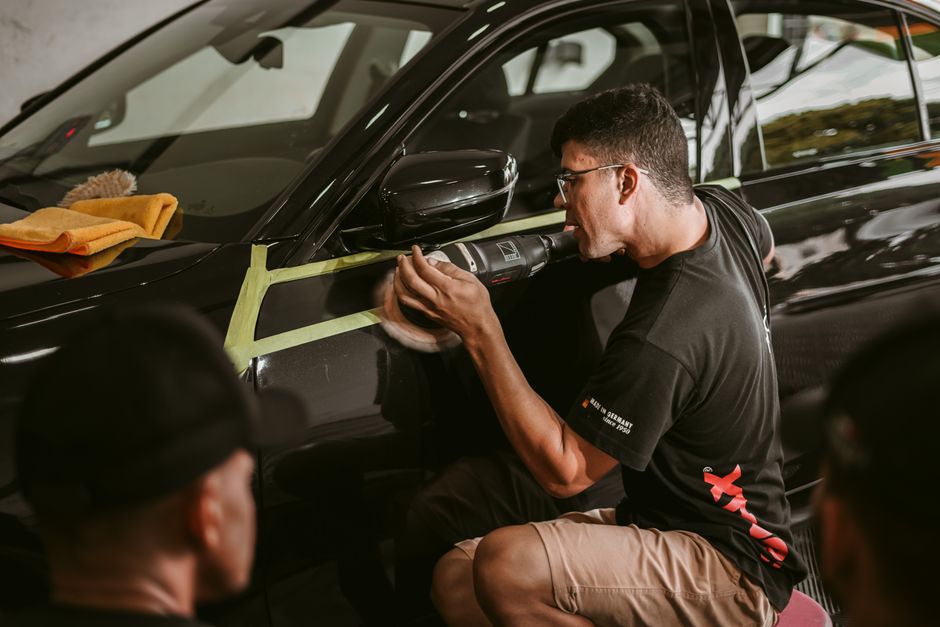
Photos win jobs. Estimators know this. Upload process shots: torn-down quarter panel, frame machine, paint booth, ADAS calibration, finished blend. Name files in plain English. Refresh weekly. Shops that only show a storefront and a smiling owner lose to shops that show the booth. Q&A should answer cycle time, whether you work with major carriers, rental coordination, and drop-off after hours. Answer as the shop, not as a marketing intern.
NAP consistency still matters for map pack. If the shop name on the building, the GBP, the website footer, and the insurance directory disagree by even a suite number, you split signals. Review velocity beats review age. A 4.6 with 38 new reviews this year outranks a 4.9 that froze in 2022. Ask after delivery, not at drop-off. Mention the actual job: hail, rear clip, PDR, not “great service.”
Body shop sites stuffed with uncompressed before/after JPEGs fail INP and LCP on mobile, and mobile is where the post-accident search happens. If the map pack click lands on a 4MB homepage that stalls the estimate form, you paid for the impression and donated the job.
Get a free marketing audit - we review your search, ads, and landing pages and send back what to fix first.
Get a free audit
Service pages that match insurance intent, not blog filler
Build one page per money service, not a 2,000-word “complete guide to auto body.” Collision repair, bumper repair and replacement, paintless dent repair, hail damage, frame and structural, paint and refinish, fleet, and classic or specialty if that is real volume. Each page needs city proof, carrier language if you are DRP, OEM vs aftermarket policy, ADAS calibration when relevant, cycle-time ranges you can defend, and a single estimate CTA.
That is not permission to publish the same bumper FAQ as every franchise mill. Google’s information-gain bias after the March 2026 core update punishes pages that restate the same bumper FAQ as every franchise mill. Write what only your shop knows: which carriers you work with, how you handle supplements, whether you have a booth on site, typical cycle time for a rear-end Civic versus a truck bed, and photos from this month’s work orders (faces and plates stripped).
Internal links should follow the job, not the org chart. Collision page to bumper, hail to PDR, frame to ADAS. Use the HeyLead Auto Blogger only as a cadence layer under human strategy for seasonal clusters (hail season, storm weeks, winter parking-lot hits), not as a replacement for those money pages.
Audit scorecard
-
Intent inventory
List the last 90 days of jobs by type: insurance collision, cash PDR, hail, fleet, OEM paint. Map each to a query cluster. Drop vanity terms that never appear on RO sheets.
-
One URL per money job
If bumper, hail, and frame share a single “services” blob, split them. Title tags must name the shop type and city, not “quality workmanship.”
-
Proof above the fold
Estimator hours, carrier logos you are allowed to show, cycle-time note, and a click-to-call plus estimate form. No hero slider of stock cars.
-
GBP vs site match
Same NAP, same primary services, same photo story. If GBP says hail and the site hides it, you train Google to distrust both.
-
Speed on estimate paths
Compress booth photos. Lazy-load galleries. Keep the estimate form on the service URL. Run a Core Web Vitals check on mobile, not just desktop Lighthouse vanity scores.
-
Citation and directory hygiene
Insurance directories, Yelp, Apple Business Connect, and city chambers. Kill duplicate listings from the previous owner.
-
Review language
Coach advisors to ask for the job type in the review. “Hail repair in three days” ranks better than “super nice.”
-
Schema that matches reality
LocalBusiness / AutomotiveBusiness, service catalog, FAQ only where you actually answer cycle time and insurance. Validate; do not fake star markup.
Action checklist
- Export Search Console queries for 90 days. Tag insurance, PDR, hail, frame, brand, and junk. Pause content plans that only serve junk.
- Run a missing keywords pass against the two shops that actually beat you in map pack, not a national content farm.
- Rebuild the highest-volume money page first (usually collision or bumper). Match H1 to the job. Put the form in the first screen on mobile.
- Use a content brief generator only to lock entities (OEM, ADAS, DRP, cycle time). Write the process yourself from the floor.
- Fix titles and H1s with the title tag checker and H1 checker so you are not competing with your own homepage.
- Confirm indexation of new service URLs with a Google index checker after the sitemap ping. Orphan pages do not book ROs.
Free tools - try these yourself
When organic traffic hits the site and the estimate still dies
You can win the map pack and still lose the RO. The usual leak is a homepage that asks people to “learn more” while the estimator is on the other line. Send collision queries to a collision page. Put click-to-call sticky on mobile. Keep the form to name, phone, insurance yes/no, and photo upload. Five extra fields is how you fund the shop down the street.
Watch behavior, not bounce rate folklore. If people scroll past the form to a 40-image gallery and never tap call, the proof is in the wrong place. HeyLead Insights is built for that post-click view: scroll depth, rage taps on the call button, and form abandon on the estimate path. Guessing from GA4 sessions alone will send you to rewrite copy when the real issue is a 12-second INP on the photo uploader.
A multi-location group in the Midwest had organic “hail repair” sessions up 41% after a storm week and almost no extra estimates. The hail URL redirected through the homepage. They killed the redirect, put a 4-field form and a 24-hour photo SLA on the hail page, and estimate requests on that URL moved from 1.8% to 6.4% in 11 days. Same rankings. Different handoff.
Track calls as conversions with a unique number on organic landing pages. If the office answers in 8 rings after hours, map-pack SEO is a lead-gen tax. After-hours voicemail that promises a callback by 8am is operational SEO. Do not pretend a ranking report fixes a dark shop.
Patterns we see in audits
The short quotes below are illustrative composites drawn from patterns in account reviews. They are not quotes from named clients.
These patterns are a composite from client calls, not attributed testimonials. Ranking #1 for “auto body” often filled the phone with cash scratch quotes; DRP work started after shops built a collision page that named cycle time and OEM parts, then matched GBP photos to the booth, not the lobby.
AI Overviews ate “how long does a bumper take” traffic. Estimate volume held when the map pack and the insurance landing page still converted. Shops that stopped writing 1,800-word explainers nobody clicked kept the jobs that pay.
FAQs
How long until SEO moves estimate volume for a body shop?
Map pack and review work can move calls in weeks if NAP and photos were the gap. New service-page rankings for competitive collision terms more often take 3-6 months. Anyone promising a specific CPL before seeing your GBP, site, and carrier mix is guessing.
Should we still write blog posts?
Only if they attach to money jobs: hail season prep for your metro, ADAS calibration after a rear clip, fleet downtime. Informational posts that Google answers in an Overview are weak ROI. Citation-worthy process pages beat volume metrics.
Do we need separate pages for every city we tow from?
If you truly pull work from those cities and can show reviews, photos, and response times, yes, thin city pages without proof will not last. One strong shop page plus honest service-area copy beats ten doorway URLs.
Is SEO enough without Google Ads?
Organic will not cover every storm week or every branded competitor auction. Use paid for overflow and name defense. Do not send either channel to the homepage. Dedicated pages keep both honest.
What should we measure besides rankings?
Booked estimates and ROs by query cluster and landing page, call answer time, form completion, and map-pack share. Last-click organic vs paid arguments waste time when the same driver Googled twice. Quality of the RO beats session counts.
Putting it to work
Execution sprint
This week
- Pull 30-90 days of performance for body shop (Search Console, ads, CRM, or call logs - whatever you have).
- Flag the top leak: wrong intent, weak page, slow response, or dirty conversion tracking.
- Ship one fix on the highest-traffic money path (page, campaign split, or response rule).
- Run the free tools below on that same URL or account and log the findings.
Free tools for this sprint
Next 30 days
- Expand the fix to the next one or two money paths only after the first one shows cleaner bookings.
- Align creative, keywords, or content with the same offer the page now states.
- Review booked outcomes weekly; cut anything that still only produces unqualified volume.
This week
-
Pull 90 days of ROs and tag insurance vs cash vs hail vs fleet. Circle the three job types that pay the bills.
-
Audit GBP categories, photos, and Q&A against those three jobs.
-
Check the matching service URLs for form, click-to-call, and mobile speed with the Core Web Vitals checker.
-
Export Search Console and strike queries that never appear on work orders.
-
Fix one orphan or thin page that should be the collision or bumper money URL.
Next 30 days
-
Ship or rebuild the top money page with process proof and a short form.
-
Align citations and kill duplicate listings from prior owners.
-
Install call tracking on organic landing pages and review answer-time with the front office.
-
Add a seasonal hail or storm module only if that work is real in your market.
-
Re-check indexation and internal links from the homepage and collision hub.
Start by lining last month’s repair orders against the landing pages that actually rank. If the jobs and the URLs do not match, that gap is the whole SEO problem for body shop companies. HeyLead can own the service-page architecture, GBP proof, and the estimate-form path so organic demand stops leaking before the advisor picks up. Chat with us on WhatsApp
Free marketing audit, or reach Martin directly:
Get a free audit Connect on WhatsApp · [email protected]