
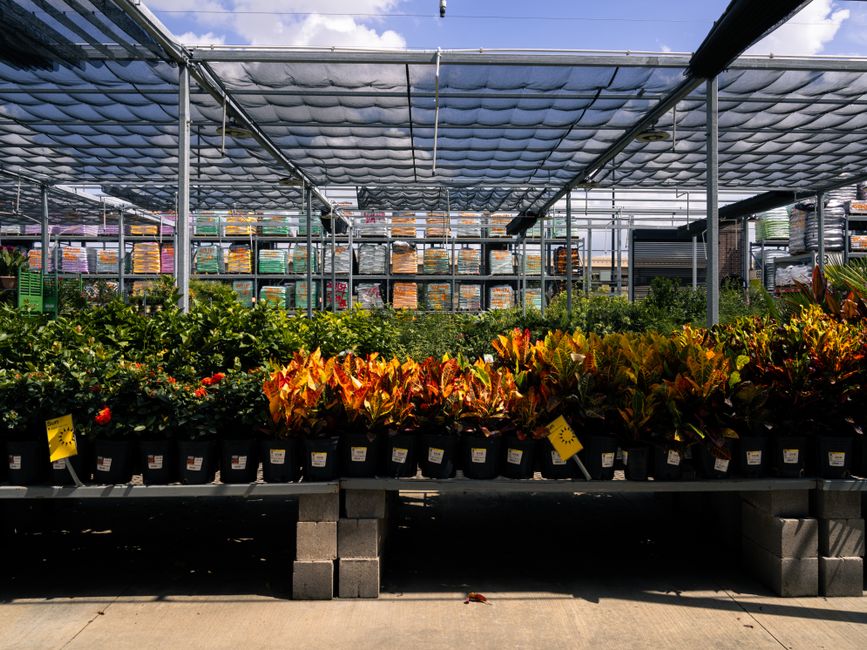
Easter weekend, 11.18am. A marketing lead at a three-site garden centre group watches Search CPC for “buy compost near me” jump from £1.40 to £2.90 while the till still rings for the same 40-litre bag. The ads are live. The offer is “free delivery over £50.” Half the clicks land on a homepage carousel of Christmas lights. That is the actual job of PPC for garden centres companies: buy the seasonal spike without paying for people who wanted a YouTube how-to on tomato blight.
Industry benchmarks suggest average CPCs in retail search have risen 10-15% year on year through 2024-25. Garden retail feels that in March and October, not as a smooth annual average. Neither number means much if 20-30% of your SEM budget dies on “DIY raised bed plans,” competitor brand names you cannot fulfil, or a mobile page that fails Interaction to Next Paint while someone is holding a dripping tray of bedding plants.
This piece is the operating version: which queries deserve budget, how to structure campaigns around seasons instead of SKU dumps, what the landing page has to do in the first scroll, and how you keep Smart Bidding honest when ad blockers eat 20%+ of conversion data.
The queries that fill trolleys versus the ones that fill bounce reports
Garden centre paid search fails first at intent, not at bid strategy. “How to prune lavender” and “lavender plants for sale 9cm pot” share a noun and almost none of the commercial heat. If you let a broad match cluster and a Performance Max asset group mix them, Google will happily spend on the informational side because it is cheaper and volume looks healthy. Volume is a dead metric here. You want click-and-collect, same-day collection, and bulky delivery bookings.
Build an intent map before you touch bids. Commercial clusters: compost and soil (peat-free, farmyard manure, John Innes numbers), seasonal bedding and hanging baskets, turf and lawn feed, fencing and sleepers, patio furniture and BBQs in late spring, Christmas trees and lights from November. Local modifiers matter more than brand: “garden centre [town],” “click and collect plants,” “open Sunday,” “wheelchair access greenhouse.” Informational and job-to-be-done queries belong in content or on a tiny brand-defence budget, not in the same ad group as “buy bark chippings 1 cubic metre.”
Negatives are not a one-off hygiene task. For garden centres, the leak list is oddly specific: jobs, salary, apprenticeship, wholesale only (unless you actually wholesale), “ideas,” “Pinterest,” “free,” “PDF,” plant identification, disease names, and national DIY chains you cannot match on price. Review search terms after every weather event. A heatwave weekend will surface “hose pipe ban” and “water butt” in the same account that was buying “BBQ cover.” If you do not split those, automated bidding treats both as equally valuable because both generated a session.
That gap is usually not “people research on phones.” It is a store-finder buried under a 6MB hero video of a water feature, or a click-and-collect form that asks for a full account before it shows Saturday collection slots. If you only look at blended conversion rate, you will keep raising bids on terms that already work on desktop and starve the phone traffic that actually walks through the car park.
If the account is still sending every ad to the homepage, stop. Dedicated pages aligned to the query cluster outperform a seasonal merchandising homepage every time we have measured it. If you need a partner to rebuild that paid search and landing handoff rather than “just send traffic,” look at how HeyLead runs Google Ads and Bing programmes for retailers who live and die on seasonal peaks.
Campaign architecture that follows the season, not the product feed
Garden centre catalogues are huge. Campaigns should not be. Fewer campaigns, broader targeting, and clean conversion setup beat a 2024-style maze of exact-match ad groups that reset learning every time you shuffle them. Performance Max will drive the bulk of spend in many accounts now. That is fine if you feed it the right assets and the right offline signals. It is a problem if PMax is allowed to harvest brand terms and “garden centre opening times” while Search is starved of the high-intent compost and turf queries.
Use Search for the money terms you can name. Use PMax for shopping-style discovery (pots, furniture, tools) with strong product titles, seasonal feed hygiene, and audience signals from actual buyers, not a dumped customer list from 2019. Keep brand in its own Search campaign so you can see what you pay to defend your own name when a national chain bids on it. Bing still converts for older, higher-ticket patio buyers in some catchments. Do not ignore it because the interface is quieter.
Bidding: high CPC pressure makes people flee back to manual CPC on new accounts. That can protect a tiny test, but it will not scale through April. The real objection is “automated bidding inflates budgets without improving conversion quality.” That happens when the conversion you optimise is “form submit” or “phone click” and half of those are trade accounts asking for 40 pallets you do not sell, or spam. Optimise to qualified events: click-and-collect booked, delivery quote requested over a minimum basket, or in-store visit if you have store-visit conversion set up honestly. Enhanced Conversions and a unified first-party signal matter because 20%+ of conversion data already disappears to ad blockers and privacy changes. Weak signal, dumb bids.
Google’s own tests on broad match with Smart Bidding have shown CPC efficiency gains of 10-15% in some retail verticals - treat any such figure as a test cell result, not a guarantee. Constant structure changes reset learning. Pick a skeleton before Mother’s Day, freeze it through the peak, and change creative and negatives, not campaign topology, in the middle of the rush.
DIY playbook for a garden centre Search rebuild
-
Export 90 days of search terms. Tag each as buy-now, visit-now, research, or junk. Pause junk at the negative list, not at the keyword.
-
Split Search into three live campaigns only: local visit (garden centre + town + open now), product-commercial (compost, turf, sleepers, furniture), brand defence.
-
Give PMax a clean product feed with seasonal availability. Out-of-stock hanging baskets should not keep spending.
-
Write RSAs that name the job: “Click & collect today,” “Peat-free compost in store,” “Turf rolls, same-week delivery,” not “Your local garden experts.”
-
Build one landing page per cluster. Headline must match the ad. Show stock, collection hours, parking, and a phone number that actually rings the plant desk, not a head-office voicemail.
-
Install conversion actions that sales will recognise. A “contact us” thank-you page is not a sold cubic metre of bark.
-
Turn on Enhanced Conversions. Pass hashed email from click-and-collect. If you run Meta as well, do not let last-click count the same weekend visit twice.
-
Set a negative keyword ritual after every bank holiday, not a quarterly tidy.
-
Cap mobile bids or fix the page. Do not “average” a 40% conversion gap into one blended ROAS slide.
-
Leave the structure alone for 3-6 weeks through the first seasonal peak. Realistic results take 3-6 months, not one viral reel about dahlias.
DIY tools for this section: UTM link builder, SEO competitor analysis for landing gaps, Core Web Vitals checker, SERP snippet preview, meta description checker.
Get a free marketing audit - we review your search, ads, and landing pages and send back what to fix first.
Get a free audit
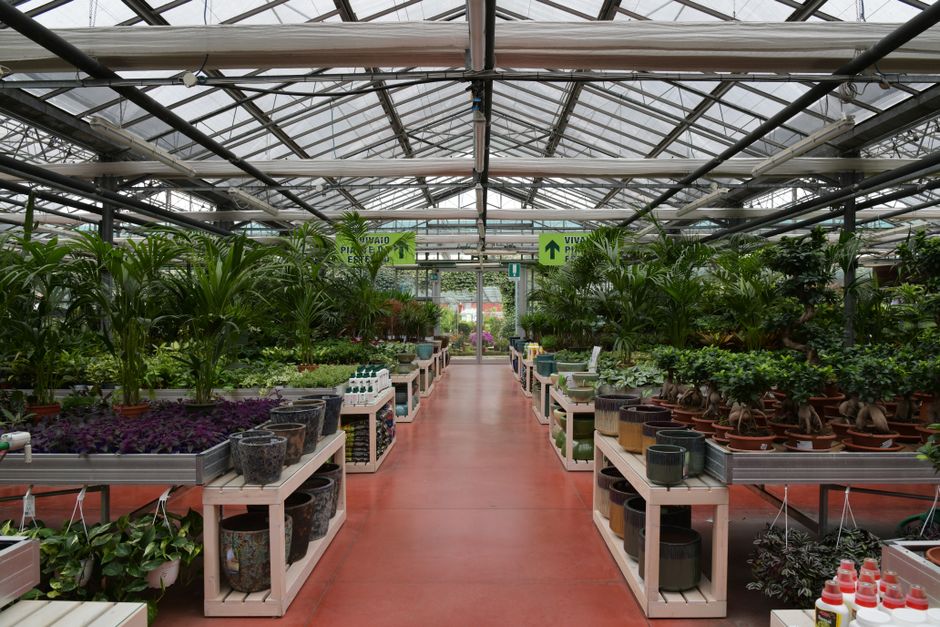
The page after the ad is where compost margin is won or lost
Agencies still get blamed for “expensive clicks” when the click hit a homepage that loads Christmas in April. Fewer than 60% of origins pass all three Core Web Vitals according to recent CrUX data (source: HTTP Archive). Garden centre sites are image-heavy by nature. If INP stutters when someone opens the collection-slot picker, Smart Bidding learns that mobile users do not convert, then it chases desktop research queries instead.
Message match is boring and it prints money. Ad says peat-free multipurpose 50L at £8.99 click-and-collect. Page must show that SKU, that price, that promise, parking, and a map. In a single client test, social proof moved collection-slot completion rate from 33.22% to 43.52% in a documented CRO pass - that is a micro-conversion on the booking step, not site-wide e-commerce CVR. For garden centres, proof is not a generic star widget. It is “collected in 12 minutes from the York site on Saturday” and a photo of the actual bay, not a stock greenhouse from another continent.
Watch the form. Trade customers will tolerate a VAT field. Weekend shoppers will not. Offer guest click-and-collect. Put bulky-item delivery on a separate path with postcode checker so you do not take ads for sleepers you cannot deliver to that postcode. Use HeyLead Insights on these pages to see where people rage-tap the map, abandon the collection form, or never reach the stock table because a cookie banner ate the first screen. Guessing which hero image “feels on brand” is how you burn April.
A three-site group in the Midlands sent all “buy turf” ads to a blog about lawn care. Bounce was ugly, but the Search dashboard still looked busy. They built a turf page with roll sizes, laying-day weather note, and a Saturday cut-off. Cost per qualified delivery enquiry dropped even though CPC stayed high. The mechanism was the page, not a new bid strategy. That is the pattern: tighter positioning and a clearer offer beat adding TikTok because a competitor’s agency deck mentioned it.
Patterns we see in audits
The short quotes below are illustrative composites drawn from patterns in account reviews. They are not quotes from named clients.
“We let PMax sit on brand and ‘opening times’ for six weeks. Search CPC on compost looked terrible until we pulled brand out. Then the commercial terms actually had a chance.” - Head of Marketing, multi-site garden retail
“Creative died in five days on Meta for hanging baskets. Search was fine. We were reading Meta fatigue as a Google problem and kept rewriting RSAs that were not the leak.” - Growth lead, home and garden retail

FAQs
Should garden centre companies use Performance Max or only Search?
Use Search for named commercial and local-visit terms. Use PMax for feed-driven discovery once the feed is truthful about stock and season. Do not let PMax be the only campaign. You will lose the ability to negative out blight-how-to traffic and you will not see which queries actually bought bark.
Is automated bidding safe when CPCs spike in spring?
It is safe if the conversion is a real commercial event and Enhanced Conversions are on. It is not safe if you optimise to any click-to-call, including “are you hiring?” Manual CPC on a brand-new account can stop a blow-up. It will not win Easter by itself.
Do we need Meta if Search already captures intent?
Do not fund Meta from the compost Search budget because a dashboard is “quiet.” Creative is your targeting on social. Search still needs keywords and negatives.
How long before a rebuilt PPC account shows real profit for a garden centre?
Give a rebuilt structure one full seasonal cycle of learning, typically 3-6 months of honest data, not one bank holiday. Anyone guaranteeing a CPL before they have seen your account, pages, and delivery catchment is selling theatre.
What should we track besides ROAS?
Cost per click-and-collect, cost per delivery quote above minimum basket, store-visit rate where eligible, and mobile vs desktop conversion separately. Last-click will double-count a remarketing view and a brand search. Treat in-platform CPA as directional, not the board slide.
Putting it to work
Execution sprint
This week
- Pull 30-90 days of performance for garden centres (Search Console, ads, CRM, or call logs - whatever you have).
- Flag the top leak: wrong intent, weak page, slow response, or dirty conversion tracking.
- Ship one fix on the highest-traffic money path (page, campaign split, or response rule).
- Run the free tools below on that same URL or account and log the findings.
Free tools for this sprint
Next 30 days
- Expand the fix to the next one or two money paths only after the first one shows cleaner bookings.
- Align creative, keywords, or content with the same offer the page now states.
- Review booked outcomes weekly; cut anything that still only produces unqualified volume.
Pull the last 60 days of search terms and mark every query as trolley, visit, research, or junk. Pause the junk with negatives, then pick the single highest-spend commercial cluster (usually compost, turf, or patio) and point it at a dedicated page with matching copy, collection hours, and a conversion that ops will recognise. That is a few hours of work, not a replatform.
This week:
-
Export search terms and build the four-tag intent sheet.
-
Add garden-specific negatives (jobs, how-to, PDF, disease names, pure DIY ideas).
-
Run the Core Web Vitals checker on your top two ad landing URLs.
-
Tag every live ad with the UTM link builder so GA4 and the till report stop arguing.
-
Rewrite one RSA to name click-and-collect or same-week delivery instead of brand poetry.
Next 30 days: freeze campaign topology through the next peak, stand up one cluster landing page, turn on Enhanced Conversions, and compare mobile conversion without blending it into desktop. If the leak is the handoff between the ad and the page where qualified plant buyers bounce before they book collection, HeyLead can own that PPC loop (query hygiene, seasonal structure, page match, and conversion signals) so your team is not rebuilding it every spring. Chat with us on WhatsApp
Free marketing audit, or reach Martin directly:
Get a free audit Connect on WhatsApp · [email protected]