
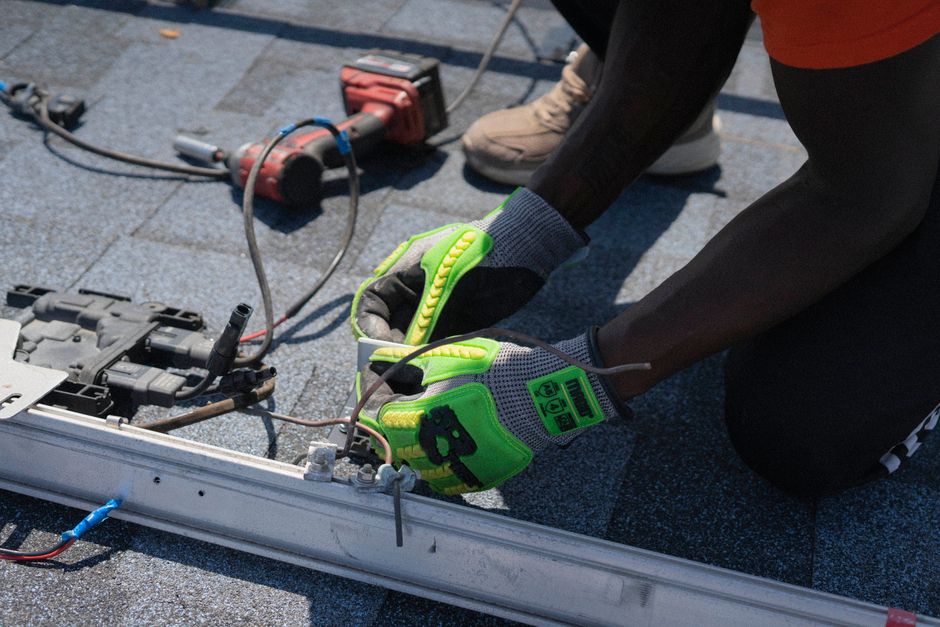
A homeowner in a 1990s ranch searches “breaker tripping tonight” at 9.18pm. They do not want a brand story. They want a licensed crew that answers, shows up, and does not ghost the call. That query is the whole job of PPC for electrical companies: buy the intent, match the offer, and get a human on the line before the next ad in the auction does.
Electrical terms sit above that on emergency and EV-charger work. For an electrical shop, last-click ROAS is a weak scoreboard. The number that matters is cost per booked job (panel upgrade, service call, commercial bid walk), not form volume.
That is the operating reality, not a channel dashboard.
Emergency, upgrade, and bid-walk queries are not one campaign
Electrical demand is three markets sharing one Google Ads account. Emergency (“no power,” “sparking outlet,” “water heater not lighting”) is high CPC, high urgency, short form, phone-first. Planned work (“200 amp panel upgrade,” “EV charger install,” “whole house rewire quote”) is slower, photo-heavy, and price-sensitive. Commercial (“warehouse lighting retrofit,” “tenant improvement electrical bid”) is longer cycle, often a facilities manager, and should never share a landing page with a 2am outage.
When you dump all three into one Search campaign with a shared budget, Smart Bidding learns the cheapest conversions. Those are usually after-hours form fills from renters who will not approve a $4,800 panel. Meanwhile the $18,000 commercial walk never gets enough impression share. You did not “fail at AI bidding.” You taught the algorithm the wrong job.
High CPC pressure makes people yank new accounts back to manual CPC. That can be right for the first two weeks while you build negatives and conversion quality. It is a trap if you stay there after Enhanced Conversions and call tracking are clean. Automated bidding inflates spend when the conversion is a thank-you page, not a booked truck. Fix the signal before you fight the bid strategy.
If they say they will just send traffic to your homepage, run. Dedicated pages for emergency dispatch, panel upgrades, EV chargers, and commercial TI work are the difference between paying for curiosity and paying for a dispatch. A short look at Google Ads for service businesses is enough to see whether your structure even separates those jobs.
Search still needs keywords; Performance Max should not own the whole board
Buyers say “Performance Max drives the bulk now” and “signals over keywords.” Both can be true without handing the entire electrical account to PMax on day one. Google still needs keywords for the phrases that mean a truck: “emergency electrician [city],” “panel upgrade cost,” “Level 2 charger install.” Broad match plus strong negatives is the 2026 pattern. Exact-match islands for every city plus every service is the 2020 playbook, and it starves volume.
On electrical, it also loves to harvest branded searches and cheap “how to reset a GFCI” informational clicks if you do not fence it. Use it as a demand catcher after Search is profitable, with asset groups split by emergency vs planned vs commercial, and with brand exclusions where you can get them. AI Max Search campaigns showing 12-18% lower CPCs versus standard Search in early Google beta tests (per Google internal data; not independently replicated at scale) are worth a test, not a full migration overnight.
Local Services Ads sit next to Search for many US electrical firms. They buy the same “near me” intent with a different lead tax. Do not treat LSA and Search as duplicates. Use LSA for licensed, review-heavy emergency coverage. Use Search for services LSA under-serves (EV, solar interconnect, commercial). If both run, negative out overlapping queries on Search or you will pay twice for one callback.
Attribution is messy. Last-click double-counts. In-platform CPA diverges from the dispatch board. You will lose 20%+ of conversion data to blockers and privacy changes unless Enhanced Conversions and call tracking are on. Unified measurement will not be perfect. It still beats arguing with a dashboard that never saw the missed 11pm call.
Get a free marketing audit - we review your search, ads, and landing pages and send back what to fix first.
Get a free audit
Build the account the way a dispatcher thinks
Do not start in Ads Editor with 40 ad groups named after every suburb. Start with how the shop actually books work. Then make Google buy that, and only that.
Audit scorecard
-
Map jobs, not services
List the last 90 days of paid jobs: emergency callouts, panel upgrades, EV chargers, lighting, generators, commercial TI. Drop anything under 5% of revenue from paid until the core four convert. Your campaigns should match those job types, not a menu copied from the website footer.
-
Split campaigns by intent speed
One Search campaign for emergency (call extensions, location, after-hours ad copy). One for planned residential. One for commercial if you actually bid that work. Shared budgets across those three is how emergency eats the panel-upgrade budget by Thursday.
-
Negatives before more keywords
Add DIY, jobs, salary, apprentice, code book, “how to,” “DIY,” “own,” “free,” “training,” and competitor brand terms you cannot win. Search terms every few days for the first month. This is how you claw back the 20-30% that usually funds irrelevant queries.
-
Convert the right event
Primary conversion: booked job or qualified call over X seconds, not “form submit.” Import offline conversions from the CRM or dispatch software when a lead becomes a scheduled truck. Smart Bidding without that import will chase cheap forms.
-
Match ads to the truck, not the brand
Emergency RSAs: license, response window, “we answer after 8pm,” city, financing only if you actually offer it. Panel/EV: permit handling, typical timeline, photo of a finished panel, not a smiling van. Commercial: insurance limits, union/non-union status if it matters in your market, bid-walk CTA.
-
One landing page per intent
Click-to-call sticky on mobile for emergency. Quote form plus photo upload for panel/EV. “Request a walk-through” for commercial. Same headline as the ad. If Core Web Vitals fail, mobile already converts 30-40% worse; you do not need a second handicap.
-
Call handling is part of PPC
If the phone dumps to voicemail at 7pm, you paid Google for a competitor’s job. After-hours routing, SMS backup, and a 5-minute SLA on emergency leads belong in the media plan, not in “ops will figure it out.”
-
Do not reset learning for sport
Daily structure changes kill Performance Max and tCPA. Change offers and landing pages more than campaign trees. Realistic paid results for a shop that never ran Search take 3-6 months, not a promised CPL on the sales call.
Action checklist
- Export 30 days of search terms and highlight every query that could never become a paid electrical job.
- Build three RSA sets: outage, panel/EV, commercial. Pause the generic “full service electrician” set.
- Turn on call reporting and Enhanced Conversions. If the conversion count in Ads is 20%+ above the dispatch log, your bidding is lying.
- UTM every ad group so the CRM can tell emergency Search from PMax display junk.
- Run a competitor SERP pass on the three money terms and steal only the proof they use (license, response time, photos), not their slogan.
Free tools - try these yourself
Agency fees in this market often sit at 10-20% of spend or a retainer from a few thousand a month upward. None of that buys qualified trucks if the account is one blob campaign and a homepage. It is a poor primary channel for “sparking outlet right now.”
The click is cheap compared with a form that never becomes a truck
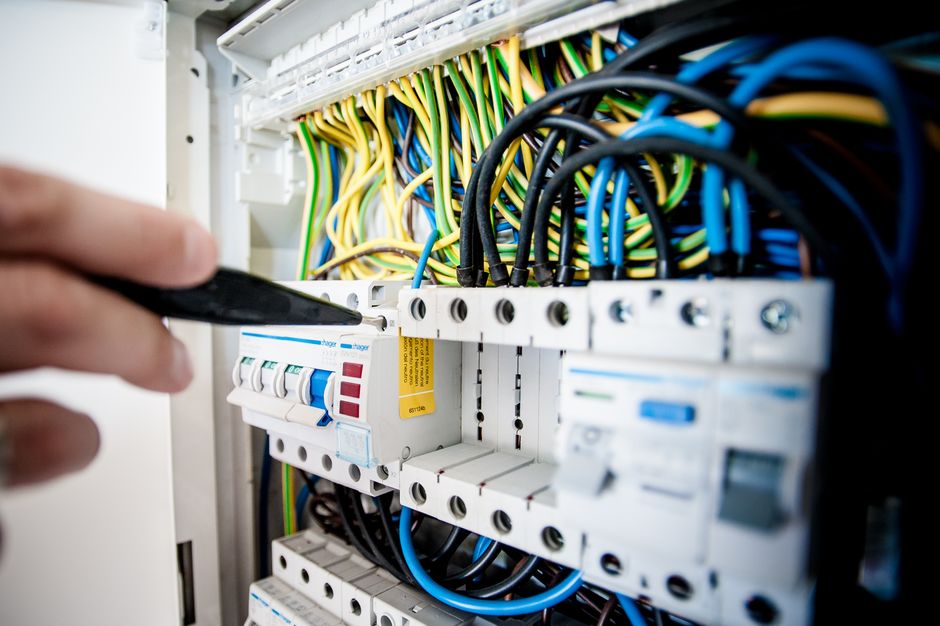
You can win the auction and still lose the night. Typical failure: ad says “electrician out now,” landing page is a 12-service grid, the phone number is in the footer, and the form asks for square footage before a callback. Mobile users bounce. Desktop looks “fine” in aggregate, so nobody notices INP or a slow hero image killing emergency conversion.
A Midwest residential shop we sat with had Search converting at 4.2% to forms and almost nothing to scheduled jobs. The mechanism was not CPC. Dispatch logged 11 of 27 after-hours forms as “left voicemail, never called back.” They put click-to-call above the fold, cut the form to name, phone, and “breakers / no power / other,” and routed overflow to an answering service with a 4-minute script. Form-to-booked moved in eleven days. CPC did not magically drop. Waste did.
Another pattern: EV-charger ads sending people to a generic electrical page with no permit talk, no panel-capacity check, and no photo of a finished wall unit. People comparison-shop Tesla Wall Connector vs ChargePoint in the same session. If your page cannot answer amperage and typical install window, Google still charges you for the visit. On a HeyLead home-services electrical client (anonymous), putting license badges, real job photos, and review snippets next to the call button lifted qualified-call conversion on emergency Search from 18% to 27% over a four-week test-maps here as proof next to the button, not a wall of stock vans.
Session recordings help you see the leak without guessing. HeyLead Insights is how you watch whether people tap call, stall on a 14-field form, or never reach the quote block on a phone. Do not argue with last-click while the heatmap shows the CTA under a 2MB hero.
Creative fatigue is more of a Meta problem, but Search RSAs go stale too. If you run paid social for generator or EV education, expect UGC to peak in 5-6 days. Rising CPMs show up before lead volume drops. Refresh the hook, not the entire account structure.
From the field
“We were optimizing to form fills from ‘electrician near me.’ Dispatch said half were DIY questions. Once we only counted calls over 45 seconds, tCPA looked worse for two weeks and booked jobs finally matched the spend.” - Head of Marketing, residential electrical contractor
“PMax looked like 5.1x ROAS until we excluded brand and found it was eating our own name. Search on panel upgrades was the workhorse; PMax was a trophy screenshot.” - Owner, commercial and residential electrical firm
FAQs
Should electrical companies start with Google Ads or Local Services Ads?
If you are licensed, insured, and review-ready in a market where LSA is live, run LSA for emergency coverage and Search for EV, panel, generator, and commercial terms LSA under-serves. Starting with only one channel is fine. Starting with one blended campaign for all services is not.
Is automated bidding going to waste the budget?
It will if the conversion is a junk form. It will not if you import booked jobs, use call duration, and give the algorithm two to three weeks without daily campaign rebuilds. Manual CPC is a diagnostic mode, not a strategy.
What CPL is “good” for an electrician?
Nobody can guarantee a CPL before seeing your close rate, average ticket, and after-hours answer rate. A $40 form that never books is worse than a $180 call that becomes a $2,400 service. Judge cost per scheduled job and revenue per campaign, not the Ads column labeled Conv. value. If your average booked job is $900 and you close 40% of qualified calls, a $144 cost per qualified call is breakeven before overhead-use that as your ceiling, not an industry average.
Do we need Meta if Search is working?
Not as the primary hunter for outages. Use it to remarket quote abandoners and to support planned work (EV, generators) where the buyer researches for days. Broad targeting only works if the creative and landing page are specific. Creative is your targeting. Weak pages make broad expensive.
How long until PPC is stable for an electrical shop?
Expect 3-6 months to get negatives, call tracking, and landing pages honest. Anything promising a specific ROAS before seeing the account is sales theater. Weekly search-term and missed-call reviews beat a glossy monthly PDF.
Putting it to work
Execution sprint
This week
- Pull 30-90 days of performance for electrical (Search Console, ads, CRM, or call logs - whatever you have).
- Flag the top leak: wrong intent, weak page, slow response, or dirty conversion tracking.
- Ship one fix on the highest-traffic money path (page, campaign split, or response rule).
- Run the free tools below on that same URL or account and log the findings.
Free tools for this sprint
Next 30 days
- Expand the fix to the next one or two money paths only after the first one shows cleaner bookings.
- Align creative, keywords, or content with the same offer the page now states.
- Review booked outcomes weekly; cut anything that still only produces unqualified volume.
Pull the last 60 days of Google Ads search terms next to the dispatch log. Tag every click that could never become a paid job, then build negatives and split emergency from planned work before you add budget.
This week
-
Pause the catch-all “electrical services” campaign if it exists.
-
Turn on call reporting and match conversions to trucks, not thank-you pages.
-
Ship one emergency landing page with sticky click-to-call.
-
Tag every ad group with UTMs via the UTM link builder.
-
Check mobile speed with the Core Web Vitals checker.
-
Preview RSA headlines in the SERP snippet preview.
Next 30 days
-
Import offline booked-job conversions.
-
Stand up separate panel/EV and commercial pages.
-
Test PMax only after Search has clean negatives and a real conversion.
-
Reconcile Ads CPA to the job board weekly, not in a monthly recap.
If the leak is the gap between a high-intent electrical query and a page or phone path that never books the truck, HeyLead can own that loop: query design, RSA and PMax structure, landing pages, and conversion signals that match dispatch. Chat with us on WhatsApp
Free marketing audit, or reach Martin directly:
Get a free audit Connect on WhatsApp · [email protected]