
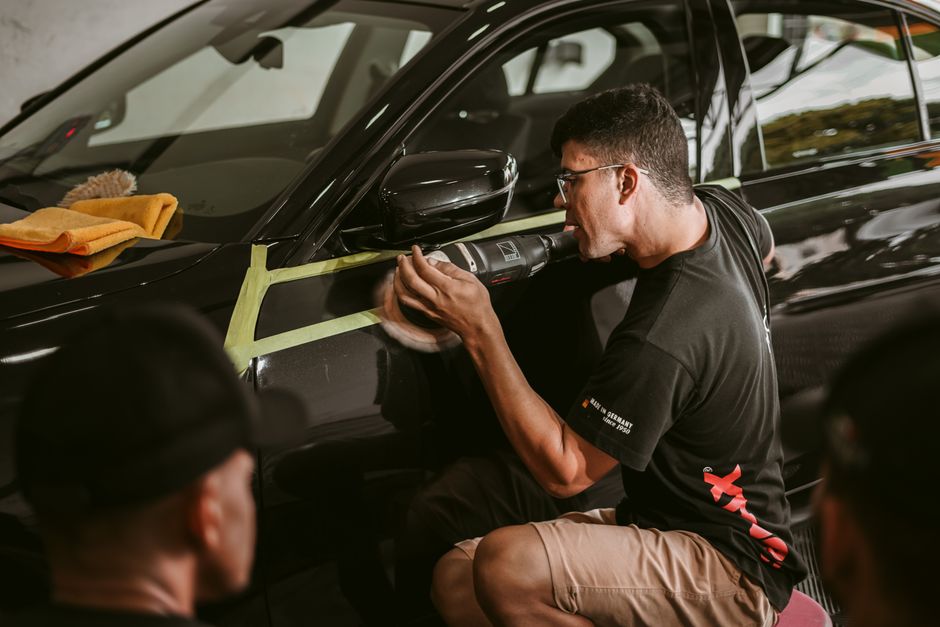
Most detailing shop owners treat their before-and-after photos and five-star reviews as the strongest asset in their Meta Ads account. Flip that assumption. In 2026, the same photos and reviews that used to be a slam-dunk are now one of the fastest ways to get flagged, rejected, or quietly reported to the FTC if you’re not handling them the right way.
Here’s what that actually costs you: a bay that should’ve had a ceramic coating job booked for Thursday sits empty because the ad that was supposed to fill it got shut down mid-run. A mobile detailer drives forty minutes to a job that cancels because the lead never really understood what they were buying. And the money you put into “boosting” a post of a filthy truck turned spotless? Gone, mostly to people scrolling past who were never going to book anything. Meta Ads across industries are averaging around a 2.8x return in 2026 benchmarks. Translate that into detailing math: on a $150 full interior-exterior ticket, a return that thin barely covers your ad spend once you factor in the no-shows and the tire-kickers who just wanted a price.
The detailers who get real results out of Meta aren’t spending more than the guy down the road boosting posts for $15 a day. They’re running a tighter operation behind the scenes, one where the ad has to prove something specific before a stranger hands over their car keys, and where every dollar gets tracked back to whether it actually filled a slot. That’s the part most shop owners skip, and it’s the part that separates a Meta account that fills a calendar from one that just generates likes.
Why your boosted posts and review screenshots are costing you bookings, not creating them
The “boost this post” button inside Facebook is not a Meta Ads strategy. It’s a convenience feature, and it optimizes for the thing that’s easiest to measure: engagement. A boosted before-and-after photo racks up comments and shares from people who already know your shop. It rarely reaches someone three towns over who’s never heard of you and is deciding, right now, whether to trust a stranger with their SUV. Real campaign structure, with a proper objective set to leads or messages instead of post engagement, is the difference between an ad that performs for your ego and one that performs for your appointment book.
Then there’s the fatigue problem. Detailing creative wears out fast. A UGC-style video of a filthy minivan getting the full treatment can peak in five or six days and start losing steam before you’ve even noticed your cost per message creeping up. The warning sign almost never shows up in your lead count first. It shows up in your CPM, the cost to reach a thousand people, which quietly climbs while your daily budget is unchanged. By the time bookings drop, the creative has usually been dead for a week. If you’re not watching that number, you’re always reacting a week late.
Now add the regulatory piece most detailing owners haven’t caught up on. The FTC’s 2024 rule on consumer reviews and testimonials isn’t limited to health claims or influencer marketing. It applies to any business using reviews, ratings, or testimonials in advertising, and it specifically targets two habits that are common in this trade: writing or buying fake reviews, and failing to disclose when you’ve given someone a discount or a free add-on in exchange for a review or a testimonial video. If you’ve ever offered “$10 off for a Google review” and then turned that customer’s quote into Meta ad creative without disclosing the exchange, you’re exactly the kind of advertiser this rule was written for. It doesn’t mean stop using reviews. It means be straight about how you got them, and say so in the ad.
A HeyLead team running a detailing shop’s paid social can also handle this kind of creative and compliance audit as part of managing the account, so the review you’re proudest of doesn’t become the one that gets your campaign pulled. If you want a second set of eyes on how your service pages are built to back up those ads, our Meta Ads management work includes exactly that kind of review.
Building a Meta Ads account that actually fills open bays
A working account looks less like a single hero ad and more like a small production line: offers, creative, proof, and a landing experience that doesn’t waste the click. Here’s the order most detailing shops should build it in.
-
Pick one objective per campaign and stop mixing goals. Run a leads or messages objective for booking-ready offers (full details, ceramic coating consults, fleet accounts), and keep brand-awareness boosting completely separate, funded separately, and judged separately.
-
Start broad on audience and let the algorithm find buyers. A tight radius around your shop plus a lookalike built from your actual paid customer list (pulled from your point-of-sale or booking software) beats hand-picked interest targeting almost every time in 2026’s auction. Your creative is doing the targeting work now, not your audience settings.
-
Build at least four to six creative variations per offer before you launch, not one. Mix a raw phone-shot before-and-after, a fifteen-second transformation reel, a static price-and-package graphic, and one piece with a real customer on camera (disclosed, if there was any incentive involved).
-
Write the offer like a detailer, not a marketer. “Full interior shampoo + ceramic spray, $179, book this week” outperforms “Premium Detailing Services” every time, because it tells a skeptical buyer exactly what they’re getting and what it costs before they click.
-
Decide deliberately between an Instant Form and a landing page. Instant Forms get you more volume at a lower cost per lead, but a dedicated landing page that shows your actual calendar, your reclaim process, and real proof usually converts a higher share of those leads into a booked, paid job. For a $150-$400 ticket, the booked-job number matters more than the raw lead count.
-
Keep that landing page fast on a phone. Over half of web pages still fail Google’s Core Web Vitals checks even now (55.9% of origins passed all three in the most recent CrUX data), and a detailing customer scrolling Instagram on a cracked phone screen will bail on a slow page before they ever see your before-and-after gallery.
-
Turn on server-side conversion tracking (what Meta calls the Conversions API) alongside your pixel. Ad blockers and browser privacy settings are quietly wiping out a real chunk of your conversion data, and without a second, server-side signal, Meta’s delivery system is making decisions on incomplete information.
-
Respond to Messenger and form leads inside minutes, not hours. Detailing decisions are often made in a ten-minute window between “my car’s a mess” and “I’ll just do it myself this weekend.” A fast reply with an exact price and the next open slot wins jobs that a slow reply loses to someone else’s ad.
-
Give every campaign and offer its own UTM-tagged link so you can trace a booked job back to the exact ad and creative that produced it, not just “Facebook” as a channel.
A few free tools are worth having open while you build this out:
-
UTM link builder to tag every Meta campaign so you can trace a booking back to its source
-
Open graph preview to check how your landing page link actually looks when someone shares it or clicks through from the ad
-
Core Web Vitals checker to catch a slow mobile landing page before it quietly kills your conversion rate
-
AI readability checker to make sure your offer copy reads clearly to a buyer scanning fast on a phone
Get a free marketing audit. We review your search, ads, and landing pages and send back what to fix first.
Get a free audit

Why a Meta Ads calendar built for Phoenix fails in Minneapolis
Seasonality in this trade isn’t one calendar nationwide, and copying a template from a shop in another state is a common way to waste a month of spend. A Minneapolis or Boston detailer gets their real surge in March and April, when road salt and brine have eaten into paint and undercarriages all winter and owners want it gone before trade-in season. A shop in Phoenix or Dallas sees its spike after dust storms and in the run-up to summer, when interiors bake and customers want protection before the heat sets in. Gulf Coast and Florida shops have a pre-hurricane-season push for protective coatings and a post-storm push for salt and flood cleanup. None of that maps cleanly onto a single national “spring special” ad.
There’s a licensing and environmental wrinkle too, and it’s bigger for mobile detailers than for a fixed shop. A growing number of states and municipalities enforce stormwater discharge rules under the Clean Water Act, meaning a mobile detailer rinsing soapy, oily wastewater straight into a storm drain or a customer’s driveway runoff can be in violation, and in some jurisdictions it’s actively enforced with fines. Shops running a water-reclaim system or using an approved disposal method have a genuine, honest proof point to put in an ad, something a competitor dumping runoff down the street can’t say. That’s a far stronger trust signal in a Meta ad than another stock photo of suds on a hood.
Picture an illustrative example: a two-location detailing business, one shop in a cold-weather state and one in the Sun Belt, running the identical ad template and the identical “leave us a review for 10% off” offer out of both locations. The cold-weather location’s reviews were piling up fast in late winter, right when demand was lowest, because customers were trading the discount for a review in the slow season rather than when they’d actually book. The warm-weather location had almost no review volume at all, because nobody there was being offered the same deal at the right moment. Once the business separated the offers by season and region, and switched from an undisclosed discount-for-review exchange to a disclosed “verified customer, discount provided” label on the handful of paid testimonials it kept, two things changed. The review volume became honest and compliant instead of a liability, and each location’s ad calendar started matching when people actually needed the service, instead of running the same clock twice.
What detailing shop owners say about the review chase
“We used to think more reviews meant a better ad. Then I realized half of them were people I’d bribed with a free wax, and none of that was disclosed anywhere. Fixing that felt like a hassle for about a week, and then the ads that used real, labeled customers just performed better anyway.”
- Owner, three-bay detailing shop
“The thing nobody told me when I started running Meta Ads was how fast a video dies. I’d see a great first two days and assume I’d found a winner, then watch the cost per message creep up by the weekend and have nothing ready to swap in.”
- Manager, mobile detailing fleet
FAQ
Can I still use customer reviews and testimonials in my Meta ads? Yes, and you should. Just be straight about it. If you gave a customer anything (a discount, a free add-on, a referral credit) in exchange for the review or testimonial they’re giving you, the FTC’s 2024 rule requires you to disclose that connection in the ad itself. Unpaid, organic reviews you simply quote don’t need the disclosure; incentivized ones do.
How much should an auto detailing shop spend on Meta Ads each month? There’s no universal number, but most single-location shops get a real read on a campaign somewhere between $600 and $1,500 a month in spend, enough to get through the early learning period without constantly restarting it. Mobile fleets covering a wider service area usually need more, since the radius targeting spreads the same budget thinner.
Should I send traffic to Meta’s Instant Form or to my own website? Test both rather than picking one forever. Instant Forms usually produce a lower cost per lead and more volume, but a chunk of those leads are lower-intent window shoppers. A dedicated landing page with your pricing, your calendar, and real proof tends to produce fewer leads that convert at a higher rate into actually booked, paid jobs, which is the number that pays your bills.
How fast does my ad creative actually wear out? Faster than it used to. A lot of detailing shops see a strong UGC-style video peak within five or six days before performance starts sliding. Watch your cost per thousand impressions as the early warning sign, not your lead count, because the CPM climb shows up before the booking drop does.
Is Meta Ads or Google Ads the better channel for a detailing business? They solve different problems. Google Ads tends to catch people who are already searching for “mobile detailing near me” right now, which usually means a higher cost per click but a buyer closer to booking. Meta reaches people before they’ve started searching, which costs less per impression but needs stronger creative and proof to turn interest into an actual appointment. Most shops that do well end up running both, not choosing one.
Putting it to work
Execution sprint
This week
- Pull 30-90 days of performance for auto detailing (Search Console, ads, CRM, or call logs - whatever you have).
- Flag the top leak: wrong intent, weak page, slow response, or dirty conversion tracking.
- Ship one fix on the highest-traffic money path (page, campaign split, or response rule).
- Run the free tools below on that same URL or account and log the findings.
Free tools for this sprint
Next 30 days
- Expand the fix to the next one or two money paths only after the first one shows cleaner bookings.
- Align creative, keywords, or content with the same offer the page now states.
- Review booked outcomes weekly; cut anything that still only produces unqualified volume.
Start this week by pulling the last 60 days of Meta leads and messages out of your account and your booking calendar side by side. Mark which leads actually became a paid job, which ones ghosted after the first message, and which creative or offer each one came from. It’ll take about an hour if your tagging is halfway decent, and it usually turns up one of two things fast: an ad that looks great in Ads Manager but produces almost no real bookings, or a slow reply time that’s quietly losing jobs your ads already paid for.
If what you find is a mess of undisclosed review-for-discount creative, a landing page that’s never been checked on a phone, or no real way to trace a booked job back to the ad that produced it, that’s exactly the kind of ongoing creative testing, compliance, and tracking work HeyLead runs for detailing businesses so you’re not rebuilding the account from scratch every time Meta changes how it delivers ads. Chat with us on WhatsApp and we can look at what your current account is actually producing.
Free marketing audit, or reach Martin directly:
Get a free audit Connect on WhatsApp · [email protected]