
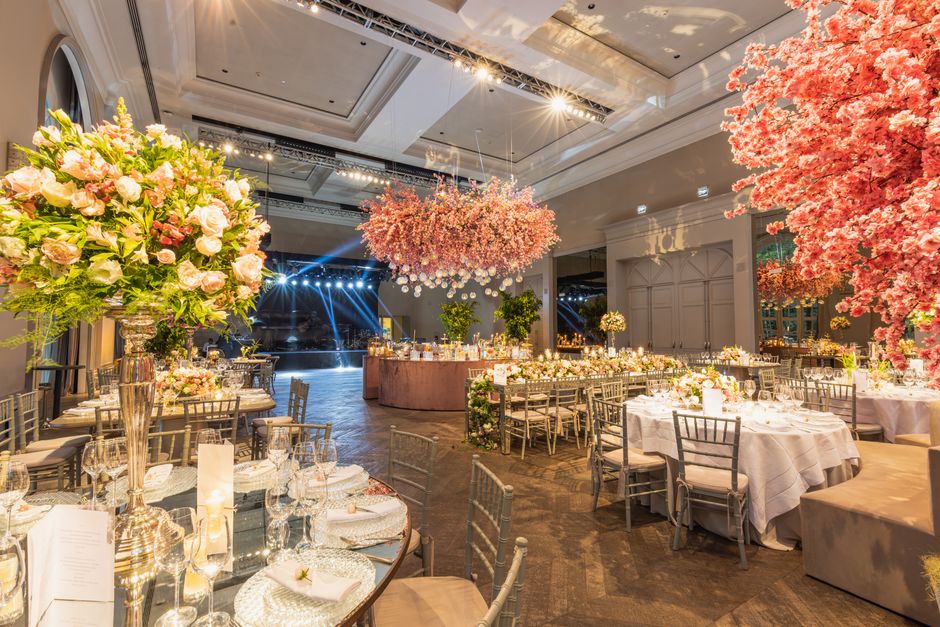
The booking inquiry that fills a Saturday in Tanjong Pagar usually starts as a Maps pin, not a branded homepage visit. A planner at a 180-pax ballroom in the CBD still watches “function hall near Raffles Place” and “rooftop event space Marina Bay” steal the click while the hall’s own name sits on page two. Local SEO for venues and events Singapore is not a listing tidy-up. It is how you show capacity, load-in, F&B rules, and tour availability in the exact query the coordinator types on the MRT.
You already know occupancy is lumpy. Corporate offsites cluster around quarter-end. Wedding site tours bunch on Saturday mornings. MICE RFPs land with a 14-day decision window. If Google Business Profile, the city page, and the form do not match that rhythm, you pay for visibility that never becomes a contracted event. This piece is the operating version of that problem: what to change in GBP, on-page, measurement, and response, without waiting for a full site rebuild.
Why “event space near CBD” still outranks your hall’s brand in Singapore search
Planners do not start with your brand. They start with a room type, a headcount, and a neighbourhood. “500 pax banquet Orchard”, “warehouse venue Kallang”, “hotel ballroom with breakout rooms”, “halal catering event space” are the queries that feed the Map Pack. Your 12-year domain authority does not automatically win those. Google is matching attributes: category, photos of the actual room, review language, and distance from the searcher’s last known location, which in Singapore is often a CBD office or a hotel in Marina Bay.
Zero-click search makes this worse. A large share of Google searches now end without a site visit, and AI Overviews sit on more commercial queries than they did a year ago. If your GBP does not answer capacity, parking, and nearest MRT in the pack itself, the planner never lands on your floor plan. Visibility without a tour request is a vanity metric. You want the pack click that becomes a WhatsApp with date, pax, and layout.
Paid search will not paper over a weak local footprint. CPCs for competitive Singapore venue terms have been running in the S$2-S$4 range based on accounts we manage; ROAS benchmarks vary widely - the Google Ads industry average of roughly 4x is a floor, not a target for venue operators. That assumes the landing page and the local listing already look like the same venue. Send “ballroom CBD” traffic to a homepage carousel of three properties and you will watch mobile conversion lag desktop by a wide margin. Mobile already drives most paid clicks globally. Venue marketers in Singapore feel that gap when the form is six fields long and the photo of the 12m ceiling is buried below the fold.
A Head of Marketing at a two-hall operator in Paya Lebar learned this the hard way. Brand queries were healthy. “Industrial event space near Tai Seng MRT” sent traffic to a competitor whose GBP listed ceiling height, forklift access, and a 48-hour hold policy in the description. They did not have a better hall. They had better attributes. That is the gap this playbook closes.
If your organic pages are thin and your GBP is a leftover from the fit-out, a Singapore SEO programme that treats venues as multi-attribute local businesses (not a single NAP line) is the faster path than another homepage redesign.
Google Business Profile fields planners actually filter on before they call
Treat GBP as a product page, not a pin. Primary category should match how people search: Event venue, Banquet hall, or Conference centre, not a vanity category that looks prestigious in a brand deck. Secondary categories cover the jobs you actually sell: Wedding venue, Meeting room, or Restaurant if F&B is in-house. Wrong category is the quiet reason you lose the pack to a hotel ballroom that is further from the MRT but correctly labelled.
Hours must reflect tour hours, not just event hours. If coordinators can walk the room 10am-6pm Tuesday to Friday and Saturday mornings, publish that. A “Closed” state on Saturday morning is how you lose the week’s highest-intent traffic. Service items should name room products: Grand Ballroom 400 pax banquet / 600 theatre, Pre-function foyer, Outdoor deck 80 pax cocktail. Singapore planners filter mentally on pax and layout. If they cannot see it in the listing, they skip you.
Photos are not brand photography. You need the empty room from the entrance, the same room in banquet, theatre, and cocktail, load-in dock, restrooms, and the nearest MRT exit. Cover images that are lifestyle collages get swiped past. Q&A should pre-answer: corkage, outside caterers, halal options, sound curfew, GST on venue hire, and whether the quote includes tables. Reviews need replies that repeat those attributes in natural language so they become ranking text, not “thanks for celebrating with us”.
Audit scorecard
-
Category and NAP match the hall
Confirm primary category, address as guests would give a Grab driver, and a phone that a human answers during tour hours. Duplicate listings for the same hall split reviews and kill the pack.
-
Attributes planners actually use
Fill accessibility, parking, Wi-Fi, and any wedding or conference attributes Google exposes. Missing parking is a disqualifier for island-wide guests even when the MRT is 6 minutes away.
-
Description written like a brief
Lead with pax, ceiling height, nearest MRT, and what you will not do (no 2am load-out, no outside alcohol, whatever is true). Keyword stuffing “best event space Singapore” still reads like 2019.
-
Products equal room SKUs
Create GBP products or services for each bookable room with starting hire in S$ if you publish rates. Vague “packages from affordable prices” trains Google to treat you as interchangeable.
-
Review velocity around peak months
Ask for a review 48 hours after a contracted event, not at invoice. Mention the room name in the ask so the review text matches the query. A six-month silence before CNY or National Day weekend is visible to the algorithm and to planners.
-
Posts that name dates and leftover inventory
Use GBP posts for open Saturday tour slots and last-minute midweek halls. Evergreen brand posts do nothing for a coordinator booking 11 days out.
-
Utm on the website button
The GBP website link should hit a room or location URL with UTM so you can see Map Pack to tour-form, not a blended organic number.
-
Messaging that your ops team can actually answer
If you enable chat, staff it. A 4-hour lag on “Is 9 Sept free for 220 banquet?” is a lost hold. Track first-response time the same way you track ranking.
Action checklist
- Export every branded and non-branded query from Search Console for 90 days. Tag room-type, neighbourhood, pax, and occasion (wedding, AGM, product launch). Those clusters are your page and GBP map, not a keyword dump.
- Build or refresh one URL per hall (or per distinct room if they sell separately) with H1, title, and meta that name the room type and area: “400-pax banquet hall near Tanjong Pagar MRT”. Run the title and H1 through checkers before you publish.
- Add LocalBusiness or EventVenue schema with geo, opening hours for tours, and the same NAP as GBP. Validate it. Mismatched postcodes are a classic Singapore duplicate-listing trap.
- Put floor plans, load-in notes, and a 3-field form (date, pax, layout) above the fold on mobile. Then watch where people stop scrolling. Session behaviour on venue pages is usually a photo grid that never reaches the form.
- Wire tour-request and WhatsApp click as conversions in GA4 with UTM on every GBP and Maps link. If 20%+ of conversion data is already leaking to privacy tools elsewhere in your stack, you cannot afford a broken venue form event on top.
- Respond to every Maps message inside one working hour during tour days. Measure site tours booked and contracts signed, not pack impressions.
Free tools - try these yourself
Get a free marketing audit - we review your search, ads, and landing pages and send back what to fix first.
Get a free audit
Site pages that convert map clicks into site tours and contracted events
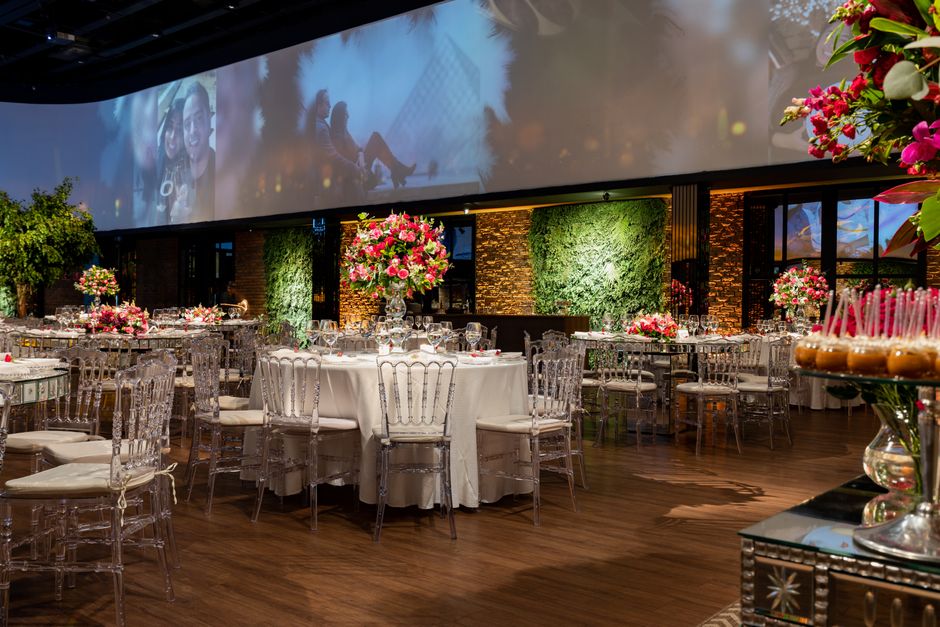
The Map Pack is a teaser. The page has to finish the sale of a tour. That means one hall, one promise, proof that matches the photo they just saw in Maps, and a form that does not ask for a company UEN before they have walked the room. Mixing three properties on one URL so “the domain looks stronger” is how you dilute relevance for every query.
Under 60% of origins pass all three Core Web Vitals according to recent CrUX data (web.dev, 2025). Venue sites fail INP when image galleries of 20MB ballroom shots block the form. A planner on 4G in a Grab between meetings will bounce. Compress, lazy-load below the first room hero, and keep the primary CTA sticky. If you care where the leak is, HeyLead Insights shows scroll depth, rage taps on the floor-plan lightbox, and form abandon on the pax field. You do not need to guess whether the menu or the date picker is the problem.
Copy should sound like ops, not like a brochure. State GST treatment, whether hire is room-only, peak Saturday premiums, and the hold policy (48 hours is common). Internal links from a Singapore events hub to each hall, and from blog pieces on “AGM venues with breakouts” to the matching room, help Google and help the human. A growing share of top-ranking pages contain AI-assisted copy - which means thin generated roundups are table stakes, not a differentiator. Thin generated “best venues in Singapore” roundups without floor plans and real constraints will not outrank a hall page that names the 4.2m ceiling and the 11pm curfew.
A realistic example: a 220-pax shophouse venue off Ann Siang kept ranking for brand and losing “cocktail venue Club Street”. The fix was not more backlinks. They split the page, put the courtyard photo first, added schema, and cut the form to date, pax, and email. Tour requests from organic Maps rose in 11 days. Contracted events lagged by a few weeks because sales still sat on the form overnight. Ranking without response is still an empty diary.
Check the page still indexes, the canonical is self-referential, and robots is not blocking the gallery. Use a Core Web Vitals checker, Google index checker, and canonical checker before you argue about content. Then run meta description so the SERP line names pax and MRT, not “welcome to our story”.
Patterns we see in audits
The short quotes below are illustrative composites drawn from patterns in account reviews. They are not quotes from named clients.
A head of marketing at a multi-hall operator in the CBD found they kept reporting Map Pack impressions while Saturday tours sat at three a month. The listing had the wrong category and the form asked for a 12-month forecast. Once they matched GBP to the 300-pax hall and cut the form, the same pack started producing holds.
A founder of a warehouse venue operator found AI Overviews answered “event space near Marina Bay” with three hotels. Their independent hall only showed up when the GBP description named capacity, dock access, and Tanjong Pagar MRT. Clicks did not explode. Qualified WhatsApps did.
FAQs
Do we need a separate Google Business Profile for every hall in a Singapore estate?
Yes if each hall has a distinct address, entrance, or bookable identity planners would search. One listing for three buildings in different parts of the island splits relevance and confuses Grab directions. Shared loading docks in one complex can stay as one profile with rooms as products, as long as NAP and photos stay honest.
Should we publish starting hire in S$ on GBP and the landing page?
If your sales team already quotes a band, publish the band. Hidden pricing does not protect yield when competitors show “from S$3,800 room-only, GST extra”. If every event is a custom RFP, publish what is included (tables, basic PA, security) so the inquiry is qualified.
How long before local SEO moves tour volume?
GBP hygiene and form friction can move inquiries in days. Competitive Map Pack for “ballroom Orchard” is a 3-6 month programme of reviews, pages, and consistency. In competitive areas like Orchard or Marina Bay, plan for at least 8-12 new verified reviews, 2-3 hall pages indexed, and 90 days of consistent NAP before expecting sustained pack movement. Anyone promising week-one domination is selling a screenshot, not a diary.
Is ranking enough if AI Overviews steal the click?
No. You still need the pack attributes, the click-through to a tour form, and citation-worthy facts (pax, MRT, constraints) that AI layers can quote. Track tours and contracts, not only impressions or AI Overview inclusion.
Where does paid search fit once local SEO is working?
Use it for overflow dates, new halls, and brand defence, pointed at the same room URLs with UTMs. Do not send “warehouse Kallang” ads to the corporate homepage.
Putting it to work
Execution sprint
This week
- Pull 30-90 days of performance for venues and events (Search Console, ads, CRM, or call logs - whatever you have).
- Flag the top leak: wrong intent, weak page, slow response, or dirty conversion tracking.
- Ship one fix on the highest-traffic money path (page, campaign split, or response rule).
- Run the free tools below on that same URL or account and log the findings.
Free tools for this sprint
Next 30 days
- Expand the fix to the next one or two money paths only after the first one shows cleaner bookings.
- Align creative, keywords, or content with the same offer the page now states.
- Review booked outcomes weekly; cut anything that still only produces unqualified volume.
Pull the last 60 days of tour requests and contracted events by source, then mark which ones started in Maps or a neighbourhood-plus-room query rather than your brand name.
This week
-
Fix GBP category, tour hours, and the website UTM on every hall listing.
-
Rewrite one hall page H1, title, and first screen to name pax, layout, and nearest MRT.
-
Cut the tour form to date, pax, and contact, and time first response on WhatsApp.
-
Validate LocalBusiness schema and Core Web Vitals on that URL.
-
Ask three recent contracted clients for a Maps review that names the room.
Next 30 days
-
Split any multi-hall URL that ranks for nothing specific.
-
Build an intent map of room-type and neighbourhood queries from Search Console.
-
Report weekly on tours and signed events by local source, not pack impressions.
-
Align any Google Ads room campaigns to the same URLs and conversion events.
If the work that stalls you is the Map Pack-to-tour handoff (attributes, room pages, and clean conversion events on Singapore venue URLs), HeyLead can run that local SEO loop so your team stays on yield and ops. Chat with us on WhatsApp
Free marketing audit, or reach Martin directly:
Get a free audit Connect on WhatsApp · [email protected]