
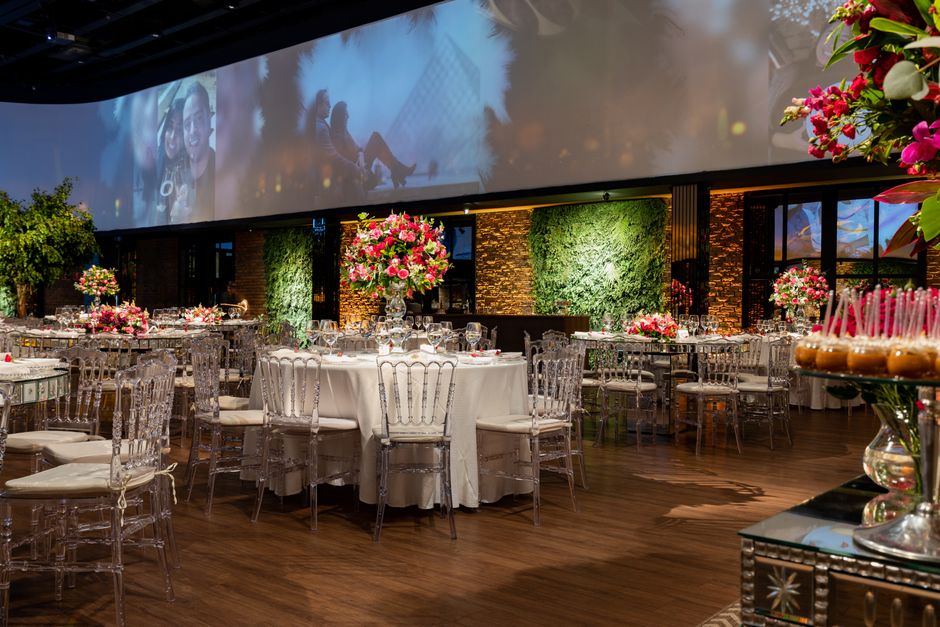
A planner in Leeds opens three tabs before lunch: your 800-capacity hall, a converted mill two postcodes over, and a hotel ballroom that already has 412 Google reviews. She is not looking for a brand story. She is checking standing capacity, load-in access, and whether anyone has complained about the cloakroom. If your Google Business Profile still says “event venue” with six photos of a Christmas party from 2023, she never reaches the enquiry form.
Local SEO for venues and events companies in the UK is not a ranking trophy. It is the work of matching the query to the right room, the right city, and a page that can take a site-tour request without making the planner hunt for ceiling height. This piece is for the marketing lead who owns enquiry volume, cost per qualified tour, and pipeline from organic Maps and city-intent search, not for the sales coordinator who routes the CRM.
Paid still matters. That global average does not reflect UK venue and events search, where CPCs in competitive cities run materially higher. That is exactly why organic local visibility is not optional.
The query is a room type, not your brand name
UK planners search like operators. They type “warehouse wedding venue Hackney”, “theatre style 200 Manchester”, “dry hire studio Shoreditch”, or “outdoor ceremony Gloucestershire”. Your homepage that opens on a mood film and a “Explore our spaces” carousel does not answer that. Google then has to guess which entity you are: hotel, nightclub, heritage house, or conference centre. Guess wrong and you rank for the wrong night, or you rank and still collect tyre-kickers who wanted a 60-seat boardroom.
Zero-click search makes this worse. A large share of Google searches now end without a visit, and AI Overviews already sit on a meaningful slice of queries, with Google talking about 2 billion monthly users of that experience. Impression share without a click is not a vanity problem if your GBP panel already shows hours, photos, and a call button. It is a problem if the panel never shows capacity, neighbourhood, or a review that mentions AV. You need to win the panel and still earn the click when the planner needs floor plans.
Treat intent as clusters, not a keyword list dumped into a blog. Wedding dry hire, awards dinners, product launches, union AGMs, and filming days convert on different proof. A Leeds mill that ranks for “industrial wedding venue” and then leads with corporate day rates will burn the enquiry. Map each primary GBP to one commercial job, then build supporting city or space pages that repeat that job in the first viewport: capacity band, postcode, nearest station, and a tour CTA.
If organic traffic lands and dies, you do not have an SEO problem first. You have a page that will not convert a planner who already compared three halls. Session recordings and heatmaps in HeyLead Insights show whether they stall on the gallery, skip the form because parking is buried, or bounce when the H1 still says “unforgettable events” instead of “400 standing, 220 seated, 4 minutes from Leeds station”.
A short check before you rewrite copy: if your team would send a homepage URL to a Google Ads campaign, stop. Dedicated space pages aligned to the query beat a catch-all site every time. If you need a partner to keep those pages shipping, HeyLead SEO services can sit under the same programme as local listings rather than as a separate content side quest.
GBP setup that planners filter on, not that agencies tidy once
Your primary category cannot be vague. “Event venue” is a start. Secondary categories should match how people actually filter: wedding venue, conference centre, banquet hall, performing arts theatre, or film studio, depending on what you can honestly fulfil. One profile trying to be all of those in a dense London cluster usually loses to a specialist two streets away.
Services and products on GBP are underused. List “site tour”, “dry hire”, “wedding reception”, “awards dinner”, “hybrid livestream”, and “overnight get-in” as services with a short note on capacity and from-price in pounds. Photos should be labelled in the filename and description with space name and city: “Main hall standing 600 Bermondsey” beats “IMG_8841”. Cover the load-in door, the accessible entrance, daylight vs blackout, and a packed room. Empty architecture shots look premium and convert like a brochure no one finishes.
Q&A on the profile is public search copy. Seed the questions planners already email: corkage, last tube, in-house catering exclusivity, PA included, and whether you take midweek conferences in wedding season. Reply in the same nouns they use. Hours should reflect when sales actually pick up, not when the bar opens. If tours run Tuesday to Thursday 10:00-16:00, say so. A “Open 24 hours” listing for a staffed hire space trains Google to send Friday 23:00 calls you will never convert.
Audit scorecard
-
One primary job per profile
If you run a wedding barn and a weekday conference wing, do not mash them into one GBP unless they share a public entrance and brand. Split profiles only when Google’s guidelines allow a distinct storefront. Otherwise, use space pages and GBP products to separate jobs without creating duplicate entities that fight each other in the Pack.
-
NAP that matches Companies House and the site footer
Use the trading address planners will visit, not the registered office in a serviced block in Slough if tours happen in Ancoats. Spell the street the same way on the site, GBP, Directory, and Ticketsource if you use it. Inconsistent unit numbers are a classic reason two Map pins appear for one hall.
-
Review themes, not star averages
Ask couples, association PAs, and production managers to mention the thing you want to rank for: “220 theatre in the gallery”, “easy load-in on Newhall Street”, “on-time site tour”. A 4.6 with no capacity language loses to a 4.4 that Google can quote in the panel.
-
Posts tied to real inventory
Use Google Posts for leftover midweek dates, open days, and new AV, not motivational quotes. Link the post to the matching space page with UTM tags so you can see whether Pack engagement becomes tour requests.
-
Uptime of the booking path
As of Q1 2025 CrUX data, around 48% of origins pass all three Core Web Vitals. A 4MB gallery of empty rooms that fails INP on a planner’s phone will not get the form submit, even if you sit in the Pack. Compress, lazy-load, and keep the tour form above the fold on mobile.
Get a free marketing audit - we review your search, ads, and landing pages and send back what to fix first.
Get a free audit
City pages and markup for a multi-site UK estate
National venue groups love one template: “Our locations” with a map pin graphic. That page rarely ranks for “conference venue Cardiff Bay” because it does not commit. Each tradable site needs a unique URL with unique proof: nearest station, parking constraint, ceiling height, exclusive caterers, and a photo set that could not be swapped with Bristol. Duplicate city pages with the name swapped are how you get filtered, not how you scale.
Schema should describe what Google already sees. Use LocalBusiness or more specific types where they fit, plus Event for public tickets if you also promote your own programme. FAQ schema on capacity, hire terms, and access helps when AI Overviews summarise the SERP. Thin, templated city copy is now common; information gain is the real differentiator. Generated city copy without a human who has walked the loading dock will not earn citations. Information gain after the March 2026 core update is the bar: a planner should learn something they cannot get from the Map Pack alone.
Internal links should follow how sales actually upsell. The Manchester hall page should point to overflow hotels you partner with, the breakout rooms, and the evening dry-hire product, not to a generic “blog” index. If you publish at volume, keep a human editor on facts (licence, capacity, postcode) and use a cadence tool only under that strategy. HeyLead Auto Blogger is built for region- and niche-aware articles at a sustainable pace, which matters when you have six sites and a seasonal content hole every January.
Action checklist
- Export every live URL that mentions a town, space, or capacity. Kill or noindex the ones that only exist to house a gallery.
- For each revenue site, write a 40-word first viewport: space name, city, standing and seated numbers, nearest rail, primary CTA (book a site tour).
- Add a comparison table of rooms on that site only. Do not make planners open PDFs for the difference between Hall A and the attic studio.
- Validate LocalBusiness and FAQ markup, then request indexing on the city URLs that actually take enquiries.
- Run a competitor gap on the three venues that steal your Pack in that city and note which review themes and photo types they show that you do not.
- Tag every GBP post, QR on the tour confirmation, and city-page form with UTMs so organic local is not dumped into “direct”.
- Re-check Core Web Vitals on the space template, not the homepage. The money URL is the one in the Pack.
Free tools - try these yourself
Seasonality, reviews, and the week the diary actually fills
UK venue demand is lumpy. Wedding site tours spike after engagement season and again when Saturday 2027 dates vanish. Corporate awards pile into autumn. University balls cluster. If your review acquisition only runs when the events manager remembers, you go into peak with a stale profile while a newer hall in the same borough harvests 30 fresh reviews in six weeks. Google treats recency as a quality signal. So do planners.
Do not bribe reviews. Do time the ask: 48 hours after a clean get-out, from the person they actually met on the recce, with a link that opens the right GBP. For multi-site groups, never let a Glasgow dinner land on the London profile. That is how you poison categories. Respond to every public complaint about parking, noise, or AV as if the next planner is reading it on the train, because they are.
Content should follow leftover inventory, not a random editorial calendar. January pieces on “how to plan a summer wedding in the Cotswolds” only help if you have dates and a tour path. A Glasgow hall with midweek holes needs pages and Posts about conferences and filming, not another engagement-shoot gallery. When AI Overviews summarise “best wedding venues in Surrey”, citation share goes to pages with specific constraints (165 seated, exclusive hire, last orders) rather than listicles of adjectives.
One Bristol rooftop venue we worked with had organic sessions up 22% after a city-page refresh and still missed tour targets. The mechanism was ugly and small: the form asked for “event date” as a free-text field, and mobile users dropped it. They swapped to a date picker plus standing/seated toggle. Tour requests from organic Maps recovered in 11 days. Rankings had not been the bottleneck. The page was.
Report tours and contracted events, not “local pack impressions”
Marketing leaders in this category get trapped in last-click. A planner discovers you in Maps, later Googles the brand, then fills the form from a saved tab. Last-click will credit Direct. Paid Search will claim the branded click. Organic local looks dead. You already hear this language in buyer conversations: unreliable attribution, mismatched tools, “attribution is basically dead” if you only mean last-click. Keep it for tactics (which query earned the first Maps view) and use a simple business view for the board: site tours booked, proposals out, contracted hire value, by site.
Clean conversion setup still matters for any paid support around the organic programme. Enhanced conversions and first-party form fields protect you when 20%+ of conversion data disappears to ad blockers and privacy changes. That does not mean you should promise a ROAS number before you have seen the account, the pages, and the unit economics of a Saturday hire. Realistic SEO movement on competitive UK city terms is a 3-6 month job, not a week of AI content.
Build one enquiry event that sales will actually mark: “qualified site tour”. Fire it from the thank-you page, not the button click. Exclude staff, suppliers, and the PR agency. If Performance Max “drives the bulk now” on the paid side, do not let those campaigns sit on the homepage while organic city pages do the hard matching work. Message match is the same discipline in both channels.
Watch mobile conversion separately. Conversion rates still lag desktop by 30-40% in many paid accounts, and organic Maps traffic is even more mobile-heavy. If desktop looks healthy in GA4, you are hiding the planner on the tram who cannot pinch-zoom your floor plan. That is a Core Web Vitals and form problem, not a “we need more backlinks” problem.
Patterns we see in audits
The short quotes below are illustrative composites drawn from patterns in account reviews. They are not quotes from named clients.
“We ranked for conference venue Leeds, then realised every form said wedding date. Corporate PAs bounced. Splitting the CTA by room type did more than another month of citations.” - Head of Marketing, multi-site events hire
“Pack clicks looked fine in Looker. Tours did not. The GBP still listed the registered office, so Google thought we were in a business park 14 miles from the hall.” - Founder, independent warehouse venue
FAQs
Should a UK venue group use one domain or a subdomain per city?
Stay on one domain with a clear folder or subfolder per site unless there is a genuine separate brand. Planners search the city plus room type. Subdomains split authority and make NAP and review hygiene harder. Unique pages still need unique proof, not cloned templates.
Do we still need citations if we have a complete GBP?
Yes, but only consistent, relevant ones: local tourism bodies, wedding directories you already pay for, conference associations, and the council licensing record if it is public. Random global citation blasts do not move a Shoreditch warehouse. Inconsistency hurts more than missing a fifth directory.
How do AI Overviews change local venue SEO?
They reduce clicks on some informational queries even when visibility rises. Defend the Map Pack with photos, categories, and reviews, and put non-obvious facts on the space page so you are worth citing: load-in width, blackout, exclusive-hire rules, station walk time. Volume of blog posts is a dead metric if those posts add no information gain.
Where should Google Ads sit next to this work?
Use paid search for leftover dates, branded defence, and high-CPC cities where the Pack is locked by hotels. Send ads to the same space pages you optimise for organic. If someone says they will just send traffic to the homepage, that is your cue to walk away. No one can guarantee a CPL before they have seen your form, your sales cycle, and your Saturday rate card.
How long before city pages move?
On competitive London and Manchester terms, plan in quarters, not sprints. You can fix GBP, photos, and the tour form in days. Rankings for “wedding venue Richmond” against entrenched halls take longer. Anything promising page-one in a week is selling you risk, not a programme.
Putting it to work
Execution sprint
This week
- Pull 30-90 days of performance for UK events (Search Console, ads, CRM, or call logs - whatever you have).
- Flag the top leak: wrong intent, weak page, slow response, or dirty conversion tracking.
- Ship one fix on the highest-traffic money path (page, campaign split, or response rule).
- Run the free tools below on that same URL or account and log the findings.
Free tools for this sprint
Next 30 days
- Expand the fix to the next one or two money paths only after the first one shows cleaner bookings.
- Align creative, keywords, or content with the same offer the page now states.
- Review booked outcomes weekly; cut anything that still only produces unqualified volume.
This week
-
Pull 90 days of enquiries and tag each as Maps, organic city page, branded, or paid. Ignore session vanity.
-
Open GBP on a phone and check category, address, hours, and whether the first 10 photos could belong to any other hall.
-
Rewrite the first viewport of your highest-revenue space page with capacity, city, and a site-tour CTA.
-
Run the local SEO checklist and the Core Web Vitals checker on that URL only.
-
Add UTMs to GBP posts and the form thank-you so the next month is not a Direct bucket.
Next 30 days
-
Split or relabel CTAs so wedding and conference planners are not forced through one “event date” field.
-
Build or prune one city page per revenue site with unique access and room facts.
-
Start a review ask 48 hours after get-out, routed to the correct profile.
-
Validate schema and request indexing on the URLs that take tours.
-
Reconcile “qualified site tour” in analytics with what sales actually walked.
If the gap is the messy middle between Map Pack intent and a tour that sales will honour, a digital marketing partner like HeyLead can own GBP hygiene, city-page information gain, and the tracking that ties organic local to contracted hire value. Chat with us on WhatsApp
Free marketing audit, or reach Martin directly:
Get a free audit Connect on WhatsApp · [email protected]