
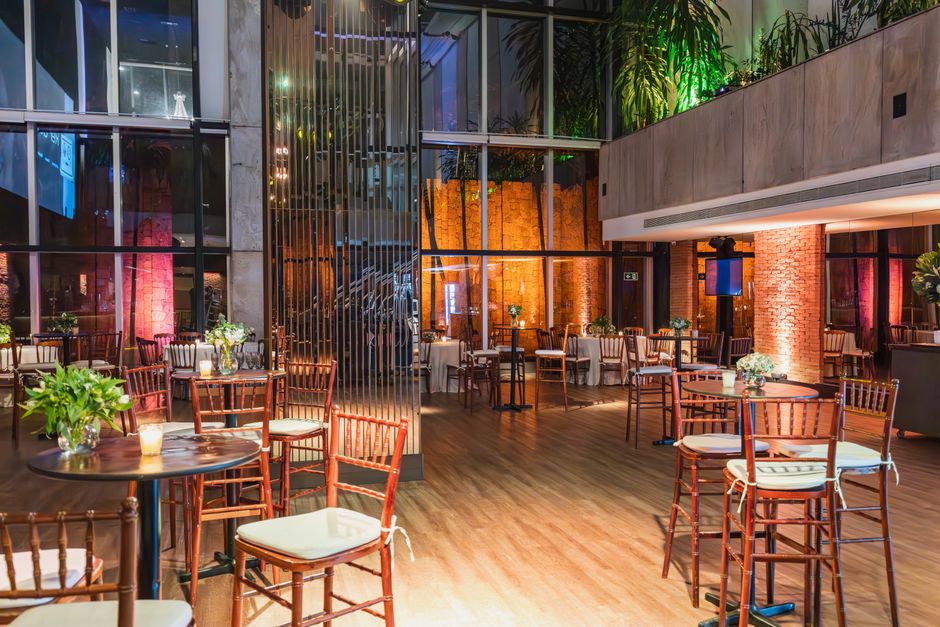
A Brisbane wedding coordinator sits in M1 traffic and types “function centre 200 guests inner west” into Google. She never types your hall’s name. She wants a map pin, a capacity number, parking, and whether the space does a Saturday bump-in without a four-hour blackout. If your Google Business Profile, suburb pages, and enquiry form do not answer that in one glance, she books a site inspection at the warehouse that does.
That is the Australian venue market in practice. Corporate planners in Sydney, Melbourne, and Perth search by suburb, capacity band, and event type. Couples search by date, photo proof, and “can we do a ceremony plus reception.” Your brand name is a later-stage query. Local SEO for venues and events companies in Australia is the work of winning those early, messy, location-plus-job searches and turning them into qualified site tours, not map impressions.
Suburb-plus-capacity searches beat your hall name on Australian SERPs
Most venue sites still treat SEO as a brochure: one homepage, a gallery, a “contact us” form, and a hope that “XYZ Events Space” ranks nationally. Planners do not work that way. They start with a job. Conference for 80 with breakouts in Southbank. 18th with a DJ curfew in Newtown. Offsite with AV and a loading dock in Port Melbourne. Google matches those strings to Maps results and pages that name the suburb, the capacity, and the event type in the title and the first screen.
You will usually find the leak in Search Console, not in a brand dashboard. Filter queries containing “near,” a suburb, “function centre,” “warehouse wedding,” “conference venue,” or a guest-count number. Brand terms can look healthy while the money queries sit on page two. That is when sales says “we’re quiet until September” and marketing thinks the pack is “fine” because branded clicks still trickle in.
AI Overviews now sit on a chunk of informational queries. Google reported in 2024 (Search On / I/O briefings) that AI Overviews were reaching over a billion users per month; for venue searches, the practical exposure is in informational queries like best-of roundups, not high-intent suburb-plus-capacity searches that still drive clicks. For venues, that often means a summarised list of “best wedding venues in [suburb]” that cites whoever published the most specific, citable facts: load-in hours, seated vs cocktail capacity, public transport, and noise rules. If your page is a mood-board paragraph, you get mentioned as a vibe, not as a bookable space. Zero-click behaviour is real, but high-intent local queries still click when the snippet shows capacity, suburb, and a clear next step.
Paid search is not a substitute for this layer. You can buy “conference venue Melbourne” and still lose the tour if the organic competitor owns the Maps pack and a page that names Docklands, 220 theatre, and a 6pm load-in. Treat local SEO as the always-on inventory for those jobs, then use ads to fill seasonal gaps, not to paper over a missing suburb page.
If your in-house team is already stretched, a focused SEO program for multi-location venues is usually cheaper than spraying more brand ads at a pack you do not control.
How Australian venue marketers actually win the Map Pack and the first click
The pack is a filter, not a vanity listing. Planners tap the three pins that match category, hours, photos, and reviews that mention the event type they are buying. Your GBP category should be the commercial reality: Event venue, Wedding venue, Conference centre, or Banquet hall, not a leftover “Restaurant” from when the chef ran the listing. Secondary categories matter when you truly run both weddings and weekday conferences. Attributes should spell parking, Wi-Fi, accessibility, and outdoor space, because those are the filters people use on mobile (mobile still accounts for most paid and organic local taps, even when conversion lags desktop).
Photos are inventory. A 12-image dump from 2019 does not compete with a space that updates ceremony, cocktail, theatre, and bump-in shots every season. Name files and captions with suburb and room type. Posts should flag remaining Saturday dates, AV packages, and school-holiday availability. Q&A should answer the questions sales already fields: corkage, noise curfew, last drinks, minimum spend on a Tuesday in July. That is local SEO work, not a one-off “set up GBP” ticket.
On-site, each sellable room or precinct needs a page that a planner can send in Slack. Title tags should read like the query: capacity, suburb, event type. Schema for LocalBusiness or EventVenue, plus FAQ where you have real answers, helps machines and humans. Core Web Vitals still gate the experience. A 6MB hero video that stalls INP on a planner’s phone is how you lose the inspection request after you won the pack.
Reviews need event language. “Lovely staff” is weaker than “220 seated, AV on time, load-out by 11.40pm.” Ask after contracted events, not after every coffee. Velocity in the fortnight before peak RFP season (typically late winter into spring for Australian corporate diaries) moves the pack more than a once-a-year review drive.
Audit scorecard
-
Query inventory vs brand vanity
Export 90 days of Search Console queries. Tag each as brand, suburb, event type, capacity, or competitor. If suburb-plus-job queries are under 30% of clicks, your pages are not matching how Australian planners search.
-
GBP category and filter match
Confirm primary category, hours, and attributes against what sales actually sells. Wrong category is why a warehouse wedding space never appears next to “wedding venue Collingwood.”
-
Room and precinct pages
One indexable URL per sellable space or city precinct, with seated vs cocktail numbers, AV, parking, and a form that asks event date and headcount. Homepages that try to rank for every suburb fail all of them.
-
Review language and recency
Count reviews in the last 90 days that name event type, suburb, or capacity. If that number is near zero, the pack has no proof for a planner comparing three pins.
-
Form and phone as conversion events
Track site-inspection requests and contracted-event calls in GA4, not only “contact” clicks. If sales cannot tell which suburb page produced the tour, you cannot fund the page.
-
Page speed on mobile planners
Run Core Web Vitals on the enquiry template. Heavy galleries that look premium on desktop often stall on 4G between site visits.
-
NAP and citation consistency
Trading name, ABN-facing address, and Maps pin must match directories planners still use (Yellow, TrueLocal, industry association lists). Split NAP is a quiet pack killer for multi-site estates.
-
Seasonal content that cites real constraints
Publish pages that name school holidays, AFL Grand Final weekends, NYE curfews, and wet-weather plans. Information gain beats another generic why-choose-us blog - volume metrics alone have not moved commercial rankings since the helpful content and quality update cycles began.
Get a free marketing audit - we review your search, ads, and landing pages and send back what to fix first.
Get a free audit
A playbook you can run without waiting for a full site rebuild
You do not need a 40-page IA project to start. You need the queries, the listings, the pages that match jobs, and a form sales will actually use. A Head of Marketing at a 350-capacity converted warehouse in Brunswick did this in a tight sprint: they split “wedding” and “corporate” into two GBP posts calendars, built one Collingwood/Fitzroy precinct page with seated 180 / cocktail 280, reset the primary GBP category from a leftover restaurant listing to Event venue, and changed the form from a free-text “message” field to date, headcount, and event type. Site-inspection requests from organic Maps traffic moved from around 3 organic Maps inspection requests per month to a steady 11 in the next 28 days. The mechanism was the form fields, not a miracle ranking jump.
A second pattern: a multi-site operator in Perth kept one homepage for three rooms. Google could not tell which pin belonged to which capacity. Separate GBPs (where Google’s guidelines allow distinct premises), unique photos, and room-level URLs stopped the wrong room winning the pack for 40-guest dinners.
Post-click, watch where planners bail. If they open the gallery then never hit the form, the proof is in the wrong order: put capacity, date availability, and a short floor plan above the fold. HeyLead Insights is built for that job, session recordings and heatmaps that show whether the enquiry module is even seen on a phone. Do not guess. Watch three real sessions from organic / Maps.
Content cadence matters because suburbs and seasons change. If you cannot staff weekly precinct updates, use a managed cadence rather than a graveyard of 2022 “top 10 wedding trends” posts. HeyLead Auto Blogger can ship region- and niche-aware articles under human strategy so each hall or city is not waiting on a freelance queue. Keep humans on E-E-A-T: real load-in times, real noise rules, real photos. The share of top-ranking pages with AI-assisted copy has grown sharply; what still separates the ranking pages on commercial venue terms is operational specificity - real load-in times, real noise rules, real photos.
Action checklist
- Pull 90 days of Search Console and GBP insights. List the top 20 non-brand queries and the suburb each maps to.
- Fix GBP primary category, hours, products (packages), and 15 current photos per location. Delete off-category photos that confuse the listing.
- Write or rebuild one precinct or room page per priority suburb. Title: event type, capacity, suburb. First 100 words: seated/cocktail, parking, AV, nearest station.
- Add FAQ and LocalBusiness / Event schema. Validate it. Internal-link from the homepage and from seasonal posts using the suburb name, not “click here.”
- Rebuild the enquiry form: event date, headcount, event type, suburb preference. Fire a GA4 event only on successful submit. Pass UTM on every GBP link.
- Ask the last 10 contracted events for a Google review that names the room and the event type. Do not script fluff.
- Check indexation and canonicals so room pages are not noindexed behind a “view gallery” app. Confirm the sitemap lists every precinct URL.
- Measure site inspections and contracted events by landing page monthly. Cut or merge pages that never produce a tour after 90 days of impressions.
Free tools - try these yourself
When the pack ranks and the diary still stays empty
You can win the three-pack in Fortitude Valley and still take zero Saturday deposits. The usual cause is a homepage that talks brand story while the query was “industrial wedding 120 guests.” Message match is the whole game. The Maps description, the organic title, and the H1 should say the same job. If they diverge, the planner bounces and your “engagement rate” looks fine because they scrolled the hero.
Another failure: tracking the wrong thing. Local pack impressions and direction requests are not pipeline. A marketing lead at a Hunter Valley estate once celebrated a spike in “website visits from Maps” that turned out to be guests navigating to the wedding they had already booked. Sales still had an empty weekday conference diary. When they tagged inspection-request as the conversion and excluded post-event guest traffic, budget moved to the two room pages that actually created RFPs.
Attribution will not be pretty. Last-click will double-count a planner who found you on Maps, clicked a remarketing ad, then submitted the form. You still need a clean event. Enhanced conversions and first-party fields (email, phone on the form) protect against the 20%+ data loss teams see from blockers and privacy changes. Promise a count of qualified site inspections by suburb and a contracted-event rate from those inspections. That is a marketing number you can defend.
Expect 3-6 months before precinct pages compound. Anyone selling week-one rank guarantees is selling something else. The operational load is real: photo refresh, review asks, hours for seasonal trading, schema when rooms change, and form QA after every CMS update. That is why this is a program, not a project.
Patterns we see in audits
The short quotes below are illustrative composites drawn from patterns in account reviews. They are not quotes from named clients.
A common pattern we see: a Head of Marketing at a multi-site events group was reporting Map Pack impressions while sales was asking why Tuesday conferences were dead. The query was “40 pax boardroom Southbank” and they only had a brand homepage.
A common pattern we see: a founder of a warehouse wedding and function space had GBP listed as a restaurant because of the in-house kitchen. Once they fixed category and put seated capacity in the first line, inspection requests from organic Maps actually showed up in the CRM.
FAQs
Do we need a separate Google Business Profile for every room?
Only when rooms are distinct premises with their own public entrance and signage under Google’s guidelines. Separate rooms in one building usually need one GBP and unique website URLs. Fake extra listings get suspended and take the pack with them.
Should we bid on Google Ads while we wait for local SEO?
Yes for peak dates and competitor conquest, with dedicated landing pages, not the homepage. Watch wasted query spend. Organic still needs to own the suburb-plus-capacity jobs you cannot afford to rent every week as CPCs climb.
How many suburb pages is too many?
If you cannot uniquely describe capacity, access, and proof for that precinct, do not publish it. Thin clones across 40 suburbs get ignored. Three to eight honest precinct or room pages beat a template farm.
What should we report to the commercial team?
Site inspections requested, show rate, and contracted events by landing page and by GBP location. Impressions and “profile views” are diagnostics, not the marketing number.
Will AI Overviews kill venue SEO?
They cut clicks on fluffy roundups. They still send traffic when your page is the cited source of capacity, curfew, and access facts. Write for citation and for the form, not for word count.
Putting it to work
Execution sprint
This week
- Pull 30-90 days of performance for Australian venues and events (Search Console, ads, CRM, or call logs - whatever you have).
- Flag the top leak: wrong intent, weak page, slow response, or dirty conversion tracking.
- Ship one fix on the highest-traffic money path (page, campaign split, or response rule).
- Run the free tools below on that same URL or account and log the findings.
Free tools for this sprint
Next 30 days
- Expand the fix to the next one or two money paths only after the first one shows cleaner bookings.
- Align creative, keywords, or content with the same offer the page now states.
- Review booked outcomes weekly; cut anything that still only produces unqualified volume.
This week
-
Export Search Console non-brand queries and highlight every suburb-plus-event-type string.
-
Audit one GBP: category, photos, hours, products, Q&A.
-
Rewrite one room or precinct title and H1 to include capacity and suburb.
-
Add date, headcount, and event type to the enquiry form and fire a GA4 event.
-
Request two reviews from recent contracted events that name the room.
-
Run the Core Web Vitals checker on the mobile enquiry template.
Next 30 days
-
Ship two more precinct pages with schema and unique photos.
-
Align GBP link UTMs and weekly inspection reporting with sales.
-
Cut or noindex pages that never produce a tour.
-
Set a photo and review cadence through your next peak RFP window.
Start by lining up last quarter’s site-inspection requests against the landing page and GBP location that produced them. If you cannot see which Australian suburb pages actually book tours, HeyLead can own that local SEO loop: Map Pack listings, precinct pages, review language, and the form tracking that ties organic clicks to contracted events. Chat with us on WhatsApp
Free marketing audit, or reach Martin directly:
Get a free audit Connect on WhatsApp · [email protected]