
A Bristol reformer studio can fill every evening Reformer 1.0 slot and still watch paid clicks bounce because the page they land on is a 14-class timetable, a 40-image gallery, and a membership FAQ written for people who already train there. That is not a media problem. It is a page problem. UK yoga and pilates companies buy traffic on Google and Meta for intro packs, pregnancy classes, lunchtime mat, and first Reformer sessions. The click is cheap relative to a wasted hour of instructor time. The page has to finish the job the ad started: one offer, one location, one next step, in pounds, with proof that looks like this postcode, not a stock studio in California.
You already know homepages exist to serve everyone. Paid and high-intent organic traffic does not. This piece is the build: how UK studio marketers structure dedicated landing pages so intro-pack and trial traffic books, how to check speed and proof without guessing, and how to measure the form without pretending last-click is gospel.
What a UK studio page has to do that a brand site never will
Most yoga and pilates companies in the UK still route Search and Meta to the same URL that lists every class, every teacher bio, and a blog about breathwork. That page is useful for returning members. It is hostile to a first-time booker who clicked “4-class pilates intro £49 Manchester Northern Quarter”. The mismatch is the leak. Agencies that “just send traffic to the homepage” get called out for a reason. Dedicated pages are not extra design vanity.
Think in student jobs, not brand chapters. Pregnancy pilates in Leeds is not “our method”. Lunchtime yoga near Liverpool Street is not “our community”. Reformer intro in Brighton is not “timetable”. Each of those jobs needs its own URL, headline, price, and proof. The ad copy and the H1 should share the same nouns. If the ad said “beginner-friendly, no experience, towels included”, the hero cannot open with a Sanskrit line and a 12-week teacher training upsell.
Mobile is the default. Most paid search clicks in fitness land on phones - Google’s own benchmarks put mobile share above 60% across categories and higher still in health and wellness. Conversion still lags desktop by a wide margin when the timetable widget is a nested iframe, the “book” button sits under a 2MB hero video, and the form asks for a GP letter before anyone has tried a class. Core Web Vitals still fail on a lot of studio sites. Interaction to Next Paint is where class-finder widgets usually blow it. If the first tap on “Book intro” takes a second to paint, you paid for a click that never became a hold on the diary.
Price in £, not “from”. Name the studio postcode or the nearest station. State class length, kit, and whether the intro pack expires in 14 or 30 days. UK buyers compare you to PureGym-adjacent pilates, boutique Reformer chains, and the independent above the bakery. Ambiguity reads as expensive. Clarity reads as bookable.
If paid social or Search is already live and you need a partner to rebuild the post-click path rather than add another campaign, HeyLead’s web design and landing page work sits on that handoff, not on a new media plan.
Get a free marketing audit - we review your search, ads, and landing pages and send back what to fix first.
Get a free audit
The page architecture that books intros, trials, and class packs
Keep one primary conversion: book the intro, start the trial, or buy the 4-class pack. Secondary links to the full timetable belong in the footer. Above the fold on mobile you need four things only: the offer in the same words as the ad, the location, a single CTA, and one proof line (Google rating, number of intro students this month, or a named teacher). Everything else is a scroll, not a debate.
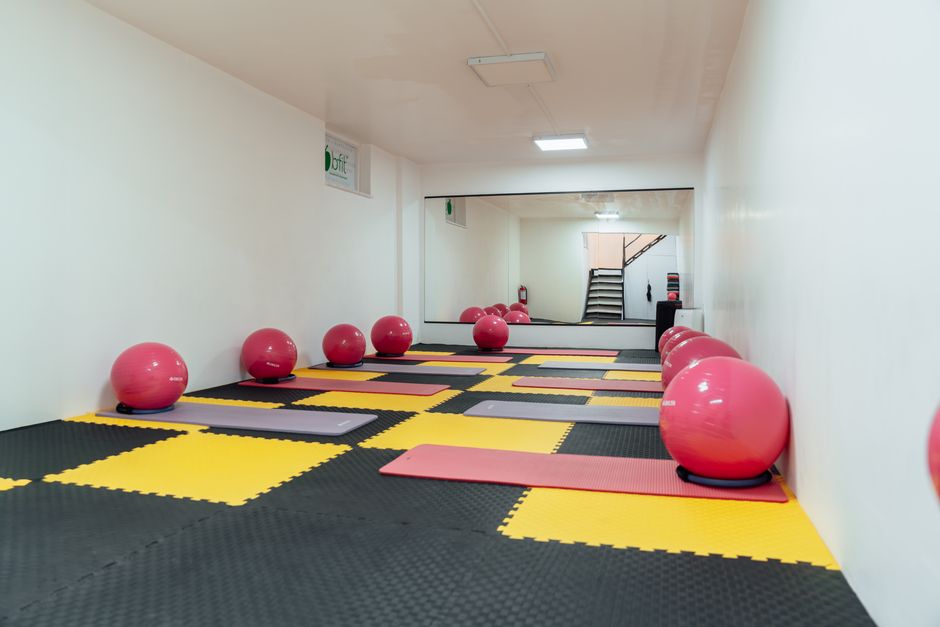
Copy the offer mechanics, not the brand manifesto. “4 Reformer classes, 30 days, £59, Shoreditch, beginners welcome, socks provided” outperforms “Discover your strongest self”. Then show the room. One honest photo of the actual space beats a carousel of five nearly identical planks. UK operators who swap stock for a phone photo of the alley entrance and the changing pegs usually see form starts climb because the visitor can picture the walk from the Overground.
Forms should ask for name, mobile, email, preferred time band (morning / lunch / evening), and which intro they want. Stop asking for injury essays on the first submit. Reception can collect that on the call or in a short follow-up. If you use Instant Forms on Meta, still send people who want more detail to this page. Instant Forms fill volume. Pages with timetable context fill the right slot. Watch drop-off with HeyLead Insights on scroll depth and the field where people abandon. You will usually find the leak is the third optional dropdown, not the headline.
Action checklist
- Map each live ad group or organic cluster to one URL: intro pilates, pregnancy yoga, lunchtime mat, Reformer beginner, private 1:1. No shared homepage for paid.
- Write the H1 as the offer plus city or neighbourhood. Check it is the only H1 with a title and meta that still mention the studio name and £ price where it fits.
- Put a sticky mobile CTA that says Book intro, not Learn more. Point it at a form that submits to the diary or a short WhatsApp handoff your front desk actually answers within 15 minutes.
- Add three proof blocks: Google reviews with local place names, a 15-second phone clip of the room (compressed), and a teacher line that names qualifications UK buyers recognise (PMA, Yoga Alliance, physio-led).
- State pack rules in one short list: expiry, freeze policy, who the pack is not for (advanced Reformer, injury without clearance). Honesty cuts no-shows more than a longer FAQ.
- Fire a unique conversion event per offer. Intro pack booked is not the same as newsletter signup. Feed Enhanced Conversions so you do not lose another 20% of signal to blockers and then wonder why smart bidding looks drunk.
- Cap page weight. Hero image under 200KB, no autoplay, fonts limited. Re-check INP after the booking widget loads.
- Match Open Graph to the ad creative so the share and the click do not show a different class. UTM every button so GA4 does not dump Meta and Search into the same (direct) bucket.
Free tools - try these yourself
A Leeds pilates owner we modelled this on had one Meta campaign pointing at the brand homepage. CTR was fine. Booked intros were not. They split a £49 4-class URL, moved the form above the teacher grid, and cut the injury questionnaire to a checkbox plus “we will call”. Booked intros moved enough that they could stop pausing spend every time CPM ticked up. The mechanism was the form, not a new audience.

An audit scorecard UK yoga and pilates marketers can run on live URLs
Do this on the actual paid landing URLs, not the staging site. Open them on a mid-range Android on 4G, because that is how a parent books after school pickup. Mark fail if the CTA is below a video they did not ask to play.
Audit scorecard
-
Offer match
Headline, price in £, and pack length match the ad or the ranking query. If Search said “pilates intro Birmingham”, the page is not a national brand story.
-
Single job
One primary CTA. Teacher training, retail, retreats, and gift cards are not in the first screen. They live lower or on other URLs.
-
Local proof
Reviews or photos that name the city, station, or neighbourhood. Generic five-star widgets without place names do not reduce first-visit anxiety.
-
Form friction
Five fields or fewer. No PDF health form before the first class is booked. Mobile keyboard types match the field (tel for phone).
-
Speed and INP
Hero and booking widget do not stall the first tap. Fail if the timetable iframe blocks interaction. Recheck after every Mindbody or Marianatek embed update.
-
Schema and snippet
LocalBusiness or SportsActivityLocation where it is accurate, FAQ only for questions you actually answer, and a meta description a human would tap. Validate, do not paste broken JSON.
-
Tracking honesty
Unique events, UTMs, and a weekly reconcilation against the diary. In-platform CPA that does not match no-shows is not a win. Last-click will double-count Search plus remarketing. Treat it as directional.
Cross-industry Search ROAS benchmarks are well north of 4x, but studio intro packs rarely match those numbers when traffic lands on the homepage. Studio intro packs do not get those numbers if the page converts browsers into brochure readers. Creative can be your targeting on Meta, and Performance Max can drive the bulk of Search, but neither saves a homepage. Tighter positioning and a clearer offer beat adding another platform. That is the same complaint buyers already make when they say if an agency sends traffic to the homepage, run.
A second scenario: a two-site yoga company in Edinburgh ran Search to a class-pack page that listed every style in one accordion. Cost per enquiry looked acceptable until reception realised half the forms wanted aerial, which they only run on Thursdays. They split aerial onto its own URL with Thursday times and a waitlist. Enquiry quality jumped because the page told the truth before the click became a phone call. One URL change, not a new bidding strategy.
FAQs
Do UK yoga and pilates companies need a separate landing page for every class type?
You need a separate page for every paid or high-intent job that has its own price, audience, or constraint: intro packs, pregnancy, Reformer beginners, privates. Do not clone 30 URLs for every teacher. Cluster by the booking decision, not by the timetable row.
Should we use the booking software’s default page or a custom URL?
Use a custom page you control for message match, speed, and proof, then pass the user into Mindbody, Mariana Tek, or similar with as few extra fields as possible. Default widget pages rarely match the ad and often fail INP on mobile.
How fast should reception respond after a form?
Treat intro forms like emergency callouts for locksmiths, not like a weekly newsletter. Same evening is the bar for paid traffic. A 15-minute WhatsApp confirmation with two time options beats an automated 400-word welcome sequence. If your booking software sends an automated confirmation, that buys you an hour - but a human follow-up with two specific time slots still converts better than a drip sequence for cold intro traffic.
Is schema worth it on a studio intro page?
Yes if it is accurate LocalBusiness data and FAQs you actually display. It will not replace a clear £ offer. Validate the markup. Fake review schema is a fast way to lose trust with Google and with members.
Can we guarantee a cost per intro before the pages exist?
No. Anyone quoting a CPL or ROAS before seeing your diary, pack economics, and current URLs is selling a 2024 slide. Plan for a few months of offer and page tests, not a week-one miracle.
Putting it to work
Execution sprint
This week
- Pull 30-90 days of performance for yoga and pilates (Search Console, ads, CRM, or call logs - whatever you have).
- Flag the top leak: wrong intent, weak page, slow response, or dirty conversion tracking.
- Ship one fix on the highest-traffic money path (page, campaign split, or response rule).
- Run the free tools below on that same URL or account and log the findings.
Free tools for this sprint
Next 30 days
- Expand the fix to the next one or two money paths only after the first one shows cleaner bookings.
- Align creative, keywords, or content with the same offer the page now states.
- Review booked outcomes weekly; cut anything that still only produces unqualified volume.
This week
-
Export the last 60 days of paid and organic landing URLs and mark which ones are still the homepage.
-
Pick the highest-spend intro or trial query and draft one dedicated page with £ price, location, and a five-field form.
-
Run that URL through the Core Web Vitals, H1, title, and Open Graph checkers linked above.
-
Watch five session recordings or heatmaps on mobile and note the first field people abandon.
-
Split the conversion event so intro booked is not lumped with contact-us.
Next 30 days
-
Ship two more job-specific URLs (for example pregnancy and Reformer beginner) instead of adding a new ad platform.
-
Reconcile form volume to actual first classes attended, not in-platform CPA.
-
Compress media and retest INP after the booking embed.
Start by opening the one URL that currently takes the most intro-pack spend and asking whether a first-time student in that city could book without scrolling past a full timetable. If the answer is no, the work is the page, not another campaign. HeyLead can own the dedicated landing pages, speed, proof, and conversion events that stop qualified yoga and pilates traffic leaking after the click. Chat with us on WhatsApp
Free marketing audit, or reach Martin directly:
Get a free audit Connect on WhatsApp · [email protected]