
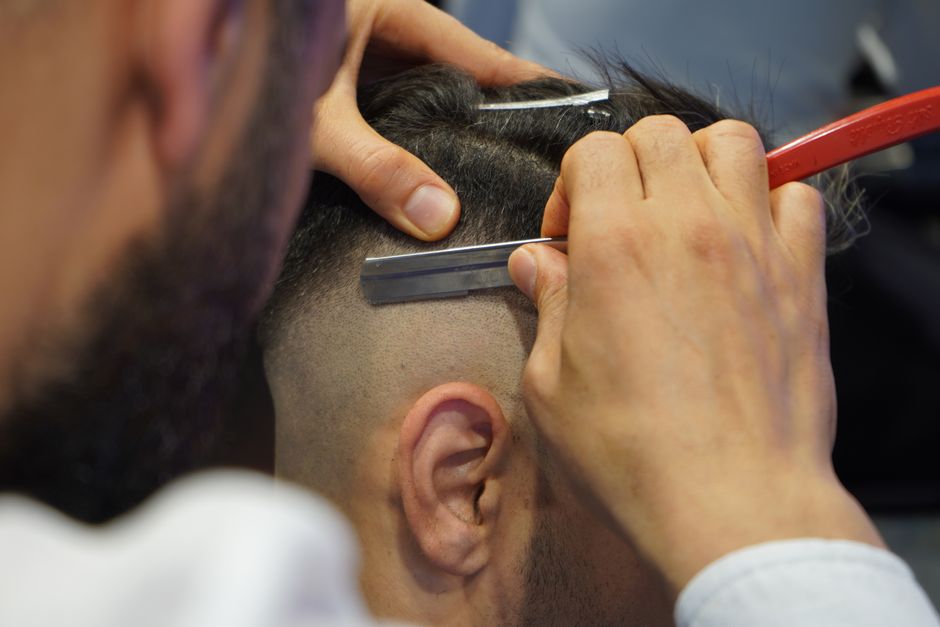
Peckham at 10.04 on a Saturday. A 29-year-old has already compared three shops on Maps, clocked the £32 skin fade, and tapped a Google ad that promised “walk in, same morning.” The next screen is your homepage: a hero carousel, a Christmas party reel from 2024, and a “Book” button that opens a third-party widget that wants a full name before it shows a slot. He closes the tab. The chair that would have paid for that click stays empty until 11.40.
That is the real job of landing pages for barbers companies UK operators run: not a prettier shop site, but a page that matches the ad, the postcode, the service, and the next 20 minutes of diary. Paid search CPC has been climbing, mobile still accounts for most paid clicks, and conversion on phone still lags desktop by a painful margin. You cannot afford to send “barber near me” or “beard trim Shoreditch” traffic into a brand story.
This piece is for marketing leads and owner-operators who own the chair-fill number. We will treat the page as part of the media buy, not a design project that waits for a rebrand.
What a UK barber click actually expects in the first five seconds
High-street barbering in Britain is not a long consideration cycle. The buyer is local, time-poor, and comparing price, wait, and whether you do the cut they named. If the ad said “skin fade + beard, from £28, walk-ins until 6,” the page has to repeat that offer, show today’s availability logic, and prove you are the shop in that postcode. Anything else feels like bait.
You will see this break in two places. First, the message match: Performance Max and Search often drive the bulk of spend now, and they will happily send “kids haircut” or “Afro barber” traffic to a generic homepage if you have not split landing URLs. Second, the mobile handoff. Thumbs, wet weather, a bus stop. If the form is below a 12-image gallery, or WhatsApp is buried in the footer, the session dies. Mobile conversion lag of 30-40% versus desktop is not a mystery when INP stutters on a booking widget and the page fails Core Web Vitals. Roughly half of all origins pass all three in CrUX field data. Barber sites with autoplay video and unoptimised Maps embeds are not in that group.
Price transparency matters more than brand poetry. UK buyers still scan for “from” pricing, student days, and whether a fade includes a hot towel. If you hide the menu behind a PDF, you force a call. Calls are fine if you answer in two rings on Saturday. If you do not, the click was wasted twice: once in CPC, once in the empty slot.
A Croydon group with four chairs sent every “barber Croydon” ad to the group homepage. Enquiry volume looked healthy. The diary did not. The mechanism was simple: the page could not tell the buyer which shop had a chair in 40 minutes. They split URLs by location, put the next available window in plain text, and stopped asking for email before time. Booked cuts from paid search moved without adding budget. One number is enough here: they stopped paying for the same click twice because the second shop in the group finally had its own page.
If your ads still dump into the homepage, that is the first thing to change. Dedicated pages aligned to the ad are the filter buyers already expect. If someone tells you to “just send traffic to the homepage,” treat that as a warning, not a plan. A short pass on HeyLead web design work is useful when the layout itself is the leak, not the bid strategy. The same logic applies to local service landing pages beyond barbers: match the query, the postcode, and the next available slot.
Get a free marketing audit - we review your search, ads, and landing pages and send back what to fix first.
Get a free audit
How the page has to work when Google and Meta both hit it
Search traffic arrives with a service in mind. Meta traffic arrives with a face, a fade, and a soundtrack. One page can serve both only if the fold is modular: offer, proof, book. The creative is the targeting on Meta. On Search, the query is the targeting. The landing page is the closer for both. When those three disagree, you get form spam, no-shows, and a ROAS that never looks right because you are measuring the wrong outcome: “contact” instead of “booked chair.”
Build around the job, not the brand film. Name the cut. Name the shop. Name the walk-in rule. Put reviews with neighbourhood language (“five minutes from the Overground,” not “world-class grooming”). Put staff first names if regulars book a person, not a brand. UK barbers companies live on loyalty to a chair. If your page cannot say who is working Saturday, you are selling a lottery.
Tracking has to match that job. Last-click will double-count a Maps view and a branded Search click. You still need a clean conversion: booked appointment, or a call over 45 seconds from the landing number, not “button click.” Privacy and ad blockers still knock 20%+ off conversion data. Enhanced conversions and a first-party booking event are how bidding stays honest. Without that, automated bidding will chase cheap form fills from people hunting a free taper on a student night you do not run.
Speed is not a vanity score. If the booking iframe loads after the hero, you taught the buyer to bounce. Check field data, not a lab screenshot from a designer’s Mac. Then look at behaviour on the live page: where thumbs stall, where the form is abandoned, whether “Book” is even in view. HeyLead Insights is the honest layer here: session patterns show the leak before you argue about headline copy.
Do not rebuild the whole site to fix this. One URL per intent cluster is enough to start: skin fade, beard, kids, Afro/textured, mobile barber if you run that, and each physical shop.
A chair-booking scorecard UK barbershop marketers can run this month
Use this as an audit against live ads, not a brand workshop. Score the URL the campaign actually uses. If paid search and paid social share one URL, audit it twice against each message.
Audit scorecard
-
Intent URL, not homepage
Each ad group or asset group points at a page that names the service and the town. “Barber Manchester Northern Quarter” does not resolve to a national franchise home. If Performance Max is in the account, check the final URL expansion and pin the location pages you actually want.
-
Offer above the fold on mobile
Price band, walk-in versus appointment, and a primary action visible without scroll on a mid-range Android. Repeat the ad’s exact phrase. If the ad said £25 fade, do not greet with “experience the craft.”
-
One booking path
Either native slots, a light widget, or tap-to-call plus WhatsApp. Not all three competing. Collect the minimum: name, mobile, service, preferred window. Email is optional. If you need a deposit for Saturday peaks, say so before the confirm step.
-
Local proof that matches the query
Three recent Google reviews, a street photo, and a map pin. Avoid stock fades. If you serve textured hair, show it. Mismatched proof is why “quality leads” never show up even when CPL looks cheap.
-
Staff and hours that are true this week
Bank holidays, late Thursdays, and who is on the chair. Stale hours are a conversion killer in Maps and on the page. Update copy when a senior barber leaves. Buyers book people.
-
Core Web Vitals on a real 4G phone
LCP on the offer, not a 4MB hero. INP on the date picker. Compress images. Kill autoplay. If the origin fails CrUX, paid traffic will keep looking expensive while desktop reports look fine.
-
H1, title, and snippet match the ad
The H1 should read like the query the buyer typed. Title tags that say “Home | Joe’s” waste the SERP. Meta description should carry price or walk-in, not a mission statement.
-
Conversion is a booked chair
Fire the event on confirmed booking or qualified call, pass it back with enhanced conversions, and reconcile to the till. If Meta CPA and the diary disagree, believe the diary. Attribution arguments do not fill Saturday.
Action checklist
- Export the last 30 days of Search terms and Meta outbound clicks. Group them into fade, beard, kids, textured, and branded shop-name. Note which still land on one URL.
- Clone one location page per cluster. Keep navigation thin. Put NAP, hours, and book in the same place on every template so staff can update prices without a developer.
- Rewrite the H1 and the first 40 words to match the winning ad. Same price, same postcode, same “walk-in until” line.
- Replace the gallery with six real cuts and one shop-front photo. Add three reviews that mention the service you sell on that URL.
- Set the conversion to booked appointment. Test the event on a dummy booking. Confirm it hits GA4 and the ad platforms.
- Run paid traffic for two weeks before you touch bids. Watch mobile CVR separately. If desktop looks fine and mobile does not, you still have a page problem, not a CPC problem.
Free tools - try these yourself
Social proof is not decoration. One CRO pattern that still shows up in 2026 work: conversion rate lifting when proof sits next to the offer, not in a footer wall. Treat reviews as part of the booking module. LocalBusiness schema should match the NAP on the page. If Google already knows your hours, do not contradict them in copy.
A Leeds operator ran Meta to a stylish one-pager with no prices. CPM looked fine for four days, then climbed as creative aged (UGC in this trade often dies inside a week). Clicks were cheap. Chairs were not. They added “skin fade from £26, no walk-in after 4pm Saturday” and a two-field booker. Same creative, same budget. The diary filled because the page finally told the truth the ad had already promised.
FAQs
Should each UK shop get its own landing page?
Yes, if you buy traffic on town or postcode terms, or if wait times differ. A group homepage cannot answer “can I sit down in 20 minutes in this high street.” Keep a shared template so prices and hours stay maintainable.
Is a booking widget better than click-to-call for barbershops?
Use both only if the widget is fast. Saturday walk-in culture still converts on tap-to-call when someone answers. If calls go to voicemail, force a slot picker and confirm by SMS. Measure booked chairs, not button taps.
Should I use a third-party booking platform like Fresha or Treatwell, or build my own booking flow?
Use a marketplace if it already fills your diary and you can still land paid traffic on a page you control, with price and walk-in rules above the fold. Build your own flow if you need one conversion event, no extra fields, and the diary to match the ad without sending buyers into an app they did not ask for. Speed and message match matter more than the brand of the widget.
How do I know the page is the problem and not the ads?
Split mobile versus desktop conversion, watch time to first action, and compare diary bookings to platform conversions. If CTR is healthy and booked cuts are not, the page or the offer is lying. Rising CPM with flat CTR is usually creative fatigue, not the URL.
What should I track in GA4 for a barbershop page?
Booked appointment, qualified inbound call, WhatsApp click if that is a real path, and scroll only as a diagnostic. Do not optimise bidding to “generate_lead” if that event fires on a half-complete form.
Putting it to work
Execution sprint
This week
- Pull 30-90 days of performance for landing pages for barbers companies uk (Search Console, ads, CRM, or call logs - whatever you have).
- Flag the top leak: wrong intent, weak page, slow response, or dirty conversion tracking.
- Ship one fix on the highest-traffic money path (page, campaign split, or response rule).
- Run the free tools below on that same URL or account and log the findings.
Free tools for this sprint
Next 30 days
- Expand the fix to the next one or two money paths only after the first one shows cleaner bookings.
- Align creative, keywords, or content with the same offer the page now states.
- Review booked outcomes weekly; cut anything that still only produces unqualified volume.
This week
-
Pull seven days of paid landing URLs and screenshot the mobile fold for each.
-
List every ad headline that does not appear in the first screen of that URL.
-
Run the Core Web Vitals checker, H1 checker, and title tag checker on those URLs.
-
Change the primary conversion to a confirmed booking or a call over 45 seconds.
-
Add price and walk-in rules to the fold on the highest-spend URL only.
-
Send 20 test clicks from a phone on 4G and try to book a fade without an email.
Next 30 days
-
Split one URL per service cluster and per shop that spends more than a few hundred pounds a month.
-
Reconcile platform conversions to the till twice, not in a monthly PDF.
-
Refresh proof and staff hours weekly so Maps and the page do not disagree.
-
Only then revisit bids. Page first, auction second.
Start with the single highest-spend URL and make the fold tell the same story as the ad, including pounds, service, and whether you can take a walk-in today. If you want that message-match work, the booking event, and the mobile leak owned as a programme rather than a one-off rebuild, HeyLead can run the landing pages that sit under your UK barber campaigns so chair time, not homepage sessions, is what you buy. Chat with us on WhatsApp
Free marketing audit, or reach Martin directly:
Get a free audit Connect on WhatsApp · [email protected]