
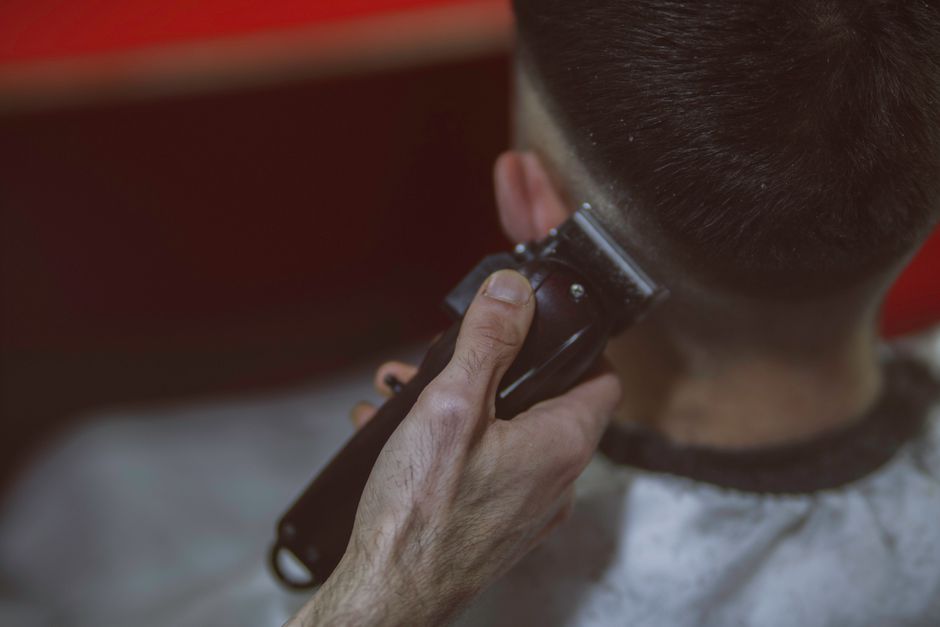
Friday 4.40pm on Chapel Street. A 26-year-old has $68 in Afterpay headroom, a mate’s wedding on Saturday, and a Google ad that promised a skin fade in 25 minutes. He does not want your brand story, your three-location carousel, or a homepage that still leads with “Welcome to our family of stylists.” He wants one screen that tells him the price band in AUD, whether he can book tonight, and whether the barber who actually cuts fades is on the floor. If that screen takes more than a couple of seconds on 4G, he is already looking at the shop two doors down.
Australian barbershop marketers already know the ad is not the whole job. Search CPC has been climbing. Mobile is most of the paid clicks, and conversion still lags desktop by a painful margin. The page is where that money either becomes a booked chair or a bounce.
This piece is about the Australian version of that page: GST-inclusive pricing, walk-in versus Fresha/Booksy behaviour, Saturday peak, and the habit of sending every campaign to the homepage. If someone on your team still says they “just send traffic to the homepage,” treat that as a red flag, not a process.
Why Australian barbershop ads die between the tap and the chair
You are not selling a haircut in the abstract. You are selling a 20-45 minute slot in a specific suburb, at a specific price, with a specific barber, before the client decides to walk in somewhere else. Paid search in Australia still clusters around “barber near me,” “skin fade [suburb],” “kids cut [city],” and “barber open now.” Meta traffic is looser: a Reel of a bald fade, a story from a local footy club, a lookalike that thinks it found “men 18-34 who like grooming.” Both can be profitable. Neither survives a generic homepage.
The failure is usually mechanical. The ad says $45 skin fade. The page opens on a hero of the fit-out and a “Book now” button that dumps into a multi-location widget with no price. The shop in Parramatta and the shop in Bondi share one URL. GST is nowhere. Parking is nowhere. The last Google review mentioning a 40-minute wait is buried. On mobile, the form sits below three paragraphs of founder copy. Interaction to Next Paint is slow enough that the thumb never reaches the time picker. As of the March 2025 CrUX report, fewer than half of origins pass all three Core Web Vitals on mobile. Barber pages that load like a magazine are in the losing half.
Attribution then lies to you. Last-click credits the branded search that happened after the Meta Reel. In-platform CPA looks fine while the diary has holes after 2pm on weekdays. Ad blockers and privacy changes already wipe 20%+ of conversion data, which is death for smart bidding. If you only count “form fills” and never “confirmed Fresha bookings,” you will keep buying the wrong clicks. Quality leads, not just more leads, is the language owners use when they are tired of tyre-kickers asking for a $25 clipper cut you do not even offer.
There is a cultural layer too. Australian walk-in culture is still real in many high-street shops. A page that only offers “request a callback” will under-convert versus a live slot grid. FIFO workers in Perth and Darwin book from camp Wi-Fi at odd hours. Students in Carlton want Afterpay or cash. Tradies in Geelong want a 6.30am chair, not a 10am “consultation.” If the landing page cannot say those things in the first viewport, the click was never going to pay for itself.
If your paid traffic is already leaking after the click, a dedicated landing page rebuild is usually cheaper than another month of CPC inflation on the same homepage.
What a high-intent Australian barbershop page has to prove in one viewport
Match the ad, then remove doubt. If the keyword was “skin fade Surry Hills,” the H1 is not “Premium grooming studio.” It is the service, the suburb, and a time or price cue. Put the next available slot or a “walk-ins welcome until 6pm Saturday” line above the fold. Show one photo of the actual cut, not the marble basin. Name the barber if the ad named the barber. Australians smell stock photography faster than they smell cheap cologne.
Price in AUD, GST-inclusive, with the band not a fake “from.” “Skin fade $45-$55, beard $25, kids under 12 $30” beats a PDF menu. If you take Afterpay, Zip, or cash only, say it. If a deposit holds Saturday, say $10 via Fresha and that no-shows lose it. Ambiguous pricing is how you get enquiry volume that never sits in the chair.
Proof has to be local. Three Google reviews that mention the suburb and the cut type outperform a 4.9 star blob. A 12-second clip of a Bald fade in the actual shop beats a brand reel shot in another city. Parking, tram stop, or “behind the IGA” is not fluff in Australian high streets. Opening hours that include public holidays matter in December. If you are closed Sundays, do not run Sunday Meta traffic to a page that cannot say so until the footer.
The booking action has to be one job. Deep-link into Fresha or Booksy with the service pre-selected. If you still take walk-ins, a second button “See wait / we’re taking walk-ins” with a phone click-to-call is honest. Do not make someone fill a CRM form so a junior can call them in 90 minutes. By then they have already sat down somewhere else. Session recordings will show you the rage-taps on the widget. That is what HeyLead Insights is for: scroll depth, form abandon, and the exact click that never became a slot.
Speed is not a vanity metric here. Mobile paid search conversion already trails desktop by 30-40%. A barber page that fails INP because a third-party booking iframe wakes up late will look “fine” in desktop QA and dead in the diary. Compress hero video. Lazy-load the map. Keep the first paint to the price and the button.
Get a free marketing audit - we review your search, ads, and landing pages and send back what to fix first.
Get a free audit
A page audit Australian barbershop marketers can run without a redesign committee
You do not need a new brand system. You need a scorecard against the actual ad groups you are running this month: skin fades, kids, beard + cut, walk-in / open now, and any Meta creative that names a price. Score each dedicated URL, not the homepage.
Audit scorecard
-
Message match to the query
Open the live ad and the live URL on a phone. If the H1 does not repeat the service and suburb from the headline, fail it. “Barber Melbourne” is not match for “kids cut Brunswick.”
-
AUD price in the first screen
GST-inclusive numbers, not “see menu.” If Saturday surcharge exists, it belongs here. Hidden surcharges create no-shows and one-star reviews that then poison the next campaign.
-
One booking job
Pre-selected service in Fresha/Booksy, or click-to-call for walk-in shops. Extra fields for “how did you hear about us” are how you lose Saturday night inventory.
-
Local proof, not brand adjectives
Reviews that name the cut and the suburb. A real chair photo. Staff names if the ad promised a senior barber. Skip “luxury experience” copy.
-
Hours, wait, and access
Today’s hours, last walk-in time, parking or tram, and whether kids or women are actually booked here. FIFO and shift workers need this more than your about page.
-
Mobile Core Web Vitals
LCP on the hero, INP on the booking widget, CLS from late-loading reviews. If the origin fails CrUX, paid traffic will look cheaper in the ad account than it is in the till.
-
UTM and booking event integrity
Every ad URL tagged. A conversion that fires on confirmed booking, not page view. Enhanced Conversions or a server-side ping so you are not flying blind after the 20%+ signal loss.
-
Offer honesty versus creative
If the Reel promised $39, the page cannot quietly sit at $55. Mismatch is how Meta learning burns and how Google wastes the 20-30% of budget that already goes to junk queries.
Run that list on the three URLs eating the most spend. You will usually find one “open now” campaign hitting a page that does not show hours, and one kids campaign hitting a gallery of adult fades. Fix those before you raise budget. Tighter positioning and a clearer offer still beat adding TikTok because a dashboard looked quiet.
Build sequence: from one URL per intent to a diary that actually fills
Start with intent clusters, not a 12-page sitemap. Skin fade, classic cut + beard, kids, and “open now / walk-in” cover most profitable Australian search and social traffic. Each cluster gets its own URL, its own H1, its own price block, and its own booking deep link. Homepages can keep brand and careers. Paid and high-intent organic should never land there.
Action checklist
- Export last 60 days of Search terms and Meta ads. Group by the job (fade, kids, beard, same-day). Kill terms that are “hairdresser jobs” or “barber course TAFE.” That is the 20-30% waste bucket.
- Clone a thin landing template: H1, AUD prices, hours, three reviews, one video, Fresha embed, click-to-call. No nav except phone and locations. Check the H1 and title tag so they are not identical to every other shop in the franchise.
- Map each ad group to one URL. Rewrite RSA headlines to the same nouns the page uses. If Performance Max is driving the bulk now, feed it these URLs as assets, not the homepage.
- Tag every link with a UTM builder. Confirm the booking complete event in GTM. If you cannot tell a booked skin fade from a menu click, pause optimisation speeches.
- Test one proof block: reviews with suburb names versus a 15-second cut video. In our own client tests, swapping a star-rating blob for suburb-named reviews lifted booking-button clicks meaningfully - you need one real data point, not a brand promise. You only need one lift, not a redesign.
- Watch mobile INP on the widget for a week. If people tap Book and wait, replace the iframe or prefetch it. Core Web Vitals are the unglamorous half of ROAS when CPC is up 12%.
- Align hours in Google Business Profile, the ads, and the page. Nothing burns “open now” spend like a page that still says Sunday when you shut at 4pm Saturday.
- Only then raise bids. Automated bidding on a leaky page inflates spend without better chairs. Fix the signal, then let Smart Bidding work.
Free tools - try these yourself
A two-chair shop in Wollongong did the unglamorous version of this. Their Meta Reel of a mid-fade was cheap. Traffic hit the homepage, bounced, and the owner blamed “Meta volatility.” The actual break was a booking widget that defaulted to colour services they do not even sell. They built one fade URL, pre-selected the service, put $48 GST-inclusive in the hero, and stopped running the Reel after 9pm when the last chair was gone. Booked fades moved. Spend did not need to triple. That is the mechanism: the default service in the widget, not a new channel.
Another operator in Brisbane ran branded search to a location page that still listed an old New Farm address. Calls came in. People arrived at the wrong door. Google got a conversion. The till did not. Clean NAP on the landing page is still CRO for local services.
Keep campaigns fewer and broader once the pages exist. Creative is your targeting on Meta. Signals beat keyword sculpture on Google if Enhanced Conversions are actually firing. Constant structure changes reset learning. Build the pages, then leave the account alone long enough to read a week of bookings, not a day of CPM panic. Creative fatigue still shows in CPM before lead volume drops. When the Reel dies in five or six days, rotate the hook, not the URL, unless the offer changed.
If search is carrying the account, keep Google Ads pointed at these URLs rather than letting Performance Max invent its own landing experience off a thin homepage.
Patterns we see in audits
The short quotes below are illustrative composites drawn from patterns in account reviews. They are not quotes from named clients.
One multi-location operator in Melbourne told us they sent every fade campaign to the homepage for six months. CPC looked acceptable until they mapped booked Fresha events and found the widget defaulted to a colour service they do not even offer. One dedicated URL and GST-inclusive prices in the hero fixed more than another month of bid tweaks.
An independent group founder described a similar mobile miss: about 70% of clicks were on phones, but the page was only QA’d on a 27-inch monitor. The Booksy iframe woke up so late that INP killed Saturday traffic. They prefetch it now and stop ads after last chair.
FAQs
Do Australian barbershop companies still need a homepage if ads use dedicated landing pages?
Yes. Organic, Maps, and returning clients still use it. Paid and high-intent “near me” traffic should not. Split the jobs so the homepage can be a brand and careers surface while money pages do one cut, one suburb, one booking action.
Should we use Instant Forms on Meta instead of a site?
Instant Forms are fine for waitlist or “text me a Saturday slot,” terrible if you need the client to pick a barber, a price, and a real time. Most Australian shops convert better when the form is the live diary. If you use Instant Forms, pipe them into the same booking tool within minutes or you will call people who already sat down elsewhere.
How do we handle walk-ins versus pre-book on the same URL?
State both in the first viewport: “Book a slot or walk in, last cut 30 minutes before close.” Give click-to-call equal weight on mobile. If Saturday is book-only, say it. Mixed messages are how you get a queue and angry Google reviews in the same hour.
What should we count as a conversion?
A confirmed booking or a connected call over a minimum duration, not a thank-you page view. Pass that into Google and Meta with first-party matching. Last-click across tools will double-count. Use the diary as the source of truth when dashboards disagree.
How long before a new page is worth scaling spend?
You can see booking-rate movement in days if traffic is already there. Once a page has seen at least 200 mobile sessions from paid traffic, booking-rate variance stabilises enough to make a directional call. Below that, you are reading noise. Treat 3-6 months as the honest window for a full paid program, not for a URL swap. Anyone guaranteeing a CPL before they have seen your unit economics and your widget is selling theatre.
Putting it to work
Execution sprint
This week
- Pull 30-90 days of performance for barbershop (Search Console, ads, CRM, or call logs - whatever you have).
- Flag the top leak: wrong intent, weak page, slow response, or dirty conversion tracking.
- Ship one fix on the highest-traffic money path (page, campaign split, or response rule).
- Run the free tools below on that same URL or account and log the findings.
Free tools for this sprint
Next 30 days
- Expand the fix to the next one or two money paths only after the first one shows cleaner bookings.
- Align creative, keywords, or content with the same offer the page now states.
- Review booked outcomes weekly; cut anything that still only produces unqualified volume.
This week
-
Pull 60 days of paid landing URLs and mark which ones are actually the homepage.
-
Write GST-inclusive prices for fade, cut + beard, and kids on one mobile-first URL.
-
Deep-link Fresha or Booksy with the service pre-selected; add click-to-call for walk-ins.
-
Run the Core Web Vitals, H1, and title checkers on that URL on a phone.
-
Tag the ad URLs and verify a booking-complete event, not a pageview.
-
Pause any ad whose promise is not on the first screen.
Next 30 days
-
Split remaining spend onto intent URLs (fade, kids, open now) instead of one catch-all.
-
Watch session recordings for widget abandon and INP stalls, then fix the iframe, not the bid.
-
Align hours and NAP across Google Business Profile, ads, and pages.
-
Rotate Meta hooks when CPM rises, keeping the same money page unless the offer changed.
-
Report booked chairs and utilised hours, not form volume.
Start by opening your three highest-spend ads on a phone and checking whether the first screen names the cut, the suburb, and an AUD price. If it does not, that mismatch is the leak. HeyLead can own the barbershop landing pages in Australia that sit between the ad and the Fresha slot, including the message match, the widget, and the booking events so you are not buying homepage bounces. Chat with us on WhatsApp
Free marketing audit, or reach Martin directly:
Get a free audit Connect on WhatsApp · [email protected]