
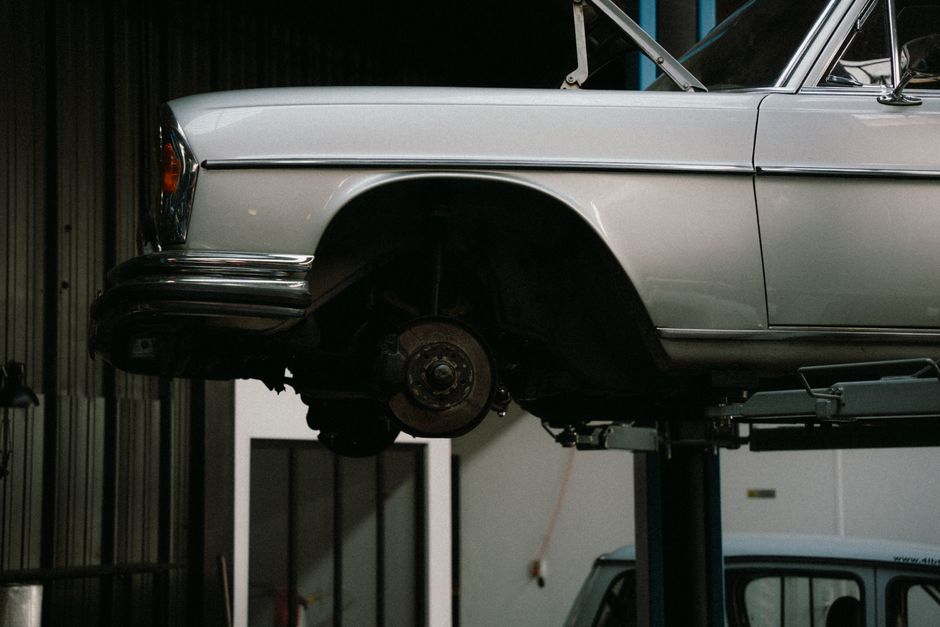
A driver on the PIE at 7:10 a.m. is not browsing your brand story. They have a warning light, a noisy compressor, or a 10,000 km service due before the weekend trip to JB. They type a job plus a place: aircon service Tampines, clutch replacement Jurong, battery replacement near Orchard. If that click lands on a homepage that lists every trade from spray painting to window tint, they bounce. Your CPC still posts. The bay stays empty.
Singapore workshops feel this faster than most markets. Search is dense, CPCs in competitive service verticals have risen sharply year on year, and globally, mobile accounts for over 60% of paid search clicks (Google, 2024); Singapore skews higher given smartphone penetration. Conversion on those phones still lags desktop by 30-40% when the page is heavy, the form is long, or the offer does not match the query. Dedicated landing pages for auto repair companies in Singapore are how you stop paying for curiosity and start filling specific jobs.
This is not a redesign of the whole site. It is a job-level page for each high-intent service, aligned to the ad or organic snippet that sent the click, with proof a workshop manager would actually put on the wall.
Why Singapore workshop clicks die on a general homepage
Most paid and organic traffic still hits the same URL: the homepage with a slider, a map, and a “all makes, all models” line. That page tries to be the brand, the menu, and the booking desk. For a searcher who already named the job, it is friction. They have to hunt for aircon, then for price bands in SGD, then for a WhatsApp or call button that is not buried under a parts catalogue.
You already know the waste pattern. Across SEM accounts, 20-30% of budget routinely disappears on irrelevant queries, weak negatives, or pages that do not match the ad. In a Singapore workshop that mix shows up as tyre-kicker forms, “how much for polishing” chats, and zero diary slots for the clutch and servicing work you actually want. Last-click dashboards still celebrate the session. The foreman does not.
Mobile makes it worse. A page that “passes” on a desktop screenshot can fail INP on a mid-range Android in a HDB carpark. If your service page stalls while Google Maps, a chat widget, and uncompressed before-after photos fight for the main thread, the click-to-call never happens. Drivers in this market will not wait. They tap the next workshop in Paya Lebar or Ang Mo Kio.
Another leak: proof that is too corporate. A stock photo of a lift, no LTA inspection mention, no typical SGD range for a 10,000 km service, no same-day aircon recharge window. The searcher cannot tell if you do their car today. They leave. If your ads still point at that homepage, treat that as the first fix, not a later CRO project.
If you want a second pair of eyes on the post-click path, a short look at landing page and web design work is enough to see whether the form, proof, and speed are actually carrying the ad message.
Build one page per job the diary actually wants
Match the query cluster to one URL. Aircon service is not accident repair. Battery replacement is not a full servicing package. COE-related “keep the car another year” servicing is not a spray job. Even when Performance Max handles most of your budget, Google will still serve mixed intent unless each landing page is built around a single job. One headline, one offer, one primary action: call, WhatsApp, or book a bay.
Write the page in the language the workshop uses on the phone. Name the estate or industrial cluster you can actually serve same day: Woodlands, Tuas, Ubi, MacPherson. Put typical SGD ranges as bands, not fake precision (“servicing from S$180, diagnosis quoted before work”). State hours that match real bays, including Saturday mornings if that is when the diary fills. Put the make list only if you truly stock those filters and compressors. A page that claims every brand and then delays a European aircon job trains Google that your conversions are messy.
Speed and snippet hygiene are part of the offer. Title tags and H1s should carry the job plus Singapore plus the business type, not a slogan. Meta descriptions should promise the action (book, call, WhatsApp) and a concrete constraint (same-day diagnosis, waiting lounge, courtesy check). Schema for LocalBusiness and FAQ helps the snippet, but only if the on-page copy is true. Thin AI filler will not save you: the majority of top-ranking pages now contain some AI-assisted content, meaning differentiation comes from workshop-specific detail, not volume.
Audit scorecard
-
Job-query match
Every live Search or PMax asset that names aircon, battery, clutch, or 10,000 km service must land on a URL whose H1 is that job for auto repair companies in Singapore, not the brand homepage.
-
SGD offer clarity
Show a price band or “quoted after 20-minute check” rule in the first screen. Hide nothing that the advisor would say on the first call.
-
Mobile tap targets
Sticky call and WhatsApp above the fold. Forms with name, mobile, car plate or make, and preferred slot only. No 12-field CRM dump.
-
Core Web Vitals on real phones
LCP on the hero under 2.5s, INP that does not freeze when the click-to-call fires. Kill autoplay video and uncompressed gallery grids.
-
Proof a sceptic believes
Workshop photos of the actual bays, Google review snippets that mention the job, and a short “what we do not do” line so accident work does not leak into a servicing campaign.
-
UTM and call tracking
Separate conversion actions for call from aircon page vs form from servicing page. If 20%+ of conversion data is already lost to ad blockers, first-party events and Enhanced Conversions matter more than another campaign.
-
Negative intent on-page
If you do not want DIY parts buyers, say you are a fitted-parts workshop. If you do not want insurance total-loss browsing, send that traffic elsewhere.
-
After-click leak check
Watch where thumbs hesitate: wrong H1, price shock, or a map that loads late. Session behaviour on the landing URL tells you more than a blended homepage bounce rate.
Action checklist
- Export 90 days of Search terms and organic landing pages. Tag each as servicing, aircon, battery, clutch, accident, or junk. Kill spend that still hits the homepage.
- Draft three pages first: 10,000 km / logbook-style servicing, aircon recharge and leak check, battery replacement with fitting. Those fill bays in Singapore faster than a brand film.
- Write H1, title, and meta around the job and the company type. Preview snippets before you publish.
- Put one primary CTA. If the workshop lives on WhatsApp, make that the hero action and keep the form as backup.
- Add two proof blocks: a job-specific review and a photo of the bay doing that job. No stock “happy family in a sedan.”
- Instrument call clicks, WhatsApp clicks, and thank-you events in GTM. Do not blend them with homepage newsletter signups.
- Run the page through speed and markup checks on a phone, then point only the matching ad groups at it for two weeks before you scale PMax.
Free tools - try these yourself
When the page is live, use HeyLead Insights to see whether people stall on the price band, miss the call button, or abandon the form after the car-plate field. Guessing from a blended GA4 bounce rate is how you keep buying the wrong jobs.
Get a free marketing audit - we review your search, ads, and landing pages and send back what to fix first.
Get a free audit
Two Singapore pages that changed what the diary filled
A three-bay independent in Ubi was sending every Google Ads click to the homepage. Search terms were clean enough: “car aircon service singapore,” “aircon gas top up.” The homepage hero was a 12-year-old brand shot and a “full workshop services” H1. Cost per form sat in an ugly band while the WhatsApp thread filled with polishing and coating questions. The fix was not more negatives. They shipped a single aircon page: H1 on recharge and leak check, S$ band for gas, photo of the gauge set, sticky WhatsApp, and a line that they do not quote coating packages on that URL. Forms dropped 22% in volume. Booked aircon jobs on that campaign rose because the remaining clicks were the right ones. One mechanism: the page stopped inviting the wrong job.
A servicing-heavy shop near Tampines had the opposite problem. Organic “car servicing singapore” traffic converted on desktop and died on mobile. The page passed a casual look. On a mid-range phone the booking widget loaded after a 4.1s LCP, and the call button sat under a parts-up-sell accordion. They cut the accordion, compressed the hero, moved call and WhatsApp into a sticky bar, and shortened the form to name, mobile, mileage, preferred morning or afternoon. Mobile conversion on that URL moved from a weak 1.8% toward the mid-threes over 11 days. Same keywords. Same budget. The page stopped fighting the thumb.
Neither team needed a new brand site. They needed job pages that a marketing lead could defend in a Monday ops huddle: this URL buys aircon, that URL buys servicing. If your agency or in-house team still says they “just send traffic to the homepage,” that is the moment to change the destination, not the bid strategy. Automated bidding on mixed landing pages will happily spend. It will not invent intent alignment for you.
Creative can be your targeting. The landing page is still the close.
Patterns we see in audits
The short quotes below are illustrative composites drawn from patterns in account reviews. They are not quotes from named clients.
Here is what we hear consistently from multi-site workshop marketing leads: they kept optimising Search while every clutch query still opened the homepage. The moment they split the clutch URL, junk WhatsApps fell off and the remaining CPC actually bought jobs they could invoice.
Here is what we hear consistently from growth leads at independent auto repair shops: mobile looked fine in the aggregate report. Session recordings showed the call button jumping after the map loaded. They froze that layout and call conversions on the servicing page moved the same week.
FAQs
Do we need a unique landing page for every make?
No. Split by job first (servicing, aircon, battery, clutch, accident). Add make-level pages only if you truly stock those parts and your ads bid on make-plus-job terms. A thin “BMW servicing” clone with no bay proof will not outconvert a strong job page.
Should Performance Max still go to the homepage?
Give PMax the job URLs as assets, not the brand home. If the feed and sitelinks all collapse to one URL, you train the system on mixed intent. Feed it the pages you want the diary to fill.
What if our prices change with parts cost?
Use bands and a “quoted after inspection” rule. Updating a number weekly is better than hiding price until the call. Drivers in Singapore compare two or three workshops on the same MRT ride.
How do we know the page is the problem, not the keyword?
If the search term is the job you want, the ad matches, and the session still fails, watch the URL: H1 mismatch, slow LCP, form friction, or proof that does not mention the job. That is a page problem. If the terms are “how to recharge aircon yourself,” that is a query problem.
Can we reuse one template across outlets?
Yes, if NAP, hours, and photos are unique per outlet and the job copy stays specific. Duplicate templates with only the estate name swapped still read as the same page to users and to Google. At minimum, each outlet page needs a unique Google Business Profile URL in the footer, outlet-specific review embeds, and at least one paragraph describing that location’s access or parking - HDB carpark vs industrial estate matters to the searcher and to Google’s local ranking signals.
Putting it to work
Execution sprint
This week
- Pull 30-90 days of performance for auto repair (Search Console, ads, CRM, or call logs - whatever you have).
- Flag the top leak: wrong intent, weak page, slow response, or dirty conversion tracking.
- Ship one fix on the highest-traffic money path (page, campaign split, or response rule).
- Run the free tools below on that same URL or account and log the findings.
Free tools for this sprint
Next 30 days
- Expand the fix to the next one or two money paths only after the first one shows cleaner bookings.
- Align creative, keywords, or content with the same offer the page now states.
- Review booked outcomes weekly; cut anything that still only produces unqualified volume.
This week
-
Pull 90 days of paid and organic landings and flag every high-spend job that still uses the homepage.
-
Ship or rewrite one aircon or servicing URL with job H1, SGD band, and sticky call or WhatsApp.
-
Run that URL through the Core Web Vitals, H1, title, and meta checkers on a phone.
-
Split conversion actions so aircon calls are not lumped with newsletter signups.
-
Point only the matching ad group at the new URL for a clean two-week read.
Next 30 days
-
Add battery and clutch pages with the same rules.
-
Watch session behaviour for form abandon and late-loading maps.
-
Add FAQ schema only for questions your advisors already answer on the phone.
-
Negate leftover queries that the new pages still attract but the bays cannot take.
Start by listing the three jobs that actually pay the rent in SGD and checking whether their ads still open a generic homepage. If the mismatch is the leak between creative and the page, HeyLead can own that job-level landing work, the speed and form fixes, and the tracking that shows which URL filled which bay. Chat with us on WhatsApp
Free marketing audit, or reach Martin directly:
Get a free audit Connect on WhatsApp · [email protected]