
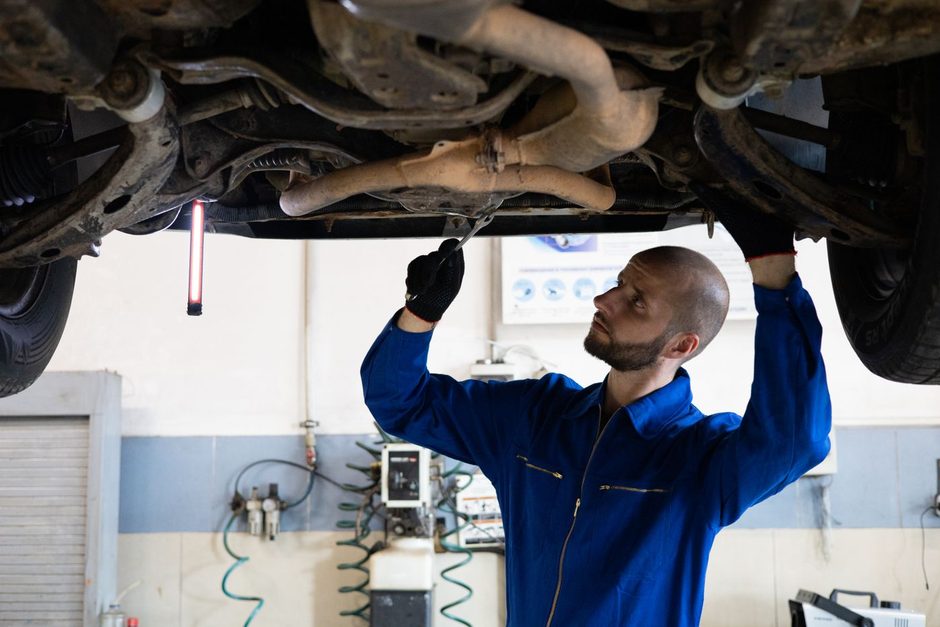
A driver searching “MOT near me” on a rain-soaked A-road is not browsing your brand story. They want a price band, a slot this week, and proof you will not fail them on a retest they could have avoided. If that click lands on a homepage that still leads with “family-run since 1998” and a contact form buried under used-car stock, you have already paid Google for a tyre-kicker.
This piece is about the page that sits between the ad (or the Maps pack) and the diary. Not another lecture on “send traffic somewhere dedicated.” You will get a UK-specific build: MOT, brakes, clutch, cambelt, diagnostics, recovery. Sterling prices, VAT language, Trustpilot and Google reviews, mobile call buttons, and the Core Web Vitals reality that still kills conversion on garage sites.
What UK garage traffic actually wants before it dials
Independent garages, fast-fit chains, and specialist independents all buy the same high-intent queries. MOT, servicing, brake pads, clutch replacement, DPF issues, aircon recharge, mobile mechanic, recovery. The buyer is usually the owner of a 5-10 year old car, paying personally, comparing you to Kwik Fit, a main dealer, and the bloke on Facebook Marketplace. Urgency is real when a warning light is on or an MOT is due in 48 hours. A good week for the marketing lead is not “more sessions.” It is booked hours in the bays that match the campaign you paid for.
Mobile still accounts for most paid search clicks. Conversion on those phones lags desktop hard, often by 30-40%, because garage sites still ship 4MB homepages, cookie walls, and click-to-call buttons that sit below three hero sliders. Fewer than half of mobile origins pass all three Core Web Vitals according to Google’s CrUX data - garage sites routinely fall in the failing half. If your landing URL fails INP, the driver never sees the MOT price. They bounce, then you blame the CPC.
Misaligned landing pages are one of the three usual leaks, next to neglected negatives and broad match gone feral. Auto repair accounts that match landing pages to job-level queries consistently outperform those that don’t - but 4x ROAS is not a floor; it depends on ticket size, diary capacity, and whether your phone gets answered. You only get near a strong return when the page matches the query and the offer is bookable without a treasure hunt.
Drivers talk in jobs, not departments. “Can you do an MOT and service same day?” “Do you supply parts or is it labour only?” “Is that including VAT?” “Will you collect the car?” If the landing page answers those in the first screen, you get the call. If it answers “our values,” you get a bounce. That is the whole problem, dressed as a web design issue.
Where homepage traffic quietly books the wrong work
Plenty of UK auto repair companies still point every Google Ads group at the homepage. The homepage has to sell MOTs, bodywork, tyres, aircon, EV diagnostics, and a cafe. Smart bidding sees a conversion whenever anyone submits “please call me back.” You then staff the phone for quote shopping on a £40 MOT while the £900 clutch job never saw a page of its own.
A marketing manager at a four-bay independent in Leeds ran Search for “clutch replacement” into a homepage with a generic “book online” widget. Form fills looked healthy. The diary filled with MOT price checks. The clutch copy lived three scrolls down, next to a 2019 BMW they had for sale. Cost per booked clutch job was unreadable because the conversion event was “form submit,” not “clutch enquiry.” They split the campaign to a clutch-only URL, put a VAT-inclusive from-price, a 12-month parts warranty line, and a same-week slot calendar. Form volume dropped. Booked clutch hours went up. One metric, one mechanism.
Another leak: sending Performance Max to the same URL as brand Search. Performance Max drives the bulk in a lot of accounts now. It will harvest whatever converts cheapest. If cheapest is a “contact us” on a slow homepage, that is what you scale. You do not fix that in the campaign structure alone. You fix it by giving each intent a page that can only convert as that job.
If your paid search partner talks only in impressions, ask what the landing URL is for MOT vs diagnostics vs recovery. If they cannot answer without opening the site map, the spend is leaking. For a tighter build on the page itself, our web design work is built around that job-level handoff, not a brochure refresh.
Get a free marketing audit - we review your search, ads, and landing pages and send back what to fix first.
Get a free audit
A job-level page build UK drivers will actually use
Treat each high-intent service as its own offer. MOT. Full service. Interim service. Front brake discs and pads. Clutch kit. Cambelt and water pump. Diagnostics (with a cap on the first hour). Recovery and collection. Do not clone the homepage and change the H1. Rewrite the proof, the price logic, the FAQ, and the next step for that job.
Audit scorecard
-
Match the query in the first 100 words
If the ad said MOT in Croydon from £40 including VAT, the H1 and first paragraph say MOT in Croydon, the from-price, VAT inclusive, and whether a retest is free if they leave the car. Do not open with the founder’s story.
-
One primary action, two backups
Sticky click-to-call for mobile, a short form (name, mobile, vehicle reg, preferred day), and WhatsApp or text if the front desk is on the ramp. Do not ask for a life story. Reg number is enough to pull a lot of vehicles.
-
Price logic, not fake precision
UK drivers distrust “POA.” Give a from-price, what is included (parts, labour, VAT), and what changes the quote (premium pads, seized bolts, dual-mass flywheel). Say you confirm on inspection. That is honest and it still converts.
-
Proof that belongs to this job
Google reviews that mention MOT wait times or brake jobs, manufacturer-trained badges if true, photos of the actual bay (not stock), and a line on courtesy cars or collection radius in miles. Job-specific reviews - ones that mention the actual wait time or whether the retest was free - consistently outperform generic star ratings in CRO split tests. Generic five-star widgets with no review text are nearly inert. Use real reviews, not five gold stars with no text.
-
Local facts a national template never has
Town, industrial estate, junction, parking, and opening hours including Saturday MOT. “Near the retail park, free parking, wait or drop.” If you serve fleet, say van size limits. If you refuse certain EVs, say so before they drive over.
-
Speed you can measure
Compress hero images, kill autoplay video, defer chat widgets until after first interaction. INP matters when the call button is the conversion. Run the page through a vitals check on mobile, not just desktop Lighthouse on the office fibre.
-
Schema and snippet that match the offer
LocalBusiness plus Service, FAQ, and opening hours. If the meta description still says “quality workmanship,” rewrite it to MOT slots, from-price, and postcode. Title tags should carry the town and the job, not the group slogan.
-
Track the job, not the form
Separate conversion actions: MOT enquiry, service enquiry, clutch enquiry, call from MOT page. Enhanced Conversions and a clean GTM setup matter because 20%+ of conversion data still disappears to ad blockers and privacy changes. If smart bidding only sees junk forms, it will buy more junk.
Action checklist
- Export the last 90 days of Search terms. Cluster into MOT, service, brakes, clutch, diagnostics, recovery. Anything that cannot map to a page you own is either a negative keyword to exclude or a brief to build a new URL.
- Write one H1 per cluster. Example: “MOT testing in Reading, from £35 including VAT, often same week.” Check it is the only H1.
- Put click-to-call in the header on mobile and repeat it after price. Measure calls as conversions with a unique number or call event per page.
- Add 4-6 FAQs in the driver’s language: retest policy, wait vs drop-off, courtesy car, payment (card, not just “accounts welcome”).
- Load 8-12 reviews that mention that job. If you only have generic “nice lads,” go get MOT-specific reviews before you scale spend.
- Test the form on a mid-range Android on 4G in the car park. If the keyboard covers the submit button, fix the viewport before you touch bids.
- Watch session recordings on the new URL. If people tap the phone number and nothing happens, or rage-click a non-button price, you have the leak.
Free tools - try these yourself
Use HeyLead Insights on these URLs so you see scroll depth, dead taps on “from £” that is not a button, and form abandon when the vehicle-reg field auto-corrects into nonsense. Guessing which hero image “feels premium” is how you burn another month of CPC.
Two UK pages that changed what the diary actually filled
A six-bay site in Bristol had a diagnostics campaign pointing at “about us.” Cost per form was fine. Techs were doing free “have a look” visits for people who wanted a second opinion after AutoTrader. They built a diagnostics page with a capped first-hour fee, what the hour includes (code read, live data, not a full electrical strip), and a note that the fee comes off the repair if they proceed. Forms fell. Paid diagnostic hours rose. The mechanism was the cap, not a prettier hero.
A multi-site fast-fit operator in the Midlands ran MOT ads to a national homepage with a store finder. Mobile users pinched-zoomed a map, then left. They launched town-level MOT pages with opening hours, wait-or-drop, and a same-day remaining slots line updated by the desk (even a crude “usually 48 hours” beat a calendar that showed nothing). Booking rate moved. They did not need a new bidding strategy. They needed the page to finish the sentence the ad started.
Trade-off you should expect: more URLs means more maintenance. Prices change. MOT fees change. If nobody owns the from-price, you will advertise a number the desk will not honour, and reviews will punish you faster than Google Ads will. Assign an owner. Review prices when parts go up, not once a year with the Christmas shutdown.
Do not promise a ROAS before you have seen the pages, the diary capacity, and whether the front desk answers in two rings. Realistic paid programmes take 3-6 months to settle. Anyone guaranteeing a CPL on a garage they have not audited is selling you a number, not a bay hour.
FAQs
Do UK auto repair companies still need a homepage if landing pages do the converting?
Yes. The homepage is for brand, used cars, careers, and people who typed your name. Paid and high-intent organic jobs should not start there. Keep NAP, opening hours, and review aggregate consistent across both so Maps and ads do not contradict the page.
Should MOT, service, and brakes share one URL to keep quality score simple?
No. Quality Score follows relevance. A shared URL dilutes the message and muddies conversion actions. One job, one URL, one primary conversion. You can still share header, NAP, and review widgets.
Is a click-to-call enough, or do we need online booking?
Call first if the desk answers. Online booking helps after hours and for MOT slots you can truly honour. A booking tool that offers times the ramp cannot deliver will generate angry reviews faster than a missed form.
How fast does the page need to be on mobile?
Fast enough that the call button is usable before the driver loses patience at the lights. If you fail INP or LCP on mid-range Android, fix media and third-party scripts before you raise budgets. Vitals are not a vanity score when the conversion is a thumb tap.
What should we measure besides form fills?
Calls from each service URL, booked jobs by type in the diary, show-up rate, and revenue per booked hour. If Ads says 40 conversions and the diary shows 11 MOT slots, your event is wrong. Fix the event before you “optimise” bids.
Putting it to work
Execution sprint
This week
- Pull 30-90 days of performance for auto repair (Search Console, ads, CRM, or call logs - whatever you have).
- Flag the top leak: wrong intent, weak page, slow response, or dirty conversion tracking.
- Ship one fix on the highest-traffic money path (page, campaign split, or response rule).
- Run the free tools below on that same URL or account and log the findings.
Free tools for this sprint
Next 30 days
- Expand the fix to the next one or two money paths only after the first one shows cleaner bookings.
- Align creative, keywords, or content with the same offer the page now states.
- Review booked outcomes weekly; cut anything that still only produces unqualified volume.
This week
-
Pull 90 days of Search terms and map each cluster to a live URL or a missing page.
-
Rewrite the MOT page first screen: town, VAT-inclusive from-price, retest rule, click-to-call.
-
Run the Core Web Vitals checker on mobile for that URL and kill the heaviest script.
-
Split conversion actions so MOT calls are not lumped with “contact us.”
-
Watch 10 session recordings on the MOT URL and list every dead tap.
Next 30 days
-
Ship clutch and diagnostics pages with capped-fee logic and job-specific reviews.
-
Add FAQ schema and unique title tags per town and job.
-
Align each Google Ads ad group to its URL. Stop sending Performance Max to the homepage.
-
Reconcile Ads conversions to diary jobs once a week until the gap is explainable.
Start by opening the three highest-spend service queries and loading the exact URL they hit on a phone. If the first screen cannot book that job, that is the leak. HeyLead builds and iterates those job-level landing pages for UK auto repair companies so ad copy, MOT and clutch offers, mobile call paths, and conversion events stay aligned as prices and diary capacity change. Chat with us on WhatsApp
Free marketing audit, or reach Martin directly:
Get a free audit Connect on WhatsApp · [email protected]