
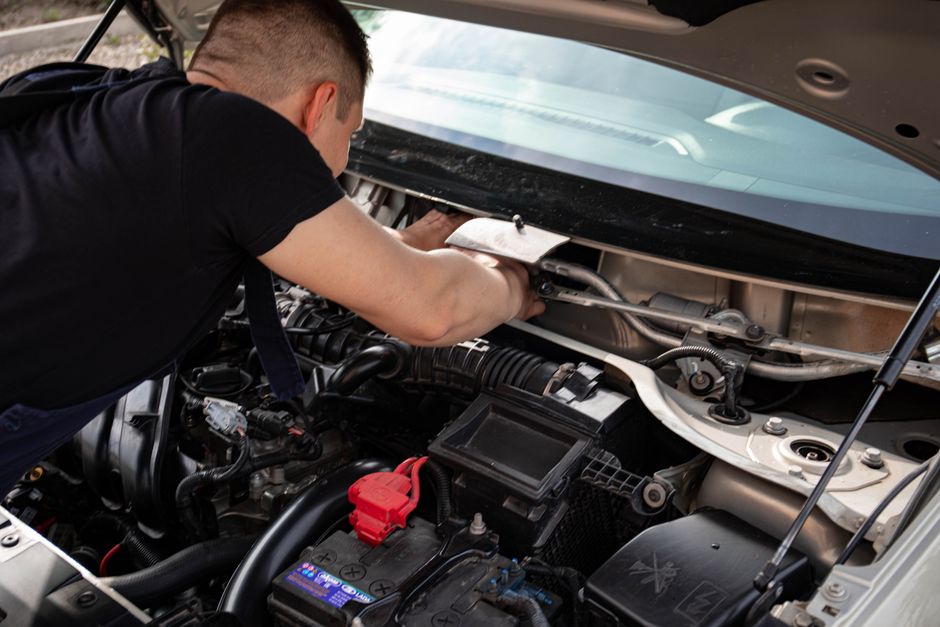
Friday 4:40 p.m. in a Campbelltown workshop. The diary still has two empty logbook slots, Google Ads is chewing through budget on “cheap tyres Sydney”, and the homepage is asking a driver with a rattling CV joint to pick a brand story. That is not a media problem first. It is a page problem: the click promised a job, the URL delivered a brochure.
Australian auto repair companies live on high-intent searches: logbook service, brakes, clutch, battery, windscreen, roadside recovery, pre-purchase inspections. Those queries are not “learn about our values”. They are “can you do this car, this suburb, this afternoon, and what will it cost in AUD”. If the landing page cannot answer that in the first screen, paid traffic leaks into call-backs that never happen, and organic visitors bounce to the next map pack listing.
This piece is for marketing leads and owner-operators who own the booking number, not for drivers. We will walk through how to build job-specific landing pages for Australian workshops, how to measure cars in bays rather than form spam, and the checklist you can run without waiting for a redesign sprint.
Why Australian searchers abandon a generic workshop homepage before they call
Most auto repair traffic in Australia arrives on a phone, often from a car park or the hard shoulder. Mobile already accounts for well over 60% of paid search clicks, and conversion rates on those devices still lag desktop by a wide margin. If your first screen is a 4MB hero video of a hoist, the driver never sees the click-to-call button. In the March 2025 CrUX report, around 54% of origins passed all three Core Web Vitals (web.dev/reports/cwv). Workshop sites that fail INP on tap-to-call pay twice: once in CPC, again in lost jobs.
Intent in this market is job-shaped. “Logbook service Honda Civic Parramatta” is not the same as “smash repair quote” or “mobile battery replacement”. Send both to /services and you train Google that every conversion looks like a vague enquiry. Smart bidding then buys more vague enquiries. In our experience auditing Australian workshop accounts, 20-30 % of spend typically flows to queries the page cannot convert-a figure consistent with what SEM auditors report across service verticals. Homepage routing is a large slice of that waste.
Proof is local, not global. Drivers want a suburb, a make list, logbook compliance language, GST-inclusive prices or a clear “from” range, and a photo of the actual reception, not stock German alloy wheels. They also want hours that match after-work drop-off. A page that hides Saturday hours behind a footer menu loses the 5 p.m. searcher to a competitor who put “open until 6, loan cars on request” in the H1 block.
Attribution makes the leak look smaller than it is. Last-click still double-counts, ad blockers and browser privacy changes can wipe 15-30% of conversion signal depending on your audience’s browser mix-Google’s own Enhanced Conversions documentation cites meaningful gaps in cookieless environments, and call tracking that only fires on desktop forms undercounts the real diary. The page is what decides which job the ad is allowed to buy.
If paid search is already pointing at the homepage, pause new spend on that URL until you have a job page live. A short landing page rebuild usually beats another week of “optimising” keywords that land on the wrong offer.
Match each paid query to one job page, not one brand URL
Think of the page as the second half of the ad. The headline promised “Same-day brake pads, Logan, GST included, we fit European and Japanese”. The page has to repeat that promise, then remove every reason not to book. Do not open with the group’s 40-year history. Open with the job, the suburb cluster, and the next available action: call, tap-to-book, or a short form that asks for rego and make, not a novel.
Structure campaigns so each high-intent cluster has a dedicated URL. Typical Australian clusters that earn their own page: logbook / scheduled service, brakes and rotors, clutch and dual-mass, batteries and jump-starts, cooling and overheating, windscreen and ADAS recalibration, pre-purchase inspection, and fleet / ABN accounts. Smash and panel should never share a page with mechanical unless you actually run both under one roof and can staff both diaries.
Copy should sound like the service advisor, not a brochure. Name makes you actually see (Toyota, Mazda, Hyundai, BMW if you have the scan tools). Name the suburbs you will collect from. State loan car or Uber credit policy in one line. If you are RACV or NRMA preferred, say it once, then prove it with a review that mentions a specific job, not a star widget with no date.
Forms must be mobile-first and short. Rego, make/model, suburb, phone, preferred time. That is enough for a quote range. Long “how did you hear about us” fields belong in the CRM after the car is booked, not on the page that is competing with a map pack listing. Click-to-call should be sticky on mobile. After-hours, swap the CTA to “leave a voicemail, we return by 8 a.m.” so you do not collect dead leads at 11 p.m.
Speed and layout are part of conversion, not a developer footnote. Compress photos of the actual workshop. Keep the H1 unique per job. Put GST language next to price, because Australian buyers notice when “from $199” becomes $218.90 at the counter. Use HeyLead Insights on these URLs so you can see whether people stall on the price block, miss the call button, or abandon after the rego field. Session behaviour beats another opinion in the Monday meeting.
Audit scorecard
-
One job, one URL
If brakes ads still land on /services or the homepage, split the URL before you add more keywords. The page title, H1, and first paragraph must name the job and the metro (Brisbane, Melbourne, Perth) the workshop actually serves.
-
First screen answers the bay question
Above the fold: job, suburb, hours, click-to-call, and a from-price in AUD with GST called out. No slider. No 20-second autoplay.
-
Proof that names the car
Two or three reviews that mention a make, a suburb, and a wait time beat a wall of five-star icons. Add a photo of the waiting area or loan cars if you have them.
-
Form asks for the car, not the life story
Rego, make, phone, time window. Track calls and form submits as separate conversions so bidding does not treat a 12-second tyre-kicker call like a booked clutch.
-
Page speed on 4G, not office Wi-Fi
Test on a phone in the car park. If tap delay on the call button is visible, INP is already costing jobs. Compress images and kill third-party chat widgets that load before the CTA.
-
Offer matches the ad, including exclusions
If the ad says logbook service, do not bury “we do not stamp some European books” in a PDF. State what you will and will not book so Google stops sending the wrong cars.
Get a free marketing audit - we review your search, ads, and landing pages and send back what to fix first.
Get a free audit
A Brisbane brakes page versus a Perth logbook page: same CMS, different jobs
A multi-site group in south-east Queensland was sending every Search campaign to the national homepage. Brakes traffic mixed with logbook, and the diary filled with $99 inspections that blocked two-hour pad jobs. The fix was not a new brand film. They cloned a thin template into /brakes-logan and /logbook-service-logan. The brakes page led with same-day pads, European scan tools, and a GST-inclusive from-price. The logbook page led with make list, loan car, and “we stamp the book”. Call duration over two minutes became the primary conversion. Within a few weeks the mix of work in the bays shifted toward the jobs the ads were actually written for. One number worth remembering: they stopped counting 11-second calls as wins.
A Perth independent had the opposite problem. Organic “logbook service near me” ranked, but the page was a 2,400-word essay with no booking widget. Drivers read, then called a chain with a tap-to-book slot. They cut the essay to a 180-word job block, moved hours and a map above the fold, and added a three-field form. Heatmaps showed people had been scrolling past the phone number entirely. After the fold change, booked logbooks from that URL stopped arriving as “just a quote” emails at 9 p.m.
Neither shop needed a 40-page website. They needed one URL per expensive job, honest AUD pricing language, and measurement that could tell a booked bay from a spam form. That is the operating standard, not a nice-to-have CRO project you schedule after peak season.
Action checklist
- Export last 60 days of Search terms. Tag each as logbook, brakes, clutch, battery, inspection, or junk. Junk gets negatives. Each real cluster gets a URL plan.
- Write the H1 as the job plus metro plus proof of capacity (same day, loan car, European). Check it is unique with a title and H1 pass before you publish a duplicate across locations.
- Build the first screen: hours, click-to-call, from-price in AUD, GST note, suburb list. Everything else can wait below.
- Add two job-specific reviews and one photo of the actual site. No stock hoists.
- Wire call tracking and form submits as separate GA4 events. Do not let a 8-second call train Smart Bidding.
- Point only the matching ad group at the new URL. Leave the homepage for branded and walk-in traffic.
- Watch scroll and tap maps for a week. If the call button is below a 1,200px hero, cut the hero, do not add more copy.
Free tools - try these yourself
What to measure so bidding buys clutches, not tyre kickers
If you only optimise for “lead”, Google will find the cheapest lead: a 9-second call about a $15 globe. Define quality in workshop language. A qualified conversion is a call over a set duration, a form with a real rego, or an online booking that lands in the diary. Feed those events back with Enhanced Conversions so you recover more of the conversion signal that ad blockers and browser privacy changes can wipe (15-30% depending on browser mix).
Reconcile weekly, not in a monthly PDF. Compare in-platform CPA to cars actually booked. Last-click will still double-count a driver who clicked Search, then Maps. Do not panic-rebuild the account every time the numbers disagree. Pick one business metric (booked hours or gross profit on jobs from paid) and treat channel dashboards as directional.
UTMs on every ad, unique landing URLs per job, and a simple source field in the booking tool are enough for most independent shops. You do not need a full MMM to see that the brakes URL converts at 4.2% while the homepage converts at 1.1% on the same CPC band. That gap is your brief for the next page, not a reason to pause the channel.
Performance Max will keep grabbing budget. If PMax is dumping traffic on the homepage, lock asset groups to the job URLs or you will relearn the same leak. Search still needs keywords and negatives even in a “signals over keywords” year. Broad without a tight page is how spend disappears into “near me cheap” queries you cannot fulfil profitably-in our experience auditing Australian workshop accounts, 20-30 % of spend typically flows to queries the page cannot convert, consistent with what SEM auditors report across service verticals.
Patterns we see in audits
The short quotes below are illustrative composites drawn from patterns in account reviews. They are not quotes from named clients.
Patterns we hear from Australian workshop operators:
“We were celebrating form volume until we noticed the diary was full of $89 services while clutch ads paid the bill. Splitting the logbook URL from brakes was the unglamorous fix.”
“The Insights recordings showed people tapping the phone number that was not actually a link on mobile. We had argued about copy for a month. The tap target was the whole story.”
FAQs
Do Australian auto repair shops need a page per suburb or per job?
Lead with the job. Duplicate thin suburb pages without unique hours, photos, and make lists will not help Maps or paid. If you have true capacity in two metros, a job page per metro is enough. Door-to-door suburb clones are usually wasted crawl and wasted build time.
Should logbook servicing and smash repair share a landing page?
Only if one team, one diary, and one set of equipment handle both. Most mechanical shops should keep smash off the mechanical URL so bidding does not mix quote-heavy panel work with same-day pad jobs.
What conversion rate is realistic for these pages?
Job-specific pages in Australian auto repair commonly convert paid traffic at 3-6% on mobile when tap-to-call is above the fold and pricing is visible. Homepage catch-all pages in the same accounts typically sit at 0.8-1.5%. Use that gap as the business case, not a vanity CVR target. If mobile is 30-40% worse than desktop, fix tap-to-call before you rewrite headlines.
Can we keep sending brand search to the homepage?
Yes. Brand and walk-in traffic can use the main site. Non-brand job queries should not. If someone says they just send everything to the homepage, that is the leak.
How long before we judge a new job page?
Give Smart Bidding enough conversions to learn, typically weeks not days, and judge on booked work quality. Promising a fixed ROAS before the page exists is theatre. Realistic paid programs take months of page and query hygiene, not a weekend of ads.
Putting it to work
Execution sprint
This week
- Pull 30-90 days of performance for landing pages for auto repair australia (Search Console, ads, CRM, or call logs - whatever you have).
- Flag the top leak: wrong intent, weak page, slow response, or dirty conversion tracking.
- Ship one fix on the highest-traffic money path (page, campaign split, or response rule).
- Run the free tools below on that same URL or account and log the findings.
Free tools for this sprint
Next 30 days
- Expand the fix to the next one or two money paths only after the first one shows cleaner bookings.
- Align creative, keywords, or content with the same offer the page now states.
- Review booked outcomes weekly; cut anything that still only produces unqualified volume.
This week
-
Pull 60 days of Search terms and tag them by job type versus junk.
-
Pick the single most expensive mismatch (often brakes or logbook still hitting the homepage) and draft one dedicated URL.
-
Rewrite the first screen with AUD from-pricing, GST, hours, and click-to-call.
-
Run the new URL through the Core Web Vitals, H1, and title checkers above.
-
Split call-duration conversions from raw form fills in GA4.
Next 30 days
-
Launch the matching ad group only to that URL and add negatives from the junk cluster.
-
Watch session recordings for the tap target and form abandon pattern.
-
Clone the template to the next job cluster only after the first URL is beating homepage conversion on quality, not volume.
Start by opening the last 60 days of paid clicks that landed on the homepage and listing which jobs those queries actually asked for. If the URL still cannot name the job, the suburb, and a GST-inclusive next step, that is the leak. HeyLead can own the build and iteration of those job-specific landing pages so Australian auto repair teams stop buying the wrong cars into the diary. Chat with us on WhatsApp
Free marketing audit, or reach Martin directly:
Get a free audit Connect on WhatsApp · [email protected]