
Shoppers who have read about moving broker scams leave your quote page fast if it hides your USDOT number, is vague about whether you own the trucks, or demands a full inventory before showing any proof. A long distance moving quote page has to earn trust before it asks for anything.
Long-distance shoppers compare several companies at once. They have usually seen a news story or a neighbor’s horror story about a lowball quote that tripled on delivery day, or about goods held until the customer paid more. So they look for proof first and form fields second. If they can’t find it, they leave, and your ad spend pays for the visit.
This checklist covers the federal disclosures, the estimate wording, the survey booking flow and the trust signals that turn those wary clicks into scheduled surveys. Each item says what good looks like and how to fix it.
Federal disclosures on your long distance moving quote page
Federal rules for household goods carriers that have a website require the site to show the USDOT number and link to FMCSA consumer publications, including “Ready to Move?” and “Your Rights and Responsibilities When You Move.” Most movers technically comply with a tiny line in the footer. That is legal, but it does little to build trust. Put the proof where the shopper decides.
USDOT number near the quote form
- Good looks like: “USDOT 1234567” in readable text right beside or above the form, not only in the footer. (Use your real number. This one is just a placeholder.)
- Fix: Add a short trust strip above the form with your USDOT number, your MC number if you hold one, and your company’s legal name as it appears in the FMCSA record.
A one-click way to verify you
- Good looks like: A “Verify us on FMCSA” link that opens the FMCSA lookup for your company in a new tab.
- Fix: Link to your record in the FMCSA SAFER system, or to the FMCSA Protect Your Move site so shoppers can search for you. Scammers avoid inviting people to check them. Inviting the check is a signal on its own.
Legal name matches the record
- Good looks like: The name on the page, the name on your Google Business Profile and the name in the FMCSA record line up, or the page explains the link (“ABC Moving is a trade name of ABC Logistics LLC”).
- Fix: If you operate under a trade name, say so in one plain sentence near the USDOT number. A mismatch looks like a shell company to a careful shopper.
Consumer publications linked, not buried
- Good looks like: Links to “Ready to Move?” and “Your Rights and Responsibilities When You Move” in a small “Know your rights” box near the form.
- Fix: Move these links up from a legal page that nobody opens. Honest movers lose nothing when customers understand their rights.
Carrier or broker, said in plain words
This is where the most trust is lost. A shopper who reads “nationwide network of trusted movers” can’t tell whether you will load the truck or sell the job to someone else. Federal rules require household goods brokers to identify themselves as brokers and not pass themselves off as carriers. So the vague wording looks evasive even when you are a real carrier.
State your status in one sentence
- Good looks like: “We are a licensed interstate moving carrier. Our own crews and trucks handle your move from pickup to delivery.”
- Fix: Put that sentence in the hero area. If you use partner carriers on some lanes, say which routes and name the carrier on the estimate. Being clear about it beats being caught later.
If you are a broker, own it
- Good looks like: “We are a licensed household goods broker. We match you with an FMCSA-authorized carrier, and your estimate names that carrier and its USDOT number.”
- Fix: Show your own USDOT and MC details, explain exactly what you do, and promise the carrier’s name before booking. Shoppers forgive brokers. They don’t forgive surprises.
Photos and words that match reality
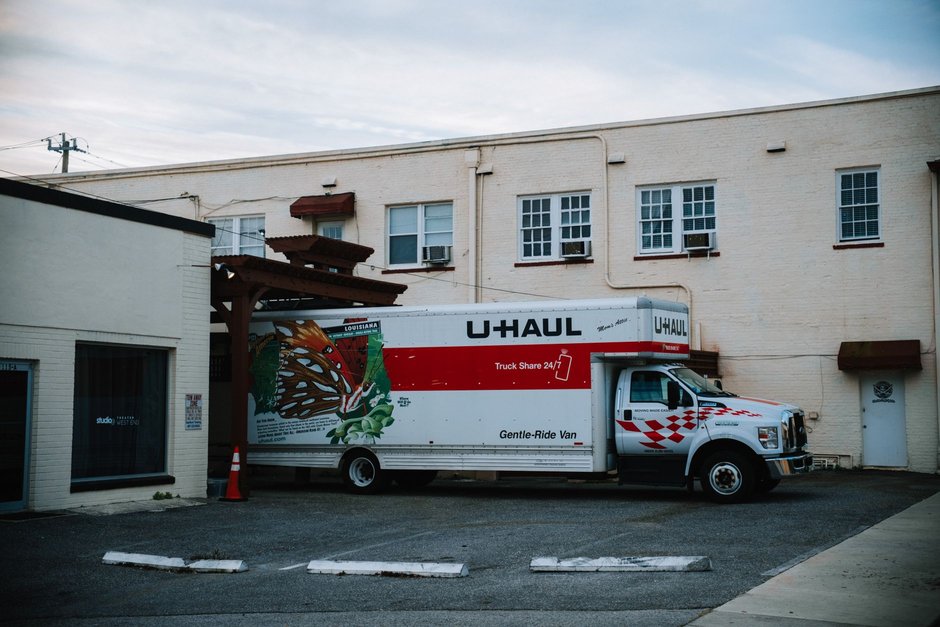
- Good looks like: Your own branded trucks and real crew, with your company name visible.
- Fix: Replace stock photos of generic trucks. A shopper who suspects a broker often zooms in on the truck to look for a name.
Binding moving estimate wording that holds up
Price surprise is the scam shoppers fear most. Your page should explain your estimate types before they fill out the form, in words a first-time mover understands.
Name the estimate types you offer
- Good looks like: A short side-by-side block. A binding moving estimate means the price is fixed for the items and services listed. A non-binding estimate means the final cost depends on the actual weight and services, so it can change.
- Fix: Write two or three plain sentences for each. If you offer a binding not-to-exceed option, explain that the price can go down but not up for the listed items.
Say what changes a binding price
- Good looks like: “If you add items or services after the survey, we’ll update the estimate in writing before moving day.”
- Fix: List the common triggers, such as extra items, a long carry, stairs or a shuttle truck, so the exceptions don’t feel like fine print.
Mention valuation in plain words
- Good looks like: A short note that interstate moves come with valuation options, explaining the difference between basic released value coverage and full value protection, plus a link to more detail.
- Fix: Add a one-line pointer on the quote page and a fuller explanation on a separate page. Shoppers who ask about coverage are serious buyers.
No price promises you can’t keep
- Good looks like: “Get a written estimate after a quick video walkthrough.”
- Fix: Remove “instant exact price” claims for interstate jobs. A careful shopper reads an instant flat price with no survey as the classic lowball setup.
Book the virtual survey before asking for the inventory
Many interstate quote forms open with a long room-by-room inventory. To a wary shopper, that feels like handing over details before you have proven anything. It is also a lot of work on a phone. Flip the order. Get the survey on the calendar, then gather details during the call.
Short first step
- Good looks like: Moving from, moving to, approximate move date, home size, name and phone. Then a calendar to pick a survey time.
- Fix: Move the inventory to the survey itself, or to an optional step after booking.
Offer video and in-person surveys side by side
- Good looks like: Two clear buttons, “Book a video survey” and “Book an in-home survey,” with one line on how each works.
- Fix: Explain that a video survey is a live walkthrough with an estimator on the customer’s phone, and how long it usually takes. Shoppers fear the unknown more than the time.
Here is a simple way to rebuild the flow with your web person:
- Cut the first form screen down to the move basics and contact details.
- Embed a scheduling tool that shows real open slots for your estimators, with video and in-person options.
- Send an automatic confirmation by text and email that includes the estimator’s name, your USDOT number and a short “how to prepare” note.
- Add an optional “skip ahead” inventory link in the confirmation for customers who like to prepare.
- Track a booked survey as the main conversion in Google Ads and GA4, not just a form submit. Our conversion tracking setup covers how to wire this in.
- Test the full flow on your own phone, from ad click to confirmation text, before you send traffic to it.
Phone stays visible
- Good looks like: A tap-to-call button in the header on mobile, with business hours.
- Fix: Many long-distance shoppers want to hear a real voice before booking. Make sure calls reach a person or a clear voicemail during your stated hours.
Trust signals for interstate movers near me searches
People searching “interstate movers near me” want a real local company that also handles long hauls. Show that you are both.
A real address, not a mailbox
- Good looks like: Your physical address with a map, matching your Google Business Profile.
- Fix: List your yard or office address. If you have several locations, list each one. Run your listings through our NAP consistency checker to catch mismatched names, addresses and phone numbers across directories.
Reviews that mention long-distance moves
- Good looks like: A few recent reviews that mention specific routes, linked to the source on Google.
- Fix: When you ask happy interstate customers for a review, ask them to mention where they moved from and to. Never write or edit reviews for customers.
Lanes you actually run
- Good looks like: “Regular routes: Chicago to Phoenix, Chicago to Denver, Chicago to Dallas.”
- Fix: List your real lanes. Specific routes signal an operating carrier. “All 50 states” with no detail is a common broker pattern.
Structured data that backs up the page
- Good looks like: LocalBusiness markup with your name, address, phone and hours, matching what is on the page.
- Fix: Add it, then check it with our schema markup validator.
If you’d rather have this built properly from the start, our web design for movers puts these proof points into every quote page we build.
Frequently asked questions
Is the footer enough for my USDOT number on my moving website?
A footer listing may cover the basic rule, but it does little for conversions. Shoppers decide at the form, so repeat the number there with a verify link. Keep the footer listing too.
Should I show both my USDOT and MC numbers?
If you hold operating authority with an MC number, showing both next to each other helps shoppers who were told to check for both. Make sure both match what FMCSA shows for your company.
Will explaining non-binding estimates scare people away from booking?
Usually the opposite. Shoppers who already fear price jumps trust a company that explains when and why a price can change. Silence on this point reads as a setup for a surprise.
Can I give a binding estimate from a video survey?
Video surveys are a recognized way to survey household goods. Many carriers issue written estimates, including binding ones, after a live video walkthrough. Check your own process and paperwork against current FMCSA guidance before promising it on the page.
We use partner carriers on some routes. How do we say that without losing the lead?
Say it plainly, name the routes and promise the carrier’s name and USDOT number on the written estimate. Shoppers mostly react badly when they find out late, not to the partnership itself.
Does a short quote form attract less serious long-distance leads?
Not if the next step is a booked survey. The calendar filters for intent, because people who pick a time slot are planning to move. Track booked surveys, not raw form fills, so you can see the difference.
Your next step
This week, open your quote page on your phone and time how long it takes a stranger to find your USDOT number and learn whether you are a carrier or a broker. If it isn’t obvious within a few seconds of landing, move both into the hero area before you spend another dollar on ads. If you want a second pair of eyes on the page, Call us+1 (415) 420-4059 or request our free marketing audit.