
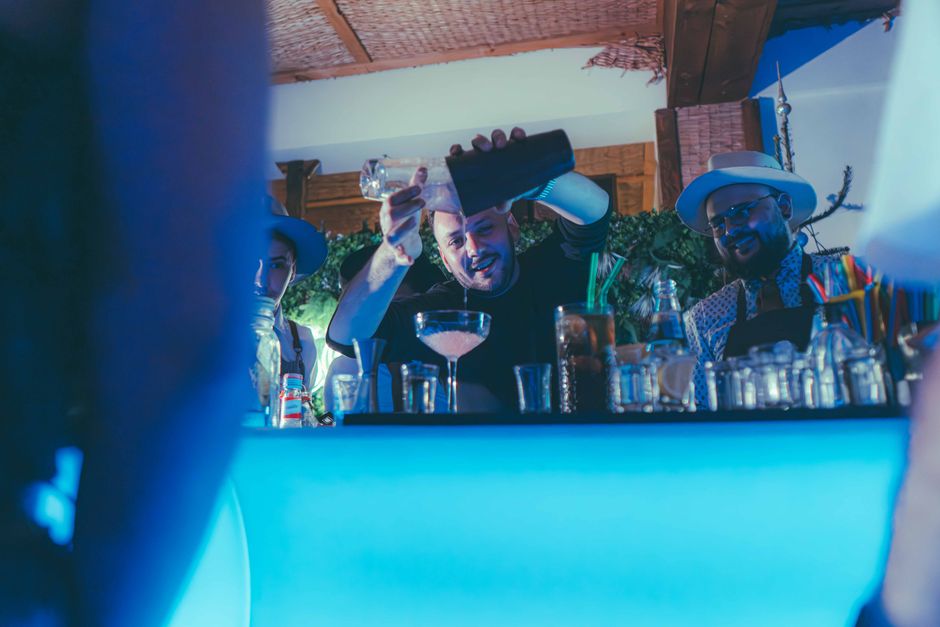
Friday at 9:47pm in a Dallas group chat, someone drops “rooftop bar near me with bottle service and a view.” Two friends open Instagram. One opens Google. Three tabs load three different venues. The first site is a slow homepage with a 2019 photo carousel and a buried “Contact” link. The second is a ticket widget that wants a full account before showing bottle packages. The third is a single mobile page: tonight’s DJ, two real crowd shots from last weekend, minimum spend in plain dollars, a three-field form, and a click-to-call button that actually works on iOS. Guess who gets the table deposit.
That is the real job of landing pages for bars and nightlife companies in the US. You are not selling a whitepaper. You are catching high-intent people who want a table, a ticket, a private buyout, or a corporate holiday party, often while they are already out or mid-scroll. Paid search, Meta, and local SEO can deliver the click. The page decides whether that click becomes a booked night or a bounce back to the competitor two blocks over in Houston, Miami, or Chicago.
This is a how-to you can run in the next two weeks: proof that matches nightlife buyers, mobile speed that survives a 5G stall outside the club, forms that do not kill the vibe, trust signals that calm the “is this legit?” filter, and behaviour data so you stop guessing where people bail.
Bars and nightlife venues that already operate in Austin can apply the landing page advice in this guide to table bookings, bottle service inquiries, and private event requests. Live music nights and festival weekends make mobile speed and short forms even more important when crowds search on the move. Target location: Austin. The Austin local firms page is the location overview for firms in Austin.
Why nightlife traffic dies after the click on most US bar sites
Most venues still send Meta traffic and “bottle service near me” search clicks to a homepage built for brand storytelling. Homepages try to do everything: dinner menu, brunch, private events, job applications, gift cards, Instagram wall. High-intent traffic does not want a tour. It wants an answer in under ten seconds: Can we get in? What does it cost? Is it packed or dead? Who do I text?
You feel it in the numbers even when the ad account looks fine. Mobile is the majority of paid clicks in most nightlife accounts, yet mobile conversion often trails desktop hard because the page is a desktop layout squeezed into a phone. Forms ask for company name, budget range, preferred seating chart, and a free-text essay before anyone sees availability. Photos are compressed poorly or replaced by stock “people clinking glasses” that scream fake. Proof is a five-star Google badge with no recent reviews visible. Tracking fires a generic “submit” event so you cannot tell a birthday-table lead from a spam bot.
There is a second failure mode that owners under-price: response lag after the form. Nightlife leads age in minutes, not days. A Saturday 11pm inquiry about a same-night table is worthless by Sunday brunch if nobody answers. The landing page should set expectation (“We reply within 15 minutes while the floor is open”) and give a phone path for people who will not wait on email.
Agencies that only optimize CPC while parking traffic on an unfocused homepage quietly waste a large slice of media. Industry-wide, a meaningful share of SEM budgets still leaks on misaligned queries and weak post-click experiences. Nightlife is unforgiving because the buyer already has three alternatives in the same neighborhood in Los Angeles or Atlanta.
If you are already buying traffic and the venue site still behaves like a brochure, tighten the post-click path before you scale spend. Dedicated web and landing page design for offer-specific campaigns beats another homepage redesign that ships in six months.
Map the nightlife offers before you design a single section
Do not start in Figma. Start with the money paths you actually sell in the US market.
Typical high-intent jobs for bars and nightlife:
-
Same-week or same-night table / bottle service reservations
-
Guest list or ticketed nights (DJ, live band, holiday takeovers)
-
Private buyouts and semi-privates for birthdays, bachelor parties, brand activations
-
Corporate holiday parties and daytime buyouts (often weekday decision-makers)
-
Happy hour and early-week fill when the room is soft
Each job needs its own landing page or a tightly parameterized page, not one “Events” blob. Ad headline and first screen must match. If the Meta creative says “$500 minimum for four, skyline view, Friday residencies,” the hero cannot open on “Welcome to our culinary journey.”
Write the offer in operator language your door and VIP hosts already use: minimum spend in USD, time windows, dress code if you enforce one, age policy, deposit rules, cancellation window. Ambiguity creates form spam and angry no-shows.
Then define the conversion event you will actually service. A booked table with deposit is different from a “request info” lead. If your hosts only respond to phone and Instagram DMs, design the page for call and SMS preference, and still capture a short form for nights when the line is slammed.
For US multi-location groups (think a small portfolio across Phoenix and Austin), clone the template per venue. Local proof, local maps, local phone numbers. National brand pages with a city dropdown and a shared 1-800 number convert like a hotel chain on a bad OTA night.
Get a free marketing audit - we review your search, ads, and landing pages and send back what to fix first.
Get a free audit
Build the conversion page: proof, speed, form, and trust in one pass
Here is the build sequence we use when the goal is qualified nightlife leads, not vanity sessions. Treat it as a checklist you can ship in 7-14 days on one priority offer (start with bottle service or private events, whichever pays the rent).
Checklist
Checklist
-
One job, one hero
Above the fold on mobile: venue name, the offer in one line, tonight or this weekend framing if relevant, primary CTA (Call / Request table), secondary CTA (View packages). No autoplay video with sound. Hero image should be your room at peak energy, not an empty set shot from open day.
-
Price and logistics without the runaround
Show minimums, typical package bands, or “from $X per table” ranges you can stand behind. List hours, neighborhood, parking or rideshare note, and whether you take walk-ups. Nightlife buyers punish mystery pricing more than a clear $800 Friday minimum.
-
Proof that feels local and recent
Rotate 6-12 real photos from the last 30-60 days. Add 3-5 short Google or Yelp quotes with first name and month. If you host recognizable residencies or brand nights, name them. Avoid walls of logos from 2017. For private events, one anonymized layout diagram beats ten adjectives.
-
Form friction cut to the bone
Default fields: name, mobile, date, party size, rough budget or package interest, optional note. That is enough for a VIP host to triage. Kill CAPTCHA that breaks on mobile Safari if you can replace it with honeypot plus rate limits. Put click-to-call sticky on mobile after first scroll. Offer SMS opt-in only with clear language.
-
Trust and safety signals nightlife actually needs
Visible address and map, door policy summary, ID rules, and a real reply-time promise during service hours. If you process deposits, state the processor and refund basics. For corporate pages, add a simple W-9 / invoice path note so procurement does not stall.
-
Mobile speed as a door policy
Compress hero media, lazy-load below-fold galleries, defer non-essential scripts, and strip stacked tag managers from the test template. Google's CrUX data consistently shows the majority of origins fail at least one Core Web Vital - nightlife pages loaded with galleries and third-party pixels are among the worst offenders. A slow page is a closed door.
-
Message match from ad to page
Duplicate the ad’s primary line in the H1. Use UTM-aware headlines if you run multiple creatives (birthday vs corporate vs ticketed night). If the ad promises a specific DJ, that name must appear above the fold or you train people to bounce.
-
Thank-you path that keeps the lead warm
After submit: confirm what happens next, show the host phone, offer add-to-calendar for ticketed nights, and deep-link Instagram or WhatsApp if that is how your door really works. Fire a distinct conversion event per offer type in GA4 via GTM.
-
Compliance and brand safety basics
Age-gating where required, alcohol advertising disclaimers consistent with your Meta and Google setups, and no before-after medical-style nonsense. Keep creative and landing claims aligned so policy reviews do not kill the funnel mid-weekend.
-
Owner QA on a real phone line
You or the GM load the page on the same phone model your guests use, on cellular, outside the building. Tap every CTA. Submit a test lead. Confirm the Slack or SMS alert hits the host within a minute. If that loop fails, the design did not ship.
Action checklist
- Pick one revenue offer and one city venue. Write the promise in 12 words or fewer.
- Draft wireframe in mobile-first order: hero, offer facts, proof, form, FAQ, map.
- Collect fresh photo set and 5 reviews with dates. Kill stock imagery.
- Build the page on a clean template. Keep global nav minimal or hidden for paid traffic versions.
- Instrument UTMs, GA4 events, and call tracking on the sticky number.
- Run Core Web Vitals and snippet checks before any media push.
- Soft-launch to a small Meta or search budget. Watch mobile CVR and scroll depth for 5-7 days, then iterate copy and form length.
Free tools - try these yourself
When social proof and clarity go in, conversion rate moves. Cross-industry CRO work regularly shows double-digit relative lifts when proof and offer clarity replace vague brand copy. Nightlife is the same pattern with louder music and shorter patience.
Use behaviour data to find the exact leak (not another opinion)
Heatmaps and session recordings are how you stop arguing about button color in the group chat. Watch ten mobile sessions from paid traffic. You will usually see one dominant failure: gallery rage-taps while the form never enters the viewport; a sticky Instagram icon covering the CTA; guests opening the menu PDF and never returning; or a multi-step widget that drops on step two when the keyboard opens.
HeyLead Insights is built for that post-click reality: session recordings, heatmaps, scroll depth, form abandon, and click patterns so you can see where proof, forms, and CTAs leak intent. Pair it with GA4 events so you are not flying on last-click folklore alone. Privacy changes and blockers already remove a chunk of conversion signal industry-wide. Clean first-party events on the landing page are part of how you keep optimization honest.
Practical read-out cadence: after 50-100 qualified sessions on the new page, list the top three drop moments, ship one fix per moment, and only then touch media budgets. Creative fatigue on Meta can show up in CPM within days; do not confuse a tired creative with a form that was always too long.
For operators who want a partner already living in this niche, start from Bars and Nightlife marketing and keep the landing page work tied to the same offer calendar your hosts run.
Two US scenarios: bottle service page and corporate buyout page
Scenario A: Independent rooftop in Miami, bottle-led weekends. Marketing lead notices Meta leads at a steady CPL while hosts complain half the forms are tire-kickers asking “guest list?” with party size 20 and budget blank. Recording review shows most mobile users never reach the minimum spend block because a full-screen cookie banner and a heavy video loop push it down. They ship a lean page: static hero image, minimum spend and mix examples in the first screen, three fields plus date, sticky Call VIP host. Form completion rate jumps; more useful change is host-accepted lead quality, because budget and date are required. They cut the homepage split test that had been diluting message match.
Scenario B: Multi-room venue in Chicago selling November-December corporate parties. Search ads for “private event space downtown Chicago” hit a generic events page with a 12-field RFP. Desktop looked fine in the board deck; mobile CVR was a fraction of desktop. Rebuild focuses on weekday buyer needs: capacity chart, sample open-bar packages in USD, AV notes, daytime photos, and a short form plus “Request proposal PDF.” They add schema-style FAQ on the page for catering minimums and invoice timing. Sales cycle stays multi-touch, but qualified form volume rises because procurement can self-serve basics before the site visit.
In both cases the mechanism is the same: align the page to one job, remove friction the phone exposed, and measure offer-specific conversions instead of “all form fills.”
What we hear from operators
What we hear from operators: plenty of accounts were paying for bottle-service clicks into a homepage that dragged on LTE outside the club. Hosts blamed lead quality, but recordings showed people never even saw the minimums. One dedicated mobile page with three fields and a sticky call button fixed more than another month of creative testing.
Corporate buyout leads tend to convert only when capacity, sample packages in dollars, and invoice language sit on the landing page. The long RFP form was theater. Shorter form, faster follow-up, same sales team.
FAQs
Should every Meta campaign go to a dedicated landing page?
Yes for prospecting and high-spend offer campaigns. Retargeting can use a tighter variant of the same page. Sending cold traffic to a homepage is the fastest way to train the algorithm on bounces.
How short should the form be for table leads?
Name, mobile, date, party size, and budget or package interest cover most VIP workflows. Add fields only when hosts prove they use them on every qualified lead.
What speed target matters on mobile?
Pass Core Web Vitals on real mobile traffic, especially LCP and INP. Target LCP under 2.5 seconds and INP under 200ms on a mid-tier Android on 4G. If PageSpeed Insights shows LCP above 4 seconds, fix media compression before touching anything else. If the hero gallery or third-party widgets blow the budget, simplify media before you buy more clicks. Use a Core Web Vitals checker on the production URL, not only localhost.
Do we need separate pages for tickets vs tables?
Almost always. Ticket buyers want lineup, door time, and checkout. Table buyers want minimums, view, and a human response. Mixing them confuses both the guest and your tracking.
Where does SEO fit if this is a landing page piece?
Use indexable pages for evergreen offers (private events, venue hire) with unique proof and FAQs. Keep pure paid variants unindexed if they are thin message-match pages. Do not block yourself from local organic demand for “private dining downtown” style queries when those pages deserve to rank.
Putting it to work
This week
-
Pick one venue and one offer (tables or private events).
-
Rewrite the hero and offer facts in USD terms your hosts already quote.
-
Cut the form to five fields or fewer and add sticky click-to-call.
-
Replace stock photos with a fresh weekend set and three dated reviews.
-
Run Core Web Vitals, H1, title, meta description, and Open Graph checks; fix critical failures.
-
Tag the page with UTMs and a distinct GA4 conversion; submit three test leads end to end.
Next 30 days
-
Install behaviour insight and review 50+ mobile sessions; ship fixes for the top three abandon points.
-
Launch or repoint a modest paid flight with strict message match.
-
Build the second offer page only after the first holds a stable mobile conversion rate.
-
Align host SLAs (reply under 15 minutes during service) with the promise on the page.
-
Document package bands so creative, page, and door script stay identical.
Pull your last 30 days of paid and organic form fills, mark which ones hit a dedicated offer page versus the homepage, and rebuild the highest-revenue path first using the checklist above. If you want a team to own the messy middle (landing page conversion, proof, speed, and behaviour insight on HeyLead Insights so nightlife leads stop leaking after the click), HeyLead can run that build and iteration with you. Call us.
Free marketing audit, or reach Martin directly:
Get a free audit Chat with us on WhatsApp · [email protected]