
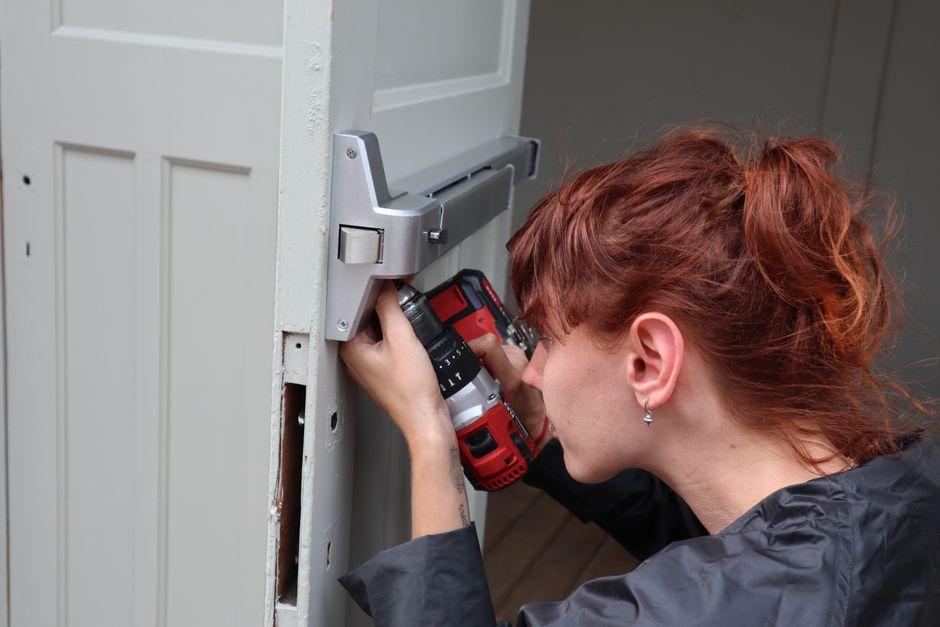
The call that pays the truck is rarely a research session. Someone is locked out of a townhouse at 11:20 p.m., a toddler is inside with the keys, or a snapped cylinder is blocking a morning school run. Residential locksmith companies live on that urgency. Marketing that treats the category like a leisure browse (how-to videos, generic “we’re local” homepages, last-click dashboards) burns budget while the neighbor with a 24/7 Google Business Profile and a click-to-call landing page takes the job.
This piece is for owners and marketers who own the marketing number: cost per booked job, not impressions.
Residential locksmith companies that work in Grand Rapids can adapt the marketing steps in this article to the lockouts, rekeys, and lock upgrades they handle every week. Trust signals, tracked calls, and tidy service pages carry over to any market where homeowners search in a hurry. Target location: Grand Rapids. Owners who run this trade there can use the Grand Rapids home services page for market notes.
Why lockout demand never behaves like a SaaS funnel
Residential work clusters around three intents: emergency lockout, rekey after a move or breakup, and hardware upgrades (smart locks, high-security cylinders). Mix them in one campaign and Google will happily spend on “how to pick a lock” and “best smart lock 2026.” Those clicks look cheap. They do not roll a van.
In this trade, the conversion is often the call. If Interaction to Next Paint is sluggish, people bounce to the next maps pin. Plenty of locksmith sites are in the failing half.
Zero-click search makes organic even less of a vanity play. Early 2026, 68.01% of US Google searches ended without a click. AI Overviews sit on a large share of informational queries and can cut CTR hard. You still need to rank and get cited for “rekey house after tenant left,” but you cannot treat organic sessions as the whole story. Maps, calls, and paid emergency terms carry the week.
Attribution will lie if you let it. Last-click double-counts. In-platform CPA on Meta will not match the dispatch log. Privacy and blockers already strip 20%+ of conversion data, which is enough to poison smart bidding if you never send first-party events. Quality leads, not more leads, is the only metric that matches payroll.
Where residential locksmith spend actually leaks
The first leak is query mix. Emergency CPCs sit well above the 2026 search average of about $2.96, and they keep climbing. Operators respond by widening match types, then wonder why they paid for lock-picking tutorials. Negatives are not a one-time list. They are a weekly hygiene job: DIY, YouTube, “how to,” “without key,” “master key system commercial,” automotive lockouts if you do not run cars, and every neighboring city you cannot reach in 30 minutes.
The second leak is the homepage. If someone says they just send traffic there, treat that as a red flag. Ad copy that says “locked out in 20 minutes, licensed, no trip fee after 10 p.m.” landing on a five-service collage with a buried click-to-call is how you buy expensive bounce. Dedicated pages for lockout, rekey, and smart lock install, each with proof (license, bonded, same-day photos of residential doors, not stock padlocks) convert because the message matches the panic.
The third leak is creative and signal quality on paid social. Creative is your targeting now. Tight 2020 lookalikes underperform broad plus a testing engine. UGC-style clips can die in 5-6 days even when day-one results looked fine. Fatigue shows in CPM first, then in lead volume. If you only check weekly, you miss the death of the ad.
If paid clicks die after the tap, session recordings on the lockout page usually show the same pattern: people hunt for the number, hit a sticky chat that covers it, or abandon a form that asks for a company name. HeyLead Insights is built for that post-click evidence so you fix the page instead of guessing in Ads Manager.
When the search account is noisy and the pages are generic, a partner that already runs search campaigns for service businesses can isolate emergency terms faster than another month of “we’ll watch it.”
Get a free marketing audit - we review your search, ads, and landing pages and send back what to fix first.
Get a free audit
The channel mix that books truck rolls, not tutorials
Lead with Google Search and Maps. That is where “locksmith near me” and “locked out of house [city]” live. Keep emergency, rekey, and product/install in separate campaigns so bidding and landing pages stay honest. Performance Max can take the bulk once conversion actions are clean (calls of 60+ seconds, form-to-job, not 5-second misdials).
Organic still matters for the jobs that are planned: new construction punch lists, smart lock quotes, landlord rekeys. Write pages that a human locksmith would actually say on the phone. A growing share of top-ranking pages now carry AI-assisted copy, which means thin, templated content is the baseline, not the differentiator. Thin generic posts do not get cited in AI Overviews, and citation share is becoming as important as classic CTR. Information gain beats volume after the March 2026 core update. A paragraph on how you handle a snapped key in a mortise lock beats another 800-word “history of locks.”
Bing is optional unless you see older homeowners in the job mix. LinkedIn is almost never the emergency channel. Do not add platforms to paper over a muddy offer. Tighter positioning and decent attribution beat a fifth ad network.
Calls are the conversion. Track them with unique numbers per campaign, fire Enhanced Conversions / Conversions API so you do not lose a fifth of the signal, and pass job type back from dispatch if you can. Last-click is a tactic for budget trimming, not the CFO answer. Unified measurement (even a simple jobs-by-source spreadsheet reconciled weekly) beats a pretty dashboard that cannot explain why Tuesday’s lockouts paid and Thursday’s forms did not.
Audit scorecard
-
Intent split
Separate lockout, rekey, automotive (if you do it), and commercial. If commercial sits in the same ad group as “house lockout,” you are buying the wrong truck.
-
Negatives and search terms
Pull 14 days of search terms. Kill DIY, training, wholesale, and cities outside your SLA.
-
Call as primary conversion
Count answered calls over a duration threshold, not every tap. Duplicate conversions inflate automated bidding and make CPL look cheaper than the board.
-
Page-message match
One URL per intent. Headline restates the ad. Phone above the fold on mobile. License, response window, and after-hours fee in the first screen.
-
Speed and INP
If the number is not tappable in a second, you lost the lockout. Check CrUX and lab data; do not trust “it felt fine on office Wi-Fi.”
-
Proof that is residential
Photos of apartment cylinders and suburban deadbolts, not a commercial panic bar. Reviews that mention night jobs and wait time beat star counts alone.
-
Maps hygiene
Categories, hours including nights, service area, and Q&A that matches how people actually search. Fake NAP variants split you in local pack.
-
Signal quality
Enhanced Conversions on, CAPI if you run Meta, UTM discipline on every number and form. Missing 20% of conversions is how smart bidding chases junk.

A lockout-page and campaign build you can copy this month
Start from jobs, not from keywords. Pull 90 days of invoices. Tag each as lockout, rekey, install, automotive, commercial. That mix is your budget split. If 70% of profit is after-hours residential lockout, that campaign gets the aggressive CPC cap and the fastest page. Rekey can live on a calmer landing page with a quote form.
A mid-size shop in a Sun Belt suburb did this after six weeks of “high lead volume” that dispatch hated. The mechanism was simple: phrase match on “locksmith” plus a homepage. Search terms were full of practice kits and car ignitions. They carved emergency house lockout into its own campaign, pointed it at a one-screen mobile page with click-to-call and a 45-minute claim, and added 80 negatives in two sittings. Form spam dropped. Booked night jobs rose even though clicks fell. One number worth keeping: qualified call rate moved from roughly 11% of clicks to 27% on that campaign. They did not need a new channel. They needed the old one to stop lying.
Creative on Meta, if you use it, should stop the doom scroll with a real door, a real tech, and a spoken offer (“rekey after you move, same day, parts listed”). Run broad. Test hooks, not 14 stacked audiences. When CPM climbs and CTR holds, rotate before volume dies. Do not reset learning with daily structure changes.
No one can honestly guarantee a CPL before they see your account, radius, after-hours fees, and close rate. Realistic paid and organic compounding is a 3-6 month program, not a week of AI-overview theater.
Action checklist
- Export 90 days of jobs. Split revenue by lockout, rekey, install. That is your campaign map.
- Build three landing pages, not one homepage. Lockout is call-first. Rekey can be form-plus-call. Install needs price ranges and brand SKUs you actually stock.
- In Google Ads, one campaign per intent. Exact and phrase on emergency. Broad only after conversion volume can train bidding.
- Add negatives from a live search terms review: how to, kit, gun, automotive (if out of scope), neighboring metros, “training,” “salary.”
- Wire call tracking and Enhanced Conversions. Import only calls that hit your duration rule. Recheck GTM after every theme update.
- Fix mobile INP and the sticky header that covers the number. Re-test on a mid-range Android on cellular, not the office fiber line.
- GBP: hours, after-hours note, photos of residential work, products, and a Q&A that matches lockout language.
- Reconcile Ads, call logs, and invoices every week for 30 days. Where they disagree, trust the invoice and fix the tag.
Free tools - try these yourself
Patterns we see in audits
The short quotes below are illustrative composites drawn from patterns in account reviews. They are not quotes from named clients.
“We were celebrating form volume until dispatch showed half the ‘leads’ were people asking how to impression a lock. Split the emergency campaign and the CPL looked worse on paper and the vans finally stayed busy.” - Owner, residential locksmith company
“CPMs on the rekey video climbed for four days before booked jobs fell. We used to wait two weeks to rotate. That delay was the whole problem.” - Head of Marketing, multi-van locksmith group
FAQs
Should residential locksmith companies put most of the budget into Google Ads or SEO?
Emergency lockout belongs in paid search and Maps first because the job expires in minutes. SEO and GBP content carry rekey, hardware, and landlord work. Starve neither. Starve the tutorial queries.
Is Performance Max safe for locksmith accounts?
Only after you have clean conversion actions and strong negatives at account level. PMax will harvest cheap informational traffic if you feed it a fuzzy “lead” event. When signals are jobs, it can carry bulk efficiently.
Do Meta ads book lockouts?
Sometimes for people who saw you earlier and get locked out later, and for planned rekeys. Do not expect cold Meta to replace “locksmith near me” at 1 a.m. Creative testing still matters; ads can die in days.
Why did automated bidding raise spend without better jobs?
If the conversion is a 3-second call or a DIY form, the algorithm did exactly what you asked. Fix the event, then revisit Smart Bidding. Manual CPC on a brand-new account is reasonable until you have 30-50 quality conversions.
How long before the paid campaigns actually show up in the dispatch log?
Paid emergency can move in days once pages and negatives are right. Organic and maps compounding is a 3-6 month arc. Anyone promising a fixed ROAS before seeing your radius and close rate is selling comfort, not a plan.
Putting it to work
Execution sprint
This week
- Pull 30-90 days of performance for residential locksmith (Search Console, ads, CRM, or call logs - whatever you have).
- Flag the top leak: wrong intent, weak page, slow response, or dirty conversion tracking.
- Ship one fix on the highest-traffic money path (page, campaign split, or response rule).
- Run the free tools below on that same URL or account and log the findings.
Free tools for this sprint
Next 30 days
- Expand the fix to the next one or two money paths only after the first one shows cleaner bookings.
- Align creative, keywords, or content with the same offer the page now states.
- Review booked outcomes weekly; cut anything that still only produces unqualified volume.
This week
-
Pull search terms for 14 days and dump every DIY and out-of-area query into negatives.
-
Build or strip a lockout landing page so the phone is the first tappable element on mobile.
-
Change the primary conversion to qualified calls, not all clicks to call.
-
Run the Core Web Vitals checker and the local SEO checklist on the lockout URL and GBP.
-
Tag last month’s invoices by job type so next month’s budget split is not a guess.
Next 30 days
-
Split campaigns by intent and give PMax only the conversion actions that match paid jobs.
-
Add Enhanced Conversions and UTMs on every call number.
-
Rotate Meta creative on a 5-6 day cycle if you run rekey demand.
-
Reconcile Ads vs invoices weekly until the gap is explainable.
-
If the plumbing of tags and pages is blocking you, book a free audit.
Start by lining last month’s invoices next to the search terms report and marking every click that could never have become a house lockout or rekey. HeyLead will take that exact waste loop (query hygiene, lockout-page match, and conversion signals that smart bidding can trust) off your plate so you keep owning dispatch, not the ad account’s junk traffic. Chat with us on WhatsApp
Free marketing audit, or reach Martin directly:
Get a free audit Connect on WhatsApp · [email protected]