
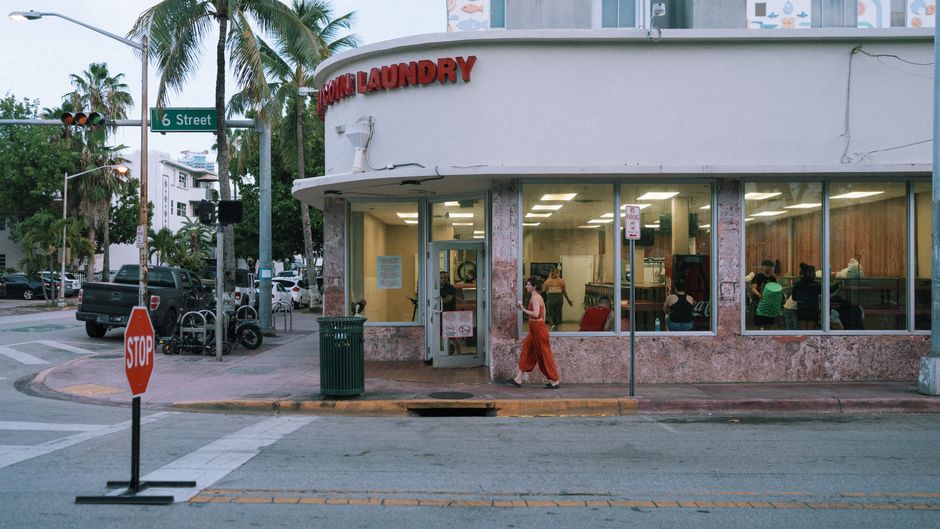
The fastest way to burn through a laundromat’s marketing budget isn’t a bad ad. It’s running a decent ad to a store whose Google Business Profile still shows the address you closed down two summers ago, a phone number that rang through to the previous owner, and two or three duplicate listings all splitting up the same hard-won five-star reviews.
Here’s what that actually costs you. Someone’s standing in their kitchen at 9pm with a comforter that won’t fit in their apartment-size machine. They search “laundromat near me,” your map pin sends them to a building that’s now a nail salon, or your listing shows “closed” when you’re open until midnight. They don’t call to ask what happened. They just drive three blocks further to the place whose listing actually works. Multiply that by every week you leave the mess unfixed, and you’re not losing a click, you’re losing a wash-dry-fold customer who might have been worth fifty dollars a month for years. With search cost-per-click running around $2.96 on average in 2026 across industries, every dollar spent sending someone to a broken storefront online is a dollar you can’t get back.
Most laundromat owners assume the fix is a bigger ad budget or a flashier website. It almost never is. The mistakes that actually drain money are boring, fixable, and usually invisible until someone looks for them on purpose. Before you touch your Google Ads account again, pull up your own business on a phone that’s never logged into your Google account before and look at exactly what a stranger sees. What you find there tells you more about your marketing problem than any campaign report will.
The six mistakes burning cash before a single load gets washed
These aren’t the exotic, cutting-edge mistakes you read about in ad platform blog posts. They’re the ones we find in almost every laundromat account we open for the first time, whether it’s one location or a dozen.
Common mistakes
-
1Duplicate Google Business Profiles fighting each other
Multi-location owners end up with two or three listings per store almost by accident: one from the original owner, one a "helpful" equipment rep set up, one duplicated when the address changed or the store got remodeled. Google splits reviews and search visibility across all of them, so a store that earned forty-plus reviews over the years only ever shows fifteen to a searcher deciding where to go tonight. The fix is unglamorous but necessary: claim every listing tied to that address and phone number, request a merge or suspension of the duplicates through Google, and make sure your name, address, and phone number match exactly across your website, your listing, and any directory site that mentions you.
-
2Review requests that cross the FTC's 2024 line
The FTC's 2024 rule on fake and compensated reviews bans offering a free dry cycle or a dollar off a wash in exchange for a five-star review, and it bans reviews that misrepresent who actually wrote them. A lot of laundromats still have a taped-up sign near the folding tables that says "leave us five stars, get a free dry." That's not a gray area anymore, it's a real enforcement risk. The fix: ask happy customers for honest feedback without tying it to any reward, and if you've run incentivized review campaigns in the past, go back and clean them up before a complaint does it for you.
-
3Broad match keywords feeding dry cleaners and job seekers
"Laundry service near me" on broad match pulls in people searching for dry cleaning, uniform rental, laundromat equipment auctions, and "laundromat attendant jobs." None of those searchers need a working dryer today. The fix is a negative keyword list built specifically for coin laundries and wash-dry-fold shops (dry clean, alterations, hiring, jobs, equipment for sale, franchise cost) and an actual habit of checking the search terms report weekly for at least the first month of any new campaign.
-
4No way to know which call turned into a drop-off
Someone calls to ask if the big comforter machines are free before they load their SUV. If that call goes to the same static number pasted on your website, your Google Business Profile, and your Facebook page, there's no way to tell whether the ad, the map listing, or the website drove it, let alone whether it turned into a paying customer. The fix is call tracking: dynamic numbers that swap per channel, call recording where it's legal, and a simple habit of tagging which calls actually became drop-offs so you can see which channel is paying for itself and which is just making noise.
-
5Paid traffic landing on a homepage instead of an answer
Someone clicks a Google ad at 10pm wanting one thing answered fast: is this place open right now, and does it have machines free. A homepage with a hero photo and a paragraph about "community laundry since 1998" doesn't answer that, and if it's slow to load on a weak cell signal, you've lost them before they scroll. Build (or have your agency build) a page that leads with hours, machine count, wash-dry-fold pricing, and a map pin, loads fast on a phone, and matches the exact offer in the ad word for word.
-
6Ad spend that ignores when machines actually sit empty
Running the same budget around the clock treats a Tuesday at 2pm, when the regulars already have every machine full, the same as a Sunday night lull when half your dryers sit idle. Pull your card-reload or POS data by hour, find your real dead windows, and shift ad delivery and any promotions toward those windows instead of spreading spend evenly across a day that isn't actually even.
One more thing worth saying plainly: fixing the page someone lands on matters as much as fixing the ad that sends them there. HeyLead Insights is the kind of tool that shows you where a mobile visitor actually stalls out on that landing page, whether it’s a slow-loading hero image, a pricing table that’s hard to read on a small screen, or a map that never finishes loading. Guessing at that is how a lot of “the website doesn’t convert” complaints turn into months of wasted spend.
What to fix this week versus what can sit until next season
Not every mistake above deserves equal urgency. Some of them cost you money every single day they stay broken. Others are worth doing right, but doing them before you’ve fixed the data underneath them just means you’re optimizing blind.
Tracking and listing cleanup come first, always, because without accurate data you can’t actually judge whether any other fix worked. Review policy gets fixed immediately too, since it costs nothing and carries real legal exposure the longer it sits. Negative keywords are a this-week job, not a someday job, because every day without them is a day of wasted spend. Call tracking should go in before you scale budget, not after, because scaling an untracked account just means scaling the guesswork. Landing page speed and dayparting are real, worthwhile fixes, but they’re the kind of thing that benefits most once the rest of the account is already clean.
DIY playbook
- 1Stop guessing whether your listings are duplicated. Search your business name from a phone that's never logged into your Google account and count how many results come up for the same address.
- 2Stop running review-for-reward promotions this week, even the informal ones taped to the wall. Replace the sign with a plain ask for honest feedback and a QR code to your review page.
- 3Stop letting broad match run without negatives. Pull the search terms report from your Google Ads account and build your negative list before the next billing cycle closes.
- 4Stop treating phone leads as untrackable. Set up dynamic call tracking numbers per channel before you add another dollar of ad spend.
- 5Once the account is clean, move on to landing page speed, mobile layout, and shifting ad delivery toward your real slow hours instead of spreading budget evenly across the day.
DIY tools for this section
Get a free marketing audit. We review your search, ads, and landing pages and send back what to fix first.
Get a free audit
A four-location chain’s turnaround, and the one fix that mattered
Picture a four-location coin laundry group somewhere in the Midwest. This is illustrative, not a named case, but the pattern is one we see over and over. They’d been running Google Ads for two years and had quietly decided the platform “just doesn’t work for laundromats.” Spend kept going out, phones weren’t ringing any more than before, and nobody on the team could say with confidence why.
An audit found two things stacked on top of each other. Three of the four locations had duplicate Google Business Profiles, so reviews and search visibility were split across listings nobody was actively managing. And the ad account had been running on broad match with zero negative keywords for its entire two-year life, quietly burning real budget on searches like “commercial laundry service” from businesses looking for linen contracts, not individual customers who just needed a working dryer that night.
The fix wasn’t more spend. It was merging the duplicate listings so each real location’s reviews finally lived in one place, and rebuilding the campaign around a tight negative keyword list paired with a dedicated landing page per location showing that store’s hours, machine count, and pricing. Within about six weeks, call volume picked up and, for the first time, the ownership group could actually see which location’s ads were earning their keep. Nothing about the offer changed. The money was simply finally reaching people who needed a dryer today instead of people who never wanted one in the first place.
What laundromat owners say once the review mess gets sorted
“We thought our website was broken. It wasn’t the website. It was that half our reviews were sitting on a listing nobody could even find, so new customers kept seeing a near-empty profile next to a competitor with eighty reviews showing up in one place.” - Owner, four-location coin laundry group

Frequently asked questions
Do I need a dedicated landing page if most customers just find me on Google Maps? Yes, if you’re spending anything on ads. Maps traffic finds your listing directly, but anyone clicking a paid search ad lands wherever you send them, and a generic homepage answers none of the questions they actually have at that moment: are you open, do you have machines free, what does wash-dry-fold cost.
How much should a single laundromat location budget for digital marketing each month? It depends heavily on whether you’re building from zero or maintaining an already-clean account, but most single-location owners we talk to are better served putting money into fixing tracking, listings, and the landing page first, then scaling ad spend once they can actually measure what’s working. Spending more before that groundwork is done usually just scales the waste.
Can I still ask customers to leave a review under the FTC’s current rules? Absolutely, you just can’t tie the ask to a reward or misrepresent who’s writing it. A simple, unconditional request for honest feedback, through a QR code at the folding table or a text after a wash-dry-fold pickup, is still completely fine and still the best source of new reviews you have.
What’s the fastest fix if my phone isn’t ringing from my ads? Check call tracking first. In a surprising number of laundromat accounts, the ad is working fine, but the number people see doesn’t match the number that’s actually monitored, or the call goes to voicemail during exactly the hours people are most likely to call.
Putting it to work
This week, pull up every Google Business Profile tied to your business name and address from a phone that’s never logged into your account. Count the duplicates, check that the hours and phone number are right, and note which listing is actually carrying your reviews. That one audit, done honestly, usually takes under an hour and tells you more about where your marketing dollars are leaking than a month of staring at ad reports.
If untangling duplicate listings, fixing a broken call tracking setup, and rebuilding a campaign around real negative keywords sounds like more than you want to own alongside running the stores themselves, that’s exactly the ongoing cleanup and management HeyLead handles for laundromat and multi-location service businesses. Chat with us on WhatsApp.
Free marketing audit, or reach Martin directly:
Get a free audit Connect on WhatsApp · [email protected]