
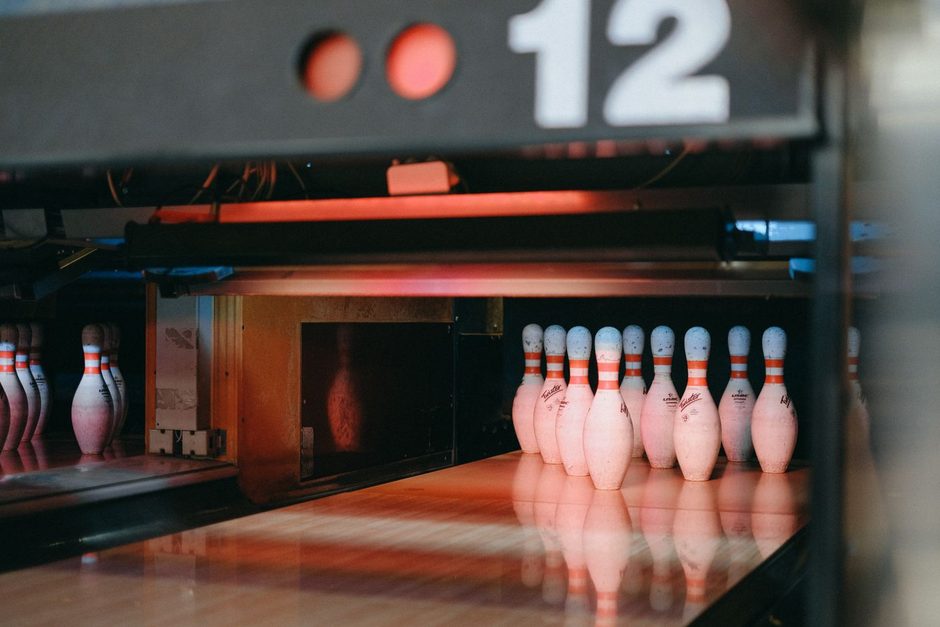
Saturday night in a suburban Dallas center. League sheets are full, the pro shop is ringing, and your phone is still buzzing with “do you have open bowl at 7?” texts that never turned into a booked lane. Meanwhile the same people who found you on Google or Meta hit a homepage that loads like a brochure from 2019, scrolls past a hero photo of empty lanes, and bounces before they ever see pricing, party packages, or a simple “reserve a lane” form.
That gap is the real story behind landing pages for bowling companies in the US. Traffic is not the hard part when search and paid social can push birthday moms, HR coordinators booking team nights, and casual groups looking for Friday open bowl. The hard part is turning that intent into a reservation, deposit, or call before they tap the next center on the map. This piece is about conversion rates and on-page signals you can actually read: what “good” looks like directionally, where pages leak, and how to fix the leaks without guessing.
Bowling centers that already operate in Houston can take the conversion signals from this article and test them on their own booking pages. Party packages, league sign-ups, and corporate events each behave differently on mobile, and local competition shapes what visitors expect. Target location: Houston. The Houston local firms page is the location overview for firms in Houston.
What US bowling buyers do in the 90 seconds after the click
Bowling demand in markets like Houston, Phoenix, Chicago, Atlanta, and Miami is bursty and mobile-heavy. Someone is standing in a group chat deciding between you, the next exit, and a restaurant with a waitlist. They care about open lanes tonight, kid-friendly policies, shoe rental, food and drink, private rooms for birthdays or corporate events, and whether they can lock something in without a phone tree.
High-intent queries and ads usually cluster around open bowl near me, birthday party packages, corporate team building, glow bowl or cosmic night, and league sign-ups. Paid clicks that land on a generic multi-location homepage waste that intent. The visitor has to hunt for hours, prices, and a form while your competitor’s page answers the offer in the first screen.
On mobile (still the majority of paid search clicks in most local verticals), conversion often trails desktop by a wide margin when pages are heavy. You do not need a national study to feel it: if the first paint is slow, the party CTA is below three screens of stock photos, and the form asks for eight fields before a time preference, people leave. Directionally, many local leisure operators see solid traffic-to-enquiry rates only when the page matches the ad or search promise, loads cleanly on mid-range phones, and offers a one-step path to “request a time” or “book a party consult.” Treat any single “industry average conversion rate” as a rumor. Your honest baseline is last 60-90 days of sessions on offer-specific pages, split by mobile vs desktop, with form starts and completed enquiries tracked separately from phone taps.
Response speed sits next to the page. A birthday enquiry that sits until Monday is often a lost booking even if your CPL looked fine. Centers that treat digital leads like walk-up customers (same-day reply during open hours, clear next step, optional deposit link) convert the same traffic far better than centers that treat the inbox like a suggestion box.
Where landing pages for bowling companies quietly kill good traffic
The failure mode is rarely “we need more impressions.” It is misaligned pages and weak proof. Ads promise $X kids party packages or Friday open bowl specials; the click lands on a brand story with no package grid. SEO ranks for “bowling alley [city]” but the page buries hours, lane rates, and party capacity under a slideshow. Tracking fires on “thank you” for a newsletter signup while the money action is a phone call that never hits the CRM.
Form friction is a classic leak. Name, email, phone, preferred date, party size, and a free-text “tell us more” is enough for ops to quote. Add company, budget, how you heard about us, and three marketing checkboxes and mobile completion collapses. Instant Forms on Meta can fill the sheet, but if your website path is the only place you can show menu, lane map, and reviews side by side, that website path has to be lighter than the form it competes with.
Trust signals matter more than operators think. Parents and HR buyers scan for recent Google review volume and stars, photos that look like your actual center (not a chain template), clear alcohol and kids policies, and a visible address and map. Thin proof reads as risky for a $400-$1,500 party deposit. Slow pages compound distrust: when only about half of web origins pass all three Core Web Vitals in recent CrUX snapshots, a laggy booking page is not a technical footnote. It is a conversion tax, especially on INP-heavy carousels and unoptimized video backgrounds.
If your team is still sending paid and organic traffic to the same homepage, that is the first structural fix. Dedicated web and landing page design for each offer (open bowl, kids parties, corporate, leagues) keeps message match tight and makes benchmarks readable, because you are no longer averaging five intents into one bounce rate.
Benchmarks and page signals worth tracking every week
Use ranges as guardrails, not targets carved in stone. For local bowling, a useful operating picture looks like this:
-
Mobile LCP: aim under roughly 2.5s on a real mid-tier device on LTE; if hero media is the bottleneck, compress or replace autoplay video first.
-
Form start to submit: if more than half of people who open the form abandon it, the form is the product problem, not “bad traffic.”
-
Enquiry-to-booked event: track this harder than raw leads. A cheap CPL that never becomes a deposit is expensive.
-
Reply time: same business day during open hours is table stakes; under an hour for party and corporate enquiries is where win rates usually jump.
-
Proof density above the fold: rating + review count, starting price or package band in USD, and one clear primary CTA beat a poetic tagline every time.
Read the numbers in pairs. High CTR from ads with low landing conversion usually means creative or keyword intent is fine and the page is wrong. High page conversion with low show-up or low deposit rate means sales ops or offer clarity after the form is the issue. Rising mobile sessions with flat bookings often point to tap targets, sticky bars covering CTAs, or maps that hijack scroll.
Page signals that correlate with booked work in this niche: offer-specific H1 matching the ad, visible hours and location, package cards with what’s included (lanes, shoes, pizza, time block), a short form plus click-to-call, and recent social proof near the CTA. Signals that correlate with tire-kickers: vague “contact us,” no price anchors at all, stock nightlife photos that do not match the center, and popups that fire before the visitor sees capacity or availability language.
Attribution does not need to be perfect to be useful. Tie UTM’d landing pages to enquiry source, then to booked events in whatever calendar or POS you already use. When in-platform ROAS and your deposit report disagree, trust the deposits and fix the page and handoff before you scale spend. Broader 2026 channel benchmarks only help if the landing experience can hold the traffic quality those auctions send you.
Get a free marketing audit - we review your search, ads, and landing pages and send back what to fix first.
Get a free audit
A practical playbook: proof, speed, friction, and behaviour data
Start with one primary offer page, not a redesign of the whole site. Pick the revenue line that hurts most when it is empty: kids parties or Friday open bowl are common. Rewrite the first screen so a stranger knows what they get, roughly what it costs, and what to do next. Put the form or “check availability” action in reach of a thumb without a scavenger hunt.
Build proof like an operator, not a brand deck. Three short package blocks beat a PDF menu buried in the footer. Embed or paraphrase real review themes (clean shoes, staff pace parties well, food came out fast). Show the actual concourse. If you run multiple sites, do not clone one page with a city name swap; local hours, parking notes, and lane count are conversion content.
Cut friction ruthlessly. Prefer fewer fields, smart defaults (party vs open bowl), and SMS-friendly confirmation. Make click-to-call obvious for same-day open bowl; make the form stronger for dated parties. Test load time after every media upload. Lazy-load below-fold galleries. Kill third-party scripts that do not earn their weight on a booking page.
Then stop arguing in meetings about “I think the button should be blue.” Watch sessions. HeyLead Insights (session recordings, heatmaps, scroll depth, form abandon, click patterns) shows whether people ever reach packages, whether they rage-tap the map, and whether the CTA is ignored because a cookie banner or chat widget owns the bottom of the screen. Behaviour data turns CRO from opinion into a punch list: move proof up, shorten the form, fix the element that steals taps.
For centers serious about bowling marketing across SEO and paid, keep landing pages as the system of record for offers. Ads and local pages should hand off into the same clear story, not three conflicting price lists.
Two US scenarios: what changed on the page, not in the slogan
Kids parties in Phoenix. A multi-lane center was spending on Meta and branded search for birthday packages. Traffic hit the main site. Mobile bounce was ugly. The fix was not a new brand video. They shipped a single party landing page with age bands, headcount tiers, what is included in USD, a 5-field form (date, kids count, contact, time window, questions), and reviews that mentioned staff running the party. Heatmaps showed almost nobody reached the old PDF menu link in the footer; the new page put inclusions mid-scroll. Ops committed to under-two-hour replies on Saturdays. Booked parties rose because parents could self-qualify and the center stopped playing phone tag on incomplete enquiries.
Corporate and league interest in Chicago. Search captured “corporate bowling event” and league registration intent, but the landing experience mixed open bowl specials with a dense events paragraph. They split corporate and league into two pages, added capacity and AV/food notes for HR buyers, and put a calendar-style preferred date field early. Session replay showed users opening the form then backing out when “company size” was required with no context. Removing that field and adding a short “we will confirm lane blocks by email within one business day” line lifted completions. They tracked form submit to held reservation, not vanity leads. One concrete mechanism each time: message-matched page plus less friction plus visible next-step SLA.
If you only copy the metrics from someone else’s dashboard, you will miss the mechanism. Copy the mechanism.
Patterns we see in audits
The short quotes below are illustrative composites drawn from patterns in account reviews. They are not quotes from named clients.
“We were celebrating form fills from Friday open-bowl ads until we watched sessions: half never scrolled to hours, and the sticky chat covered Book now on iPhone. We fixed the page stack before we touched budget, and deposits finally moved with the clicks.” - Owner, multi-lane bowling center, Texas
“Party CPL looked fine in the ad account. The leak was an eight-field form and Monday replies on weekend enquiries. Shorter form plus same-day texts did more than another creative round.” - Marketing lead, family entertainment group, Southeast US
Free tools
DIY free tools for this playbook
Run these on the pages and campaigns this article covers, then fix what they flag before you scale spend or content volume.
Run these on this playbook
If the checklist shows a leak you cannot close in-house, request a free marketing audit.
Frequently asked questions
What conversion rate should a bowling landing page hit?
There is no universal number that fits open bowl, parties, and leagues across New York density and smaller Sun Belt markets. Build your baseline from 60-90 days of offer-specific pages, split mobile/desktop, and improve against yourself. Prioritize enquiry-to-deposit rate over raw form CVR.
Should every ad go to a dedicated landing page?
For paid campaigns and high-intent SEO landing URLs, yes whenever the offer is specific (birthday package, corporate event, league signup). Homepage traffic is fine for brand explorers; it is a poor default for message-matched ads.
How fast does the page need to be?
Fast enough that a parent on cellular data can see the offer and CTA without waiting on a hero video. If Core Web Vitals or field data look weak, start with image weight, fonts, and third-party tags before a full redesign.
Do Instant Forms replace website landing pages?
They can capture volume, but they rarely carry the proof depth a deposit decision needs. Many operators run both: short forms for speed, site pages for packages, menus, and trust. Watch show rates and booked revenue, not only cost per lead.
What should we measure besides conversion rate?
Form start rate, field-level abandon, click-to-call, reply time, and booked events by landing URL. Those page signals explain why the conversion rate moved.
Putting it to work
Pull the last 60 days of sessions, form starts, submits, and booked parties or lane reservations for your top two offers, split by mobile, and list the single biggest drop-off on each page (speed, proof, or form fields). Fix that one leak before you add another campaign.
When you want a partner to own the messy middle of landing-page proof, mobile friction, and behaviour-led fixes for US bowling sites so traffic turns into deposits instead of bounce charts, HeyLead can run that conversion work as part of an ongoing program. Reach out at [email protected].
Free marketing audit, or reach Martin directly:
Get a free audit Chat with us on WhatsApp · [email protected]