
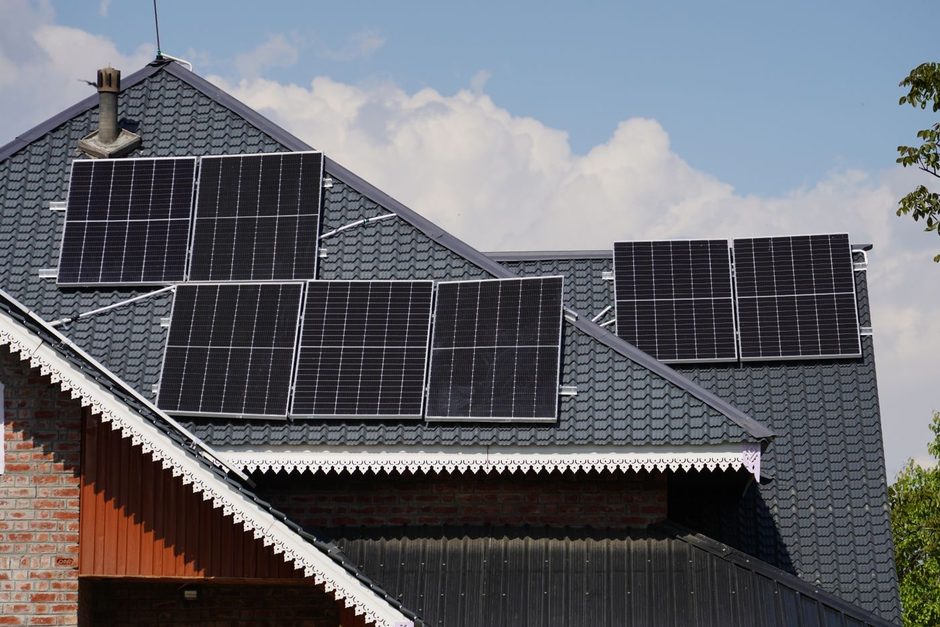
Sunday night in a three-bed terrace off the A61 in Leeds, and the standing charge on the latest bill has done its job. The homeowner has three installer tabs open, a rough roof photo from their phone, and one question that actually decides the click: who looks like they will turn up, quote properly, and not vanish after the deposit. That is the job of a solar landing page in the UK. Not brand theatre. Not a catalogue of every service you have ever offered. A page that turns high-intent traffic into booked surveys before the next tab wins.
Most solar firms still send Google Ads and Meta traffic to a homepage built for browsing. The visitor wanted a clear path from “panels on my roof” to “someone is coming Thursday.” What they got was a slider, a vague “Get a quote” button, and a form that asked for a National Grid reference before it asked for a postcode. The click was expensive. The diary stayed thin.
Where UK solar traffic pays for the click and still leaves empty-handed
Paid search for terms like solar panels cost, battery storage quote, or MCS installer near me is not casual browsing. People arrive after bill shock, a neighbour’s install, or a broker comparison. They already know roughly what they want. Your page has a few seconds to prove you are local, certified, and ready to survey, not that you once fitted a commercial array in 2019.
The failure mode is boring and expensive. Ad copy promises a free survey and a fixed-price estimate. The landing page opens on a company story, a map of the whole of England, and a phone number buried in the footer. On mobile, which is most of this traffic, the form sits below a wall of stock roof photos. Half the fields are optional noise. Half are mandatory friction. Visitors bounce, and the platform still charges you for the session.
You also lose when proof is generic. UK buyers look for MCS certification, insurance-backed warranties, real postcode evidence, and a sense of how long the job takes once scaffolding goes up. A single Trustpilot widget and a “fully insured” line do not settle nerves about deposits, DNO applications, or whether someone will actually handle the Smart Export Guarantee paperwork. When the page ducks those questions, the homeowner keeps shopping. Your cost per enquiry climbs while quality drops, because the people who do submit are often tyre-kickers who fill every form on the SERP.
Tracking gaps make it worse. If the thank-you page does not fire a clean conversion, or if call tracking is missing and survey bookings live only in a shared inbox, you cannot tell which creative or keyword bought real work. You keep funding pages that look busy in analytics and quiet in the van schedule. That is not a media problem first. It is a landing page and measurement problem dressed up as “leads are expensive in solar.”
What a UK solar page has to prove before the form is even fair
Think of the page as a short argument, not a brochure. Above the fold on mobile you need a plain offer tied to the ad: free roof survey, fixed quote after inspection, battery-ready design, or 0% VAT residential install language where it applies. Name the area you actually cover. “Serving Leeds, Bradford and surrounding postcodes” beats a UK-wide claim that makes a Birmingham crew look like a call centre.
Proof has to be specific. MCS logo with a link or membership detail. Installer insurance and workmanship warranty length in plain English. Three or four jobs with suburb names, system size in kW, and a one-line outcome (cut daytime import, battery covers evening peak, export live on SEG). Photo of a real crew on a real roof beats a glossy hero of an anonymous suburban street. If you install with a known inverter or battery brand, show it once with a short reason a homeowner should care, not a full tech dump.
Trust also means process clarity. Spell out what happens after submit: call-back window, survey length, how scaffolding and scaffolding permits are handled, and when a firm price lands. UK buyers have been burned by soft quotes that jump after a site visit. A short timeline block reduces form anxiety more than another paragraph about “sustainability.” Add a visible phone number for people who will not type on a phone keypad, and make sure that number is tracked so marketing can see which campaigns book surveys rather than chat.
Match the message to the traffic. A campaign on solar battery storage should not dump people on a generic panels page with battery as a footer afterthought. One dedicated page per major intent cluster keeps quality up and wasted spend down. If you are already buying traffic into a homepage because “the site is fine,” that is the moment to stop and build purpose-built destinations. Teams that treat web and landing page design as part of the acquisition system, not a one-off rebuild, usually see the diary fill before they see CPC miracles.
Get a free marketing audit - we review your search, ads, and landing pages and send back what to fix first.
Get a free audit
Mobile speed, form friction, and the three-second trust test
Most solar enquiry traffic in the UK is mobile. If the hero image is a multi-megabyte panorama and the chat widget loads before the headline, you are paying platforms for bounce. Core Web Vitals are not a vanity score here. Slow Largest Contentful Paint and clumsy Interaction to Next Paint feel like an unprofessional installer. Compress roof photos, lazy-load below-fold galleries, and keep third-party scripts on a diet. A page that paints useful content quickly wins the same click a prettier but heavier site loses.
Forms should ask only what you need to qualify and book. Name, phone, email, postcode, and roughly how many bedrooms or a simple “interested in panels / battery / both” is enough for a first response. Save roof pitch, fuse board age, and export meter questions for the surveyor. Every extra mandatory field is a reason to abandon, especially when the homeowner is on the sofa comparing three firms. Use large tap targets, sensible autofill, and a single primary button. Multi-step forms can work if each step feels short and progress is obvious; a twelve-field wall does not.
Response speed after submit is part of the page experience even though it happens off-page. If the confirmation says “we will call within the hour” and nobody rings until the next afternoon, the neighbour’s installer who texted in twelve minutes owns the job. Wire the form to SMS or a ringing phone for the on-duty estimator, not only a CRM notification someone checks at lunch. Marketing owns the promise on the page. Operations has to keep it.
When you want evidence instead of opinions about where people stall, watch real sessions. Heatmaps and recordings show whether visitors hit the MCS block and relax, or open the form and rage-tap the postcode field. That is the practical use of analytics and behaviour insight work on solar pages: find the exact scroll depth where trust fails, the field that causes exits, and the CTA that never enters the viewport on a standard phone. Fix those before you raise budgets.
If paid social or search is already sending volume and the diary still has gaps, a focused pass on Solar marketing landing pages usually beats another week of creative swaps on a broken destination.

How a Manchester residential team and a Bristol multi-crew outfit stopped leaking surveys
A residential solar owner in Greater Manchester was spending steadily on Search for “solar panels Manchester” and near-variant cost terms. Traffic looked healthy. Booked surveys did not. The landing page was their main website home: autoplay video, six service tiles, and a “Contact” link into a generic form that also served commercial enquiries. Recordings showed mobile users scrolling past the offer, opening the About page, then leaving. The fix was not a full rebrand. They shipped a single campaign page with a fixed headline offer, three local job cards with kW sizes and suburb names, MCS and warranty lines above the fold, and a four-field form. Call tracking sat on the click-to-call button. Within roughly three weeks the same spend produced more survey slots on the calendar because the page stopped arguing with the ad.
Steps that mattered in practice:
-
One URL per ad group intent (panels vs battery-led) instead of one catch-all home URL.
-
Postcode field first so out-of-area tyre-kickers could be filtered without a full sales call.
-
Thank-you page event firing into the ad platform so Smart Bidding optimised for surveys, not raw form spam.
-
Estimator SMS within fifteen minutes as a non-negotiable ops rule, written into the page copy so marketing and the floor shared one promise.
A multi-crew outfit covering Bristol and the surrounding counties had a different leak. Their page was fast and MCS-heavy, but the form asked for EPC rating, fuse board photo upload, and preferred scaffold dates before anyone would commit a callback. Completion rate sat near 4.2% on mobile. Session tools showed repeated abandonment on the upload step. They moved photo upload to a post-booking email, cut the form to essentials, and added a short “what happens next” block with survey length and when a firm price appears. Completion moved to about 11% on the same traffic mix. Pipeline quality held because qualification shifted to the phone call, where a human could ask better questions than a stressed form.
Neither story needed a mythical redesign budget. Both needed dedicated destinations, proof that matched UK buyer fears, and the discipline to measure booked surveys rather than “leads.” Soft creative tests still help, but creative cannot rescue a page that feels like a brochure written for investors.
Patterns we see in audits
The short quotes below are illustrative composites drawn from patterns in account reviews. They are not quotes from named clients.
“We were paying for ‘free survey’ clicks into a homepage that never repeated the offer. Once the landing page said MCS, local jobs, and four fields only, the same weekly budget started filling Thursday survey slots instead of a junk CRM list.” - Founder, residential solar, North West England
“Heatmaps showed people never reached the warranty block on mobile. We pulled proof up, killed the 2MB hero, and form starts jumped before we touched bids.” - Head of Marketing, multi-crew solar installer, South West

Action checklist
Landing page checklist for solar jobs
Use this as a working checklist for solar jobs - specific steps you can run this week, not theory.
- List every paid and organic URL that sends traffic for solar jobs. Rank them by sessions and by booked outcomes.
- Rebuild the worst high-traffic page first: one offer, one primary CTA, sticky phone on mobile, proof in the first screen.
- Cut form fields to the minimum needed to book; stop asking for data the visitor does not trust you with yet.
- Add industry-specific proof (reviews mentioning the service, case notes, process, credentials, financing).
- Measure mobile LCP, form completion, and click-to-call for 14 days after each change.
- Match ad or SEO message to the H1 so the visitor does not bounce on a bait-and-switch.
- Only redesign secondary pages after the top money page converts cleanly.
Free tools - try these yourself
If the checklist shows a leak you cannot close in-house this month, request a free marketing audit - we will prioritize SEO, ads, and landing pages around the same outcome metrics above.
Frequently asked questions
Do I need a separate landing page for every town I cover?
Not for every postcode. Build pages around intent and real service radius first: panels, battery, commercial if you do it, and major metro clusters you can honestly serve next-week. Thin town pages with swapped names and no local proof rarely help conversion or quality. A strong Leeds or Birmingham page with genuine job evidence beats twenty empty satellite URLs.
Should the page push phone calls or form fills?
Offer both. Many UK homeowners still want a quick voice check before they share a roof photo. Track the number, staff it during the hours your ads run, and keep the form short for after-hours. Judge success on booked surveys from either path, not on which button looks busier in a dashboard.
How fast does the page need to be on mobile?
Fast enough that the headline, proof strip, and form are usable without waiting on a mid-range Android on 4G. If your largest content takes several seconds to appear, compress media and strip scripts before you debate button colour. Speed is part of trust for a firm asking for a home visit.
Where does behaviour insight fit if we already have GA4?
GA4 tells you that people left. Session recordings and heatmaps show whether they stalled on a dense paragraph, a broken field, or a CTA below a long gallery. Use that to prioritise fixes weekly. You do not need a month of data to see a pattern on a high-traffic solar page.
Can a strong landing page fix weak offer economics?
No. If your survey-to-install close rate or margin cannot support current CPCs, a prettier form only burns budget more efficiently. Fix positioning, package clarity, and follow-up speed alongside the page. The page’s job is to book the right conversations, not to invent unit economics you do not have.
Putting it to work
Execution sprint
This week
- Pull 30-90 days of performance for solar jobs (Search Console, ads, CRM, or call logs - whatever you have).
- Flag the top leak: wrong intent, weak page, slow response, or dirty conversion tracking.
- Ship one fix on the highest-traffic money path (page, campaign split, or response rule).
- Run the free tools below on that same URL or account and log the findings.
Free tools for this sprint
Next 30 days
- Expand the fix to the next one or two money paths only after the first one shows cleaner bookings.
- Align creative, keywords, or content with the same offer the page now states.
- Review booked outcomes weekly; cut anything that still only produces unqualified volume.
Next 30 days
- Expand the fix to the next one or two money paths only after the first one shows cleaner bookings.
- Align creative, keywords, or content with the same offer the page now states.
- Review booked outcomes weekly; cut anything that still only produces unqualified volume.
Next 30 days
- Expand the fix to the next one or two money paths only after the first one shows cleaner bookings.
- Align creative, keywords, or content with the same offer the page now states.
- Review booked outcomes weekly; cut anything that still only produces unqualified volume.
Free marketing audit, or reach Martin directly:
Get a free audit Chat with us on WhatsApp · [email protected]