
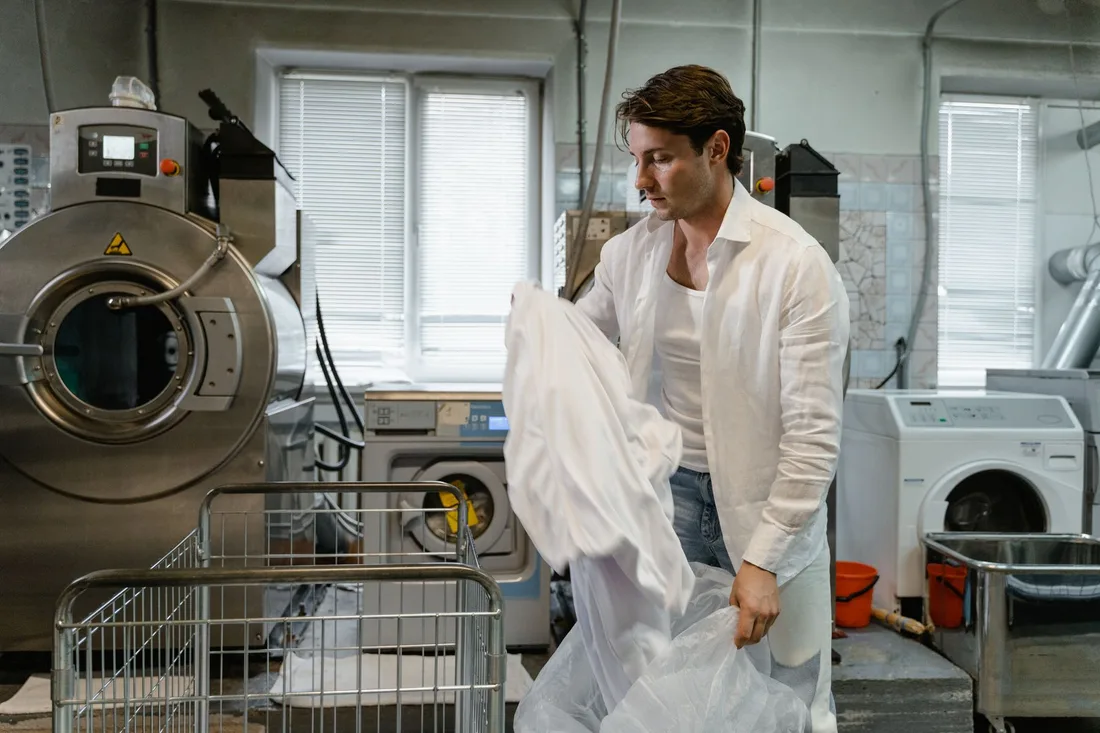

CRM Integration for Dry Cleaning

Dry Cleaning CRM Integration
That Closes More
booked job Faster.

When buyers search "dry cleaning near me", they choose the operator who answers urgency with proof, not a generic agency page. Most dry cleaning businesses lose demand to thin landings, misaligned tracking and DIY, job-seeker and out-of-area traffic. HeyLead builds CRM Integration programs that turn those searches into measurable booked job and lasting booked job.

Dry cleaning customers choose convenience, care quality and turnaround. Marketing that only says “dry cleaning near me” without trust or logistics details underperforms. We go deeper than checklist CRM Integration: trade-specific architecture, landing alignment, weekly governance and reporting on booked jobs, not vanity metrics.

$35 to $150 depending on market and urgency
Typical cost per lead (paid search)
$80 to $400 when landing pages and follow-up are aligned
Typical cost per booked job
$1,500 to $4,000 per month for a single service area
Recommended starting ad spend
3 to 9 months for local service pages that rank
SEO payback window

Why Dry Cleaning CRM Integration is not generic agency work

Context from how your customers search, compare and book.

Customers choosing a dry cleaning provider weigh trust, availability, proof of work and price in that order. Marketing wins when it answers those questions before the first call.

Search demand for dry cleaning splits into research, comparison and ready-to-book intent. We structure campaigns and landing pages around each stage so spend follows revenue.

For CRM Integration, that means campaigns, pages and creative aligned to "dry cleaning near me", "best dry cleaning near me" and "dry cleaning cost", with negatives and qualifiers that block DIY, job-seeker and out-of-area spend.

Economics for dry cleaning marketing depend on average job value, repeat rate and how shared lead marketplaces dilute margin. We model cost per enquiry against booked revenue, not clicks.

Shared directory leads often look cheaper upfront but convert poorly and attract fee shoppers. Owned demand usually costs more per click and less per booked job.

We capture dry cleaning demand where intent is highest: local search, map pack visibility, retargeting after research visits, and speed-to-lead follow-up that beats slower competitors.

Who we reach

Customers choosing a dry cleaning provider weigh trust, availability, proof of work and price in that order. Marketing wins when it answers those questions before the first call.

groups Customer segments

  • person Homeowners with an urgent or planned need
  • person Property managers and landlords booking on behalf of tenants
  • person Small businesses needing reliable, insured trade work
  • person Repeat customers who rebook when service quality was proven

psychology What drives their decision

  • check_circle Local reputation, reviews and proof of completed jobs
  • check_circle Clear pricing signals and fast quote turnaround
  • check_circle Licensed, insured credentials visible before enquiry
  • check_circle Response speed when the need is time-sensitive

The Dry Cleaning CRM integration playbook

Five pillars to stop lead leakage for dry cleaning.

settings
Team mapping CRM pipeline stages and lead handoffs. Photo by fauxels on Pexels

Technical SEO

Make every dry cleaning URL crawlable, fast and indexable.

  • arrow_right Clean URL structure for service and area pages
  • arrow_right Hub-to-spoke internal links from service pages to city landings
  • arrow_right XML sitemaps, robots.txt and canonical rules that protect money pages
  • arrow_right Core Web Vitals tuned for mobile users on the move
  • arrow_right HTTPS, security and crawl error cleanup before content scale
article
Operations team reviewing lead routing and response workflows. Photo by fauxels on Pexels

On-page SEO

Match search intent with trade copy, local proof and conversion elements.

  • arrow_right Keyword research by urgency, package and property type for dry cleaning
  • arrow_right Title tags and meta descriptions per service and area
  • arrow_right Header hierarchy that answers pricing, licensing and availability
  • arrow_right Image alt text and proof photos that reinforce trust
  • arrow_right Rich snippet readiness: FAQ and Service schema on money pages
location_on
Handshake representing clean handoff from marketing to sales CRM. Photo by fauxels on Pexels

Local SEO and Google Business Profile

Win map pack and local organic together.

  • arrow_right GBP services list mirrors website taxonomy with matching URLs
  • arrow_right NAP consistency across GBP, site footer, citations and social profiles
  • arrow_right Review velocity with themes on quality, speed and courtesy
  • arrow_right Local posts for seasonal offers and service area updates
  • arrow_right Service-area businesses: hide address correctly while ranking across suburbs
link
Team planning CRM automation workflows on a sticky-note board. Photo by fauxels on Pexels

Off-page authority

Build trust signals directories and competitors neglect.

  • arrow_right Quality local citations and directory cleanup
  • arrow_right Industry and chamber links where legitimate
  • arrow_right Reputation management on negative reviews
  • arrow_right Guest content and local partnerships for relevant backlinks
  • arrow_right Avoid spammy directories that dilute dry cleaning brand trust
monitoring
Charts used for CRM reporting and lifetime value by channel. Photo by Lukas Blazek on Pexels

Tracking and analytics

Report what books jobs, not vanity metrics.

  • arrow_right GA4 with events for calls, forms and bookings by landing page
  • arrow_right Organic call tracking tied to service and area URLs
  • arrow_right GBP insights alongside website conversions
  • arrow_right Keyword visibility by city and service type
  • arrow_right Monthly audits: indexation, cannibalization, speed and conversion leaks

Multi-city and service-area scale

Operators winning organic search rarely rank for one city name. They build a network of service plus suburb pages until they appear across the full radius they cover.

  • pin_drop Priority suburbs first: highest booked job volume and weakest incumbent competition
  • pin_drop Service hub in the middle, suburb spokes outward aligned to how buyers search
  • pin_drop High-ticket services as a separate scale path with proof and financing signals
  • pin_drop Commercial or B2B city pages for facility clusters, not residential templates reused
  • pin_drop GBP service areas expanded in step with published suburb landings
  • pin_drop 90-day sprint model: first dozen areas live, then expand based on call data and capacity

Keywords and pages we build

Real search targets for dry cleaning, mapped to the landing page type that should rank and convert.

Search target Buyer intent Page we build
dry cleaning near me Urgent or high-intent local need CRM source tag and routing rule for urgent enquiry type
best dry cleaning near me Comparison and pricing research Package comparison page with proof and FAQ schema
dry cleaning cost Vendor shortlist and trust check Reviews, credentials and case proof landing
dry cleaning near me Map pack and local discovery GBP-aligned local page with NAP and service area map
emergency dry cleaning Same-day or after-hours demand Urgent landing with click-to-call and availability above fold

CRM Integration plays that compound

hub

Service and problem page architecture

Hub pages for core dry cleaning services link to suburb landings with localized proof.

location_on

Map pack and organic alignment

Google Business Profile services mirror site taxonomy with matching landing URLs.

calendar_month

Seasonal content calendar

Publish and refresh pages ahead of peak demand in your market.

autorenew

Repeat customer content cluster

Comparison guides and guarantee explainers push booked job attach.

store

Commercial or high-ticket SEO

Facility-type pages with documentation and contract enquiry forms.

smart_toy

AI and local search readiness

Answer-engine optimization on FAQs and service areas so AI Overviews cite accurate dry cleaning details.

How we deliver CRM Integration

Dry Cleaning crm integration follows how buyers research and book dry cleaning services.

Team mapping CRM pipeline stages and lead handoffs. Photo by fauxels on Pexels
1

Pipeline and source audit

We map how dry cleaning enquiries enter your CRM today, where source data is lost and which stages leak before a job is booked.

Operations team reviewing lead routing and response workflows. Photo by fauxels on Pexels
2

Form, call and ad integrations

Website forms, call tracking, Meta lead ads and chat tools create records with campaign, keyword and landing-page fields automatically populated.

Handshake representing clean handoff from marketing to sales CRM. Photo by fauxels on Pexels
3

Routing and speed-to-lead rules

Assignment rules, SMS alerts and task templates shorten response time. Slow follow-up is a common reason dry cleaning leads choose a faster competitor.

Team planning CRM automation workflows on a sticky-note board. Photo by fauxels on Pexels
4

Lifecycle and follow-up workflows

Nurture sequences, quote reminders and reactivation flows keep warm dry cleaning prospects moving without manual spreadsheet chasing.

Charts used for CRM reporting and lifetime value by channel. Photo by Lukas Blazek on Pexels
5

Closed-loop reporting

Won jobs push value back to ad platforms where supported, so campaigns optimize toward revenue, not raw lead volume.

Closed-loop reporting dashboard for CRM-won jobs by channel. Photo by Tima Miroshnichenko on Pexels
6

Measure by booked job and booked job attach

Rankings reported alongside organic form fills, calls and CRM-tagged bookings by service type.

Printed CRM reports used in a quarterly pipeline review. Photo by Lukas Blazek on Pexels
7

Quarterly scale and consolidation review

We retire thin URLs, refresh seasonal content and expand into suburbs where call data proves capacity.

handshake

What Dry Cleaning CRM Integration includes

Get every enquiry into the pipeline fast, with source data intact

  • check_circle Lead routing from website forms, calls and Meta lead ads
  • check_circle Source tagging so won work traces back to marketing
  • check_circle Follow-up workflows that improve speed to lead and close rate
  • check_circle Strategy workshops aligned to your service area, capacity and margins
  • check_circle Monthly reporting tied to enquiries and booked jobs, not vanity metrics
  • check_circle Direct access to specialists who understand the dry cleaning market
  • check_circle Intent signal tracking: Calls and forms that mention timing, address or job scope

What you can expect

  • verified CRM Integration programs scoped to dry cleaning buyer intent, not generic templates
  • verified Clear visibility into which keywords, ads or pages drive booked work
  • verified Faster iteration using real enquiry and conversion data from your market
  • verified Integration with your sales process so marketing supports close rate
  • verified A compounding asset that reduces reliance on shared directory leads over time
  • verified Radius and suburb targeting around your real service area, with separate campaigns when you cover multiple territories or emergency vs scheduled work.
Learn about HeyLead CRM Integration arrow_forward

Deliverables you receive

inventory_2 Pipeline and leakage audit summary
inventory_2 Integration map for forms, calls and ad leads
inventory_2 Field mapping and source tagging specification
inventory_2 Routing and notification rule set
inventory_2 Follow-up workflow templates
inventory_2 Closed-loop conversion export where supported
inventory_2 Monthly performance review with scale, pause or fix recommendations for dry cleaning

Technical approach

The mechanics behind CRM Integration for dry cleaning, explained plainly.

Team mapping CRM pipeline stages and lead handoffs. Photo by fauxels on Pexels

API and webhook reliability

Retries, error logging and field validation stop silent lead loss when forms spike during dry cleaning seasonality.

Operations team reviewing lead routing and response workflows. Photo by fauxels on Pexels

Source persistence

UTM, gclid and campaign fields survive stage changes so a job won three weeks later still credits the right channel.

Handshake representing clean handoff from marketing to sales CRM. Photo by fauxels on Pexels

Automation guardrails

Workflows include human handoff rules for high-value dry cleaning quotes so automation speeds response without feeling robotic on complex jobs.

Intent signals and how we capture them

What buyers do before they enquire, and the on-page or tracking response we build.

sensors Calls and forms that mention timing, address or job scope
check_circle Dedicated landing with proof, availability and tracking tuned for this intent on dry cleaning pages.
sensors Mobile searches during business hours or after-hours emergencies
check_circle Dedicated landing with proof, availability and tracking tuned for this intent on dry cleaning pages.
sensors Branded and comparison searches that name competitors
check_circle Dedicated landing with proof, availability and tracking tuned for this intent on dry cleaning pages.
sensors Repeat visitors returning to pricing or contact pages
check_circle Dedicated landing with proof, availability and tracking tuned for this intent on dry cleaning pages.

Common mistakes we fix

Problem

One "dry cleaning near me" page targeting every service variant

What we do instead

Split by service type and intent so Google can match urgent, comparison and commercial queries to the right URL.

Problem

Chasing free or coupon keywords without qualifying intent

What we do instead

Pair offers with service context and area limits so SEO brings booked jobs, not DIY, job-seeker and out-of-area clicks.

Problem

Mixing high-ticket and general services on one landing page

What we do instead

Different proof, pricing and sales cycles need separate pillars.

Problem

Duplicate suburb pages with swapped city names

What we do instead

Each area page needs unique proof, service notes and internal links.

Problem

Ranking without conversion elements for urgent searches

What we do instead

Availability, guarantee badges and short booking paths reduce drop-off.

Problem

Inconsistent NAP across GBP, website and directories

What we do instead

Audit and fix name, address and phone formatting everywhere.

Problem

Optimizing the website but ignoring GBP and map pack

What we do instead

Treat GBP services, photos, posts and reviews as part of SEO.

KPIs we report every month

Specialist dry cleaning CRM Integration is judged on pipeline, not vanity charts alone.

Organic phone calls and form fills
Primary revenue signal for urgent dry cleaning intent
GBP calls and direction requests
Map pack often outperforms website for same-week jobs
Booked jobs by service type
Shows which pages actually convert, not just rank
Repeat booked job from organic
Separates LTV growth from one-off coupon traffic
Keyword visibility by city and service
Tracks multi-city scale, not one vanity head term
Landing page conversion rate
Catches rankings that bring clicks but fail on trust or availability

How we work with dry cleaning operators

Transparent process, no call-center handoff. You speak with specialists who know dry cleaning economics.

1

Fit call and site review

We review your site, GBP, service area and capacity. You see where thin landings or NAP gaps cost calls. Mutual fit first.

2

SEO discovery and intent map

Together we build the service x area x buyer-type matrix, competitor gap analysis and 90-day priority list.

3

Scoped proposal

Clear fees, deliverables and timeline tied to your branch count and growth goals.

4

Execution and measured ROI

Monthly sprints on pages, technical fixes and local SEO. Reporting on calls, bookings and booked job attach.

Dry Cleaning economics and benchmarks

Economics for dry cleaning marketing depend on average job value, repeat rate and how shared lead marketplaces dilute margin. We model cost per enquiry against booked revenue, not clicks.

Typical cost per lead (paid search)
$35 to $150 depending on market and urgency
Typical cost per booked job
$80 to $400 when landing pages and follow-up are aligned
Recommended starting ad spend
$1,500 to $4,000 per month for a single service area
SEO payback window
3 to 9 months for local service pages that rank

Shared directory leads often look cheaper upfront but convert poorly and attract fee shoppers. Owned demand usually costs more per click and less per booked job.

What to expect

Timelines depend on your starting point, but most {trade} clients follow a similar rhythm on CRM Integration.

Weeks 1 to 2

Audit, account access, intent map and work plan. You see the diagnosis and priorities before spend scales.

Weeks 3 to 6

Campaign, page or tagging implementation depending on channel. First qualified dry cleaning enquiries usually appear here when tracking is sound.

Month 2 onward

Ongoing optimization, monthly reporting and testing. The goal is lower cost per booked job and higher enquiry volume your team can close.

Frequently Asked Questions

Which dry cleaning pages should we publish first for SEO? expand_more
Start with services that bring same-week revenue in your market, then high-ticket variants, then commercial pages if B2B is a goal.
How is dry cleaning SEO different from ranking "dry cleaning near me" alone? expand_more
Broad near-me terms attract price shoppers. Service-specific URLs with proof and availability convert urgent intent.
Can SEO help us sell repeat booked job, not one-off jobs? expand_more
Yes. Plan comparison content and post-job guides capture visitors after the first booking.
How long until dry cleaning SEO generates booked jobs? expand_more
Urgent service pages in uncompetitive suburbs can produce calls within 6 to 10 weeks.
What KPIs should we track for dry cleaning SEO? expand_more
Organic and GBP phone calls, booked jobs by service type, repeat sign-ups from organic, and landing page conversion rate.
Why hire a specialist instead of a general local SEO agency? expand_more
dry cleaning search mixes urgency, comparison and commercial compliance. Specialists build service hubs and area scale as one system.
Is route service worth marketing separately? expand_more
Usually yes. Pickup and delivery is a different offer with different conversion copy than counter drop-off.
Can you help with corporate accounts? expand_more
Yes. B2B pages and outreach can sit alongside consumer local search.
How do turnaround promises affect ads? expand_more
Only promise what operations can keep. Clear turnaround messaging converts and reduces complaints.
What about wedding dress and specialty cleaning? expand_more
Those high-ticket services deserve their own pages and campaigns.

Ready to scale Dry Cleaning CRM Integration?

Get a free audit and we will show you where your next enquiries are hiding.

Get a Free Audit arrow_forward