
Martin
Founder, strategy and audits
Writes every audit and takes every first call. On your account from day one, running growth for SMEs since 2010.
A visitor with no water wants a phone number in two seconds. A visitor with hard water wants to understand the options before inviting anyone in. A good water company site serves both, with a loud emergency path, a calm planning path, test-first forms and proof that your technicians know wells, tanks and treatment.
For water treatment and well pump companies that want a fast, clear site with an emergency path, a planned-purchase path, honest water test forms and tracking that links each lead to a job.
Context from how your customers search, compare and book.
Two visitors land on the same home page. One is standing in a dry kitchen, ringing around on a phone. The other is sitting with a laptop, comparing softeners and reverse osmosis. If the page tries to speak to both at the top, it speaks to neither. A clear split above the fold solves this.
The emergency path must be nearly bare: a tap-to-call button, the hours you answer, the areas you cover and a line on what the technician checks first. The planned path can be richer, with a quiz-style guide, system comparison, maintenance notes and a form for a water test.
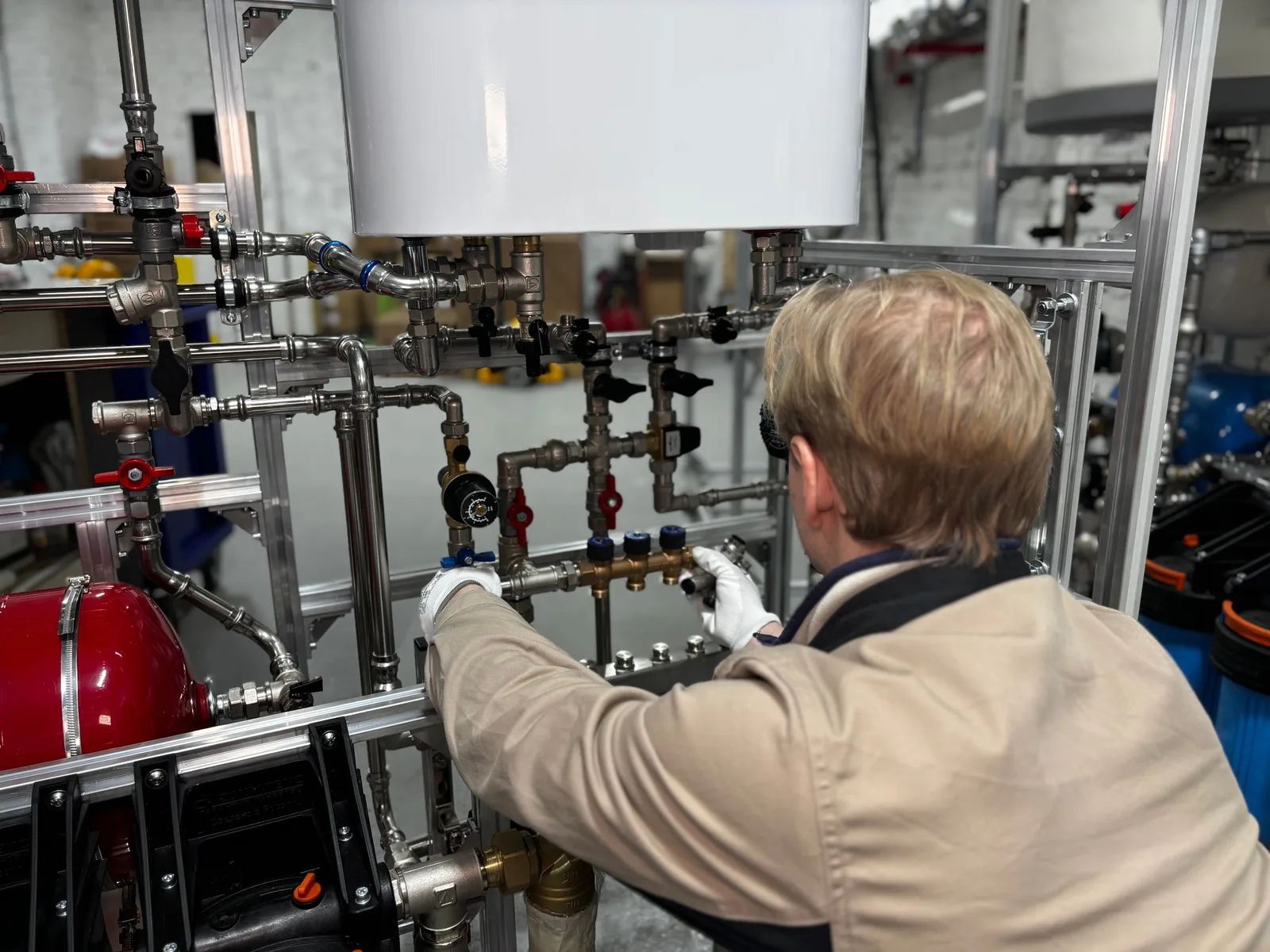
Proof for water work is different from other trades. Visitors want to see what you test, how you read the result, the brands you install and how often salt, cartridges or tanks need attention. Photos of tidy installs, a marked pump and tank diagram and a few real customer remarks build more confidence than adjectives.
Honesty about limits helps. A page that says some water needs no treatment, or that a repair may beat a new pump, wins the careful buyer who suspects an upsell. That same buyer often returns for service plans, so the site should explain them plainly and show how to join.
A clear, repeatable process built around how water treatment and well pumps customers search and decide.

We design the top of the home page with two clear buttons: no water now, and improve my water. Each leads to its own section and form, so a household in trouble never reads about reverse osmosis and a planner is not pushed into an emergency script.

Pages for softeners, iron filters, UV units, reverse osmosis, pressure tanks and pumps each start with the complaint they solve. Diagrams show where equipment sits in a home. Specifications stay brief, and a link to book a water test is always close.

The main form asks for name, phone, area, water source and what the owner has noticed. A separate short form serves emergencies and asks only for phone and area. Both send alerts to the office and store the lead with its source.

We build on a light framework, compress photos and diagrams and test on older phones and weak signals, since many well owners live where coverage is thin. Call buttons, forms and thank-you messages are tried on every page.

After launch we watch where visitors drop out and which buttons they press. If emergency visitors scroll past the call button, we move it. If planners abandon the test form, we shorten it, then compare booked tests across pages.
Pages that make it easy to understand the offer and take the next step in Australia

The mechanics behind Web Design for water treatment and well pumps, explained plainly.
Rural homes often have slow connections. We keep pages light, defer large images, cache static files and avoid heavy scripts, so the emergency page appears quickly on a poor signal and the call button works before everything else has loaded.
We add markup for the business, areas served, hours and common questions about hardness, iron and pumps. Address and phone details match your profile exactly, which helps both visitors and search engines trust the site.
Emergency forms text the on-call technician and email the office. Planned forms go to the sales calendar. Every lead is saved with its page, source and complaint in your customer records, so reports show which pages bring installs.
Water Treatment and Well Pumps web design starts at A$2,000. Scope depends on how many pages and features you need, and we agree it with you after seeing your current site.
What's included
The pages customers need to decide, laid out for phones first, with proof and a clear next step.
Forms and call buttons that work on every phone, with each request tracked to its source.
Image, speed and mobile checks before launch, and a short list of fixes afterwards.
Larger builds, such as online shops or booking systems, are scoped after discovery. Talk to us for a fit.
A water company site is usually quick to build once photos, product lists and plan details are in hand. Delays tend to come from waiting on content.
We agree the page map, collect product lists, photos and plan details and draft the main pages. You review the wording on testing, credentials and warranties, which remain your decisions.
The site is built, connected to tracking and tested on phones. We send test emergencies and test quote requests, confirm that alerts arrive at the right desks and phones, and only then launch.
We review call and form data, adjust the layout where visitors stall and add finished-job photos and seasonal notices. The site grows with your business without a full rebuild.
Our team
Martin writes every audit and takes the first call. The same team stays on the account. 160+ businesses since 2010.
Founder, strategy and audits
Writes every audit and takes every first call. On your account from day one, running growth for SMEs since 2010.

Social and app development
Shapes social strategy and builds practical app experiences that turn attention into action.

SEO
Owns technical, local and content SEO so the right buyers find you when demand is highest.

Paid media
Plans and manages paid search and social campaigns around qualified leads.

Analytics
Connects tracking, attribution and reporting so decisions are based on revenue-quality data.

Design
Creates clear brand and conversion-focused design across landing pages, campaigns and product experiences.
Certified and experienced
Verified platform knowledge, 25+ years of hands-on experience, and an operating track record since 2010.
Get a free audit and we will show you where you are losing enquiries today.
Get a Free Audit arrow_forward