

The “Boost post” button sitting under every photo on your business Instagram is the single costliest piece of software a concreting business ever touches. It doesn’t even feel like spending money. That’s the trap.
Picture the usual Tuesday: you post a photo of last week’s exposed aggregate driveway, tap boost, throw forty dollars at it, and by Friday you’ve got sixty likes, a dozen “looks great mate!” comments, and maybe one message asking what colour oxide you used. Meanwhile the job board for next month still has three empty pour slots. That’s not a targeting problem. Boosting optimises for the thing Meta can measure easily, which is engagement, not the thing you actually need, which is a booked site visit. Across the industry, Meta Ads average somewhere around a 2.8x return in 2026 benchmarks, well under what Google Search typically returns for the same spend. That gap isn’t a reason to avoid Meta. It’s a reason to stop running it like a social media hobby and start running it like a lead channel with a job to do.
Here’s the part most concreters miss: on Meta in 2026, the creative you shoot is doing more of the targeting work than the audience settings ever will. Meta’s delivery system, the auction engine marketers now call Andromeda, has gotten good enough at finding the right person that your main lever isn’t who you target anymore. It’s whether the first three seconds of your ad make someone with a cracked driveway or a bare backyard slab stop scrolling. Get that right, and a modest, well-structured campaign will outwork a boosted post every time. Get it wrong, and no amount of audience tweaking saves it.
Why “boosting” a post is the costliest move a concreting business makes on Meta
Start with what boosting actually optimises for. When you tap that blue button, Meta’s goal becomes maximising reach and engagement for the dollars you’ve handed it. It doesn’t know the difference between someone thinking “nice finish” and someone who needs a 120-square-metre slab poured before their shed arrives in six weeks. It can’t, because you haven’t told it. There’s no objective set for leads, no form, no phone call event, nothing for the system to chase except likes and comments.
That’s why the DMs you get from a boosted post skew so heavily towards price-shoppers and curious neighbours rather than people ready to book. You’ll field a dozen “how much per square metre roughly” messages for every genuine enquiry with an address and a timeline attached. Your admin person, if you’ve got one, burns an hour replying to people who were never going to hire you. If you’re answering those messages yourself between pours, that’s an hour you’re not quoting the jobs that would actually fill the board.
The deeper issue is you can’t see any of this clearly because there’s no tracking underneath it. A boosted post has no pixel event firing when someone submits a form, no record of which ad led to which quote, no way to tell your exposed aggregate campaign apart from your retaining wall campaign in terms of what actually converted. You’re flying on vibes, and vibes don’t tell you which suburb, which job type, or which photo is actually worth another dollar. Plenty of concreters conclude from this that “Meta doesn’t work for tradies.” What’s really happened is they never ran a campaign built to generate anything measurable in the first place.
If you want to see this fixed properly without rebuilding your whole marketing approach, a Meta Ads specialist can set your account up for leads from day one rather than retrofitting tracking after months of guessing; HeyLead’s Meta Ads management work for trade businesses usually starts exactly there.
Australia’s pour windows: why your Meta budget needs to move with the weather, not the calendar
Concreting is one of the few trades where the weather doesn’t just affect your schedule, it should directly set your ad spend. A wet pour site is a wasted site visit and a customer who starts to wonder if you know what you’re doing. Run the same flat weekly Meta budget across twelve months and you’ll spend just as hard chasing leads in a soaking wet fortnight as you do in the middle of a dry run, which is backwards.
In the southern states, the real booking window for driveways, slabs, and patios runs roughly spring through early autumn, when homeowners are planning outdoor projects and the ground is workable. Winter brings fewer enquiries but often better ones, from people who’ve decided after a wet season that their drainage or their cracked path finally needs sorting properly. Up north, the wet season from November through April is the opposite problem: torrential rain can knock out pour windows for weeks, and your Meta spend chasing driveway leads in Cairns in February is largely wasted if you can’t physically get a truck on site. Storm season also brings a different kind of enquiry entirely, slab repairs and drainage fixes after flooding or erosion, which is a different ad, a different headline, and arguably a different audience than someone planning a new alfresco for summer.
The fix isn’t complicated, but it does mean treating your Meta account like a living thing rather than a set-and-forget campaign. Build separate ad sets for “new project” work (driveways, patios, pool surrounds) that you lean into during your region’s dry, workable months, and a smaller, always-on campaign for storm and flood damage repair that you can scale up fast when a weather event hits your service area. Pull spend back hard during your least workable weeks rather than letting it run flat, and bank that budget for the fortnight after the rain clears when every homeowner who’s been staring at a cracked slab finally picks up the phone. Regional weather isn’t a footnote here. It’s the single biggest lever on whether your Meta spend lands on people who can actually book a job this month.
Get a free marketing audit. We review your search, ads, and landing pages and send back what to fix first.
Get a free audit
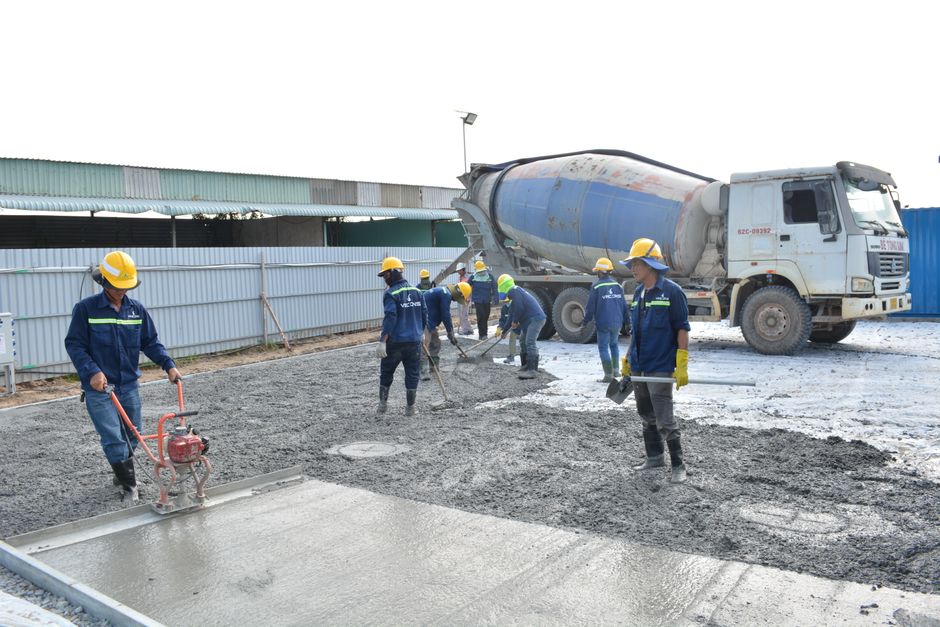
The campaign build that turns scrollers into booked site visits
Once the objective and the seasonal pacing are sorted, the actual account build is where most of the real work happens, and it’s worth doing properly rather than leaving on a default setup from whoever built it first. The structure below is close to what we’d run for a concreting business with one or two crews and a genuine local service area.
Account build checklist
- 1Set the campaign objective to leads or calls, never "engagement" or "awareness". This is the single change that fixes most of the tyre-kicker problem on its own.
- 2Build your audience on a realistic radius around your actual service area, not the whole state. A 25-40 kilometre radius from your yard or depot is usually closer to the truth than you think.
- 3Run separate ad sets by job type: driveways and resurfacing, slabs and sheds, patios and alfresco, commercial and civil. Each job has a different buyer and a different worry, and lumping them together muddies your results.
- 4Shoot real job-site footage rather than relying on finished glamour shots. Raw video of a pour, the screeding, the exposed aggregate wash, or a time-lapse of a driveway going from dirt to finished slab consistently stops the scroll better than a polished after-only photo.
- 5Write the headline to the actual worry, not the service. "Pooling water on your driveway after every storm?" out-converts "Quality concreting services" because it names something the reader has already noticed.
- 6Test a Meta Instant Form against a proper landing page with a short quote form. Instant Forms are quick and lower friction, but a landing page lets you show real project photos, your licence and insurance details, and a clear next step, which matters for a job this size.
- 7Set up Conversions API or offline conversion imports so booked jobs, not just form submissions, feed back into Meta. Without this, Meta optimises towards people who fill in a form and never book, which quietly drags quality down over time.
- 8Exclude the audiences unlikely to ever book: renters for driveway resurfacing, apartment-heavy postcodes for slab and shed base work, unless you're specifically chasing strata or commercial jobs.
- 9Build a retargeting audience from landing page visitors and quote-page viewers who didn't submit. This group is often your cheapest, highest-intent spend once the main campaign has been running a few weeks.
- 10Review creative every five to seven days, not monthly. Short-form video and UGC-style job footage on Meta can peak within days and start fatiguing almost as fast, so waiting a month to refresh it means you're burning budget on a tired ad for weeks longer than you need to.
Whichever way you land on the Instant Form versus landing page question, don’t assume the page itself is innocent. A lot of concreting ads that look solid in Ads Manager quietly leak leads once someone actually lands on the site, because the form is below the fold, there’s no photo of real finished work, or there’s no mention of licensing and insurance anywhere above the scroll line. This is where tools like HeyLead Insights earn their keep, by showing you exactly where visitors stall on your quote page, whether they scroll past your gallery without pausing, and whether they abandon the form at the suburb field or the photo upload step. Guessing at this is expensive when every click costs real money.
Picture a driveway resurfacer running two crews out of outer Melbourne, illustrative but close to what we see often. For two years, they’d boosted finished-driveway photos and fielded a steady trickle of price-check messages with nothing to show for it on the job board. Switching to a proper leads campaign, splitting resurfacing from new-pour work, and replacing the stock-style after photo with raw phone footage of the exposed aggregate wash-off changed what showed up in the inbox almost immediately. The messages started arriving with a street name and a date attached instead of a colour question. Retargeting the people who’d viewed the quote page but not submitted picked up a handful of jobs each month that would otherwise have gone cold. None of it was a different audience. It was the same postcode radius, a different objective, and creative that showed the actual work.
A few free tools are worth having open while you build this out, particularly if you’re doing the setup yourself before handing it to someone to manage ongoing:
DIY tools for this section
What concreters notice when a Meta campaign is actually working
We hear versions of this from almost every concreting business once the account is tracking properly instead of running on boosted posts:
“We stopped getting messages asking what colour oxide looks best and started getting messages with an address and a date they wanted the pour done. That’s the whole difference. The first kind was a hobby. The second kind is a job.” - Owner, driveway and exposed aggregate business, regional Victoria

FAQ
How much should a concreting business budget for Meta Ads in Australia? There’s no single right number, and anyone who quotes you one before seeing your area and job mix is guessing. What matters more than the total figure is pacing it with the weather, running a smaller always-on budget through your region’s slow months, and scaling up during the weeks you can actually get a crew and a truck on site.
Should we use Facebook, Instagram, or both? Run both through one campaign rather than choosing. Meta’s delivery system will find whichever placement performs for your creative, and splitting budget to pick a “winner” platform usually just starves both of the volume they need to learn properly.
Do Meta Ads work for commercial and civil concreting, not just driveways? Yes, but the creative and the offer need to change. A builder or facilities manager isn’t moved by a glamour shot of a residential patio. Case studies of commercial pours, references, and a direct line to a quote request usually outperform anything aimed at a homeowner audience.
How do we actually know which Meta leads turned into booked pours? This is the gap that trips up most accounts. You need a simple habit, even a shared spreadsheet, that tags each enquiry by source and then gets updated when a quote turns into a booked job. Feed that back into Meta through Conversions API or an offline conversion upload, and the platform starts optimising towards people who actually book, not just people who fill in a form.
What creative actually works best for concreting ads in Australia? Raw, real job-site footage beats polished stock photography almost every time: the pour itself, the screeding, a drone pass over a finished driveway, a quick phone video explaining why you’d choose exposed aggregate over plain concrete for a given spot. People hiring a concreter want proof you’ve actually done the work, not a design studio’s idea of what concrete looks like.
Putting it to work
Start this week by pulling the last ninety days of enquiries that came through Instagram or Facebook, whether from a boosted post, a DM, or a form, and mark each one against your job board: quoted, booked, or nothing. It takes about half an hour and tells you more about where your Meta spend is actually going than a month of watching the likes roll in.
If what that spreadsheet shows you is a pile of engagement with nothing booked against it, that’s the gap HeyLead spends its time closing, turning a Meta account built for likes into one built to track every enquiry back to a booked pour, paced to the weeks your crews can actually work. Chat with us on WhatsApp.
Free marketing audit, or reach Martin directly:
Get a free audit Connect on WhatsApp · [email protected]