
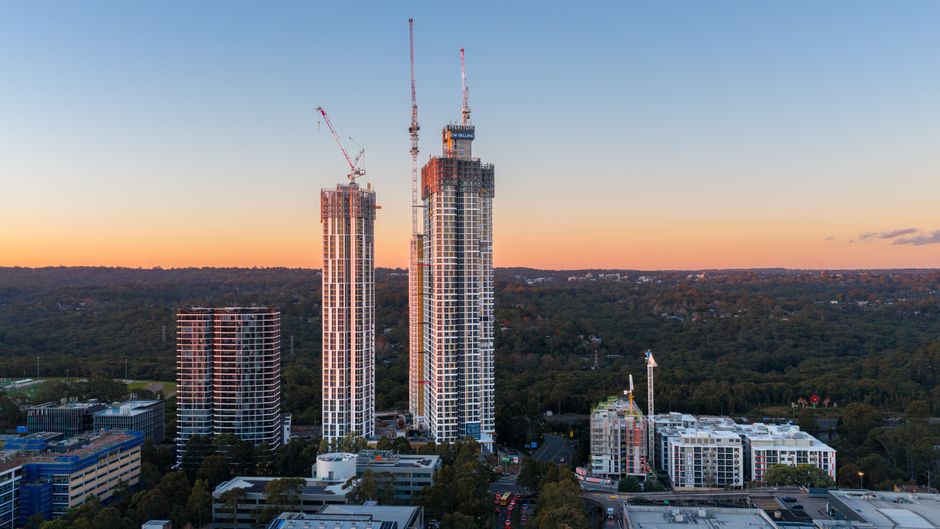
Why does the display suite for a 220-apartment tower barely crack page two for “new apartments near me,” while a single agent with one rental listing on the same street sits comfortably in the map pack above it? The agent has been trading from that address for a decade. Your project has existed for eighteen months and will be gone in three.
That gap costs you real appointments. Every week the display suite sits half-booked instead of fully booked is a week your sales consultants are chasing their own database instead of walking fresh buyers through the show unit. Throwing more spend at Google Ads doesn’t fix it, because the moment you pause the campaign, you vanish again. A buyer searching organically for “off the plan [suburb]” at 9pm on a Tuesday, trying to work out whether the stamp duty concession is still worth it, never sees you at all. They see realestate.com.au, a rival project two suburbs over, and whichever agency bothered to answer the question properly.
Here’s the part most project marketing teams miss: a development isn’t a business, it’s a lifecycle. Land release, construction, settlement, sold out, gone. Most people set up the Google Business Profile once at launch and never touch it again, the same way they’d set up a shopfront for an established agency. Google reads that static, ageing listing as a business that’s either dying or was never real to begin with, and it ranks you accordingly.
How local SEO actually works when the sales office won’t exist in three years
Start with the basics Google actually checks, because most developers get at least one of them wrong without realising it. The category you choose for your Google Business Profile matters more than it should: “real estate developer” and “real estate agency” send different trust signals, and plenty of project teams default to whatever the agency managing sales already uses, even when it’s the wrong fit for a single project listing. Then there’s the pin itself. Your display suite is frequently not on the development site, it’s in a separate sales office, sometimes a shopfront streets away, occasionally a shared space with another project entirely. Google wants one location that represents the business. If your pin, your signage, and your actual construction address all disagree, you’re fighting your own listing before a buyer even searches.
NAP consistency, meaning your name, address and phone number matching everywhere, gets harder in this niche than in almost any other local business, because your address changes. A pre-launch sales office becomes a different address at settlement. Your phone number might route through a call centre during the marketing campaign and switch to a strata manager’s line once the building is handed over. Every time that happens, realestate.com.au, domain.com.au, your developer’s own site, and a dozen local directories need updating in the same week, not whenever someone remembers. Miss that reconciliation and Google starts treating your business as unreliable, which quietly suppresses your ranking even when everything else is solid.
Schema markup is where most development sites leave easy visibility on the table. A stage page with RealEstateListing schema and FAQPage schema tells Google exactly what you’re selling, the dwelling types, the price band, the expected completion date, and it lets rich answers surface in search for things buyers actually type. And those buyer questions are distinctly Australian. Someone searching “off the plan stamp duty concession Victoria” or “First Home Owner Grant NSW new build” is deep in research, closer to booking an appointment than someone typing “apartments for sale.” Build content clusters around suburb, stage, and dwelling type, then answer the state-specific grant and concession questions inside them, because FHOG thresholds and off-the-plan duty concessions differ by state and change with nearly every state budget. Generic national content misses all of it.
A HeyLead team working across local SEO for development projects typically finds the address and schema problems within the first week of an audit, simply because nobody on the client side was tracking them as a single connected system.
What a healthy setup looks like once the hype cools and settlement starts
A project with its local SEO working properly doesn’t look flashy. It looks boring, consistent, and quietly present. The Google Business Profile gets posts tied to real construction milestones, slab down, topping out, display suite opening hours, not generic “limited units remaining” copy that reads as filler because it is filler. Reviews arrive in waves tied to genuine moments: pre-settlement excitement is one wave, but the second wave, from owners who’ve actually moved in and lived with the finishes for a few months, matters more to Google and to future buyers than the first. A listing with only five-star reviews from people who haven’t taken possession yet reads as thin, and buyers researching a six or seven-figure purchase notice that too.
Page speed matters here more than most developers assume, because stage pages are usually loaded with floor plan PDFs, embedded virtual tours, and video walkthroughs, all of which tank load time if nobody’s watching. Across the broader web, only around 55.9% of origins pass all three Core Web Vitals thresholds according to Google’s own Chrome UX Report data, and a property page stuffed with autoplay video and unoptimised render files is a near-guaranteed way to land in the failing majority. A buyer on their phone during a commute isn’t going to wait for a hero video to buffer before they can see the floor plan.
Now, what to ignore. Don’t chase rank for “apartments Australia” or “new homes Australia.” Those terms are unwinnable and, more importantly, they don’t convert, because nobody booking a site visit searches that broadly. Don’t treat a total citation count as a scoreboard either, twelve consistent, correct listings beat forty scattered and half-wrong ones every time. Skip the backlink exchanges with unrelated local directories that exist purely to sell links, they add nothing and occasionally hurt you. And resist measuring success by organic click-through rate alone. A page can pull plenty of clicks and still produce nothing if the form is clunky or the call-to-action buries the booking link below three screens of brochure copy, which is a conversion problem, not a visibility one.
That handoff from click to booked appointment is where most development marketing quietly leaks. HeyLead Insights is useful here precisely because it shows where buyers scroll, pause, and abandon on a stage page, rather than leaving you to guess why enquiries dried up after a strong week of traffic.
Get a free marketing audit. We review your search, ads, and landing pages and send back what to fix first.
Get a free audit
The playbook: rebuilding the listing every time the project moves phase
None of this needs to be complicated, but it does need to be done in order, and it needs revisiting every time the project physically changes. Here’s the sequence we run with development clients.
Local SEO rebuild sequence for a new development
- 1Confirm the Google Business Profile category fits the project (real estate developer vs real estate agency) and correct the pin so it matches the physical site, not just the sales office address.
- 2Pull every live listing across realestate.com.au, domain.com.au, your own site, and local directories into one sheet and flag every mismatch in name, address, or phone number.
- 3Add RealEstateListing and FAQPage schema to every stage page, including dwelling type, indicative price band, and expected completion window.
- 4Write suburb-and-stage content that answers the First Home Owner Grant and off-the-plan stamp duty concession questions for your specific state, not a generic national version.
- 5Switch Google Business Profile posts from generic urgency copy to real construction milestones: slab down, frame up, display suite opening, defects period starting.
- 6Update display suite hours ahead of the summer building shutdown most of the industry takes over Christmas and January, so buyers searching in the holidays don't turn up to a locked door and never come back.
- 7Set up call tracking and enquiry-form tracking in GA4 so you can see whether a booked appointment came from organic search, paid, or a direct referral, rather than lumping it all under "contact form."
- 8Request reviews at two separate moments: shortly after the holding deposit, and again a few months after move-in, so the profile reflects both excitement and lived experience.
- 9Retire or redirect sold-out stage pages instead of leaving them live and indexed, which confuses both buyers and Google about what's actually available.
- 10Re-run this whole audit every quarter, or at every phase change, because the project itself keeps changing shape underneath the listing.
DIY tools for this section
What project marketers notice between launch and settlement
“We didn’t realise our own agency had changed the display suite phone number on realestate.com.au and left the old one on our Google listing. Three weeks of missed calls before someone noticed.” - Marketing manager, mid-size residential developer
“Buyers ask about the stamp duty concession before they ask about the finishes schedule. If your page doesn’t answer that in the first screen, they’re gone to the next listing.” - Sales director, off-the-plan apartment project
FAQ
Do we need a separate Google Business Profile for every display suite address? Generally yes, if the display suite is a distinct physical location from the development site and from any other project you’re running. Keeping separate, clearly categorised profiles stops signals from one project bleeding into another, and makes the address change at settlement far simpler to manage.
What happens to our local SEO when the display suite closes and the team relocates? Update every listing in the same week, not over the following month. Redirect the old stage page rather than deleting it, and update the Google Business Profile address and hours immediately. A stale “open” listing at a closed sales office is one of the fastest ways to lose trust with both buyers and Google.
Does GST or the margin scheme actually belong in our content? Only in plain language, not as a legal explainer. Buyers searching “off the plan GST” or “margin scheme apartment NSW” want to know roughly what it means for their contract price, not a tax office citation. A short, honest FAQ answer here captures genuine search intent that most project sites ignore entirely.
How long before local SEO starts producing booked appointments? Expect the first meaningful lift in three to six months, longer if the project launched with major NAP inconsistencies or no schema at all. It moves faster than most people expect once the listing and content are clean, because development searches are high-intent by nature.
Should we build one page per stage or one page for the whole project? Both, with a clear hierarchy. One strong hub page for the overall development, then a dedicated page per stage with its own schema, price band, and FAQ content. Stage pages capture the specific searches; the hub page holds the authority and internal links between them.
Putting it to work
Start this week by pulling every current listing for your project, your Google Business Profile, realestate.com.au, domain.com.au, your own site, and any directory you can find, and lining them up side by side. Look for one thing: any address, phone number, or opening hours that doesn’t match across all of them. It usually takes under an hour and it’s almost always where the real damage is hiding.
A digital marketing partner like HeyLead can take on the part that’s genuinely hard to sustain in-house, keeping your listings, schema, and stage content accurate as the project physically changes phase, so your search presence doesn’t quietly rot between launch and settlement. Chat with us on WhatsApp.
Free marketing audit, or reach Martin directly:
Get a free audit Connect on WhatsApp · [email protected]