
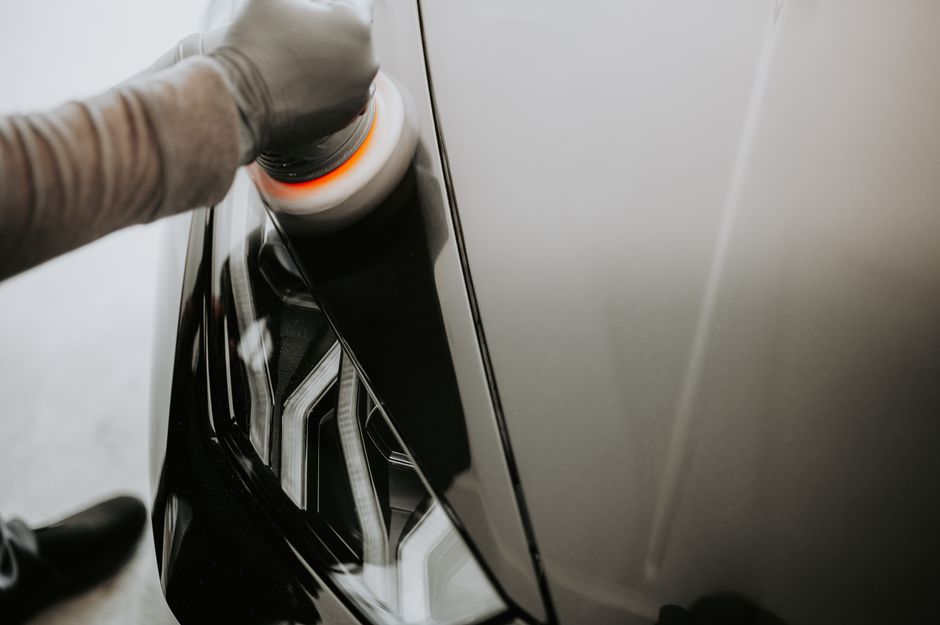
The most expensive job a car detailing business ever wins is the $69 wash and vac. It eats forty minutes of bay time, barely covers the water, the microfibre cloths, and the apprentice’s hourly rate, and it’s sitting on your hoist while the paint correction customer who’d have paid $900 books in with the shop two suburbs over because your calendar looked full on Google.
Throwing more budget at Google Ads or Meta doesn’t fix this. It just buys you more of the same customer, faster. Industry-wide benchmarks for 2026 put the average return on ad spend across Google Ads at around 4.2x, and that number will look perfectly healthy on your monthly report even while half the “leads” it bought you were cheap washes that cost more in bay time than they earned. ROAS measures spend against revenue. It says nothing about which revenue you actually wanted.
Here’s the first thing worth fixing, before you touch a single campaign setting: work out what a bay-hour is actually worth across your service menu, then build your marketing so the cheap jobs find you by accident and the ceramic coating, paint correction, and fleet work find you on purpose. Done properly, that looks like a weekly report showing cost per booked ceramic coating job rather than cost per lead, and a diary that fills itself with the work that actually pays your lease.
What has to be true before you spend a dollar on detailing ads
Most detailing shops skip straight to the Google Ads dashboard because it feels like action. The problem is that nothing in the account can fix a Google Business Profile that’s still categorised as “Car wash” instead of “Car detailing service,” or a quote page that doesn’t show GST-inclusive pricing and triggers a bill-shock phone call the moment a customer compares your number to a rival’s.
Australian customers compare quotes with GST already baked in, because that’s how every other service they buy is priced. A landing page that shows “$850 + GST” instead of “$935” reads as either naive or deliberately misleading, and either way it costs you the call. Get the pricing presentation right before you spend a cent sending traffic to it.
The rest of the list is less about compliance and more about not wasting the traffic you’re about to pay for. Walk through it before you launch anything:
-
Google Business Profile claimed and set to “Car detailing service” as the primary category, with recent photos of finished ceramic coating, paint correction, and interior work, not shots from three years ago.
-
A tracked phone number and a WhatsApp click-to-chat link on your website that’s separate from your main business line, so every enquiry can be traced back to the exact ad or keyword that produced it.
-
Service pricing displayed GST-inclusive, so the number a customer sees online matches the number they hear on the phone.
-
A booking calendar you can actually check before an ad extension promises “availability this week.”
-
A clear-eyed answer to which three or four services earn the most revenue per bay-hour, because that’s where the ad budget needs to point first.
Skip any one of these and the campaign build below will still run, the dashboards will still fill with numbers, and you’ll still be puzzled in three months about why the washes keep coming and the ceramic coating bookings don’t.
The nine-step build: turning clicks into booked bays, not just cheap washes
This is the part that actually moves the needle. None of it is complicated on its own, but it has to happen in order, because steps four through nine depend on the groundwork in steps one through three being done properly.
Playbook
- 1Pull your last 90 days of bookings and tag each job by service type and revenue, then divide by the hours it occupied a bay. This is the number that tells you whether a $69 wash or a $900 paint correction is your actual best customer, and most shops have never run the math.
- 2Build one landing page per high-value service, ceramic coating, paint correction, PPF, fleet contracts, mobile detailing, instead of sending every click to a general "services" page. Each page needs its own before-and-after photos, its own GST-inclusive price range, and its own call to action.
- 3Set up a tracked phone number and a WhatsApp click-to-chat button on each landing page, separate from your main business line, so you can see exactly which page and which ad produced the call.
- 4In Google Ads, split low-intent generic terms like "car wash near me" into their own campaign with a tight daily cap, and give high-intent service terms like "ceramic coating [suburb]" or "paint correction near me" their own campaign with the bulk of the budget.
- 5Build a negative keyword list before launch: jobs, franchise, course, DIY, how to, kit, wholesale. These searches look like customers in a keyword report and cost you real money without ever producing a booking.
- 6Set up value-based conversion tracking in GA4 and import it into Google Ads, so a $900 paint correction booking counts for more than a $69 wash in the eyes of Smart Bidding. Without this, the algorithm optimises toward whichever service is easiest to sell, which is rarely the one you want more of.
- 7On Meta, build creative around the transformation, not the brand: fifteen seconds of swirl marks disappearing under a polisher, or water beading off a freshly coated bonnet. Run it broad rather than stacking narrow interest audiences. The creative is the targeting now, provided the hook earns the first three seconds.
- 8Build a remarketing audience for anyone who viewed a ceramic coating or PPF page but didn't book, and show them a different message, a free consult or a walkthrough of the process, not a discount that trains people to wait for one.
- 9Build your campaign calendar around the Australian weather and travel pattern, not a generic twelve-month split, and review weekly against cost per booked job by service tier, shifting budget toward whichever tier is returning the best bay-hour value that month.
DIY tools for this build
If building five separate landing pages feels like more hours than your week has, that’s usually where a dedicated web design build earns its keep, matching each page to the exact ad that sends traffic to it rather than making one page try to sell every service to everyone.
Get a free marketing audit. We review your search, ads, and landing pages and send back what to fix first.
Get a free audit
Where this comes unstuck: broad match washes, hail season timing, and leads that ghost the phone
A lot of detailing accounts in Australia still run one lumped-together Search campaign targeting “car detailing,” “car wash,” and “mobile detailing” at once, with broad match switched on and no negative list. Google’s broad match will happily catch “car wash jobs Brisbane” or “how to detail a car yourself at home” alongside the searches you actually wanted. Industry figures put wasted spend on irrelevant or mismatched queries somewhere around 20 to 30 percent of a search budget, and a single lumped campaign with no negatives is usually sitting at the high end of that range.
Meta Instant Forms cause a quieter version of the same problem. They’re frictionless, which is exactly why a bored student scrolling at lunch will tap through a free-detail competition form with no intention of ever booking anything. The lead count looks great in the ad manager. The phone doesn’t ring back. Swapping the Instant Form for a click to your actual landing page, with a required field like vehicle make and preferred service, filters most of that out before it ever reaches your front desk.
Then there’s the traffic that does land on the right page and still goes quiet. A tool like HeyLead Insights will show you exactly where that happens: scroll depth on the PPF page, whether a thumb hovers over the WhatsApp button and pulls back, whether the price section is the last thing anyone reads before they close the tab. Guessing at this costs more than checking it.
The deeper mistake is running a marketing calendar built for the wrong hemisphere. A lot of generic templates were written assuming spring runs March to May and storm season peaks in US spring. Copy one of those without checking the dates and you’ll be pushing pollen and tree-sap removal content in October, when the real pollen season in Sydney and Brisbane runs September through November, right alongside jacaranda season. You’ll be running storm-readiness messaging in April because a template said so, while the hail corridor running from south-east Queensland down through northern New South Wales doesn’t really light up until spring tips into summer, October through March, which also happens to be bushfire season across most of the eastern states. Ash and fine particulate settle on paintwork for weeks after a fire event, and demand for a full decontamination wash tends to follow a week or two behind, not the same afternoon.
December and January aren’t quiet months either, even though plenty of accounts wind spending down for the holidays out of habit. That’s when Australians are doing the big summer road trip, the beach house run, the long drive for Christmas with family interstate, and it’s the best window all year to sell ceramic coating and paint protection before a car does 2,000 kilometres of insects, sand, and salt air. Pace your budget evenly across a generic twelve-month calendar and you’re underspending in the exact six to eight weeks where your highest-value bookings are sitting there waiting to be found.
What detailing shop owners notice once enquiry quality changes
“We used to get fifteen enquiries a week and maybe two would show up with a car actually worth correcting. Once we split the wash traffic from the ceramic coating traffic, the number of enquiries dropped, but the diary filled with the jobs that pay.” - Owner, two-bay detailing studio, Melbourne
“Every November our phone used to go quiet right when the hail started, because our spend was still set the way it had been in June. Now the budget actually follows the weather instead of the calendar.” - Owner, mobile detailing business, Brisbane

FAQ
Do I need separate Google Ads campaigns for every suburb I service?
Not necessarily separate campaigns, but you do need location-specific ad copy and landing page mentions, especially for mobile detailing where “we come to you in [suburb]” matters more than exact-match suburb targeting. Early on, a well-structured service split matters more than suburb-level granularity.
How much should a car detailing business in Australia budget for marketing each month?
For a single-site shop chasing ceramic coating and paint correction work rather than volume washes, a realistic starting range covering ad spend and management sits somewhere between $2,000 and $6,000 a month. Mobile operators and multi-site businesses covering a wider service radius usually need more, simply because the service area is bigger and the competition for those searches is thicker.
Is SEO or Google Ads the better first move for a new detailing shop?
They solve different timing problems. A properly built Google Business Profile and a steady stream of reviews can produce calls within weeks. Content and landing pages built around “ceramic coating [city]” style searches take months to climb. Google Ads is the fastest way to fill the diary while the organic side catches up, provided the value-based tracking from step six is in place so you’re not just buying volume.
What do I do about Instant Form leads that never answer the phone?
Switch the campaign objective from lead forms to website clicks, send the traffic to a service-specific landing page, and add a required field like vehicle make and preferred service. It costs you some lead volume on paper and saves your front desk hours of chasing numbers that were never going to book.
Does GST need to be shown on my landing page pricing?
You’re not legally required to break out a GST line on a marketing page the way you are on a tax invoice, but showing GST-inclusive totals is what Australian customers expect to see, and it avoids the quote-shock call where the number on the phone doesn’t match the number on the screen.
Putting it to work
Pull your last 90 days of bookings this week, sort them by service type, and calculate revenue per bay-hour for each one. It takes an afternoon with a spreadsheet, not a new piece of software. Once you know that a paint correction job earns three times what a basic wash earns per hour on the hoist, you’ll know exactly which landing page, which keyword campaign, and which Meta creative deserves the next marketing dollar.
Building that kind of service-by-service campaign structure, and keeping the budget pointed at the right jobs through hail season, bushfire season, and the summer road-trip rush, is exactly the ongoing work HeyLead runs for Australian service businesses, from the landing pages through to the tracking that tells you which job each enquiry actually turned into. Chat with us on WhatsApp if you’d like a hand setting it up.
Free marketing audit, or reach Martin directly:
Get a free audit Connect on WhatsApp · [email protected]