
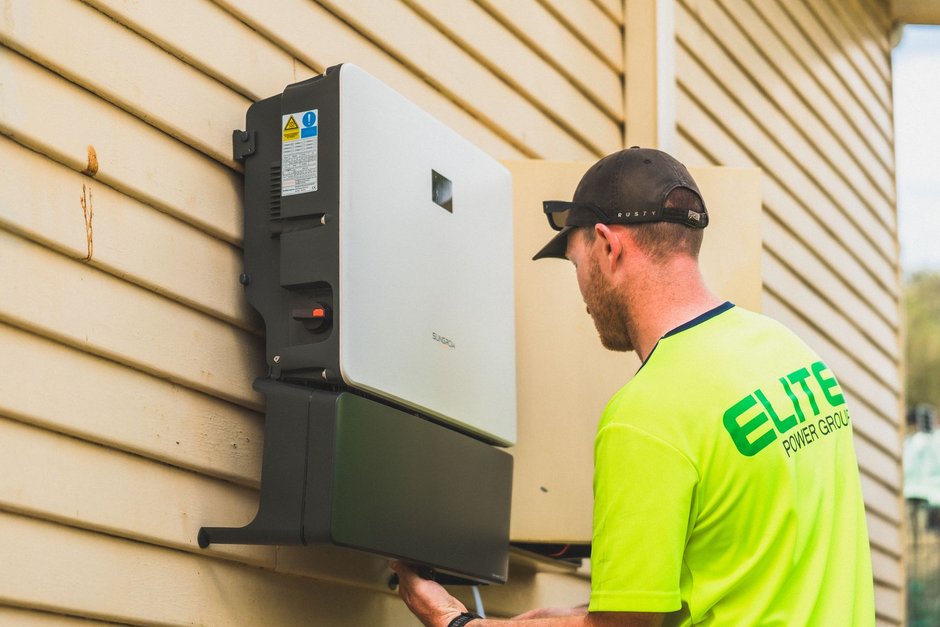
On 13 November 2026, the Clean Energy Regulator published highlights of its 2025-26 inspections of solar battery and solar PV installations under the Small-scale Renewable Energy Scheme, and missing or incorrect critical warning labels, along with poor identification of backup circuits, were the most common reasons batteries were rated substandard. If you install batteries in Australia, this CER battery inspection report is now part of your sales conversation, whether or not you bring it up. Your battery landing pages should answer the questions it raises before a homeowner picks up the phone.
Homeowners comparing quotes no longer ask only “how much” and “how big.” They ask who will do the install, whether that person is accredited, and how the job will be done. Most battery pages we see say nothing about any of that. They show a product photo, a rebate line and a quote form.
This post covers what to add to those pages: your accreditation details, a plain description of your install and labeling steps, and your fix-up process. Together they show the buyer that the problems in the report are ones you already handle.
What the CER battery inspection highlights say
The regulator’s highlights, published 13 November 2026, rated each inspected installation adequate, substandard or unsafe. You can read the full 2025-26 SRES inspection report highlights from the Clean Energy Regulator on its website.
These are the points that matter for your sales pages:
- Labeling was the main problem. Missing or incorrect critical warning labels, and poor identification of backup circuits, were the most common reasons batteries were rated substandard.
- Evidence is now mandatory. Mandatory evidence requirements for critical labeling began on 1 March 2026.
- Bad results come with follow-up work. Installers with substandard or unsafe results must go back to the site, fix every issue and send proof to Solar Accreditation Australia.
- Repeated bad results carry risk. Repeated adverse results can lead to further regulatory action.
The findings matter to any installer working under the scheme, because substandard or unsafe results bring required fix-up work and repeated adverse results can lead to further regulatory action. Homeowners also have a new reason to ask harder questions. When a regulator publishes findings about home battery installation quality, careful buyers start checking. Your pages can either look like the problem or look like the answer.
Put your battery installer accreditation where buyers look
Battery installer accreditation is usually buried in a footer or an “about” page. Buyers deciding between three quotes don’t go looking for it. Put it on the page they land on from your ad or search result.
What to show
- The accredited people. Name the installers or the lead installer who will actually be on site. If you use subcontractors, say how you choose and supervise them.
- Accreditation details. State that your installers hold Solar Accreditation Australia accreditation for battery work, and give buyers the details they need to check it.
- Electrical licensing. Show your electrical contractor license details for the states you work in.
- Who signs off. Tell the buyer who checks the job before your team leaves.
Where to put it
Place a short trust block close to the top of the page, near your first quote button. Keep it to a few lines: who installs, their accreditation, and your license. Link to a fuller “our installers” section further down for buyers who want more.
Don’t use a wall of logos with no explanation. A homeowner doesn’t know what most of those badges mean. One clear sentence, such as “Every battery we install is fitted by an accredited installer from our own team,” does more than a row of icons.
Describe the install and the labeling, step by step
The report says labels and backup circuit identification are where installs most often fall short. Most buyers have never thought about labels. Once they learn it’s the most common problem, though, they want to know you take it seriously.
Write a short “how we install your battery” section in plain language. Walk through the job the way the homeowner will see it:
- Site check. What you look at before quoting: the switchboard, the location for the battery, and which circuits the customer wants backed up during an outage.
- Install day. Roughly how the day runs, who will be there, and whether the power will be off for part of it.
- Labeling. Explain that you fit all the critical warning labels required for a battery system, and that you clearly mark which circuits are on backup at the switchboard. Say that your installers record evidence of the labeling, which has been mandatory since 1 March 2026.
- Handover. What you show the customer before you leave: how backup works, which circuits stay on in an outage, and where the labels are.
- Paperwork. What the customer receives afterwards.
Keep this section honest. If your handover includes photos of the finished labeling sent to the customer, say so. If it doesn’t, don’t promise it. Write what your team actually does on every job, because a buyer may hold you to it.
This section also answers a question that costs you calls: “Which of my circuits will work in a blackout?” Say that you agree this with the customer at the site check and mark it clearly at install. That turns a confusing technical point into a reason to choose you.
Explain your fix-up process before anyone asks
Many installers would rather not mention problems at all. We think that’s a mistake now that the report is public. A homeowner reading it learns that some installs fail inspection. Their next thought is “what happens if mine does?”
Answer it on the page in a short section with a heading such as “If an inspection finds an issue.”
Cover these points in plain words:
- That inspections happen. Installs under the scheme can be inspected, and that’s a good thing for the homeowner.
- What you do if a job is rated substandard or unsafe. You come back to the site, fix every issue, and send proof to Solar Accreditation Australia, as required.
- How the customer contacts you. Give a phone number on the page and a named contact or team. Don’t send them to a generic form.
- Who pays. If you fix your own workmanship issues at no charge, say so clearly. Only write what you’ll honor.
This doesn’t make you look worse. It shows the buyer you know the rules and have a plan. A competitor whose page is silent on it looks like they’re hoping nobody asks.
The page update, in order
Here’s the order we’d work in. Most of it is a writing job your web person can finish in a few sessions.
- List every battery page you have. Include your main battery page, suburb or region pages, brand pages, and any landing pages used for Google Ads or Meta Ads. Old ad pages are often forgotten and still getting traffic.
- Add the trust block near the top. Who installs, their accreditation with Solar Accreditation Australia, and your electrical license, placed next to the first quote button.
- Write the “how we install your battery” section. Use the five stages above and keep each to a few sentences. Include the labeling and backup circuit step in its own line so it stands out.
- Add the fix-up section. Use a clear heading and state what you do, how the customer reaches you, and who pays.
- Add an FAQ block. Answer the questions buyers raise on calls: accreditation, labels, backup circuits, inspections. Our free FAQ schema generator turns those questions into structured data, so search engines can read them as questions and answers.
- Check that the page reads clearly. Short sentences and plain terms help homeowners and AI search tools alike. Run the page through our free AI readability checker and fix any section it flags as hard to follow.
- Make the quote form ask the right question. Add an optional field such as “Which appliances or circuits do you want backed up?” It starts the backup circuit conversation early and gives your estimator better information.
- Match your ads to the page. If your ad mentions accredited installers, the landing page should prove it in the first screen. If your ads point to an old page, redirect them to the updated one.
- Track what changes. Make sure calls from the page and form submissions are both recorded as leads. If you aren’t sure they are, our conversion tracking setup service covers it.
If you’d rather have the whole page rebuilt around these trust points, that’s what our high-converting landing pages service is built for.
Frequently asked questions
Should I mention the CER inspection report on my battery page at all? Yes, briefly. A short, calm line linking to the regulator’s highlights and explaining how your process covers labeling and backup circuits shows buyers you’re on top of it. Don’t use it to attack other installers. Keep the focus on what you do.
What if one of our own installs was rated substandard? Don’t hide your fix-up process because of it. Installers with substandard or unsafe results must return to the site, fix every issue and send proof to Solar Accreditation Australia. Describe that process on your page. Buyers care more about how you respond than about a promise that nothing ever goes wrong.
How much detail about labels should I give homeowners? Enough to show you do it, not a technical manual. Say that you fit all the critical warning labels, mark which circuits are on backup, and record evidence of the labeling as required since 1 March 2026. Then show the customer at handover. Leave the wiring detail for the paperwork.
Do my suburb and region battery pages need these sections too? Yes. A buyer landing on a suburb page from a local search has the same questions as one on your main page. You can keep the accreditation and fix-up sections the same on every page. Then add local details such as which team covers that area.
Will adding accreditation and install details help my Google rankings? It can help indirectly. Clear, specific answers to real buyer questions make a page more useful, and an FAQ with structured data gives search engines more to work with. The bigger gain is usually in conversion. More of the people who already land on the page will call or ask for a quote.
We use subcontracted installers. How do we handle that on the page? Be upfront. Say that installs are done by accredited installers you work with, explain how you check their accreditation and work, and say who the customer deals with if something needs fixing. Don’t imply your own staff do the work if they don’t.
Your next step
This week, open your main battery landing page and add a short trust block next to the first quote button. Say who installs, their Solar Accreditation Australia accreditation, and your electrical license. Then add one line saying that every install includes the critical warning labels and clearly marked backup circuits. It’s a small edit, but it answers the question homeowners are asking right now. If you’d like us to look at your battery pages with you, Chat with us on WhatsApp.