
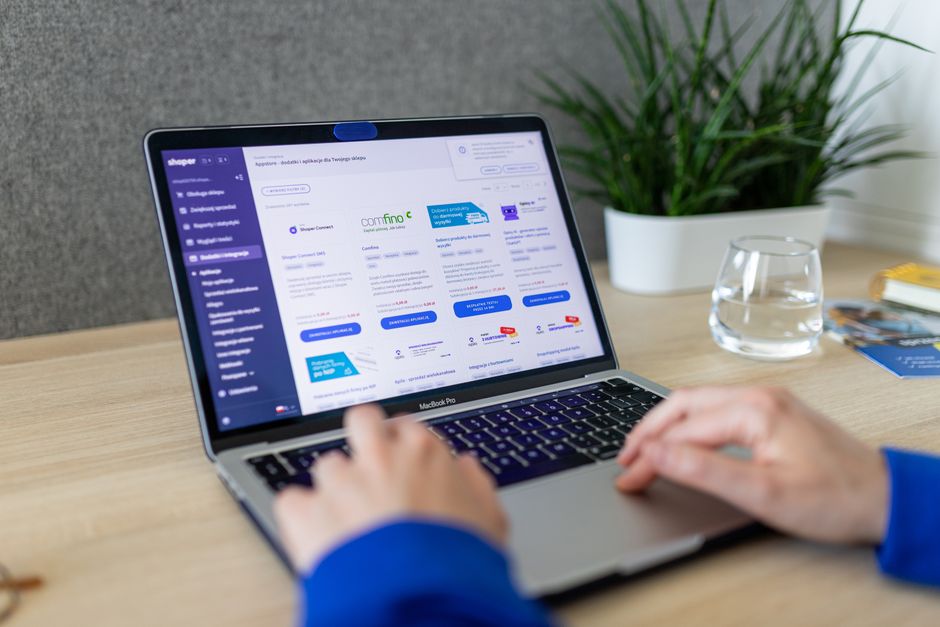
Friday afternoon in a Manchester SaaS team: Google Ads is still clearing auctions on “pricing”, “demo”, and competitor terms, yet the CRM only shows a thin trickle of qualified form starts. Field data from Chrome UX Report is the quiet verdict. On the money pages, Largest Contentful Paint sits past 3.2 seconds on mid-tier Android, Interaction to Next Paint spikes whenever the sticky bar and chat widget fight for the main thread, and a late-loading review carousel shoves the primary CTA down the viewport. You did not lose the auction. You lost the first useful paint and the first reliable tap.
That is the marketing job of website performance optimisation in the UK: protect paid and organic intent long enough for a real next step, not a vanity PageSpeed screenshot on the office Wi-Fi. The other half keeps buying clicks that bounce before proof, forms, or calendar embeds finish loading.
This playbook is for CMOs, heads of growth, and founders who own the marketing number. It covers what to instrument, what to fix first on UK templates, how to read field metrics weekly, and how booked conversations (not lab scores) prove the work.
When UK media spend meets a page that is still assembling itself
UK search and paid social rarely fail only in the auction. They fail in the seconds after the redirect, especially on 4G through London, Leeds, Birmingham, or a train corridor where packet loss is normal. Marketing owns the brief, the offer, the creative, and usually the landing URL. Engineering owns the stack. The gap between those two is where budget evaporates: hero images served at desktop weight on mobile, third-party tags firing before content, consent banners blocking interaction, and “one more pixel” requests that never get retired.
You feel it first as soft metrics. Cost per click looks stable. Impression share is fine. Then cost per qualified lead creeps up while sales swears inbound quality is “the same but slower”. What changed is time-to-interactive proof. Visitors who would have scrolled to a case study or opened a calculator leave during the blank hero. Smart bidding still gets conversion pings from the people who waited, so the algorithm keeps buying similar traffic into the same slow experience. You are training the machine on survivors, not on the full audience you paid for.
Privacy and signal loss make this worse. When 20%+ of conversion data already disappears to blockers and consent choices, every wasted impression on a sluggish page compounds the problem. You cannot afford to burn the remaining clean events on URLs that cannot paint. Attribution then looks “broken” when the real issue is simpler: the page never earned the conversion event in the first place.
Lab-only culture is another trap. A green Lighthouse run from a quiet desktop in the office does not equal field LCP for a Bristol estate-agency lead form at 18:40 on a phone. CrUX and Search Console experience reports tell you what real UK users felt. If marketing only celebrates synthetic scores, you will scale spend into theatre.
If paid and organic already hit your site but forms stall, treat performance as part of the same programme as offer and layout, not a side ticket for “when engineering has time”. Teams that want a partner to own that loop can start with HeyLead’s website performance work for UK properties.
A marketing-owned UK performance system: field metrics, fix order, proof
Own performance the way you own channel mix: a short scoreboard, a fixed fix order, and a weekly habit that ties speed to pipeline, not to developer pride. You do not need to rewrite the CMS. You need the URLs that spend money to feel instant under real UK traffic.
Measure what marketing can act on. Pull Search Console Core Web Vitals (URL groups), CrUX field distributions where available, and your own analytics on landing-page conversion rate, scroll depth to proof, and form-start rate by device. Pair spend from Google Ads or Meta with the exact final URL. If a Leeds campaign points at a blog post wrapped in a mega-menu, fix the destination before you touch bids.
Read the three vitals as a sequence, not a single grade. LCP is whether the main content arrives before patience dies. INP is whether taps on CTAs, filters, and form fields respond without dead air. CLS is whether layout jumps steal taps or hide the button the ad promised. On UK lead-gen templates, LCP is often a hero, logo sprite, or web-font stack; INP is often tag managers, chat, and heavy frameworks; CLS is often cookie UI, late embeds, and unsized media.
DIY playbook for money URLs
-
List every URL that took paid or high-intent organic traffic in the last 30 days. Rank by spend and by assisted pipeline, not by pageviews.
-
For each URL, note device split, LCP element (hero, H1 block, booking widget), and the first interaction users attempt (form focus, “Get a quote”, calculator).
-
Capture field status from Search Console experience reports and compare with a single mobile field trace on a mid-range Android, not only office broadband.
-
Freeze new third-party tags on those URLs until the current set is justified. Every pixel should map to a decision you still make.
-
Fix LCP first: compress and properly size the LCP image, preload only that critical asset, defer non-critical CSS, and avoid lazy-loading the hero.
-
Cut main-thread work that hits INP: delay chat until after first interaction or idle, remove duplicate analytics bundles, and simplify sticky headers that reflow on scroll.
-
Reserve space for consent banners, fonts, and embeds so CLS stops shoving the primary button. Set width and height on images and video posters.
-
Align the above-the-fold story to the ad query or creative. Speed without message match still wastes the click; match without speed still loses the impatient half of mobile.
-
Wire clean conversion events (form start, form success, calendar book) through a maintained GTM container so bidding sees quality, not only page views.
-
Re-check field metrics after release, then watch cost per qualified lead and sales-accepted rate for two full weeks before declaring victory.
Free tools - try these yourself
Behaviour data closes the loop. Session replay and heatmaps show whether users rage-tap a CTA that has not hydrated, abandon a multi-step form on the postcode field, or never reach the trust block because the fold is a spinner. HeyLead Insights is built for that post-click evidence so you fix the real friction instead of guessing from bounce rate alone.
Weekly rhythm should stay light. One owner reviews the top five spend URLs, flags any vital that slipped, and ships one performance change or one tag removal. No day-by-day ceremony. Just a backlog ordered by pounds at risk. When you need deeper redesign or template work, keep performance acceptance criteria in the brief: target field LCP, no layout shift on consent, and form interactive under a stated INP budget on mobile.
Get a free marketing audit - we review your search, ads, and landing pages and send back what to fix first.
Get a free audit

Two UK fixes where the page, not the bid, was the lever
A Birmingham B2B services firm was paying healthy CPCs on high-intent Search terms into a service page that reused the global header, a 2.4 MB homepage hero, and three sequential review widgets. Lab scores on desktop looked “acceptable”. Field LCP on mobile sat near 4.1 seconds. Marketing cut the hero to a compressed, correctly dimensioned still, moved reviews below the fold with reserved space, and deferred the chat script until scroll. Form-start rate on mobile moved from roughly 4.2% to 11% over 11 days of stable spend. CPC barely moved. Cost per sales-ready enquiry fell because more of the same clicks reached a usable form.
Mechanism first, metrics second: the LCP element was a marketing asset that had never been budgeted as part of media cost. Once the creative team treated hero weight like media waste, the paid account stopped looking “expensive”.
Second case: an Edinburgh product company ran Meta traffic to a long landing page with a sticky multi-button bar and a third-party ROI calculator injecting late. INP suffered on the primary “Book demo” control; people double-tapped, thought nothing happened, and left. Heatmaps showed repeated taps on a dead zone while the calculator bundle parsed. The fix was boring and effective: static proof above the fold, calculator loaded on click, sticky bar reduced to one action, fonts subsetted. Demo requests did not double overnight, but mobile conversion rate rose enough that the same creative set cleared learning without another bid panic. Creative fatigue still existed (UGC can fade in days), yet the page stopped amplifying it.
Speed and message match on the destination are cheaper than another restructure that resets learning.
When the brief is “traffic is fine, pipeline is not”, put performance and CRO in the same sprint as creative testing rather than a later engineering epic.
Patterns we see in audits
The short quotes below are illustrative composites drawn from patterns in account reviews. They are not quotes from named clients.
“We kept blaming Smart Bidding until we watched mobile sessions stall on a hero that never finished. Field LCP was the budget leak, not the bid strategy.” - Head of Growth, UK B2B SaaS
“Chat and the consent bar fought the CTA on our highest CPC URL. Once INP settled, the same Leeds campaign stopped looking like it had ‘gone off’.” - Marketing Director, professional services

FAQs
Is website performance still a marketing problem if engineering owns the CMS?
Yes. Marketing chooses landing URLs, launches campaigns against them, and owns cost per qualified lead. You may not commit code, but you set acceptance criteria, prioritise which templates get fixed, and stop sending spend to known-slow paths. Treat performance like brand safety: non-negotiable on money pages.
Should we pause campaigns until Core Web Vitals are green?
Rarely a full pause. Throttle or exclude the worst URLs, shift budget to faster variants, and ship LCP and INP fixes in days, not quarters. A total pause trains leadership that performance is optional theatre. A controlled reallocation keeps learning while you repair the destination.
What is “good enough” for UK lead-gen pages?
Use field data, not a single lab number. Aim for the bulk of real-user LCP in a range users forgive on 4G, stable INP on primary taps, and near-zero CLS around forms and consent. Then prove it with form-start and sales-accepted rates. Passing origins are still only a bit over half the web in CrUX; beating your category on the URLs that spend is the practical bar.
How does performance interact with Performance Max or broad Meta delivery?
Automation sends volume wherever conversions appear. Slow pages bias learning toward patient users and under-count frustrated mobile traffic. Clean events plus a fast, matched landing URL give the systems better signal. Creative remains targeting on Meta; the page still has to honour the click without jank.
Do we need a full rebuild to win on performance?
Usually no. Most UK marketing sites leak on a handful of templates: paid landing layouts, pricing, demo request. Image discipline, tag hygiene, font strategy, and reserved space for UI chrome fix a large share. Rebuild when the framework itself blocks interaction; otherwise sequence high-ROI URL fixes first.
Putting it to work
Execution sprint
This week
- Pull 30-90 days of performance for website performance playbook for marketing teams (Search Console, ads, CRM, or call logs - whatever you have).
- Flag the top leak: wrong intent, weak page, slow response, or dirty conversion tracking.
- Ship one fix on the highest-traffic money path (page, campaign split, or response rule).
- Run the free tools below on that same URL or account and log the findings.
Free tools for this sprint
Next 30 days
- Expand the fix to the next one or two money paths only after the first one shows cleaner bookings.
- Align creative, keywords, or content with the same offer the page now states.
- Review booked outcomes weekly; cut anything that still only produces unqualified volume.
This week
-
Export the ten URLs with the highest paid plus high-intent organic sessions for the last 30 days and mark device mix.
-
Run each through a field-aware vitals check and note the LCP element and any INP-heavy scripts on the primary CTA.
-
Remove or delay one unjustified third-party script on the top spender and reserve space for consent UI if CLS is visible.
-
Align ad headline claims to the first screen of that URL so speed gains are not wasted on message mismatch.
-
Tag form start and success cleanly, then compare mobile conversion before/after for a full business week.
Next 30 days
-
Create a standing performance backlog ordered by media pounds at risk, not by whoever shouted loudest.
-
Add performance acceptance lines to every new landing-page brief (field LCP target, INP on main CTA, no layout shift on load).
-
Review behaviour on the top forms with session evidence and fix one friction point that speed alone will not solve.
-
Re-qualify Smart Bidding or Advantage-style delivery only after the primary destinations are stable in the field.
Pull those ten URLs and the associated spend today, then fix the single worst LCP or INP issue before you touch another bid adjustment. If you want a team to carry website performance optimisation for UK marketing teams as an ongoing programme (vitals, tag hygiene, landing behaviour, and the proof loop into pipeline), HeyLead can take that operational load so you stay on channel strategy and offer. Call us.
Free marketing audit, or reach Martin directly:
Get a free audit Chat with us on WhatsApp · [email protected]