
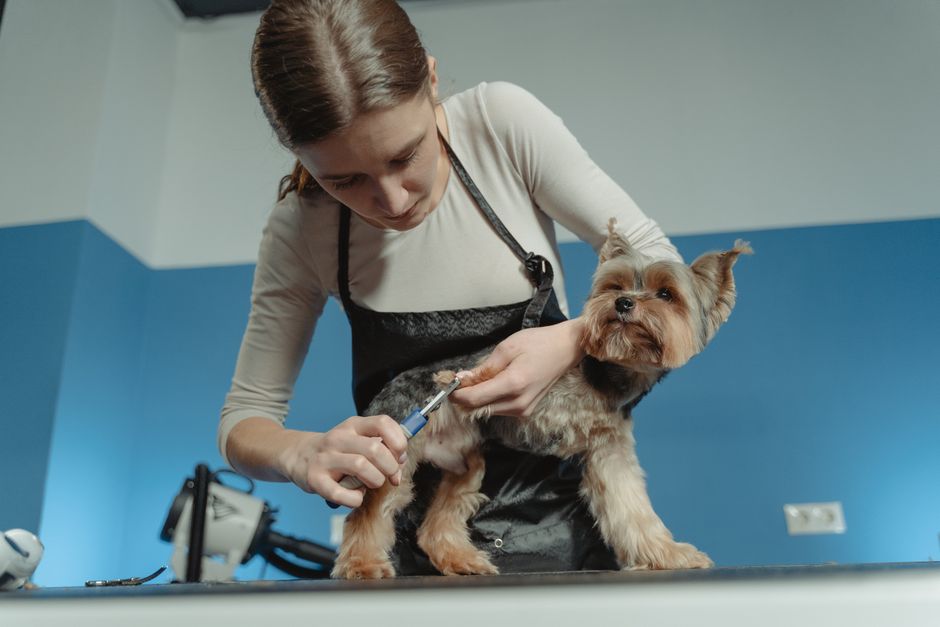
Every independent groomer we talk to says they want more enquiries. The ones sitting around £85,000 in annual turnover should think twice before they get their wish.
The UK’s VAT registration threshold moved to £90,000 in April 2024, and a huge number of one- and two-table grooming salons sit right under that line on purpose. Push past it with a run of successful Google Ads campaigns and you don’t just get busier: you get a 20% price jump you either absorb yourself or pass on to clients who were booking you precisely because you were the affordable local option. A salon owner who’s never modelled that out can end up with a fuller diary and a worse year. That’s the opposite of what a marketing campaign is meant to do.
This isn’t an argument against running PPC for a grooming business. It’s an argument against running it the way most agencies and DIY dashboards sell it, which is “more clicks, more leads, job done.” A dog grooming salon has a hard capacity ceiling: one table, one dryer, a set number of hour-long slots a day, and a coat that needs matting-out time nobody budgeted for. The win isn’t volume. It’s the right dogs, at the right price, on the days you actually have room. A scored audit of your account finds the leaks that cost you that control. A generic “run more ads” conversation never does.
Most grooming PPC accounts we’ve looked at in the UK aren’t under-spending. They’re spending against the wrong signal, and nobody’s checked the account closely enough to notice.
Why a fuller diary isn’t automatically the right KPI for a UK grooming business
British weather does something to grooming demand that most ad accounts never account for. A wet fortnight in October sends a wave of owners searching for someone to sort out matted, muddy coats, and that demand spikes fast and drops just as fast once the ground dries out. Spring brings the moulting rush, when every Labrador and golden retriever owner in a 15-mile radius suddenly wants a de-shed treatment booked before the sofa disappears under fur. January, by contrast, is often dead quiet. An account running the same monthly budget through all of it is either starved in May or burning cash on empty slots in February.
Then there’s the VAT question, which is genuinely a UK quirk that doesn’t exist the same way for groomers in most other markets. A salon turning over £82,000 a year with a strong PPC campaign that adds another £15,000 of bookings doesn’t just cross £90,000: it crosses it and has to start charging VAT on everything, not just the new bookings. Owners who understand this will sometimes cap their own growth deliberately, which means the PPC goal shouldn’t be “maximise leads.” It should be “fill the quiet weeks with the right dogs and protect the margin on the busy ones,” which is a completely different campaign brief.
We also see groomers confuse enquiry volume with booked, paid, attended appointments. A phone that rings forty times a month looks healthy on a dashboard. If twelve of those calls are people asking if you do nail trims for free, six are people price-shopping three salons at once, and four never show up, the real number of productive bookings might be eighteen. The account that drove those forty calls looks like it’s working. It isn’t, not in the way that matters to someone standing at a grooming table from 8am to 6pm.
If you run your enquiries and bookings through HeyLead’s Google Ads management service, this is exactly the kind of mismatch we go looking for before touching a single bid.
The grooming PPC audit: twelve things worth checking before you spend another pound
Run through this with your actual Google Ads account open. Most of it takes ten minutes per item. None of it requires a marketing qualification, just a willingness to look closely at numbers you might be avoiding.
Audit scorecard
-
1Campaigns match how dogs actually get booked
Check whether your account splits full grooms, puppy intro grooms, de-shed and moulting treatments, hand-stripping, and cat grooming into separate campaigns or ad groups. One broad "dog grooming" campaign blends a £22 nail trim with a £65 full groom, so Google's bidding has no idea which clicks are worth chasing and which aren't.
-
2Radius matches your real catchment, not a postcode blanket
Compare your targeting radius against actual drive times, or the real loop a mobile grooming van drives. A fail here means you're paying for clicks from 35 minutes away who were never going to book a toy poodle trim, and a mobile groomer is burning fuel chasing enquiries outside their route.
-
3Negative keywords exclude jobseekers and DIY searches
Pull the search terms report and look for "dog grooming jobs," "grooming course," "grooming scissors," and "how to groom a dog at home." These searches cost you clicks and bring in exactly nobody who wants to book. Good accounts prune this list regularly, not once at setup.
-
4Budget moves with the coat, not the calendar month
Check whether spend flexes around the spring moulting rush and the post-wet-weather matting spike, or whether it's a flat figure every month regardless of season. A fail here means you're underfunded exactly when de-shed demand peaks and overspending through a dead January week.
-
5Pricing on the landing page includes VAT clarity, not "from £X"
Look at the page your ads send people to. Does it show believable price bands by breed and coat length, with VAT status stated plainly if you charge it? Vague pricing pushes bargain hunters to bounce, and if you're VAT-registered but unclear about it, people feel misled at the till.
-
6The page proves trust to someone handing over an anxious pet
Check for before-and-after photos of real clients, a groomer bio, any pet first-aid or insurance mentions, and genuine reviews visible without scrolling past three stock photos of a happy golden retriever that isn't yours. A fail here loses nervous first-time owners before they even read your prices.
-
7Call tracking is wired into the campaign, not just a static number
Confirm every campaign has a dynamic tracking number so phone bookings link back to the ad that drove them. Most grooming enquiries still come by phone. If none of that shows up in your ads dashboard, you're funding campaigns blind and probably funding the wrong ones.
-
8A deposit or card hold filters out time-wasters
Look at your booking flow for first-time and full-groom appointments. If there's no deposit or card-on-file requirement, check your no-show rate. A fail here means your ad spend is funding "conversions" that leave an empty table at 10am.
-
9Google Business Profile reviews are feeding the ad story
Check how recent your reviews are and whether seller ratings or review snippets actually appear on your ads. Three-year-old reviews with nothing new in months mean your ads promise a trust your profile doesn't back up when someone clicks through to check.
-
10The booking page loads fast on a phone with patchy signal
Test your landing page on mobile data, not office wifi. Only 55.9% of web origins currently pass all three Core Web Vitals, and a parent stood at the school gate one-thumb typing a booking form will not wait for a slow page to catch up.
-
11Enquiries get a same-day reply, not a same-week one
Check your actual response times on form fills and WhatsApp messages. A booking enquiry sent on a Tuesday and answered on Thursday has usually already booked somewhere else by the time you reply.
-
12Completed, paid appointments feed back into the platform
Confirm whether cancellations and no-shows get excluded from what counts as a conversion, and whether attended, paid appointments import back as offline conversions. Without this, Smart Bidding keeps optimising toward form fills that never put a dog on the table.
If the thought of running through twelve items on your own account makes you want to hand the whole thing to someone else, that instinct is worth listening to. It’s genuinely this detailed, and it needs checking more than once a year.
Get a free marketing audit. We review your search, ads, and landing pages and send back what to fix first.
Get a free audit
Score it, then fix it in this order
Grade each of the twelve items pass, weak, or fail. Pass means you checked it this week and it’s genuinely working. Weak means it exists but you’re guessing rather than measuring. Fail means it either doesn’t exist or you’ve just discovered it’s actively costing you money.
Fix order matters more than most owners expect. Tracking comes before anything else: items 7 and 12 on that list. If you can’t see which calls and appointments actually came from which campaign, every other fix you make is a guess dressed up as a decision. We’ve seen groomers pour an extra £300 a month into a campaign that “looked” like it was working, only to discover once call tracking went in that most of the real bookings were coming from a completely different ad they’d almost paused.
After tracking, fix intent before you touch budget: campaign structure and negative keywords, items 1 and 3, then radius, item 2. There’s no point flexing your spend seasonally if half of it is still going to jobseekers and people 40 minutes outside your catchment. Only once intent is clean does the seasonal budget work in item 4 actually pay off, because you’re flexing real demand rather than amplifying waste.
Landing page and trust fixes, items 5, 6, 8, 9, and 10, come next, and response time, item 11, sits alongside them. Speed and proof beat new creative every time. A groomer who spends a week writing fresh ad copy before fixing a slow-loading booking form is polishing the front door while the back door stays open.
The 30-day repair order
- 1Install or verify call tracking on every campaign and confirm offline conversion import is switched on, so Smart Bidding learns from real bookings, not raw form fills.
- 2Pull the last 90 days of search terms and build a negative keyword list covering jobseeker, course, and DIY searches, then re-check it monthly from here on.
- 3Split one broad campaign into service-specific campaigns (full groom, de-shed, puppy intro, hand-stripping) and tighten the geographic radius to your real catchment or route.
- 4Rebuild the landing page with clear pricing bands including VAT status, real before-and-after photos, and recent reviews pulled from your Google Business Profile.
- 5Add a deposit or card-on-file step to the booking flow for first-time and full-groom appointments, and set a same-day reply standard for WhatsApp and form enquiries.
- 6Test the booking page on an actual phone, on mobile data, and fix anything that takes more than a couple of seconds to load before you spend another pound driving traffic to it.
- 7Map your known seasonal patterns (spring moulting, post-rain matting spikes, quiet January) against last year's bookings and set a flexible budget range rather than a flat monthly figure.
DIY tools for this section
If your page is still losing people between the click and the booking form, that’s usually a behaviour problem, not a traffic problem. Watching how real visitors scroll and where they abandon the form, which is what HeyLead Insights is built to show, tends to surface the exact spot where a nervous first-time dog owner gives up on booking you.
What groomers say when the diary and the ad spend don’t match
“We were getting calls every day and I thought that meant it was working. Then I actually counted how many turned into a paid appointment and it was less than half. The ad spend wasn’t the problem. Nobody was chasing the bookings that didn’t show up.” - Owner, two-table grooming salon
“I didn’t realise how close we were to the VAT line until my accountant flagged it mid-year. We had to actually slow the ads down for two months rather than speed them up, which felt backwards until I saw the maths.” - Owner, independent dog grooming business
FAQ
Should a grooming salon close to the VAT threshold still run Google Ads? Yes, but the goal should shift from “more leads” to “the right leads on the right weeks.” Target your quiet months hard and pull back deliberately once you’re approaching a turnover level that would push you into VAT registration mid-year. A good campaign protects your margin, not just your volume.
What’s a realistic cost per booked appointment for pet grooming PPC in the UK? It varies enormously by region and service mix, and anyone quoting you a precise figure before seeing your account, your landing page, and your actual booking data is guessing. What matters more is tracking enough of your own data, properly, to know your own number within a few months.
Does Meta Ads work for pet groomers, or is Google Ads enough on its own? Google Ads tends to catch people actively searching for a groomer right now, which fits a service with a hard capacity ceiling. Meta can work well for filling specific quiet slots or promoting a de-shed offer ahead of moulting season, but it needs the same landing page and tracking discipline, not a separate set of rules.
How much should a UK grooming salon budget for PPC each month? Less important than the figure itself is whether the figure flexes with your seasonal demand and capacity. A fixed budget that ignores your busiest and quietest months wastes money in both directions.
Do mobile dog groomers need different campaigns than salon-based groomers? Yes. Radius targeting needs to follow your actual driving route, not a fixed circle, and your landing page needs to answer a different question: not “where’s your salon” but “do you come to my postcode, and when.”
Putting it to work
Start this week by pulling your Google Ads search terms report for the last 90 days and reading every single query. It takes maybe twenty minutes. Flag anything that’s clearly a jobseeker, a DIY searcher, or someone 40 minutes outside your catchment, and build your first proper negative keyword list from it. That one check alone usually exposes where a meaningful chunk of your budget has been quietly leaking out.
The gap between an enquiry and a paid, attended appointment is exactly the thing most grooming PPC accounts never get fixed properly, because it touches campaign structure, tracking, and the booking page all at once, and most owners don’t have the hours to own all three. HeyLead runs that whole loop, from campaign structure and call tracking through to landing page and deposit flow, as an ongoing programme rather than a one-off setup. Chat with us on WhatsApp.
Free marketing audit, or reach Martin directly:
Get a free audit Connect on WhatsApp · [email protected]