
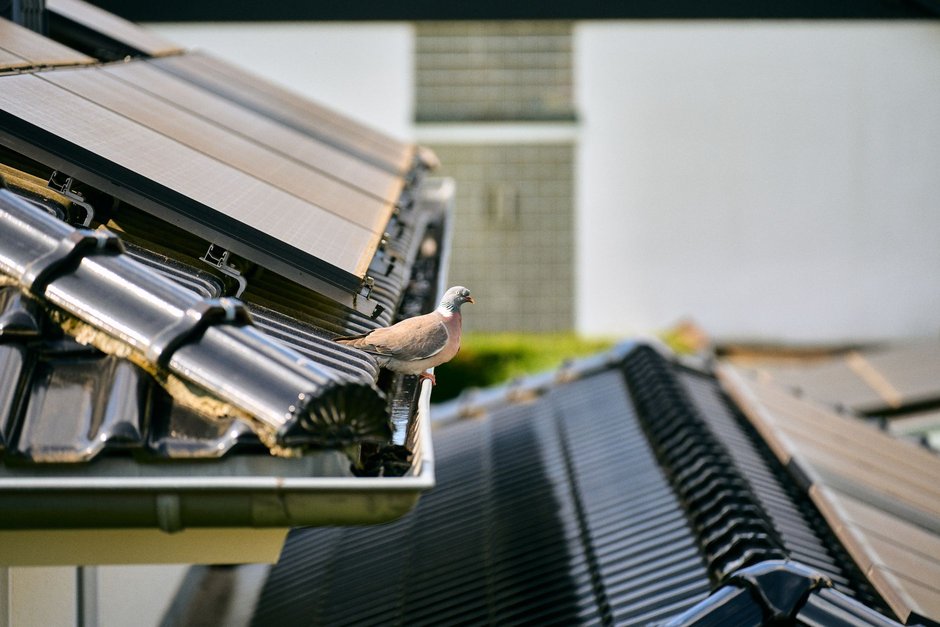
If you want to rank for pigeon proofing solar panels in your area, you need a dedicated page for it, not a line on your general birds page. Right now, when a homeowner searches for pigeons under solar panels, Google mostly shows national chains and solar retailers. They have built pages that answer the exact question. Most local pest controllers have the skills and the van but bury the service where Google cannot see it.
This is fixable in a week. You need one strong page with real price ranges, clear rules on nesting and roof access, and before-and-after proof from your own jobs. Then you get it linked from the solar installers and roofers who already send you work, or who should.
Below is how we would build it, step by step.
Who ranks for pigeons under solar panels right now
Search your main service towns on your phone and look at who comes up. You will usually see three kinds of result.
National pest control brands. They have one page per service and often one page per region. Their pages are not better than yours on substance. They are simply specific.
Solar retailers and installers. Some sell solar panel bird mesh kits or offer proofing as an add-on. Their pages rank because they talk about panels, warranties and fixings in plain language.
Directories and trade platforms. These include Checkatrade profiles and similar listings. They rank because they gather reviews in one place.
What you rarely see is the local firm that has actually done dozens of these jobs. That firm usually has a “Bird control” page that covers spikes, netting, gulls, pigeons on shop fronts and solar panels all at once. Google cannot tell what that page is mainly about, so it does not show it for the specific search.
If you want a structured look at what the top results cover that you do not, run your service area through our free SEO competitor analysis tool. It will show you the gaps in a few minutes.
What a pigeon proofing solar panels page needs to answer
A homeowner with pigeons nesting under their panels is usually annoyed, sometimes worried, and often has questions they feel silly asking. Your page should answer them before they pick up the phone. That means four things.
Price ranges they can actually use
People search “bird proofing cost” because they are scared of a surprise bill. You do not need to publish a fixed price. You do need to publish your own real ranges and explain what moves the price within them. Common factors include:
- How many panels and how many separate arrays
- Whether the roof is single story, two story or higher
- Whether the birds have already nested and there is debris to clear
- Whether panels need cleaning after the mesh goes on
- What access equipment is needed
A range with honest reasons builds more trust than “call for a quote”. It also filters out people who were never going to book.
Nesting rules in plain English
Wild birds and their active nests have legal protection in the UK. Pigeon control sits under specific exceptions and current guidance that changes from time to time. Do not try to write a legal guide on your page. Instead, explain what you do in practice. You check for eggs or chicks before you fit anything. You never seal live birds in. You follow current wildlife law and guidance, and you explain what happens if you find an active nest. Pigeons can breed for much of the year, so tell people to call early rather than wait for “the right season”.
Access and safety
Homeowners want to know whether you need scaffolding, a cherry picker or ladders, and whether they need to tell the neighbors. Say how you decide which method to use. Say that you work in line with UK work at height rules. Say whether you handle access yourself or bring in a partner.
What happens to the panels
This is the question solar retailers answer well and pest controllers often skip. Explain how your solar panel bird mesh is fixed, for example with clips that attach to the panel frame without drilling. Explain why you use that method: it avoids damaging the panels or affecting the installer’s warranty. If you have checked this with installers you work with, say so.
The build: seven steps to do this week
This is the core of it. Each step is small enough for you or your web person to finish in a day or less.
-
Create a new page with its own URL. Something like /pigeon-proofing-solar-panels/. Do not edit your existing birds page into this. Leave that page as it is and link from it to the new one.
-
Write a title and H1 that match how people search. Use the phrase “pigeon proofing solar panels” with your main town or county. For example: “Pigeon Proofing Solar Panels in [Town] - Mesh Fitted, Nests Cleared.” Keep the title under the length where Google cuts it off. You can check that with our title tag checker.
-
Write the four sections above in your own words. Cover price ranges, nesting, access and panel protection. Write the way you would explain it on a doorstep. Short paragraphs. No jargon unless you explain it.
-
Add before-and-after proof from real jobs. Pick three or four recent jobs where you have photos. For each one, add a photo of the gap and nesting debris before, a photo of the fitted mesh after, and two or three lines on the job: the property type, the access method, and what you found. Only use photos you took and that the customer is happy for you to share. Name the area, not the street.
-
Put the contact options where a phone user will see them. In the UK, people with a pigeon problem usually call, send a WhatsApp or fill in a short form. Put a click-to-call button and a WhatsApp button near the top. Add a short form that asks for a postcode, the number of panels and an optional photo. A photo upload saves you a site visit on simple jobs.
-
Add an FAQ block and the right structured data. Use the questions you hear on the phone every week. Add LocalBusiness markup so Google connects the page to your business and service area. Our local business schema generator will write the code for you to paste in.
-
Link to the page from your own site and your Google Business Profile. Add a link from your homepage, your general birds page and any town pages you have. In your Google Business Profile, add “Pigeon proofing for solar panels” as a service and post a before-and-after from one of your jobs.
If you would rather have this done for you, including the content, structure and links, see how we handle SEO for pest control companies.
Getting links from solar installers and roofers
A good page on its own will start to show up. Links from relevant local businesses are what push it past the national chains. Solar installers and roofers are the obvious partners, because their customers get pigeon problems and they often do not want to deal with birds themselves.
Solar installers
Many installers get calls from past customers about pigeons and either turn the job down or pass it on informally. Make that formal. Offer to be their recommended proofing partner. Ask them to link to your solar page from their aftercare page, their FAQ, or a page about panel maintenance. In return, you send them customers who want panel cleaning or system checks. You can also mention on your page that you work with local installers, with their permission.
Roofers
Roofers see pigeon damage all the time: blocked gutters, nesting under tiles, birds under panels they did not fit. A roofer who links to your page when a customer asks “who can sort the pigeons?” sends you a qualified lead and a useful link at the same time.
How to ask
Keep it simple. Phone or message the owner and say you have built a page that explains pigeon proofing under panels, and that their customers keep asking about it. Send the link. Ask whether they would add it to their site. Most small firms will say yes if it saves them awkward calls.
Avoid paid link schemes and directory spam. A handful of real local links from businesses in your trade area is worth more and carries no risk.
Checking the page is working
Give the page a few weeks after it is live and indexed, then check three things.
Is it indexed? Search Google for your page URL or use the URL inspection feature in Google Search Console. If Google has not picked it up, request indexing there.
What searches is it showing for? In Search Console, look at the queries for that page. You want to see phrases like “pigeons under solar panels”, “solar panel bird mesh” and your town names. If the page shows for searches but gets few clicks, rewrite the title and meta description to be more specific.
Are the calls and messages tracked? If you cannot tell which inquiries came from this page, you cannot tell whether it is worth more effort. Set up call tracking or at least a separate WhatsApp link with a pre-filled message for this page. Then you will know when a message came from it. If you also run local search work beyond this page, our local SEO service covers tracking across all of it.
Frequently asked questions
Should I take pigeon and solar content off my general birds page?
No. Keep a short paragraph about solar panels on the general page and link from it to the new dedicated page. That tells Google which page is the main one for the topic, and visitors on the general page can still find it.
Will publishing a price range lose me jobs to cheaper firms?
It tends to do the opposite. People who see a range with clear reasons, such as roof height, number of panels and nest clearance, arrive at the quote already expecting your price. The ones who only want the cheapest option were unlikely to book you anyway.
Do I need a separate page for every town I cover?
Not at first. Start with one strong page that names your main service area. Add a town page only where you get regular solar jobs and have local photos and details to put on it. Copying the same text across dozens of town pages usually hurts more than it helps.
What if a solar installer is worried the mesh will affect their warranty?
Explain your fixing method and show them photos of a finished job. If you use clips that attach without drilling into the panels, say so clearly on your page and in your message to them. Ask what they need to see to be comfortable, and add that detail to the page, because homeowners will ask the same thing.
Can I use photos the customer sent me before the job?
Only with their permission, and only if the photos do not show their house number or anything that identifies the property. Your own before-and-after shots from the roof are usually clearer and more convincing anyway.
How long before the page starts bringing in calls?
It depends on your area, how many competitors have specific pages and how many local links you get. Some pages start showing within weeks, others take longer. Getting it indexed quickly and earning two or three links from installers or roofers is the fastest route we know.
Your next step
This week, pick your three best recent solar proofing jobs, pull the before-and-after photos off your phone, and write two lines about each one. That gives you the proof section of your new page, and it is the part competitors cannot copy.
If you want us to build the page and the links around it, Chat with us on WhatsApp and tell us which towns you cover.