
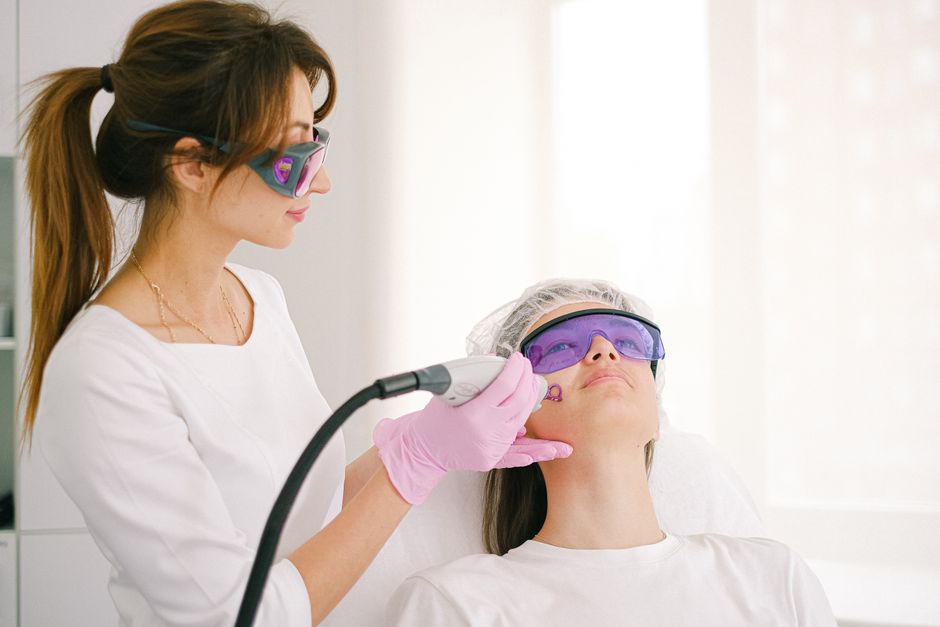
Most UK aesthetic clinics would love to advertise their best-selling treatment by name, and the rules say they can’t. Botox and other botulinum toxin products are prescription-only medicines, and the CAP Code bars promoting them to the public, on your own website and social feeds as much as in a paid ad.
So the clinics that fill the diary are not the ones shouting loudest. Plenty still send paid clicks to a homepage that lists every injectable, plays a brand film and offers one “book now” button for everything, then wonder why consults are thin and why a complaint has reached the ASA. A bigger budget only puts more people in front of a page that is both weak and risky, and a redesign that keeps the same menu-of-everything layout changes nothing.
What works here is a page built around the consultation rather than the product. Start from the patient’s concern (lines, volume loss, skin quality), then who will assess them, what the appointment involves, what it costs, and how to book it from a phone. That page keeps you on the right side of the ASA, and it answers the question the patient actually arrived with.
Why UK aesthetic ads still land on the wrong page
Most clinic sites were built as brand experiences. They are beautiful. They are also the wrong destination for a high-intent searcher comparing Botox Harley Street with a chain in Canary Wharf. The visitor arrived with a procedure, a price band in mind, and a CQC-adjacent trust question. The homepage answers none of those in the first screen.
Agencies and in-house teams still hear the same line from buyers: if someone says they just send traffic to the homepage, run. That is not theatre. In aesthetics that gap is worse because the form asks for treatment interest, preferred clinic, and a photo upload on a 4G commute.
You also lose signal. Clients routinely drop 20%+ of conversion data to ad-blockers and privacy changes. Smart bidding then optimises on a partial picture of “thank you page viewed” instead of “consult held.” Last-click will happily credit the same booked consult twice if Meta and Google both fire. That is why a dedicated page with one primary conversion event, Enhanced Conversions, and a UTM discipline matters more than another brand colour refresh.
Core Web Vitals are not a side quest. Aesthetic sites fail INP when before/after galleries, chat widgets, and Instagram embeds fight the tap. A visitor who came from a £22 CPC query will not wait for your 12MB hero reel. If paid media is already on a retainer in the £8k-£25k band, an unoptimised landing page is the cheapest place you are still wasting money.
If your ads already point at procedure URLs but consult quality is messy, a short web design and landing page pass on the highest-spend treatments usually pays faster than adding another campaign.
Get a free marketing audit - we review your search, ads, and landing pages and send back what to fix first.
Get a free audit
What a UK medspa landing page has to prove in the first scroll
The job of the page is not to represent the brand. It is to get a qualified person to request a consult for the treatment they searched. Everything else is decoration. In UK aesthetics that means you have to answer four questions before the fold: which clinic, which clinician type, what happens in the first visit, and what it costs in pounds without a fake “from £99” that the front desk will not honour.
Lead with the procedure the ad named. If the RSA said “Profhilo Manchester, GMC-registered doctors,” the H1 cannot be “Welcome to Luxe Aesthetics.” Put the city and the clinician credential in the first 90 characters. Then show three pieces of proof that a sceptical 38-year-old actually uses: a CQC registration mention where it is true, a named prescriber or doctor (not a stock model), and 8-12 recent Google reviews that mention that treatment, not “lovely spa.”
Price and pathway belong above the form, not in a PDF. UK buyers compare. They will bounce to a competitor who states “consultation £50, redeemable against treatment” rather than “prices on request.” Spell the pathway: virtual or in-clinic, how long, whether a patch test or cooling-off period applies for that modality, and what happens if they are not a candidate. That last line filters tyre-kickers better than a longer form.
Keep one CTA. “Book a consult,” “Request a skin assessment,” or “Hold a Harley Street slot.” Do not offer shop, blog, Instagram, and WhatsApp as equal buttons. Secondary links can sit in the footer. The form should ask only what the coordinator needs: name, mobile, treatment, preferred site, and optional photo. Every extra field on mobile is a 30-40% conversion penalty waiting to happen.
Session recordings will show you the rest. People enlarge one before/after, then hunt for the doctor’s bio, then abandon when the sticky bar covers the submit button. That is exactly where HeyLead Insights earns its keep: heatmaps and form-abandon clips tell you whether the leak is proof, price, or the tap target, without guessing from a blended GA4 number.
Audit scorecard
-
Query-to-H1 match
Open the three highest-spend search terms in Google Ads. If the H1 and first paragraph do not name that treatment and city, the page fails. Rewrite before you touch bids.
-
Single consult event
One primary conversion: consult request submitted. Do not fire the same event on newsletter signup, chat open, or “call” clicks unless those are separate, named actions with different values in GBP.
-
Mobile INP on the form
Test the live URL on a mid-range Android in Chrome. If the first tap on Name lags, strip third-party scripts until Interaction to Next Paint is usable. CrUX will not save a slow clinic page.
-
Proof that names the treatment
Replace generic five-star widgets with reviews and photos of that procedure. A Morpheus8 page with only hydrafacial selfies trains the auction on the wrong patient.
-
Honest £ pathway
State consult fee, whether it is redeemable, and a real starting band. “From £49” that becomes £1,200 in the room destroys return visits and wrecks your conversion signal.
-
UTM and thank-you hygiene
Every ad uses a unique landing URL with campaign, ad group, and creative in the query string. The thank-you page is a distinct URL so Enhanced Conversions can fire once.
-
Clinic and clinician identity
Show the actual site (not a stock lobby) and who they will meet. Multi-site groups need a location selector that does not reset the form.
-
No competing CTAs
Remove shop, gift cards, and “explore all treatments” from the first two screens. Those links belong after the consult is booked.

How to build procedure pages that Google and Meta can actually learn from
Start with spend, not with the full treatment menu. Pull 90 days of Google Ads and Meta. Rank by cost, then by consults held, not form fills. Build or rebuild pages for the top five money procedures: typically toxin, filler, skin tightening, laser hair, and a signature device. One URL per procedure per city if you run multi-site and the CPCs justify it. Sharing one “injectables” page across toxin and lips is how Quality Score and creative message match both decay.
Copy the ad’s promise into the first 140 characters of the meta description and the opening paragraph. If Performance Max is driving the bulk of volume, you still need query-level landing alignment for the search themes inside the asset group. PMax will happily send “cheap Botox near me” to a £450/ml page. That is a negative and a page split problem, not a bidding problem.
Creative is your targeting on Meta. The landing page has to continue the hook, not restart the brand story. If the Reel opened on a 12-second jawline result, the page hero should be that result, that clinician, that clinic, not a marble reception. UGC that dies in 5-6 days still needs a durable page. When CPMs rise before lead volume drops, check the page first: fatigue is often a message mismatch, not only ad age.
Do not reset learning with weekly template swaps. Change one proof block or one form field, measure 7-14 days at your spend, then move. Automated bidding inflates budget when the conversion you feed it is junk. Feed it consult booked with a GBP value that reflects expected first-visit revenue, not a dummy £1.
Action checklist
- Export last 90 days of cost by campaign and map each ad group to a live URL. Anything still hitting / or /treatments/ gets a dedicated page this sprint.
- Write the H1 as treatment + city + who delivers it. Example: “Morpheus8 in Marylebone with doctor-led aftercare.”
- Add a three-step consult script on the page: assessment, candidacy, plan. Mirror what the coordinator actually says on the phone.
- Put £ pricing and redeemable consult fee next to the form. If you cannot publish a band, you are not ready to scale that keyword.
- Compress hero media, defer Instagram, and re-test Core Web Vitals on the URL you actually advertise.
- Install one GTM consult event, Enhanced Conversions, and a unique thank-you. Kill duplicate pixels on the homepage path.
- Build UTMs for every RSA, PMax asset group, and Meta ad. If you cannot split consults by creative, you cannot retire the ones that book hydrafacials instead of CO2.
- Watch five session recordings of mobile form starts. Fix the first rage-click before you raise budget.
- Align negatives to the page: “training,” “cheap,” “NHS,” “DIY” stay off a premium doctor-led URL.
- Only then raise bids or broaden PMax. Broader targeting without a strong funnel is how you buy low-quality traffic at UK aesthetic CPCs.
Free tools - try these yourself
Two UK clinic scenarios where the page, not the bid, moved consult mix
A growth lead at a three-site injectables group in Greater Manchester was happy with form volume and unhappy with the diary. Meta CPAs looked fine in-platform. The coordinator’s spreadsheet showed 41% of “consults” were gift-card and facial shoppers. The mechanism was a shared landing URL whose form defaulted to “general enquiry.” They split toxin, lips, and skin booster onto three URLs, forced treatment as a required radio, and valued toxin consults higher in Google. Form volume dipped 11%. Held doctor consults rose. In-platform CPA looked worse for two weeks. The diary did not.
A founder-operator of a doctor-led laser clinic in Edinburgh ran Search plus PMax into a single “body contouring” template. Queries for CoolSculpting-style fat freeze mixed with HIFU face. The page used US spelling, dollar-style “from $” leftover from a template, and a 9-field form including NI number. They rebuilt one fat-freeze URL with UK English, a £ consult fee, three local reviews naming the device, and a four-field form. Cost per held assessment fell even though CPC did not. The team stopped daily bid tweaks that had been resetting learning every time a new query cluster appeared.
Neither story needed a new channel. Tighter positioning, a clearer offer, and a page the auction could learn from beat adding TikTok. Volume is a dead metric when the front desk is full of the wrong treatment. Information on the page has to match the query, or you train Google on junk.
What UK clinic owners notice first
“We kept celebrating Meta CPA while the diary filled with £49 facial enquiries. The form didn’t even ask which device they wanted. Splitting the landing URLs was the first week the doctor’s calendar looked like the ads.” - Owner, UK multi-site clinic (illustrative)
“INP on the consult form was the thing nobody watched. Ads were fine. People tapped Name and the page froze. We cut two chat scripts and consult rate moved before we touched bids.” - Founder, doctor-led aesthetic clinic (illustrative)
FAQs
Should every treatment in the UK clinic get its own landing page?
No. Start with the five procedures that already absorb most paid spend. Long-tail treatments can live on service pages until CPC and volume justify a split. Duplicate thin pages hurt more than they help.
Can we use the homepage if it ranks well organically?
Organic can keep the homepage. Paid should not. Message match and conversion tracking both degrade when one URL serves every intent. Keep brand search on a brand page if you must; send non-brand procedure queries to procedure URLs.
How fast does a landing page need to be for aesthetic PPC?
Fast enough that a mid-range Android can complete the first form field without lag. If you fail INP or LCP on the advertised URL, fix media and third-party tags before you scale. Passing CrUX on the domain average is not the same as passing on the money page.
Do Instant Forms replace clinic landing pages on Meta?
They can capture volume. They rarely capture consult quality unless you still send high-intent people to a page with price, clinician, and candidacy. Use Instant Forms for remarketing lists; use pages when you need the diary to match the ad.
How long before we judge a new procedure page?
Give it enough conversion events for bidding to see a pattern, typically a few weeks at your current spend, not overnight. Promising a specific CPL before the page and account have run is how retainers go sour. Three to six months is still a honest window for a full programme. A page test can show directional consult mix much sooner.
Putting it to work
Execution sprint
This week
- Pull 30-90 days of performance for landing pages for medspas and aesthetic medicine companies uk (Search Console, ads, CRM, or call logs - whatever you have).
- Flag the top leak: wrong intent, weak page, slow response, or dirty conversion tracking.
- Ship one fix on the highest-traffic money path (page, campaign split, or response rule).
- Run the free tools below on that same URL or account and log the findings.
Free tools for this sprint
Next 30 days
- Expand the fix to the next one or two money paths only after the first one shows cleaner bookings.
- Align creative, keywords, or content with the same offer the page now states.
- Review booked outcomes weekly; cut anything that still only produces unqualified volume.
Open the page your biggest ad or search term sends people to and read it with the CAP Code in mind. In about an hour, check three things: whether it names a prescription-only product anywhere a member of the public would read it as promotion, whether it leads with the consultation and the practitioner rather than the product, and whether a patient can book that consultation on a phone without hunting. Fix the first failure before you raise a bid.
If building consultation-led pages that satisfy the ASA and still fill the diary is the part your team never has time for, HeyLead can take it on. Chat with us on WhatsApp
Free marketing audit, or reach Martin directly:
Get a free audit Connect on WhatsApp · [email protected]