
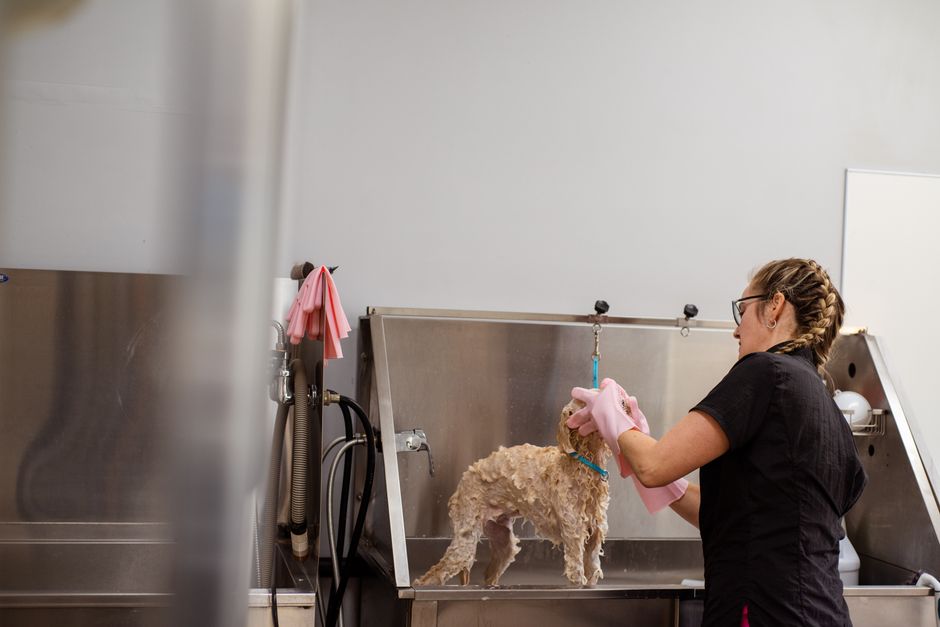
Sunday morning in Leeds. A Labradoodle is matted after a wet walk, the owner has ten minutes before the school run, and they type “dog groomer open today near me” into Google. They are not browsing breeds or comparing spa packages. They want a slot, a price band they can live with, and someone who picks up the phone.
That is the buyer your Google Ads programme has to win. High intent, short patience, and a diary that only pays when the dog is actually on the table. This playbook is built around Search campaigns that protect margin, kill soft enquiries early, and measure cost per booked groom rather than a pretty cost-per-lead chart.
Why UK groomers burn budget before the first clippers start
Search demand for grooming is real across London, Manchester, Birmingham and the rest of the UK, but a lot of it is the wrong job. People look for free advice on de-matting, “puppy first haircut” curiosity, mobile van comparisons they never book, and rescue centres hunting for discounted work. If your campaigns still match broad terms like “dog grooming” without a ruthless negative list, you fund research, not revenue.
The second leak is operational. Ads run through lunch when the salon is full and the phone rings out. Forms land on a homepage that lists every service from cats to hand-stripping, with no proof of turnaround time, breed experience, or parking. The click was expensive; the enquiry dies in voicemail. Plenty of accounts still optimise for form fills because the platform calls them conversions. Your bank account only cares about dogs in the diary.
Mobile drives most of those clicks. Owners search from the park or the car. If the landing page is slow, the click-to-call button is buried, or the offer in the ad does not match the first screen, you pay for a bounce. You also pay VAT on media and fees like everyone else in the UK, so wasted queries hurt harder than the dashboard admits. Treat irrelevant search terms and slow response as the same problem: both raise cost per booked job.
If you want a sharper read on how paid search should sit beside the rest of the funnel for this trade, skim HeyLead’s notes on Pet Groomers marketing and keep the focus on booked work, not vanity volume.
Build your Google Ads for UK pet groomers around booked appointments
Start with exact and phrase themes that sound like money: dog groomer near me, cat groomer [town], puppy first groom [area], de-matting [postcode cluster], mobile dog grooming [city]. Split mobile and salon if capacity differs. Separate brand terms so you do not let competitors siphon owners who already know your name. Layer location tightly to the postcodes you can actually serve same week; do not buy the whole city if your van only covers the north side. Where volume supports it, treat mobile pet grooming UK as its own theme so van radius, dayparting, and landing proof stay separate from in-salon capacity.
Negatives are half the craft. Build lists for jobs, wholesale, courses, DIY, “how to”, “salary”, “apprenticeship”, “kit”, “table”, “scissors”, and pure price shoppers you cannot profitably serve. Review search terms weekly at first, then keep the rhythm once waste drops.
Bid and budget with capacity in mind. Daypart around the hours someone answers: early evening enquiries after work often convert if you call back within minutes, but after-hours spend into a full voicemail box is charity for Google. Use call extensions and call-only where phone is the real booking path. Track calls with unique numbers and require a minimum duration so an 8-second “wrong number” does not train Smart Bidding.
Conversion design matters more than clever bid strategies on day one. Fire a primary conversion on booked appointment confirmed (calendar event, CRM stage, or staff-tagged call outcome), not on “thank you for your enquiry”. Enhanced Conversions and clean tag setup help when privacy tools strip signal. Automated bidding can work once you have enough true booking events; on thin data it will chase form spam. Manual or limited enhanced CPC while you clean tracking is often the honest move, even if it feels old-fashioned.
Ad copy should name the breed types you handle well, same-week availability when true, and a clear price entry or “from” range so tyre-kickers self-select. Send every ad group to a matched landing page, not the homepage. For ongoing UK Search management patterns that stay tied to pipeline rather than clicks, HeyLead’s SEM / Google Ads work is built around that discipline.
Get a free marketing audit - we review your search, ads, and landing pages and send back what to fix first.
Get a free audit
Landing pages, proof, and the five-minute call-back rule
The ad promise and the first viewport have to rhyme. If the ad says “same-week Labradoodle grooms in south Manchester”, the page should open on that offer, not a stock photo carousel and a 12-link menu. Show prices or bands where you can, breed examples, before-and-afters you own the rights to, Google review snippets, and a single primary action: call or book. Secondary links for full spa menus can wait below.
Forms should be short: name, mobile, dog breed or size, preferred day, postcode. Long questionnaires feel thorough and kill conversion on mobile. Instant Forms inside the ad platform can capture volume, but they often deliver softer intent and weaker context than a page that already sold the slot. Prefer the page when you need quality; use Instant Forms only if your team can qualify fast and your cost per booked job still works.
Response speed is part of the media plan. A groomer in Bristol who calls back in under five minutes during open hours will beat a prettier site that answers next morning. Script the first line: confirm breed, coat condition, and whether they need de-matting so you quote honestly. Track no-shows and cancellations back to campaign so you stop scaling the source that books ghosts.
When traffic arrives but the book button stalls, stop guessing. Session recordings and heatmaps show whether owners bounce at price, abandon half-filled forms, or never see the call button on a small screen. HeyLead Insights is built for that on-site behaviour view so you fix proof and friction with evidence. Pair it with basic Core Web Vitals hygiene; plenty of origins still fail the full set, and mobile lag quietly taxes every pound of CPC.
Two UK salon scenarios with the fix that actually moved the diary
A multi-table salon near Birmingham ran a broad “dog grooming” campaign into the homepage. CPC sat in a painful band for local services, and the team celebrated 40-plus forms a week. Most were “how much for a cockapoo” with no postcode, or people hunting £15 nail clips. Search term mining showed courses, jobs, and “grooming table for sale” eating budget. They rebuilt three ad groups: full groom + breed modifiers, puppy intro, and de-matting emergency. Negatives went deep on DIY and career queries. Ads pointed to a single landing page with “from” prices by size and a click-to-call sticky bar. Primary conversion became staff-confirmed bookings in the diary software, not form submit. Within roughly 11 days the form count fell, but booked full grooms from paid search rose and cost per booked job dropped enough to justify raising budget on the puppy theme only.
A mobile groomer covering parts of Edinburgh and Glasgow kept ads live until 10 p.m. because “that is when owners browse”. Calls hit voicemail; morning staff chased cold leads. They cut delivery to hours two people could answer, added call-only ads at peak commute times, and used a simple SMS auto-reply after hours with the next open booking window rather than a dead form. They also excluded postcodes outside the van’s profitable radius. Spend fell about a fifth; booked vans filled earlier in the week. The mechanism was not a clever auction insight. It was aligning impression share with human capacity.
-
Map every live keyword theme to one landing promise and one diary outcome.
-
Kill after-hours delivery unless a real human or reliable callback process exists.
-
Report weekly on cost per booked groom, show rate, and average ticket, not CPL alone.
If your pages still feel like a brochure, a short CRO pass on proof and mobile call paths usually returns more than another week of bid tweaks.
Patterns we see in audits
The short quotes below are illustrative composites drawn from patterns in account reviews. They are not quotes from named clients.
“Cost per booked groom dropped from £28 to £11 in six weeks once we dayparted and only credited diary-confirmed jobs.” - Owner, mobile grooming van, Greater Manchester (composite example drawn from common account patterns)
FAQ
What should I optimise for in Google Ads as a UK pet groomer?
Optimise for confirmed bookings in your diary or CRM, with call outcomes included when phone is the main path. Cost per lead and CTR are diagnostics. Cost per booked groom and contribution after product and staff time are the decisions.
How aggressive should negative keywords be?
Aggressive enough that you are slightly worried you blocked something useful, then you add back only terms that produced real jobs. Career, DIY, wholesale, and pure research queries rarely belong in a local groomer’s account.
Is Performance Max a good default for salon bookings?
Not as your only structure when you need tight local intent and phone bookings. Some accounts add PMax later for residual demand once Search is clean and conversion tracking is honest. Leading with uncontrolled asset coverage often blurs which queries actually pay.
How fast do we need to answer enquiries?
During open hours, minutes beat hours. Owners comparing two local results will take the first confident human who can offer a slot and a clear price path. Build staffing and dayparting around that truth.
Should ads go to the homepage?
Almost never for non-brand search. Match the query to a focused page with proof, price orientation, and one booking action. Homepage traffic is how you pay for confusion.
Free tools
DIY free tools for this playbook
Run these on the pages and campaigns this article covers, then fix what they flag before you scale spend or content volume.
Run these on this playbook
If the checklist shows a leak you cannot close in-house, request a free marketing audit.
Putting it to work
Pull the last 30-60 days of Google Ads search terms and mark each row booked job, soft enquiry, or junk. Pause or negative the junk themes, point the remaining spend at one matched landing page with click-to-call, and switch your primary conversion to confirmed bookings before you touch bids again.
When you want a partner to own the messy middle of query hygiene, booking-quality tracking, and landing proof for UK pet groomers so you are not babysitting wasted CPC every week, HeyLead can run that Search programme end to end. Start the conversation at [email protected].
Free marketing audit, or reach Martin directly:
Get a free audit Chat with us on WhatsApp · [email protected]