
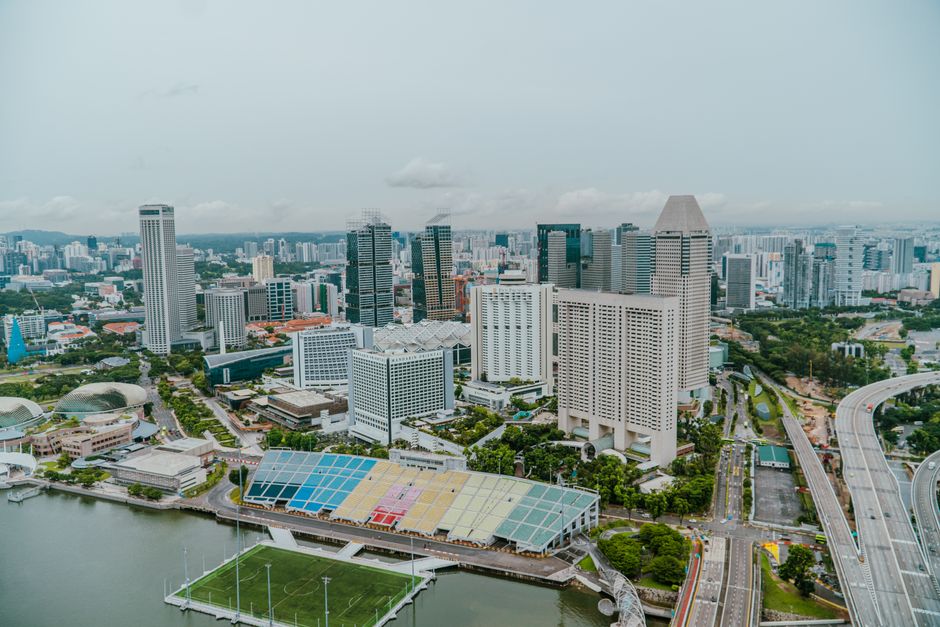
A facilities head in the CBD opens three tabs after lunch: one for a Grade A floor near Raffles Place, one for a light-industrial unit out west, and one WhatsApp thread with a colleague who already walked a site last week. They are not browsing lifestyle content. They want usable size, loading access, lease flexibility, and a human who replies before the internal shortlist closes. If your page loads slowly on mobile data, hides the contact path under a generic “Enquire now”, or shows stock skyline photos with no floor plate or fit-out proof, that tab closes. The enquiry never becomes a viewing, and the viewing never becomes a mandate.
Commercial real estate in Singapore runs on high-intent moments: people searching for office space for rent near MRT, warehouse units with clear height, retail frontage in a defined precinct, or a broker who already understands URA and building management realities. Paid search and organic listings can deliver those clicks. What decides whether the spend turns into booked work is almost always the page after the click: proof density, form friction, mobile speed, and how fast your team answers on WhatsApp or phone.
This is a practical playbook for landing pages built for commercial real estate in Singapore. It covers what to put on the page, what to measure each week, and how to judge success by viewings and instructions, not form volume alone.
Why CRE traffic in Singapore dies between the click and the viewing
Most teams do not lack enquiries. They lack enquiries that survive the first 30 seconds on site. A landlord’s asset manager comparing two Central office options will bounce if the hero claims “premium commercial space” with no NLA range, no floor plate PDF, and no building name or clear location cue. A logistics operator looking West wants ramp access, power, and ceiling height near the fold, not a long brand story about “partnering for growth”.
Mobile makes this worse. A large share of paid and organic clicks arrives on phones, often between site visits. When the page is heavy, the sticky call bar covers the CTA, or the form asks for company registration number, budget, and a multi-line brief before any human contact, you train serious buyers to message a competitor who answers on WhatsApp in minutes. Form volume can still look fine in the ad account while the diary stays empty.
Another quiet leak is the homepage habit. Sending every campaign for “office space CBD”, “B1 industrial Jurong”, and “retail unit Orchard corridor” to the same corporate homepage forces the visitor to reverse-engineer your inventory. Message match breaks. Cost per click keeps rising while cost per qualified viewing does not improve. You can spend well on media and still lose on the handoff because the landing page never answered the search intent in the first screen.
Tracking gaps hide the damage. If every form fires the same “lead” event, you cannot separate tyre-kickers from decision-makers who requested a floor plate. If WhatsApp sits outside conversion tracking, the channel that actually books viewings looks weak on paper. Marketing then defends CPL while principals ask why instructed work is flat. The failure mode is not “we need more traffic”. It is traffic that never meets proof, speed, and a clean path to a real conversation.
If you already know the media is fine and the page is the bottleneck, a focused pass on web and landing page design usually pays back faster than another campaign restructure.
The CRE landing page stack: proof, path, and Singapore-ready trust
Build one page per intent cluster, not one page for the whole firm. Office leasing near the CBD, industrial and warehouse West or North, retail street frontage, and capital markets or investment sales each need their own hero, proof, and offer. The headline should mirror the query language buyers type: floor size bands, use type, and area. Subcopy should name what happens next: floor plate on request, viewing slots this week, or a shortlist against three comparable buildings.
Proof blocks carry more weight than adjectives. Use real building photography, annotated floor plates where you have rights, recent transaction or mandate language that compliance allows, tenant-mix cues, and clear notes on access, parking, and loading. Reviews and client logos help when they are specific (“responded same day with NLA options for our 8,000 sq ft brief”) rather than generic five-star walls. For Singapore buyers, practical trust signals matter: UEN where appropriate, office address, named consultants, and a visible WhatsApp path with expected response windows during business hours.
Cut form fields aggressively. Name, work email or mobile, property type, size band, and preferred area often beat a ten-field qualification form. Offer WhatsApp and call as first-class options beside the form. Many corporate users will not complete a long web form between meetings, but they will send a short message with a target size and timing. State GST treatment only where you publish fees or marketing packages; for leasing enquiries, clarity on who responds and how fast usually matters more than tax copy.
Performance is part of conversion. Aim for pages that feel instant on 4G in a lift lobby: compressed images, restrained scripts, and stable layout so the CTA does not jump. “It looks fine on the office fibre” is not a standard. If Interaction to Next Paint stutters when someone opens a gallery or PDF link, you lose people who were ready to enquire.
Map each paid or organic cluster to a dedicated URL with matching H1, hero, and primary CTA. Keep secondary navigation light so the page stays a decision tool, not a tour of the whole agency. When you need a broader programme across listings and brand, tie the pages back into your overall Commercial Real Estate marketing system so creative, SEO landing URLs, and sales follow-up share the same proof and offers.
Get a free marketing audit - we review your search, ads, and landing pages and send back what to fix first.
Get a free audit
What to measure weekly so “leads” become viewings and jobs
Vanity metrics flatter weak pages. Weekly, pull a short set that connects media to diary outcomes. Start with landing-page conversion rate by intent cluster (office vs industrial vs retail), mobile vs desktop split, and scroll depth to the proof and CTA blocks. Then connect CRM or spreadsheet fields your team already uses: enquiry to first response time, response channel (WhatsApp, phone, email), viewing booked, second meeting, and instruction or exclusive.
Set a response SLA you can keep. For high-intent commercial enquiries in Singapore, same-morning replies during weekday hours are table stakes; many buyers expect a WhatsApp acknowledgement within minutes if your ads promise “talk to a specialist today”. Measure median first-response time, not the best case. A pretty page with a generic chatbot with no escalation to a named broker will inflate form counts and destroy trust.
Quality scoring should be light but honest. Tag enquiries that name size, timing, and use type as higher intent. Tag residential misclicks, student projects, and incomplete “call me maybe” notes separately so you do not optimise landing copy toward noise. If industrial pages attract the wrong vehicle type or power assumptions, fix the above-the-fold specs before you raise bids.
On the creative and SEO side, watch message match: does the search term or ad promise appear in the first screen? When CPC pressure rises, misaligned pages burn budget faster because every unqualified click is more expensive. When CPC pressure rises and on-page conversion holds flat, the wasted spend is almost always concentrated in mismatched landing URLs and missing negatives - check those two before you touch bids. Your weekly review should catch pages where click-through is healthy and on-page conversion is not.
Attribution will never be perfect across WhatsApp, calls, and long lease cycles. Still, unique phone numbers or call tracking on paid clusters, UTM discipline, and a mandatory “how did you hear about us” field on human qualification calls give you direction. Judge the page programme on cost per viewing and cost per instructed job over a rolling window, not on yesterday’s form spike alone.

Two Singapore page fixes: CBD office shortlist and West industrial brief
Scenario one: a boutique agency running search ads for CBD office space sent everything to the homepage. CPL looked acceptable. Viewings did not. The fix was a single landing page with size bands (1,500 to 3,000 sq ft and 3,000 to 8,000 sq ft), three anonymised comparable outcomes, a floor-plate request CTA, and WhatsApp pre-filled with “CBD office, size, timing”. They removed job-title and budget fields from the first step. In one cluster we tracked, the ratio moved from low single digits to mid-teens over the following month because brokers finally received briefs they could action without a chase email.
Steps that mattered:
-
Match ad headline language to the H1 and first paragraph.
-
Put NLA ranges and precinct cues above the fold.
-
Offer floor plate or shortlist as the micro-commitment, not “submit to learn more”.
-
Route WhatsApp and form to the same on-duty roster with a 15-minute acknowledgement target in business hours.
Scenario two: an industrial desk covering the West saw strong traffic on warehouse queries but high mobile exit rates. Session review showed users opening the page, pinching a blurry exterior photo, and leaving before the clear-height line. The team rebuilt the hero with a sharp loading-bay image, a three-spec strip (clear height, power, floor loading), and a sticky call or WhatsApp bar that did not cover the primary button. They added a short PDF fact sheet under 2MB instead of an embedded heavy deck.
Operational follow-through:
-
Compress media and defer non-essential scripts until after first paint.
-
Rewrite the CTA to “Check availability this month” with area and GFA fields only.
-
Tag each enquiry with estate or planning area so inventory matching is faster.
-
Review heatmaps weekly for rage clicks on non-linked “Download brochure” text.
In both cases the media plan barely changed. The page started doing the qualification work the form used to pretend to do, and brokers spent time on briefs that could become jobs.
Patterns we see in audits
The short quotes below are illustrative composites drawn from patterns in account reviews. They are not quotes from named clients.
“We kept celebrating WhatsApp volume until we watched a session where a facilities lead hit the brochure button four times on mobile and left. The button was not wired. Fixing that one control did more for viewings than another week of bid tweaks.” - Head of Marketing, commercial brokerage, Singapore
“Our industrial page ranked and still under-converted because we buried clear height below three paragraphs of firm history. Moving specs into a strip under the hero cut the back-and-forth before the first site visit.” - Founder, industrial real estate team, West Singapore
Free tools
DIY free tools for this playbook
Run these on the pages and campaigns this article covers, then fix what they flag before you scale spend or content volume.
Run these on this playbook
If the checklist shows a leak you cannot close in-house, request a free marketing audit.
Frequently asked questions
Do we need a separate landing page for every listing?
Not for every unit. You need a page per intent cluster and, where volume justifies it, for major assets or precincts you actively market. A clean cluster page with current examples and a path to request specific floor plates usually beats dozens of thin listing URLs that never get proof or speed work.
Is WhatsApp enough without a form?
WhatsApp can be the primary path if you track it and staff it. Keep a short form for buyers who will not message cold, and make sure both routes land in the same queue with the same SLA. Unmonitored WhatsApp widgets are worse than a simple form with email alerts.
How fast should the page be on mobile?
Fast enough that a buyer on mobile data can read size, location cues, and CTA without waiting on large galleries. Treat Core Web Vitals and real device checks as part of launch, not a once-a-year IT task. Heavy auto-play video heroes are a common self-own on CRE pages.
What proof is safe to publish?
Use rights-cleared photography, permitted building names, and outcome language your compliance team approves. Specific process proof (response times, how shortlisting works, what you need for a first viewing) converts well and avoids over-claiming returns or confidential deal terms.
Where does behaviour analytics fit?
When traffic is real and conversion is not, watch sessions instead of guessing. Watch for rage clicks on floor-plate images that are not linked to a PDF, and check scroll depth to confirm spec strips (clear height, NLA) are being read before drop-off - these two patterns appear most often on under-converting industrial pages. Tools in the vein of HeyLead Insights (session recordings, heatmaps, scroll and form abandon) show whether people stall on slow galleries, ignore trust blocks, or drop at a field they should not have to answer on first contact. Pair that with your analytics stack via a proper analytics setup so fixes are evidenced, not taste-driven.
Putting it to work
Pick your highest-spend commercial intent cluster from the last 60 days and rebuild only that URL: intent-matched hero, spec proof above the fold, three-field form plus WhatsApp, mobile speed pass, and a written response SLA tied to named owners. Launch it against the same ads or SEO entry points and compare enquiry-to-viewing rate for two weeks before you touch the rest of the site.
When you want that conversion layer owned end to end, from CRE-specific page structure through behaviour review on the leaks between click and booked viewing, HeyLead can run the landing page programme with you. Reach us on WhatsApp.
Free marketing audit, or reach Martin directly:
Get a free audit Chat with us on WhatsApp · [email protected]