
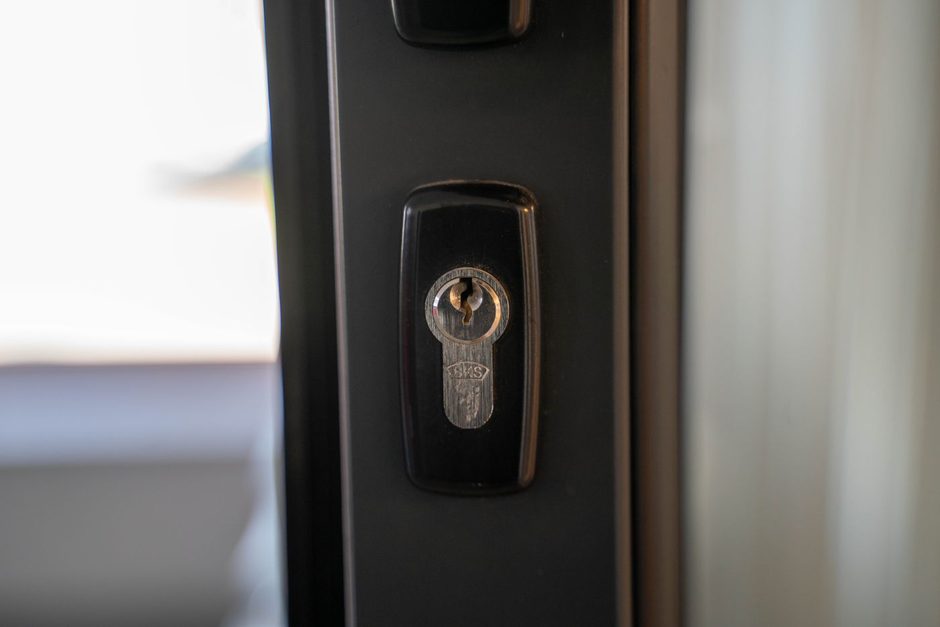
The fob won’t turn, the guard’s post at the void deck is empty, and it’s gone midnight on a weeknight. The phone in your caller’s hand is running low on battery, and the last thing they want to do right now is read their block and unit number out loud to a stranger on a call. They’d rather type it. Fast, quiet, done.
That’s the moment your landing page has to win, not nine the next morning when a form notification lands in your inbox. Lose that moment and you don’t lose a lead, you lose a job that was already decided, to whichever locksmith replied on WhatsApp in under a minute while your page was still loading a hero image of a shiny deadbolt. The caller isn’t comparing reviews at 1am. They’re comparing who answers first and who sounds like they’ll actually turn up.
Here’s the part most emergency locksmith pages in Singapore get backwards: they’re built like a brochure for someone browsing calmly on a laptop, phone number in the header, a contact form below the fold, maybe a gallery of past jobs. That design assumes the caller wants a conversation. Most of them want a destination: a chat window open, a van on the way, a price range before they commit to anything. Get that sequence right and the page does the job your front-of-house used to do. Get it wrong and you’re paying for clicks that bounce to a competitor’s chat bubble.
Emergency locksmiths who respond to calls in Bedok can build the landing page structure in this guide around that local audience. Target location: Bedok. The Bedok home services page contains market notes on how residents in the area search when they are locked out, what reassurance they need and how quickly they expect a reply. Use those notes to organise your Bedok landing page, your call button and your response promise.
Why your emergency callout page still makes someone dial a stranger at 1am
Walk through a typical Google Ads click for “locksmith open now singapore” and you’ll usually land on one of two pages: a generic homepage repurposed as a landing page, or a dedicated page that still leads with a phone number as the only call to action. Both have the same flaw. A phone call requires the caller to speak, to explain their situation out loud, and to trust that whoever picks up actually knows where Bedok Reservoir Road is. For someone locked out, possibly in a stairwell, possibly trying not to wake a sleeping household, that’s friction they didn’t sign up for.
WhatsApp doesn’t have that friction. It’s already the default way most people in Singapore reach a tradesperson, a food delivery rider, even a clinic to reschedule an appointment. When your page forces a call as step one, you’re asking the caller to use a channel they’d normally avoid, at the exact moment they have the least patience for it. We’ve seen locksmith accounts where the Google Ads click-through looked healthy and the conversion rate still sat well below what the spend should have delivered, and the landing page was the reason every time: no WhatsApp button above the fold, no way to send a photo of the lock, nothing that said “we’re open right now” in a way a stressed-out reader could register in two seconds.
There’s a second failure that compounds the first. Emergency locksmith pages in Singapore rarely ask what kind of building the caller is in, and that’s a genuinely local problem. An HDB block usually means straightforward access, maybe a quick word with a neighbour. A condo means a guardhouse, a visitor registration process, sometimes a call from the guard to confirm before your locksmith is even let past the barrier. If your page doesn’t capture that detail upfront, your technician finds out about the condo’s visitor policy when he’s already standing at the gate, and the callout that should have taken twenty minutes stretches well past that while he waits for approval. That delay shows up as a bad review, not as a landing page problem, but it started on the page.
Then there’s plain page speed, which still gets treated as a technical nice-to-have rather than a conversion lever. Google’s own May 2026 CrUX data shows only 55.9% of web origins pass all three Core Web Vitals thresholds. On a locksmith page loaded on patchy stairwell signal, a slow-loading hero image or a layout that jumps around while it finishes rendering isn’t a minor annoyance. It’s the difference between someone tapping your WhatsApp button and someone backing out to try the next search result.
What the page has to capture before your guy even starts the van
None of this means rebuilding your entire website. It means building (or fixing) one page that’s designed around the three things an emergency caller needs to do in order: get reassurance you’re actually available, say where they are, and reach you on the channel they already trust. Everything else on the page is secondary.
The fields that save you a callback
A locksmith landing page that converts well usually has a short capture step before or alongside the WhatsApp handoff, not a long form. The goal is to arm your dispatcher with enough information that the technician isn’t improvising at the door.
Core fields and proof elements for an emergency callout page
- 1A single WhatsApp button above the fold, pre-filled with a short message like "Locked out, need help now" so the caller doesn't have to type a greeting first.
- 2A quick toggle or two buttons: "HDB / landed" versus "Condo / commercial building", so your dispatcher knows whether to expect a guardhouse step.
- 3A postal code or area field instead of a full address form. It takes seconds and tells you which technician is closest.
- 4A live or clearly stated "open now" indicator, ideally tied to your actual roster, not a static "24/7" claim that reads as generic.
- 5A rough price range for the most common jobs: locked out of main door, broken key in lock, digital lock battery failure. Vague pricing is one of the top reasons callers message a second locksmith to compare before committing.
- 6One or two photos of a van or a technician in uniform, not stock photography of a generic toolkit. It signals you're a real local operation, not a reseller dispatching whoever's cheapest.
- 7A line that states licensing or years operating in Singapore specifically. Locksmiths here aren't regulated the way electricians are, so trust signals carry more of the weight.
- 8A clear callback or voice option for the minority of callers who still prefer to talk, positioned below the WhatsApp button, not instead of it.
Speed and structure: fixing the technical half of the page
Once the content is right, the page still has to load fast and read cleanly to Google, because a chunk of your emergency traffic is still coming from organic search and Google Business Profile, not just paid clicks. A page that’s slow to interact with, or one with a muddled heading structure, fights you on both fronts: slower conversions and weaker visibility for “locksmith near me” style queries that spike at odd hours.
Free tools to check your own callout page this week
Run those five checks against your current emergency page and you’ll usually find at least two or three issues worth fixing this month: an H1 that’s your business name instead of “24-hour locksmith Singapore, locked out and broken keys”, a meta description that was never written and defaulted to your homepage copy, or a Core Web Vitals score that’s fine on a fast office wifi connection and poor on a 4G signal three floors underground in a basement carpark, which is exactly where some of your callers are standing. If you want to see where callers actually drop off on the page itself, not just whether it loads, HeyLead Insights shows scroll depth and where someone starts filling a form and abandons it, which is often more useful than a speed score alone for deciding what to fix first.
A page redesign is one project. Keeping it tuned as your call volume shifts with weather, holidays, and ad spend is a different, ongoing job, and that’s usually where owners run out of hours in the week. If that’s where you’re stuck, our landing page and web design team can take the rebuild and the ongoing testing off your desk while you focus on actually fielding the jobs it brings in.
Get a free marketing audit. We review your search, ads, and landing pages and send back what to fix first.
Get a free audit
A one-van locksmith in Toa Payoh who stopped losing jobs at the guardhouse
Picture a small outfit running one van, a part-time helper, and a Google Ads budget that was never huge to begin with. The owner noticed something odd: his cost per click looked reasonable, his ad copy was decent, but a disproportionate share of enquiries that reached WhatsApp went quiet after the first message. Not rude, not rejecting the quote, just silent.
The mechanism turned out to be simple. His landing page had no way to flag that a caller was in a condo, so his technician would arrive, find a guardhouse, and need the caller to come down and sign them in, sometimes a ten to fifteen minute wait on top of the drive. Callers who were already anxious about being locked out, often standing in a lobby in their pajamas, would see that wait stack on top of everything else and start messaging a second number while they waited, just in case. Whoever replied and arrived first got the job. The original locksmith’s van was often already en route by the time the caller cancelled.
The fix wasn’t a full rebuild. It was adding the HDB/condo toggle to the WhatsApp message template, so the pre-filled text read “Locked out, I’m in a condo, may need visitor registration” automatically when that option was selected. His dispatcher could then warn the caller in the first reply to let the guardhouse know a locksmith was on the way, which cut the wait at the gate before the van even left the shop. Jobs that used to stall at the guardhouse started closing on the first message instead of the third. The page didn’t get faster or flashier. It just stopped assuming every caller lived in the same kind of building.
This is the pattern worth noticing: the fix rarely needs to be a page redesign. It needs to be the one field that’s missing, the one assumption baked into the layout that doesn’t match how half your callers actually live.
What dispatchers notice in the WhatsApp thread before a job gets booked
“The ones who send a photo of the lock before I even ask are the ones who book. If they’re just typing ‘help’ with no detail, I know I’m competing with two other chats on their phone right now.”
Dispatcher, two-van emergency locksmith operation
“We added the price range to the page because people were asking ‘how much’ before ‘how fast’. Turns out at 1am, money worry beats everything else, even the lockout itself.”
Owner, independent locksmith business
FAQs
Should the landing page push WhatsApp over phone calls entirely? No, keep both, but order matters. Put the WhatsApp button first and make it the visually dominant action, since it’s the lower-friction option for most callers. Leave the phone number visible for the callers who genuinely prefer to talk, usually older customers or anyone in a situation too urgent to type.
Do we need separate pages for HDB and condo callouts? Not separate pages, but the single page should ask the question early, ideally as a two-button toggle rather than a text field. That one answer changes how your dispatcher briefs the technician and can shave real time off the response.
How much should we show on pricing without a site visit? A range, not a fixed quote. Most callers aren’t shopping for the cheapest locksmith at 1am, they’re checking they can afford any locksmith at all. A believable range for the most common jobs, locked out, broken key, digital lock reset, removes that worry without boxing you into a number you can’t honour once the technician sees the actual lock.
Is it worth running Google Ads at all if organic “locksmith near me” traffic is already decent? Usually yes, because organic traffic skews toward daytime searches and planned jobs like rekeying, while paid search catches the true emergencies at the hours your organic rankings may not cover as reliably. The two channels are landing on the same page, so the page needs to work equally well for both.
What’s the single most common mistake on these pages? A phone number as the only call to action, with everything else, pricing, building type, proof of availability, missing entirely. It’s an easy fix and usually the highest-leverage one.
Putting it to work
Start this week by pulling up your current emergency callout page on your own phone, on mobile data rather than wifi, and timing how long it takes before you can see a way to message you. If it’s more than a few seconds, or if the only option is a phone number, that’s your first fix. Add the WhatsApp button, the building-type toggle, and a rough price range before you touch anything else on the page.
If the gap between a panicked click and a booked job is where you keep losing work, that’s exactly the kind of landing page and conversion problem HeyLead builds and maintains for trades businesses like yours, so the page is doing its job at 1am even when you’re not watching the dashboard. Chat with us on WhatsApp.
Free marketing audit, or reach Martin directly:
Get a free audit Connect on WhatsApp · [email protected]