
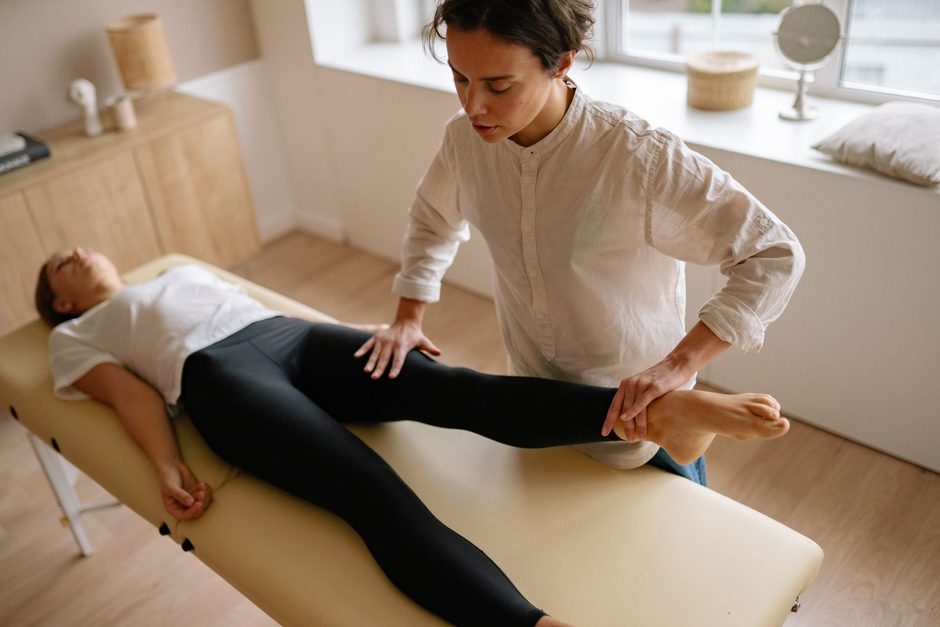
Clinic WhatsApp pings at 7:12am with “still have slots for paediatric physio this week?” The parent already compared three clinic pages, skimmed Google reviews for Central and East branches, and checked whether your team treats developmental delay or only sports rehab. That is how organic demand for Allied Health in Singapore actually starts: high-intent, mobile-first, and impatient about proof.
Digital marketing for Allied Health Singapore is not a generic “get more traffic” project. Physiotherapy, occupational therapy, speech therapy, dietetics, podiatry, and chiropractic clinics win when searchers who already know the modality find a clear service page, a real clinician profile, and a booking path that does not die in a contact form black hole. This playbook is the SEO version of that job: intent clusters, local and entity signals, content that ranks and converts, review proof, and a publishing cadence you can sustain without hiring a full-time content desk.
If you own the marketing number, the goal is booked assessments and follow-up series, not impressions. Organic search still does the heavy lifting for “near me” and condition-led queries across HDB towns, condos, and landed estates, while paid channels mop up surplus demand. Get SEO right and your cost per qualified enquiry drops; get it wrong and you fund competitors who simply made modality pages and entity signals clearer.
Where Singapore Allied Health clinics lose organic bookings before the diary fills
Most clinics do not fail because nobody searches. They fail because the SERP shows a thin homepage, a stock “our services” blur, and a phone number buried under a stock photo of a treadmill. Searchers comparing speech therapy for late talkers in Punggol or sports physio near Tampines bounce when they cannot see modality scope, age groups, languages spoken, or how first visits work.
Another failure mode is one URL trying to rank for every modality. A multi-discipline group stacks physio, OT, speech, and dietetics onto a single page with no distinct intent map. Google cannot confidently match that page to “paediatric OT evaluation Singapore” or “vestibular physiotherapy Woodlands.” You rank for brand terms and little else. Referrers (GPs, schools, coaches) also need clear pages they can forward; a vague homepage does not travel well on WhatsApp.
Local and entity SEO is still soft in many practices. NAP inconsistencies between Google Business Profile, clinic directories, and the website confuse both users and crawlers. Clinician bios lack credentials, AHPC-related clarity where relevant, special interests, and photos that look like real people. Reviews sit unread or unanswered. Schema is missing. Core Web Vitals drag on mobile, and fewer than six in ten origins globally pass all three Core Web Vitals thresholds. On a phone at lunchtime in the CBD, a slow booking form loses the parent who will try the next listing.
Measurement is the quiet killer. Teams celebrate organic sessions while the front desk cannot say which keyword cluster drove a completed first visit. UTM discipline is weak. Call and WhatsApp enquiries never rejoin Search Console data. You keep publishing blog posts about “wellness tips” that never map to a billable assessment. Volume becomes the vanity metric; booked work never shows up in the weekly review.
If your organic pages still send every click to a generic homepage, tighten the service architecture first. HeyLead’s SEO work for clinics starts with that intent-to-page map, not another batch of unfocused articles.
Intent clusters that actually mean a Singapore booking, not a browse
Build SEO around the jobs patients and caregivers are hiring you for. In Singapore Allied Health, those jobs cluster into a few durable buckets:
-
Modality + condition: “ACL rehab physiotherapy Singapore”, “stuttering speech therapy child”, “sensory processing OT evaluation”
-
Modality + life stage: paediatric, adult neuro, geriatric mobility, antenatal physio
-
Modality + place: Central, East, West, North, North-East, plus estate-level modifiers when you truly serve that catchment
-
Proof and logistics: first visit cost cues, GST-inclusive pricing clarity, languages, parking or MRT access, telehealth follow-ups, PayNow deposits - e.g. “does physio first session include assessment fee Singapore”, “speech therapy near Jurong East PayNow”, “OT clinic near Buona Vista MRT”
-
Referrer language: school OT reports, sports club clearance, post-surgery protocols
High-intent organic queries often convert faster than cold paid social because the searcher already named the service. Your job is to match one primary intent per landing URL, then support it with FAQs, clinician proof, and a single primary CTA (WhatsApp, call, or online booking). Secondary CTAs are fine; five competing buttons are not.
Map each cluster to a page type. Service pages own commercial head terms. Condition or programme pages own mid-funnel education that still ends in a booking. Location pages only exist when staffing, hours, and reviews are real for that branch. Blog posts should feed those money pages with internal links, not float as orphan “health tips” with no path to an assessment.
Watch zero-click behaviour. AI Overviews and answer-style results shrink some CTR even when you appear. That is why information gain matters: publish the specific protocol steps, what to bring to the first session, typical frequency of visits, and contraindications you can ethically state. Generic AI filler is everywhere (a large share of top pages now contain AI-assisted copy). Clinics that win add clinic-specific detail, clinician voice, and Singapore logistics competitors skip.
Free tools - try these yourself
Get a free marketing audit - we review your search, ads, and landing pages and send back what to fix first.
Get a free audit
The Allied Health SEO build: pages, entities, proof, and speed
Treat this as an operating system for organic demand, not a one-off redesign. The sequence below is what we implement when a multi-modality clinic needs booked assessments from search without burning the team on random content.
Checklist
-
Inventory modalities and catchments
List every billable service line (e.g. MSK physio, women’s health, paediatric OT, adult speech, sports podiatry). Note which branches in Central, East, West, North, or North-East can actually deliver them. Kill pages for services you no longer staff.
-
One URL, one primary intent
Create or rewrite a dedicated page per commercial cluster. Title and H1 name the modality and Singapore context. Lead with who it is for, what the first visit includes, and how to book. Avoid stuffing five unrelated therapies onto one scroll.
-
Entity SEO for clinic and clinicians
Align legal name, trading name, and Google Business Profile. Publish clinician pages with credentials, modalities, languages, and a short first-person note on approach. Link profiles to the services they deliver. Keep NAP identical across directories and site footer.
-
Proof above the fold
Surface review aggregates, recent Google review excerpts (with permission patterns your legal team accepts), insurer or corporate partner notes if accurate, and photos of the actual treatment rooms. Caregivers decide fast when they see social proof next to the CTA.
-
Booking path that matches Singapore behaviour
Offer WhatsApp enquiry and call on mobile, plus online booking if you can staff it. State response expectations (e.g. same-day replies on clinic days). Clarify GST 9% on listed fees when you publish prices. PayNow deposit instructions reduce no-shows for first assessments.
-
Technical floor
Fix indexation, canonicals, sitemap, and robots issues. Compress hero media. Improve LCP and INP on service templates. Implement LocalBusiness schema with the most specific applicable subtype - MedicalOrganization for the clinic entity, Physician or MedicalBusiness subtype for clinician pages - and validate in Google's Rich Results Test. Add FAQ schema only where content is visible. Mobile layout must keep CTAs sticky without covering content.
-
Internal links with commercial gravity
From every educational article, link to the assessment page with descriptive anchors. From the homepage, deep-link top three modalities. Cross-link related programmes (e.g. post-op knee physio to sports return-to-play) without creating circular fluff.
-
Review operations
After a completed series, ask for a Google review with a simple SMS or WhatsApp template. Reply to every review. Flag clinical complaints offline. Review velocity is a local ranking and conversion asset, not a vanity counter.
-
Tracking that ties to the diary
Tag booking confirmations, thank-you pages, and click-to-WhatsApp / click-to-call. Use consistent UTM conventions for any boosted organic URLs. Weekly, reconcile Search Console queries and landing pages against front-desk “new assessment” counts, not just GA4 sessions.
-
Publishing cadence you can keep
Ship two to four clinically accurate pieces per month that answer real caregiver questions, each feeding a money page. Human clinicians review claims. For multi-location groups that need region- and niche-aware articles without a giant writing team, HeyLead Auto Blogger can sustain that cadence under human strategy rather than random AI dumps.
Technical and local checks
When traffic still fails after the click, watch the page like a clinician watches gait. Session behaviour on service templates shows where caregivers stall: buried CTAs, long forms, weak proof. HeyLead Insights is built for that post-click evidence so you fix the leak instead of guessing from bounce rate alone.
Two clinic scenarios: modality focus and multi-branch entity cleanup
East-side paediatric OT practice. The owner ranked for brand and almost nothing else. Search Console showed impressions on “sensory integration OT Singapore” but the only page was a 400-word homepage. They split paediatric OT evaluation, handwriting and school readiness, and feeding therapy into three URLs. Each page opened with age range, session length, what parents should bring, and a WhatsApp CTA. Clinician bios named special interests. Within one quarter, organic enquiries that named OT (not generic “clinic”) became the majority of new assessments. The mechanism was not more blog posts. It was matching one commercial intent per URL and answering logistics parents actually ask at 9pm.
Weekly ops stayed simple: Monday glance at top landing pages and queries, same-day reply SLAs on WhatsApp leads from organic, and a monthly clinician review of two new FAQs grafted onto the evaluation page. They stopped measuring success as “organic users up 40%” and started measuring first-assessment bookings tagged to those three URLs.
Island-wide physio group with three branches. GBP listings disagreed on phone numbers. The site used one “Locations” page with a map embed and no unique content. Reviews mentioned Woodlands staff on the Central listing. They rebuilt branch pages with real hours, parking and MRT notes, modality availability per site, and embedded review highlights. NAP was standardised. Service pages linked to the correct branch CTAs. Indexation cleanup removed duplicate parameter URLs. Booked work shifted toward the correct catchment because searchers and Google finally saw three real entities, not one confused brand blob.
For multi-location Allied Health marketing that has to stay clinically accurate across pages, pair this architecture with a disciplined content system rather than random freelancers. That is the practical path behind sustainable Allied Health marketing programmes in Singapore: structure first, then cadence.

FAQs
How long before Allied Health SEO in Singapore shows booked assessments?
Expect technical and page-structure fixes to influence enquiry quality within weeks, while competitive head terms often need a few months of consistent content, reviews, and links. Treat 3-6 months as a realistic window for durable organic pipeline, not a one-week miracle.
Should we prioritise Google Business Profile or the website?
Both. GBP wins many local pack clicks for “near me” and modality + area queries. The website owns depth: protocols, clinician proof, multi-modality navigation, and tracking. Starving either side leaves a gap competitors will fill.
How do we keep content clinically accurate when we publish frequently?
Use a clinician-review workflow on every piece before it goes live: draft against real caregiver questions, have a treating clinician check claims, modality scope, and Singapore context, then publish only after sign-off. Keep a short internal checklist for credentials, contraindications you can ethically state, and links back to the right assessment pages. Tools like HeyLead Auto Blogger can help sustain cadence when volume is the bottleneck, but only under that same human editorial control.
What should we measure weekly?
Search Console clicks and queries by money page, organic-assisted new assessments from the diary, WhatsApp and call response times, review velocity, and Core Web Vitals on key templates. Sessions without booking linkage are a supporting metric only.
Do we still need paid search if SEO is working?
Often yes for brand defence, new modalities, and surplus demand. SEO lowers blended acquisition cost over time; paid covers gaps and tests offers. Keep landing pages aligned so neither channel dumps traffic on a generic homepage.
Putting it to work
Execution sprint
This week
- Pull 30-90 days of performance for Allied Health clinics (Search Console, ads, CRM, or call logs - whatever you have).
- Flag the top leak: wrong intent, weak page, slow response, or dirty conversion tracking.
- Ship one fix on the highest-traffic money path (page, campaign split, or response rule).
- Run the free tools below on that same URL or account and log the findings.
Free tools for this sprint
Next 30 days
- Expand the fix to the next one or two money paths only after the first one shows cleaner bookings.
- Align creative, keywords, or content with the same offer the page now states.
- Review booked outcomes weekly; cut anything that still only produces unqualified volume.
This week
-
Export Search Console queries for 90 days and tag which ones map to a real assessment type you sell.
-
Pick the single highest-intent cluster with no dedicated URL and outline that page (who, first visit, proof, CTA).
-
Run title, H1, and Core Web Vitals checks on your top three organic landing pages.
-
Align NAP across website footer, GBP, and two major directories.
-
Add click-to-WhatsApp events (or equivalent) so organic mobile enquiries are countable.
-
Draft one clinician-reviewed FAQ block for your busiest modality page.
Next 30 days
-
Ship or rewrite three modality pages with entity-rich clinician links.
-
Stand up a monthly publishing rhythm (human-reviewed) feeding those pages; use Auto Blogger only with editorial control if volume is the bottleneck.
-
Implement review request after completed care episodes.
-
Reconcile front-desk new assessments to organic landing pages in a simple weekly sheet.
-
Fix the worst mobile speed issues on booking templates.
Pull your last 90 days of organic landing pages next to the diary and mark which URLs actually produced first assessments. If the gap is modality architecture, entity consistency, or a publishing system that stays clinically sound, HeyLead does that work so your team can stay on patient care. Email [email protected] to start.
Free marketing audit, or reach Martin directly:
Get a free audit Chat with us on WhatsApp · [email protected]