
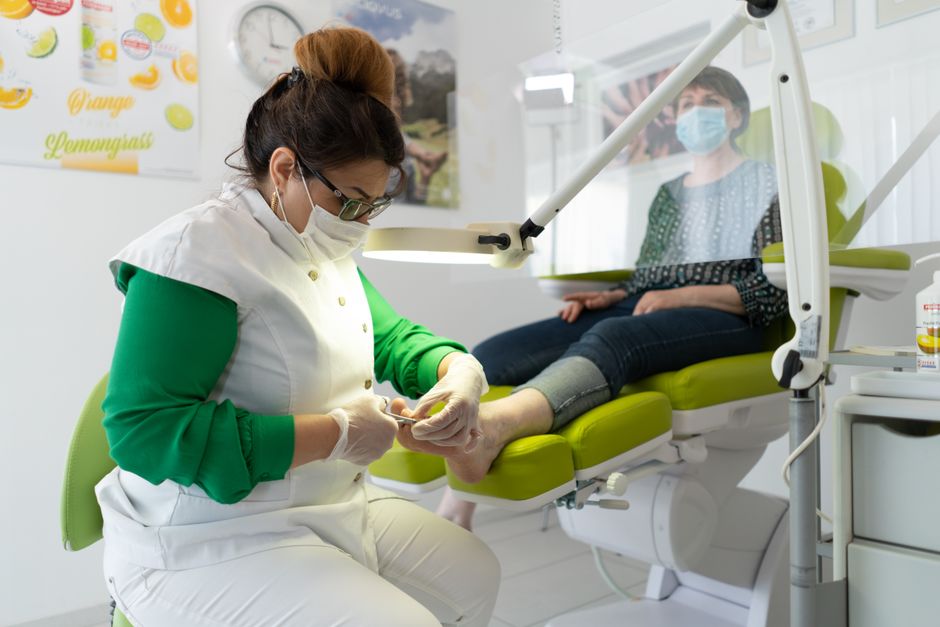
A heel that won’t take weight at 6am doesn’t wait for office hours. Neither does a toe that’s gone from “a bit tender” to swollen and red overnight, or a mum who’s just noticed her son walking on the outside edge of one foot. By the time any of these people pick up their phone, they’re not browsing. They’re trying to work out whether this needs a doctor, a podiatrist, or just better shoes, and they want an answer fast, from someone who can actually see them this week.
Here’s where most Singapore podiatry clinics leak that moment away: they rank fine for “podiatrist Singapore,” which is a fine term, but it’s a term for people who already know what they need. It’s not the term for the person Googling “why does my heel hurt when I get out of bed” at 6:15am. That person never lands on your homepage. They land on a forum post, a competitor’s blog, or a generic health site, and by the time the pain is bad enough to act on, they’ve already half-decided who to call. A new website won’t fix this. Neither will more ad spend pushed at the same two or three keywords everyone else is bidding on. The problem sits further upstream, in what your site is actually built to answer.
The clinics that fill their afternoon slots consistently aren’t the ones with the prettiest site. They’re the ones whose content matches the exact words a worried patient types at 6am, written in a way that’s compliant with how Singapore regulates healthcare advertising, and backed by a Google Business Profile and WhatsApp setup that turns that search into a booked consult the same day. That’s the whole game, and it’s buildable. Here’s how.
What a Singapore foot-pain search actually looks like before it reaches your clinic
Run a quick mental experiment. Someone in Toa Payoh wakes up with a stabbing pain in their heel. They’re not going to search “podiatrist.” They’re going to search “why does my heel hurt in the morning,” “plantar fasciitis treatment Singapore,” or just “heel pain won’t go away.” A parent whose kid’s toenail has gone yellow and thick searches “ingrown toenail removal Singapore cost” or “fungal nail treatment near me.” Someone managing diabetes who’s just noticed numbness searches “diabetic foot check Singapore,” often after a GP mentions it in passing. None of these people start with your clinic’s name, or even the word “podiatrist.” They start with the problem.
This matters because most podiatry websites in Singapore are built around services, not symptoms. The navigation reads “Our Services: Biomechanics, Nail Surgery, Diabetic Foot Care, Orthotics,” which is accurate and completely useless to someone who doesn’t know yet that their problem has a name. If your site’s only page about heel pain is a paragraph inside a general “conditions we treat” page, you’re invisible to the exact traffic that’s cheapest to win and most ready to book, because they aren’t shopping around on price, they’re trying to stop hurting.
The second thing that quietly kills bookings is WhatsApp friction. In Singapore, a lot of patients who find your clinic online won’t fill out a contact form. They’ll screenshot your Google Business Profile number, open WhatsApp, and type something like “hi, can I check if u got slot for ingrown toenail today.” If that number isn’t actively monitored during clinic hours, or if it forwards to a generic reception line that takes two hours to reply, you’ve already lost someone who was ready to pay today. SEO gets the right person to your page. What happens in the next ninety seconds on WhatsApp decides whether they become a patient or move to the next search result.
The nine-step build: turning symptom searches into booked consults
This is the part most clinics skip or half-do. You don’t need an agency retainer to start it, but you do need to actually finish the list, not just the first three items before something else gets urgent.
What has to be true before you start
-
You (or someone on staff) has admin access to your Google Business Profile, not just a login someone set up three years ago and forgot about
-
Your website’s CMS is editable by someone on your team, or you have an agency relationship that can turn pages around in days, not months
-
WhatsApp Business is set up on the number listed on your Google profile and your website, with someone checking it during clinic hours
-
You know, roughly, which conditions you actually want more of: heel pain and sports injuries pay differently than routine nail trims, and your content priorities should follow your appointment book, not guesswork
-
You’ve got Google Search Console connected to your domain, even if nobody’s looked at it in months
If any of these aren’t true yet, fix them before you write a single new page. Content built on top of a broken WhatsApp handoff or a Google Business Profile nobody owns is wasted effort.
How-to
- 1Pull your last 90 days of Google Business Profile search queries (Business Profile Performance tab) and every WhatsApp enquiry you can find. Write down the actual phrases patients used: "heel pain," "ingrown toenail," "flat feet child," "runner's knee" even though that's not a foot condition, whatever shows up. This is your real keyword list, not a guess from a tool.
- 2Group those phrases into 6-10 condition clusters: plantar fasciitis / heel pain, ingrown toenails, diabetic foot care, verrucas and warts, bunions, flat feet and paediatric gait, sports injuries, corns and calluses, fungal nails. These become your page architecture.
- 3Build a dedicated page for each cluster, not a shared "conditions" page with a paragraph each. Each page needs: what it feels like in plain language, when it's urgent versus when it can wait, what a first consult involves, rough cost expectations, and a clear WhatsApp or booking button above the fold.
- 4Write the page title and H1 the way a patient actually searches: "Heel Pain and Plantar Fasciitis Treatment in Singapore," not "Biomechanical Assessment Services." Use the condition-specific landing page as the thing that ranks, with your homepage ranking for the branded and generic "podiatrist Singapore" terms separately.
- 5Add an FAQ block to each condition page answering the three or four questions you get asked on the phone every week for that condition. This is also where structured FAQ schema earns you extra real estate in search results.
- 6Fix your Google Business Profile categories and services list to match these same conditions, not generic "Podiatrist" alone. Add photos of the actual clinic interior and team, and keep your opening hours accurate, especially around public holidays.
- 7Check your name, address, and phone number match exactly across your website, Google Business Profile, Facebook page, and any directory listing (HealthHub-linked GP referral pages, insurer panels, clinic directories). Even small mismatches, like "Blk 123" versus "Block 123," slow down how fast Google trusts your location.
- 8Run each condition page through a mobile page-speed check. Most Singapore patients are searching on a phone in a taxi or on the MRT, and a page that takes four seconds to load loses them before they ever see your WhatsApp button.
- 9Set up a simple tag in your WhatsApp or booking flow that captures which page the patient came from, so three months from now you can see which condition pages are actually turning into consults, not just traffic.
Free tools to run this yourself
None of this is exotic. It’s the same logic a GP clinic or a dental practice would use, adapted to the handful of conditions that bring people to a podiatrist. The reason most clinics never finish it isn’t difficulty, it’s that steps 3 through 6 take real hours across a few weeks, and the clinic manager doing it is also running the front desk. If this is the piece that keeps sliding to next month, a dedicated SEO program can carry the content build and the technical cleanup while your team keeps seeing patients.
Get a free marketing audit. We review your search, ads, and landing pages and send back what to fix first.
Get a free audit

Where MOH’s advertising rules decide what you can actually publish, and where builds usually stall
Podiatrists in Singapore operate under tighter constraints than a lot of other local service businesses, and this is the one regional detail that changes how you write every page. Licensed healthcare services here fall under advertising rules administered by MOH, and the practical effect for a clinic’s website is real: you generally can’t run patient testimonials claiming specific outcomes, you can’t promise or imply a cure, and you need to be careful with before-and-after language, especially around anything that reads as a comparative or superiority claim against other providers. This isn’t a reason to write thin, generic pages. It’s a reason to write informative ones instead of promotional ones.
In practice, that means your condition pages should read like a clear explanation from a clinician, not a sales page. Describe what plantar fasciitis feels like, what a consult actually involves, roughly how many sessions a typical case takes, and when someone should go to a hospital instead of a clinic. That kind of page tends to rank better anyway, because it answers the question behind the search instead of just asking for the booking. Google’s AI Overviews, which now surface on a large share of health-related searches, pull from pages that clearly explain a condition in plain terms, so writing for the patient’s actual question also happens to be the content format that gets pulled into those AI summaries.
Where builds usually stall isn’t the writing, it’s the follow-through. A clinic publishes six condition pages in a burst of motivation, then nothing changes for eight months because nobody’s checking which pages are actually converting. Or the pages get written but never linked from the homepage navigation, so they sit invisible even to people already on the site. Or the WhatsApp number on the new pages doesn’t match the one monitored at the front desk, and enquiries pile up unanswered in an account nobody checks. Each of these is small on its own. Together, they’re why a clinic that did “the SEO thing” six months ago still can’t say whether it worked.
If your site also handles anything beyond text, like a booking form or a symptom-checker quiz, it’s worth watching where people drop off rather than guessing. HeyLead Insights shows session recordings and scroll depth on pages like your condition landing pages, so you can see exactly where a patient hesitates before closing the tab instead of clicking “Book now” or opening WhatsApp.
What clinic staff notice once enquiries match the condition page
“We used to get a lot of calls where I had to ask three questions before I even knew what the patient wanted treated. Once the pages actually named the conditions, people started WhatsApping us saying ‘saw your page on ingrown toenail, can I come in tomorrow,’ and that’s a completely different conversation to start a consult with.”
- Clinic manager, two-location podiatry practice
“The thing nobody warned us about was how much slower the phone got on weekday mornings and how much busier WhatsApp got in the evening. If you’re not checking it after hours, you’re losing the exact person who just finished work and finally had time to deal with their foot.”
- Owner, solo podiatry clinic

FAQ
How long before SEO actually brings in new patients for a podiatry clinic in Singapore? Expect the first condition pages to start appearing in search results within 4-8 weeks, with meaningful enquiry volume building over 3-6 months as Google builds trust in the new pages and your Google Business Profile picks up the matching service categories. Clinics chasing competitive terms like “podiatrist Singapore” from a new domain should expect longer, which is exactly why condition-specific pages are the faster route.
Can we put patient testimonials or before-and-after photos on our website? Be cautious here. MOH’s advertising rules for licensed healthcare services restrict testimonials and outcome claims for most registered providers, so a direct quote promising a specific result is risky territory. Third-party Google reviews that patients post themselves sit in a different category to content you write and publish on your own site, so focus your on-page content on clear clinical explanations rather than promotional claims.
Should we target “podiatrist near me” or the specific conditions? Both, but they’re not interchangeable. “Podiatrist near me” and “podiatrist Singapore” belong on your homepage and Google Business Profile for people who already know they need a podiatrist. Condition terms like “heel pain treatment Singapore” or “ingrown toenail removal Singapore” belong on dedicated pages, because that’s where the bigger, less competitive, and more ready-to-book search volume actually lives.
Does WhatsApp actually affect our SEO? Not directly as a ranking factor, but it affects whether the traffic you win from SEO turns into booked consults, which is the only reason to do SEO at all. A fast, monitored WhatsApp line connected to a Google Business Profile with matching hours and categories is part of the same system as your content, not a separate project.
Do we need separate pages for each clinic location? Yes, if you operate more than one location. Each location needs its own page with its actual address, hours, and a map, feeding into its own Google Business Profile listing. Trying to rank one page for two addresses in different parts of Singapore confuses Google about which location to show for a nearby search, and you end up losing local visibility in both.
Putting it to work
This week, pull your last 90 days of Google Business Profile search queries and every WhatsApp enquiry your front desk can find, and sort them by the actual condition mentioned. Give yourself an hour. You’ll likely find two or three conditions that show up again and again with no dedicated page answering them, and that’s your starting list for the nine-step build above.
That gap between what patients are searching for by symptom and what your website actually has a page for is the exact thing that keeps good enquiries from ever reaching your front desk. HeyLead can run that keyword-to-page mapping, build the condition-specific pages within Singapore’s advertising rules for healthcare content, and keep the technical side (Google Business Profile, page speed, structured data) maintained as an ongoing program rather than a one-time project. If that’s useful, chat with us on WhatsApp.
Free marketing audit, or reach Martin directly:
Get a free audit Connect on WhatsApp · [email protected]