
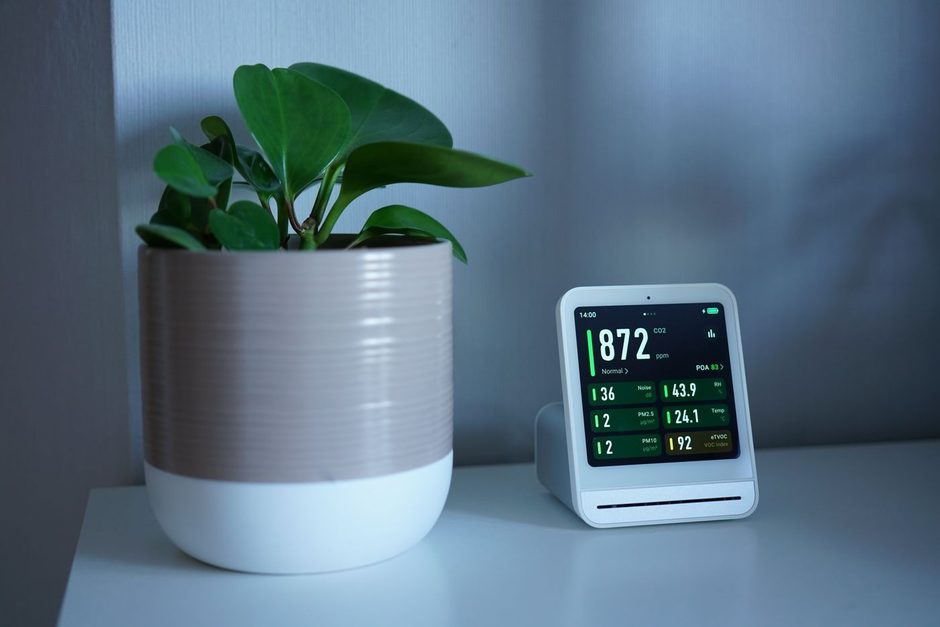
Most indoor air quality (IAQ) testing and remediation enquiries in Singapore do not start with a branded search. They start when a facilities coordinator for an HDB block, a condo MCST office, or a landed-home owner in the East gets a post-renovation checklist, a formaldehyde or PM2.5 concern after fit-out, or a tenancy requirement that suddenly cares about indoor air. WhatsApp is often the first reply channel. PayNow is how many smaller jobs settle. The marketing question is narrower than “rank for IAQ”: which organic queries, local entities, and proof assets actually turn into booked surveys and remediation jobs at a cost you can live with in SGD.
This piece is a benchmarks guide, not a vanity ranking report. You will get directional ranges for organic demand quality, local pack behaviour, page experience, content output, response speed, and booking conversion. Treat every number as a calibration band for Singapore home-services operators, not a promise. Your service mix (testing-only versus full remediation), service radius, and whether you emphasise formaldehyde, PM2.5, VOC, or broader IAQ will move the needle more than any national average.
If you already run SEO for an IAQ testing or remediation firm here, use the bands to stress-test your dashboard. If you are building the program from scratch, use them to decide what “good enough this quarter” looks like before you hire writers or buy more tools.
How Singapore buyers actually search before an IAQ job books
Intent in this niche clusters in three bands. High intent is short and operational: “IAQ testing Singapore”, “formaldehyde test Singapore”, “PM2.5 remediation condo”, “post renovation air quality inspect”, plus estate-adjacent variants when a managing agent is shopping for a preferred vendor list. Mid intent sits on education pages: health thresholds, HDB or condo ventilation quirks, what a continuous monitor shows versus a one-off sample. Low intent is broad indoor-air or “stuffy flat after reno” language that rarely books a crew without a strong filter on the landing page.
Local and entity SEO matter more than most pure content plays. Google needs a clear business entity: consistent NAP, service areas that match how you actually dispatch (Central, East, West, North, North-East rather than “all Singapore” fluff), and Google Business Profile categories that do not bury you under generic contractors. Reviews that name the job type (formaldehyde test, PM2.5 assessment, post-reno clearance, remediation follow-up) outperform five-star fluff. Photos of plant rooms, unit sampling setups, and landed-home jobs beat stock lab imagery.
Zero-click pressure is real in 2026. AI Overviews sit on a large share of informational queries, and many health-adjacent searches never reach a click. That does not kill commercial SEO. It concentrates value on pages that answer the booking question in the first screen: who you serve, typical timeline from enquiry to survey, what proof you show, and how fast someone replies on WhatsApp. Impression share without enquiry share is a vanity band. Track branded plus high-intent non-brand sessions that reach a form, call, or WhatsApp click.
Directional organic quality bands for a specialised IAQ testing and remediation operator in Singapore (steady program, not a brand-new domain):
-
Share of organic sessions from high-intent commercial queries: aim 25-45% of total organic once the site is mature; under 15% usually means you are ranking for air-quality essays that never book.
-
Organic enquiry rate (form + click-to-call + WhatsApp) on commercial landing pages: 2-6% is a common working band for home-services technical niches; under 1% on a dedicated IAQ or formaldehyde page is a page or offer problem, not a “need more traffic” problem.
-
Survey-to-job close on organic-sourced enquiries: often 20-40% when response is fast and the crew can quote clearly; much lower when you only sell “free advice” with no next step.
-
Time-to-first-response on WhatsApp or phone during business hours: under 15 minutes is the band that protects organic CPL; over an hour and paid competitors with weaker rankings still win the job.
Currency context stays simple. Report CPL and cost per booked survey in SGD, and if you show package pricing on-page, be ready for GST 9% questions from corporate buyers. Do not hide fees in PDF-only quotes if your SERP competitor shows a clear starting range.
Where IAQ SEO numbers go soft before rankings do
The failure mode is familiar. Rankings climb for a handful of educational URLs. Monthly organic sessions look healthier. The report celebrates positions. Booked testing and remediation work does not move. What broke is usually one of four mechanisms: wrong intent mix, thin local proof, slow handoff after the click, or measurement that stops at “form submit”.
Wrong intent mix shows up when most organic landings are long explainers with no Singapore-specific dispatch story. A reader finishes the article and Googles a competitor who answers in five minutes on WhatsApp. Thin local proof shows up when the page never mentions HDB plant rooms, condo MCST process, or landed-home access constraints for sampling and remediation. Slow handoff shows up when the only CTA is a desktop form and mobile users bounce. Broken measurement shows up when UTM hygiene is missing, call tracking is off, and sales marks every WhatsApp lead as “referral”.
Page experience is part of the benchmark story, not a side quest. Technical service pages stuffed with uncompressed before/after galleries often fail INP or LCP on mid-range Android devices common in field teams and managing agents. If your commercial URL is slow, organic CPC-equivalent value leaks even when you “rank”.
Content volume without information gain is another soft number. A large share of top-ranking pages now include AI-assisted draft, but thin rewrites of the same IAQ FAQ do not move booking rate. Information gain in this niche looks like a clear post-mitigation-style retest path after formaldehyde remediation, a one-page checklist of what a condo MCST typically requires before approving contractor access, or a plain-language map of how a managing-agent decision chain differs from a direct homeowner WhatsApp enquiry-including who signs off on sampling points and who pays. Singapore buyers want local process, contractor framing you can stand behind, and proof of completed work. Volume is a dead metric if every URL says the same thing.
If organic traffic is rising while booked surveys stay flat, fix the post-click path before you commission another 20 articles. A short pass with behaviour data (scroll depth, rage clicks on the quote button, form abandon) often explains more than another keyword spreadsheet. HeyLead Insights is built for that kind of session-level read when you need evidence instead of opinions.
Get a free marketing audit - we review your search, ads, and landing pages and send back what to fix first.
Get a free audit

Benchmark scorecard: ranges that keep IAQ SEO honest
Use this as an audit scorecard. Score each line green, amber, or red against your last 90 days. The point is not perfection. The point is knowing which band you are actually in before you scale content or claim “SEO is working.”
Audit scorecard
-
High-intent organic share Pull Search Console queries that map to IAQ test, formaldehyde, PM2.5, remediation, post-reno clearance, and “Singapore” or estate modifiers. Target 25-45% of clicks from that commercial set once the site is past the first six months of focused work. If educational queries dominate clicks above 70%, your content calendar is feeding research, not pipeline. Rebalance internal links and titles toward commercial hubs, not more science essays.
-
Local pack and GBP health For primary commercial terms, track whether you appear in the local pack on mobile from the districts you actually service. Weekly GBP posts are less important than review velocity and photo freshness. A practical band: at least 2-4 new job-specific reviews per month once volume exists, with owner replies inside 72 hours. Incomplete services list or wrong primary category is a red flag regardless of domain authority.
-
Commercial landing conversion Dedicated IAQ testing and remediation pages should convert organic visitors in a 2-6% enquiry band when traffic is truly commercial. Homepages that try to sell aircon servicing, general waterproofing, and IAQ in one scroll usually sit under 1.5%. Split the offer. Put WhatsApp and call primary on mobile. State response window and typical survey lead time in Singapore working days.
-
Proof density above the fold Count concrete proof units in the first viewport and immediately below: named job types, districts served, retest or clearance process, crew credentials you can defend, and review snippets that mention formaldehyde, PM2.5, or indoor air. Aim for 4-7 proof units before the long FAQ. Pages with only a stock hero and a contact form underperform even with strong rankings.
-
Core Web Vitals on money URLs Money URLs should pass LCP, INP, and CLS on mobile field devices, not only on a lab desktop. If you fail, compress install galleries, defer non-essential scripts, and kill chat widgets that block the first tap on WhatsApp. Treat a fail on the main IAQ or remediation URL as a conversion problem equal to a weak headline.
-
Content cadence versus information gain A sustainable band for a specialised SG operator is often 2-4 substantial, localised pieces per month plus continuous improvement on the commercial hubs, not 30 thin posts. Each URL should add something a competitor page lacks: a process diagram for condo access, a checklist for managing agents, or a clear post-remediation retest path. If drafts are AI-assisted, human edit for E-E-A-T and local accuracy is non-negotiable.
-
Response and booking ops tied to organic Organic CPL only matters if someone answers. Benchmark first response under 15 minutes in business hours and same-day qualification for survey slots when capacity exists. Track booked surveys per 100 organic enquiries. If that ratio sits under 15% with decent traffic, the leak is sales process or quote clarity, not rankings.
-
Attribution hygiene Every commercial landing needs clean UTM defaults for any boosted distribution, GA4 events for WhatsApp click, call click, and form submit, and a simple CRM or sheet field for “organic - IAQ”. Without that, you will misread SEO ROI when a managing agent calls the main line after reading a blog post. Directional target: 80%+ of known web enquiries tagged with a usable source within 30 days of process cleanup.
DIY playbook
-
Export 90 days of Search Console queries. Tag each as commercial, local-commercial, educational, or junk. Compute click share by tag.
-
List your top three money URLs. Run Core Web Vitals and title or H1 checks. Fix the worst URL first.
-
Rewrite the primary IAQ / remediation landing page proof block for Singapore: HDB, condo, landed, WhatsApp, survey lead time, retest or clearance.
-
Align GBP services and photos to real jobs. Request reviews that name the service, not only “friendly crew”.
-
Instrument WhatsApp and call clicks as conversions. Spot-check 20 leads for source truth.
-
Plan one month of content around gaps competitors leave (condo MCST access process, post-reno formaldehyde testing, PM2.5 follow-up), not synonym spam.
-
If publishing capacity is the bottleneck, put a human-led cadence system in place rather than random guest posts. HeyLead Auto Blogger exists for niche and region-aware article flow under strategy, not unattended junk.
Free tools - try these yourself
When you want a specialist team to run the organic system end to end for this trade, start from the industry page on Radon Mitigation marketing and map it to your Singapore dispatch reality rather than a generic home-services template.
Two Singapore scenarios where the ranges changed the decision
Hypothetical example - Scenario one: an illustrative two-crew IAQ operator covering East and North-East, including Tampines and Punggol condo work. Organic sessions rose 38% over four months after a blog push. Booked surveys from organic stayed almost flat. The mechanism was blunt. Sixty-one percent of new clicks came from a single health explainer that ranked, while the commercial IAQ testing URL sat on page two with a title aimed at “indoor air quality tips.” They collapsed three thin posts into the money page, added MCST-friendly process steps for sampling access, moved WhatsApp above the fold, and fixed LCP by cutting a 4MB hero gallery. Ninety days later, commercial query click share moved from 14% to 33%, and organic-sourced surveys roughly doubled without a matching traffic double. The lesson: traffic band up, intent band wrong.
Hypothetical example - Scenario two: an illustrative landed-home focused firm in the West with strong word of mouth and a weak entity footprint. They ranked for brand terms only. GBP had eight generic reviews and no services list. After a six-week entity sprint (services, geo pages that only claimed districts they truly covered, review asks after each clearance retest, schema on the main service URL), local pack visibility on “formaldehyde test Singapore” style queries became intermittent then stable on mobile for their core map area. Enquiry volume was still modest in absolute terms, which is normal in a specialised niche, but cost per booked survey from organic beat their previous reliance on sporadic directory leads. They stopped judging SEO by total sessions and started judging it by tagged WhatsApp enquiries that reached a site visit within 48 hours.
Neither story needed a fabricated “study.” Both are labelled illustrative scenarios using honest bands: intent mix, proof, speed, and local entity completeness.

FAQs
What organic CPL band should an IAQ testing or remediation company in Singapore expect?
There is no single national tariff. Specialised home-services organic enquiries often land cheaper than aggressive paid search once rankings are real, but early months can look expensive if you count content and setup labour. Judge cost per tagged enquiry and cost per booked survey in SGD over 90 days, not week-one traffic. If organic enquiries convert to surveys in the 20-40% band with fast WhatsApp response, SEO usually clears the bar against directories and cold outbound.
How long before commercial IAQ keywords move in Singapore?
For a site with clean technical foundations and real local proof, expect meaningful movement on mid-competition commercial terms in roughly 3-6 months of consistent work. Brand-new domains or thin sites take longer. Anyone promising page-one commercial wins in a week is selling risk, not a program.
Should we prioritise blog volume or service page depth first?
Service page depth and GBP entity health first. Blogs support information gain and internal links after the money URLs convert. A high volume of near-duplicate AI posts will not fix a 0.8% converting IAQ or remediation page.
Do AI Overviews make SEO pointless for IAQ?
No. They punish thin informational copy and reward clear entities, cited expertise, and pages built to book work. Track enquiry outcomes, not only blue-link CTR, and keep commercial pages unmistakable.
What should we track weekly versus monthly?
Weekly: response times, tagged enquiries, GBP review or Q&A issues, CWV regressions on money URLs. Monthly: intent mix in Search Console, landing conversion rates, booked surveys by source, content that earned links or secondary rankings. Avoid living inside position-only spreadsheets.
Putting it to work
Execution sprint
This week
- Pull 30-90 days of performance for IAQ (Search Console, ads, CRM, or call logs - whatever you have).
- Flag the top leak: wrong intent, weak page, slow response, or dirty conversion tracking.
- Ship one fix on the highest-traffic money path (page, campaign split, or response rule).
- Run the free tools below on that same URL or account and log the findings.
Free tools for this sprint
Next 30 days
- Expand the fix to the next one or two money paths only after the first one shows cleaner bookings.
- Align creative, keywords, or content with the same offer the page now states.
- Review booked outcomes weekly; cut anything that still only produces unqualified volume.
This week
-
Tag 90 days of Search Console queries into commercial versus educational and write the percentages on one slide.
-
Run Core Web Vitals, title, and H1 checks on your top IAQ or remediation URL and fix the worst technical issue.
-
Add or rewrite proof and WhatsApp response expectations for HDB, condo, and landed contexts (testing access, MCST process, clearance retest).
-
Turn on or verify WhatsApp and call click events; sample 15 recent leads for source truth.
-
Request two job-specific reviews tied to completed tests or remediation jobs.
-
Use the free local SEO checklist and competitor gap tools above to list five concrete page fixes, not five new blog ideas.
Next 30 days
-
Rebuild internal links from educational winners into the commercial hub.
-
Publish two high-gain local pieces (process and proof), not ten thin FAQs.
-
Stabilise a publishing cadence you can sustain, with human review on every URL.
-
Reconcile organic enquiries to booked surveys in SGD including GST conversations where corporate buyers ask.
-
If behaviour on the landing page is still opaque, review session evidence before the next content spend.
Pull your last 90 days of organic enquiries beside booked IAQ surveys and score them against the intent, conversion, and response bands above. If the gap is the unglamorous loop of local entity SEO, commercial page proof, measurement, and steady niche publishing in Singapore, a partner like HeyLead can own that operational load while you keep dispatch and quoting tight. Our APAC support coordinates with an offshore specialist team-start a conversation on Chat with us on WhatsApp.
Free marketing audit, or reach Martin directly:
Get a free audit Chat with us on WhatsApp · [email protected]