
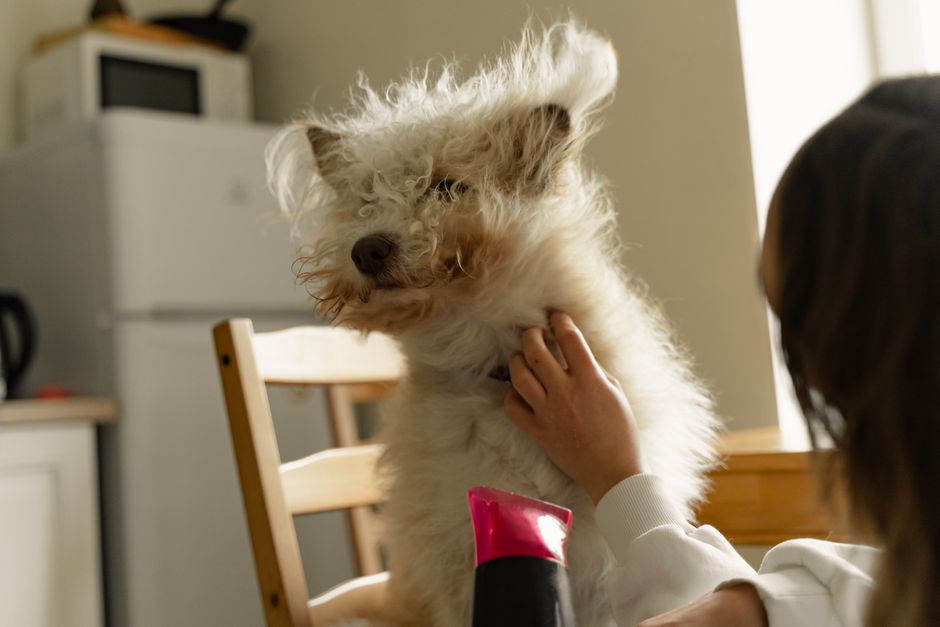
A cockapoo starts matting behind the ears two days before Chinese New Year, and the owner isn’t thinking about grooming philosophy or five-star reviews. She’s standing in the kitchen with the dog scratching at her ankle, thumbing “dog groomer near me open this week” into Google at half past nine, already annoyed she left it this late.
That search is the whole business. If your ad shows up and she clicks, you haven’t won anything yet - you’ve bought three minutes of her attention. What happens in those three minutes decides whether she books a slot or closes the tab and tries the next listing. Miss that window and it doesn’t show up as a missed click in your Google Ads dashboard. It shows up as an empty 11am table on a Tuesday, a groomer getting paid to wait, and a CPC that keeps climbing because the account never learns what a real booking actually looks like.
Here’s the part most grooming salons in Singapore get backwards: the ad doesn’t need to be clever. It needs to hand that searcher straight into the channel she’s already going to use anyway, which in Singapore is almost never a contact form. It’s WhatsApp. Get that handoff wrong and every other optimization in the account is rearranging deck chairs.
Why the ad isn’t what loses you the booking
Most grooming salons here run a perfectly decent Google Ads campaign and still can’t explain why the diary doesn’t match the spend. The ad copy is fine. The keywords are reasonable. The budget isn’t the problem. The problem sits in the three or four minutes after the click, and almost nobody audits that gap because it doesn’t live inside the ads platform.
In Singapore specifically, that gap is a WhatsApp-shaped hole. A pet owner searching for a groomer wants to send a photo of the matted coat, ask if you can fit a Shih Tzu in before 6pm, and get a reply in minutes - not fill in a form and wait for a callback. If your landing page sends her to a “Contact Us” page with a form and a generic enquiry box, she’s gone before she finishes reading it. She’ll open a new tab, search again, and message the next salon on WhatsApp instead.
Mobile matters here more than most grooming owners realise. She’s doing this search standing in a kitchen, in a lift lobby, on the MRT. Page speed on mobile is the difference between her messaging you and giving up. Only 55.9% of web origins passed all three Core Web Vitals in Google’s most recent Chrome User Experience Report, which means a slow, image-heavy grooming page is the rule, not the exception - and every second of load time between her tap and your WhatsApp button is a second she’s deciding whether to bother.
Then there’s GST. A Google Ads landing page that quotes “from $38” without saying whether that’s before or after GST sets up a quote-shock conversation on WhatsApp twenty minutes later, when the real price comes back higher than she expected. That mismatch doesn’t just cost you the booking - it costs you the ad spend that got her there in the first place, because she won’t come back to that page a second time.
Six mistakes that quietly drain a Singapore grooming account
These are the ones we see on repeat when we pull apart a grooming account here. None of them are exotic. All of them are expensive, and most compound each other.
Common mistakes
-
1Sending the click to a homepage instead of a WhatsApp-first page
The ad promises "same-day dog grooming" and lands on a general homepage with a navigation bar, a gallery, and a buried phone number. The searcher came to do one thing - message you about her dog - and the page makes her hunt for it. Build a single landing page per service or breed category (small dog, large dog, cat grooming, de-matting) with a WhatsApp button above the fold that pre-fills a message like "Hi, I need a groom for my [breed], is [date] available?" That one change removes the thinking she doesn't want to do.
-
2Conversion tracking that's blind to WhatsApp clicks
Most accounts only count a form fill or a phone call as a conversion. But if nine out of ten of your real bookings start as a WhatsApp click, Google's bidding algorithm is optimising against a signal that barely exists. Set up a click-to-chat trigger through Google Tag Manager on your wa.me link, fire it as a conversion action, and feed that into Smart Bidding alongside Enhanced Conversions. Without this, you're paying for clicks and asking the algorithm to guess what a booking looks like.
-
3Broad match with no negative list for courses, jobs, and DIY
Singapore has a real market of people searching "dog grooming course", "pet groomer salary", "dog grooming kit", and "pet grooming academy Singapore" - none of whom want to book an appointment. On broad match, your ad shows for all of it. Build a negative keyword list that excludes course, academy, diploma, training, salary, jobs, kit, scissors, and DIY, and review the search terms report every couple of weeks to catch new leaks before they eat a meaningful share of budget.
-
4One island-wide campaign ignoring mobile versus shop-based intent
Singapore is small, but nobody's crossing the island in traffic for a groom when three salons sit within a ten-minute drive. A searcher typing "mobile pet groomer" wants someone who comes to her condo or HDB block; a searcher typing "pet groomer Tiong Bahru" wants a shop she can walk into. Running both intents through one campaign with one landing page means neither searcher sees messaging that matches what she actually wants. Split the campaigns, split the ad copy, and if you run a mobile grooming van, say so in the headline.
-
5Quoting a price that doesn't show GST
An ad or landing page that says "from $35" and leaves out GST sets up a worse conversation later, when the WhatsApp quote comes in higher than expected and the owner feels like she's been baited. State clearly whether prices are before or after GST on the landing page itself, not just on an invoice she sees after she's already committed to the visit. It's a small line of text that prevents a no-show.
-
6Running the same ad and offer for months without touching it
Creative fatigue shows up as rising CPC and CPM well before it shows up as fewer bookings, which is exactly why it gets missed - the lead count looks fine right up until it doesn't. If your headline and offer haven't changed in a quarter, Google is paying more for the same attention and you won't see the damage in your weekly glance at the dashboard. Rotate between two or three offers (first groom discount, de-matting special, senior dog rate) and watch CPC trend, not just conversions.
If you want a quick gut check on the technical side of your landing pages before you touch bids or budgets, HeyLead’s free Core Web Vitals checker and SERP snippet preview tool will show you exactly what a searcher sees and how fast your page loads on the phone she’s actually holding.
Get a free marketing audit. We review your search, ads, and landing pages and send back what to fix first.
Get a free audit
Fixing this in order: tracking first, then the bleed, then the page
Owners usually want to fix the thing that feels most visible - the ad copy, a new offer, a bigger budget. That’s almost never the right order. Fix tracking before anything else, because every decision downstream depends on it. If Google doesn’t know what a real booking looks like, raising your budget just buys more of whatever it’s currently optimising for, which might be form fills from people who never show up.
Once tracking is honest, stop the bleed. Negative keywords and a split between mobile and shop-based campaigns cost nothing extra to fix and usually free up 15 to 25% of spend within the first couple of weeks, simply by not paying for clicks that were never going to become a booking. This is the cheapest win in the whole list and most salons skip straight past it to chase new campaigns instead.
Only after tracking is clean and the obvious waste is cut does it make sense to touch the landing page and the WhatsApp handoff. Rebuilding a page before you can measure whether it’s working is just guessing with better design. And only after that - once the page converts and the account has a real baseline - does creative refresh start to matter. Refreshing ad copy on top of a broken tracking setup just makes the noise prettier; it doesn’t fix the signal.
Picture a two-groomer home-based salon operating out of a condo in the east, a setup we see a lot of in Singapore. The owner was running Google Ads with a healthy budget and a contact form on the landing page, and couldn’t understand why enquiries looked fine but the diary stayed patchy. The fix wasn’t more budget - it was replacing the form with a WhatsApp button, tracking that click as the real conversion, and adding six negative keywords that had quietly been pulling in course and training searches for months. Within a few weeks, the diary started filling earlier in the week instead of only at the last minute, because the account finally knew what a booking looked like and could chase more of it.
If you’re sending traffic to a page but still can’t tell where people drop off before messaging you, that’s worth a closer look at the session itself rather than another guess at copy. HeyLead Insights shows scroll depth and where visitors hesitate on a landing page, which is often the fastest way to see whether the WhatsApp button is actually visible on the phone she’s holding or buried below a gallery nobody scrolls past.
For salons running their own accounts without a dedicated media buyer, a Google Ads management partner is often less about running the campaigns and more about catching this kind of drift before it costs another month of spend.
What groomers say about the WhatsApp scramble
“Our ad budget looked fine every month, but I had no idea half our ‘leads’ were people asking about becoming a groomer, not booking one. Nobody told me that until we actually read the search terms report.” - Owner, two-chair grooming salon, Bishan
“Customers message us a photo of the dog before they even ask the price. If your website makes them find a phone number first, you’ve already lost them to whoever replies first on WhatsApp.” - Manager, mobile pet grooming service
FAQ
How much should a Singapore pet grooming business budget for Google Ads? There’s no fixed figure that fits every salon, but most small grooming businesses here start seeing a usable signal once they’re running a few hundred dollars a week consistently, with clean WhatsApp conversion tracking in place. Spending more before tracking is fixed just scales the guesswork.
Should I track WhatsApp clicks as a conversion in Google Ads? Yes, and for most grooming accounts it should be the primary conversion, not a secondary one. If the majority of your real bookings start as a WhatsApp message rather than a form fill, your bidding needs that signal to optimise toward the right outcome.
Do negative keywords actually matter for a small account? They matter more for a small account, not less. A limited daily budget spent on “dog grooming course” searches is budget that never had a chance to reach someone looking to book, and small accounts can’t absorb that waste the way a bigger budget might.
Is it worth running Meta Ads alongside Google Ads for a grooming salon? It can work well for retargeting past customers around seasonal spikes, but most grooming salons in Singapore get more direct booking intent from Google Search, since people are actively searching rather than scrolling. Get the Google Ads to WhatsApp handoff working first before adding another channel to manage.
Does GST need to be shown on my landing page pricing? At minimum, make it unambiguous whether a quoted price is before or after GST. The goal isn’t compliance paperwork, it’s avoiding the quote-shock conversation on WhatsApp that turns an interested pet owner into a no-show.
Free tools
DIY free tools for this playbook
Run these on the pages and campaigns this article covers, then fix what they flag before you scale spend or content volume.
Run these on this playbook
If the checklist shows a leak you cannot close in-house, request a free marketing audit.
Putting it to work
This week, open your Google Ads conversions tab and check one thing: is “WhatsApp click” even listed as a conversion action? If it isn’t, that’s your starting point. Setting up a click-to-chat trigger through Google Tag Manager on your wa.me link takes about half an hour, and once it’s firing, watch which keywords actually produce the WhatsApp clicks that turn into booked slots over the next two weeks - you’ll likely find the keywords driving “conversions” today aren’t the ones filling your diary.
Closing that exact gap, between the ad click and the WhatsApp conversation that actually books the appointment, is the kind of ongoing account work HeyLead handles for grooming and pet care businesses so the owner can stay focused on the dogs in front of them, not the tracking setup behind the scenes. Chat with us on WhatsApp.
Free marketing audit, or reach Martin directly:
Get a free audit Connect on WhatsApp · [email protected]