
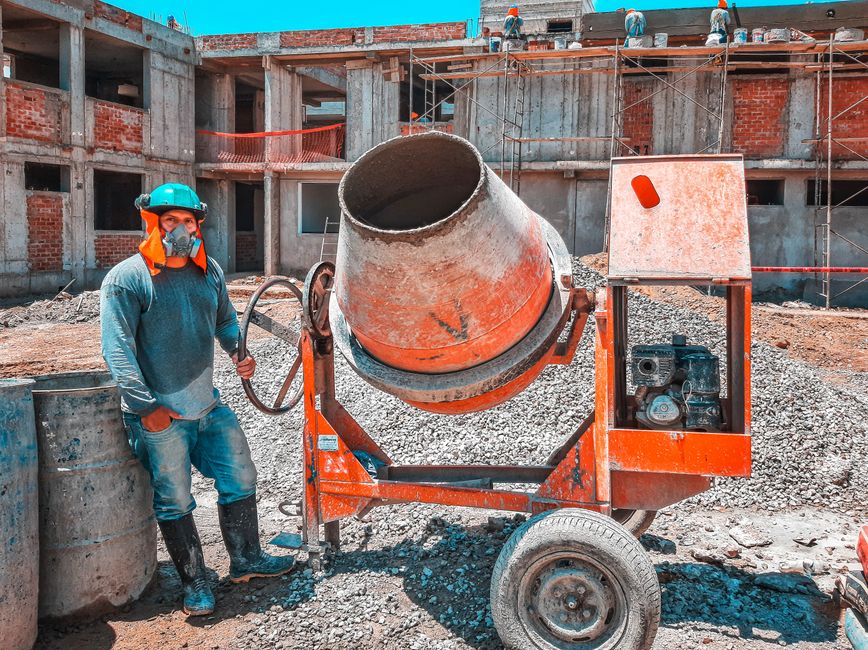
A driveway doesn’t crack on schedule. It gives way after years of monsoon water sitting in the same low corner, usually right before the in-laws arrive for Chinese New Year and the whole extended family is about to walk across it in good shoes.
That’s the moment a homeowner opens Instagram or Facebook, not out of curiosity but because the slab finally failed and they need someone this month, not someday. The trouble is what happens next. Someone messages “hi how much to redo my car porch” with no photo and no dimensions, you quote blind or spend two days chasing basic details, and by the time you’ve got enough to price the job, they’ve already messaged two other concreters off a renovation Facebook group. The job is gone before the van leaves the yard. Throwing more budget at the same ad doesn’t fix that. A cheaper cost per message means nothing if half those conversations die after one reply.
The concreting businesses that actually win work off Meta aren’t getting more messages than everyone else. They’re getting messages that open with a photo and a postal code, because the ad and the WhatsApp reply both ask for it before the homeowner even realises they’ve been asked. That one habit, more than audience targeting or budget size, is what separates a Meta account that fills the diary from one that just generates noise.
Why the click isn’t the job: how a concreting enquiry actually moves in Singapore
Very few homeowners here fill out a web form for a tradesman job. They tap the message button on an ad while they’re still scrolling, expecting a reply inside the hour, and they’re usually doing it from two or three other concreters’ pages open in the background. WhatsApp isn’t a nice-to-have channel for this trade, it’s the only one that matches how people actually behave when a slab’s cracked or water’s pooling by the gate. If your Meta ad routes them anywhere else first, a lead form, a generic contact page, you’ve added a step between the trigger and the reply, and that step is where the job leaks to someone faster.
The real funnel looks like this: ad stops the scroll, click opens a WhatsApp thread, the thread needs a photo and a rough measurement before you can quote properly, the quote leads to a site visit, the site visit leads to a booked pour. Every one of those handoffs can break. An ad with a strong hook but a vague landing spot gets clicks that go nowhere useful. A WhatsApp thread with no greeting message sits unanswered overnight. A quote without GST made clear up front causes friction on the day you’re meant to be signing the job, not generating it.
Weather plays its own part. The Northeast monsoon from roughly November through January brings the kind of rain that floods car porches and exposes every weak patch in an old slab, which is exactly when urgency-driven creative about pooling water and cracked edges performs best. But the actual pour usually gets booked for the first dry stretch after, which means your ad account needs to keep nurturing that enquiry through a delay most other industries never deal with. A concreter who treats every lead as needing an answer in 48 hours will lose jobs that were always going to book six weeks out, once the rain clears.
Compare that to a lead-form ad that captures a name and a number with none of that context. The first contact becomes a cold call where you’re asking questions the homeowner already half-answered in the form, which feels clumsy next to a competitor who just says “send us a photo on WhatsApp and we’ll get you a rough price today.” In a trade this visual, where the problem is literally sitting in someone’s driveway, making them describe it in a web form is working against yourself.
Setting up a Meta Ads account that sends buyers to WhatsApp ready to quote
Before any of the campaign mechanics matter, a handful of things need to already be true. Skip these and the best-built campaign still sends traffic into a gap.
-
Your WhatsApp Business app or API is connected inside Meta Business Suite, with a greeting message and a quick-reply template already written, not something you’ll “get to.”
-
Meta Business Manager is verified, since click-to-WhatsApp and messaging campaigns in Singapore run more smoothly on a verified business profile.
-
You’ve got a real bank of job photos and short videos, ten or more before-and-after sets from actual pours, not stock images of a generic driveway.
-
Rough pricing ranges exist for your common job types (driveway resurfacing, courtyard screeding, HDB corridor repair, pool deck, footings) so you’re not improvising a number mid-thread.
-
Someone actually checks WhatsApp during the day. Ad spend feeding a queue nobody opens is the single most common waste in this setup.
-
Your quote template states clearly whether pricing is nett or plus GST, so the number a homeowner saw in your ad matches the number they see on the quote.
How-to: building the campaign
- 1In Ads Manager, create a campaign with the Messages objective and set the destination to WhatsApp, not Messenger and not a lead form. This is the single setup decision that matters most for this trade.
- 2Install the Meta Pixel and Conversions API on any supporting pages you link to (a service page, a job gallery), and make sure the "Contact" or "WhatsApp click" event only fires once per thread, not once per message exchanged.
- 3Keep the audience broad. Let Advantage+ handle delivery across Singapore rather than stacking narrow interest layers; tight audience-stacking from a few years back now mostly just starves the algorithm of data.
- 4Build four to six creatives per ad set using real job footage: a time-lapse of a pour, a before-and-after of a cracked driveway, a short clip of the pump truck arriving on a narrow landed-property lane. Real footage consistently beats polished stock here.
- 5Write copy that names the actual job and the visible problem: a cracked car porch, a sunken patch by the gate, an uneven courtyard that pools water every time it rains. Vague copy about "quality concreting services" gets scrolled past.
- 6Set up the WhatsApp greeting message to ask directly for a photo, a rough measurement or the size of the area, and the postal code, before any back-and-forth starts. This is the step that turns a vague enquiry into a quotable one.
- 7Run two or three ad sets at most, each with its own creative set, and give each a real test budget for five to seven days before judging anything. Killing a campaign on day two, while it's still in the learning phase, is one of the most common ways Meta budgets get wasted.
- 8Watch CPM trend, not just cost per message. A climbing CPM on flat creative is usually the first sign of fatigue, well before your lead volume visibly drops.
- 9Keep a simple log, even a shared spreadsheet, tagging each WhatsApp enquiry by source and tracking it through quote, site visit, and booked pour. Without this, you're guessing which ad actually filled the calendar.
- 10Refresh creative every one to two weeks using photos from jobs you've just finished. Short-form job footage tends to peak within five or six days before engagement drops off, so a library that renews itself from real work keeps the account fed.
A properly built Meta Ads programme for a concreting business is less about clever targeting and more about this handoff staying tight week after week, which is exactly the part that’s hardest to keep up with alongside actually running jobs.
DIY tools for this section
If any part of this funnel still routes through a job gallery or quote page rather than straight to WhatsApp, it’s worth watching how people actually behave on that page rather than guessing. HeyLead Insights shows where visitors stall, scroll past, or abandon a form, which matters more than it sounds for a trade where the gap between “clicked the ad” and “sent a usable photo” is where most jobs are actually lost.
Get a free marketing audit. We review your search, ads, and landing pages and send back what to fix first.
Get a free audit

Where concreting budgets leak after week two
The first leak is a WhatsApp thread with no greeting message set up. The ad does its job, the homeowner taps through, and then nothing happens until someone checks the phone that evening, by which point the enquiry has already gone cold or gone to a competitor who replied in ten minutes. This is the single most preventable waste in the whole setup, and it’s rarely a Meta problem at all.
The second is judging too fast. Pulling a campaign after two days because the cost per message looks high ignores that Meta’s delivery system needs roughly 50 conversion events to leave the learning phase and start optimising properly. Constant tweaking during that window, swapping creative, adjusting budget, changing the audience, resets that learning and keeps the account permanently unsettled.
The third is letting the same three or four creatives run untouched for a month. Short-form job footage tends to peak fast, often within days, and once it fatigues, CPMs climb even while the creative still looks fine to you. If you haven’t swapped in fresh footage recently, that’s usually the first place to look when cost per message starts drifting up with no obvious cause.
The fourth is treating every enquiry the same. A homeowner asking about a cracked car porch, a property agent sourcing quotes for a landed-property renovation, and an MCST manager asking for a quote on common-area resurfacing all need different creative and different handling. Feeding all three into one generic ad and one generic greeting message produces a lot of low-quality back-and-forth that never converts, and it’s one of the quieter reasons a healthy-looking message volume doesn’t translate into booked pours.
What concreters hear on WhatsApp when the ad is working
“The ones that go somewhere always start the same way, a photo of the crack and a rough size, before we’ve even asked. The ones that don’t, we’re still going back and forth three days later asking for a postal code.” - Owner, residential concreting business, Singapore
“We stopped worrying about how many messages came in and started looking at how many turned into a site visit within a week. That number told us more about the ads than the message count ever did.” - Operations lead, concrete and screeding contractor
FAQ
Should a concreting business use click-to-WhatsApp ads or lead form ads on Meta? Click-to-WhatsApp wins for this trade almost every time. Homeowners expect to send a photo and chat in real time, and a lead form just adds a step between the trigger (the crack, the pooling water) and the reply, which gives a faster-responding competitor the opening.
How much should a concreting business budget for Meta Ads in Singapore? There’s no single right number, but a budget that can’t sustain five to seven days of testing per ad set rarely gives Meta’s delivery system enough signal to optimise. Smaller, consistent weekly spend with creative that gets refreshed regularly tends to beat a bigger budget that’s switched on and off.
Does Meta Ads work for B2B concreting work, like contractor subcontracting or MCST common-area jobs? It can, but it needs its own ad set and its own creative. An MCST manager or a main contractor responds to different proof points (track record, insurance, past commercial jobs) than a homeowner responds to, and mixing both audiences into one campaign usually produces enquiries that don’t match either.
How long before Meta Ads produce booked pours rather than just enquiries? Given the weather delays that are normal for this trade, expect a longer gap between first enquiry and booked job than most retail businesses see. A log that tracks enquiry through to booking matters more than any single week’s cost per message.
Should ads pause during the Northeast monsoon? Not necessarily. The visible damage from heavy rain, pooling water, cracked slabs, is often exactly what prompts the enquiry, even if the actual pour gets scheduled for the next dry stretch. Pausing the ad just means missing the moment someone decides to act.
Putting it to work
Pull your last twenty WhatsApp enquiries that came from Meta ads and check how many opened with a photo and a postal code without being asked, versus how many needed three or four follow-up messages just to get basic details. Fifteen minutes with that list will tell you more about where your account is actually leaking than any dashboard metric will.
If the gap between a Meta click and a usable, quotable WhatsApp thread is the thing slowing your jobs down, that’s the exact piece HeyLead can take off your plate, building the campaign structure, the creative refresh cadence, and the WhatsApp handoff so enquiries arrive ready to quote instead of needing to be chased. Chat with us on WhatsApp.
Free marketing audit, or reach Martin directly:
Get a free audit Connect on WhatsApp · [email protected]