
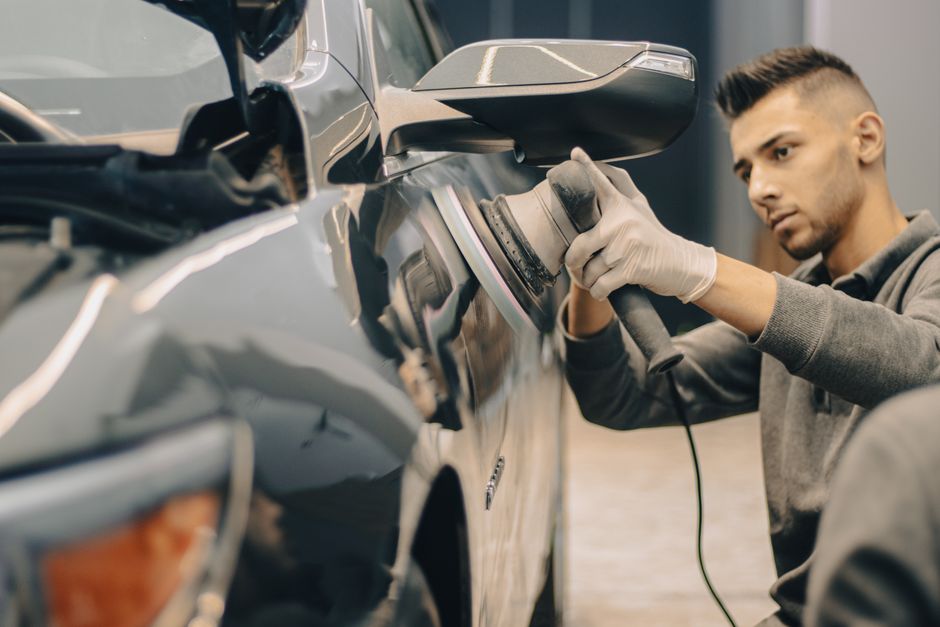
Why does a video of a filthy Camry turning into a showroom car rack up three hundred likes, a dozen “wah nice!” comments, and still leave Tuesday’s bay sitting empty?
That gap is the whole problem. Engagement feels like proof the ad is working, but a like doesn’t pay for the polish compound, the detailer’s hourly rate, or the ceramic coating kit you ordered for a job that hasn’t booked yet. Most detailing shop owners in Singapore we talk to can point to a Meta ad that got attention and still can’t tell you how many of those viewers actually messaged, let alone showed up with their car. The bay stays half-full, the staff schedule has gaps on weekday mornings, and the owner starts wondering if Meta Ads even work for a business like theirs. Here’s the part nobody explains clearly enough: Meta doesn’t sell you an audience the way Google Ads sells you a search term. It sells you an auction that reads your creative as the targeting signal itself. Get that mechanism wrong and you can spend a few thousand dollars a month and still be guessing why half your leads never reply to a follow-up message.
How Meta’s auction actually treats a detailing ad
Run a Google search ad and you’re bidding against a query - someone typed “car detailing Punggol” and you’re fighting for that specific intent. Meta has no query. Nobody searches Instagram for “ceramic coating near me.” Instead, Meta’s delivery system, the one practitioners now call the Andromeda-driven auction, watches what a scrolling user lingers on, taps, or shares, and decides in real time whether your ad belongs in front of them. The creative isn’t just the pitch. It’s the targeting mechanism.
That changes what “good targeting” means for a detailing shop. Five years ago the playbook was narrow interest stacking: men, 25-45, interested in “luxury cars” and “car care,” layered with a lookalike of your past customers. That playbook has aged badly. Broader audiences, fed with distinct, fast-cutting creative and left alone long enough to exit the learning phase, now consistently outperform tightly stacked interest groups, often by a wide margin. The reason is simple: Meta’s own delivery system is better at finding the right eyeballs than a manually built interest list, as long as you give it clean conversion signals to optimize toward.
Those signals are where most detailing accounts quietly leak money. If your Meta Pixel is the only source of conversion data, you’re losing a meaningful share of it to iOS tracking prevention, ad blockers, and browser privacy settings, probably somewhere north of 20% depending on your audience’s devices. Pair the Pixel with the Conversions API so server-side events back up what the browser misses, and your Event Match Quality score climbs. A higher EMQ score doesn’t guarantee profit on its own, but a low one reliably starves the algorithm of the data it needs to find more people like your best customers. For context, 2026 benchmark data across industries puts average Meta Ads ROAS around 2.8x, with local-service and auto-adjacent verticals ranging roughly between 2.79x and 3.61x. That’s a reasonable sanity check for a shop running a modest monthly budget, not a guarantee, and it only holds if your tracking is actually catching the bookings you make.
The WhatsApp handoff that makes or breaks the booking
In most Western markets, a Meta lead ad or a landing page is the default next step after the ad. In Singapore, that’s often the wrong move. WhatsApp is where the enquiry actually happens. A customer sees your ceramic coating reel, taps through, and the moment they can type “hi, how much for a Honda Civic full detail” into a chat thread they already use all day, they will. Send that same person to a contact form instead and you’ve added a step most of them won’t bother with.
Click to WhatsApp ads solve this by routing the ad’s call-to-action straight into a WhatsApp conversation, often with an automated greeting that acknowledges the specific service they clicked through for. This matters more in detailing than in most trades because pricing here isn’t fixed. A full detail on a sedan costs differently than one on an SUV, and add-ons like engine bay cleaning or leather conditioning change the quote. A chat thread lets you ask the make and model, send a price (GST-inclusive, since Singapore buyers expect the number they see to be the number they pay, not one with tax bolted on after), and close the booking inside the same conversation. That’s a far shorter path than form-fill-then-callback.
There’s a second layer of Singapore-specific friction worth naming: where the car physically gets detailed. Mobile detailing vans working HDB multi-storey carparks generally move with less friction than vans trying to operate inside a condo’s basement carpark, where the MCST’s house rules on commercial vehicles and water use can slow things down or require prior approval. If your shop runs a mobile arm, your WhatsApp script should ask for the building type early, not after you’ve already quoted a time slot you can’t actually deliver on.
The handoff only works if someone’s watching the inbox. A Click to WhatsApp ad that gets a reply in nine minutes converts very differently from one that gets a reply the next morning, because the customer has usually messaged two other shops in the meantime and booked whichever one answered first. If your Meta ads also drive traffic to a services page or price list before the chat button, HeyLead Insights is worth a look here, since session recordings show you exactly where someone scrolls, hesitates, or abandons before ever reaching WhatsApp.
Running the account and the inbox well at the same time is a lot to hold. A partner that handles your Meta Ads structure and creative testing frees you up to focus on answering the chats fast, which is usually the bigger lever on bookings anyway.
Get a free marketing audit. We review your search, ads, and landing pages and send back what to fix first.
Get a free audit
Building and auditing the account without burning the budget on vanity settings
A fair number of detailing shops we look at are quietly wasting spend on settings that feel like good marketing practice but don’t change anything in the bay. Detailed audience stacking is one: narrowing by five interests and three behaviors doesn’t sharpen targeting anymore, it just shrinks the pool Meta’s delivery system has to learn from. The blue “Boost Post” button is another: it optimizes for engagement, not for the WhatsApp message you actually want, and it skips campaign-level conversion tracking entirely. Checking reach and impressions daily is a third habit worth dropping; those numbers move constantly and tell you almost nothing about whether cars are getting booked.
What actually moves a detailing account forward is closer to the list below. Treat it as a build order if you’re starting from scratch, or an audit if you’ve been running ads for a while and aren’t sure why results have flattened.
Playbook: setting up or auditing a detailing shop's Meta Ads account
- 1Install the Meta Pixel and the Conversions API together, not just one. Map "WhatsApp message started" and "booking confirmed" as separate events so you can see drop-off between the two, not just a combined total.
- 2Build one Click to WhatsApp campaign per core service (full detail, ceramic coating, paint correction) rather than one catch-all campaign. Each service has a different price point and a different buyer, and separating them lets you see which one actually drives profitable bookings.
- 3Set your audience broad by default: full Singapore, 25-plus, car owners if the targeting option is available, and let the delivery system narrow it using signal, not your interest list.
- 4Produce at least three distinct creative concepts per service before launch: a transformation video, a close-up of a specific result (swirl removal, interior shampoo), and a price-anchored offer post. Variety beats polish here.
- 5Write a WhatsApp auto-greeting that asks for make, model, and whether it's HDB or condo parking, so the first human reply can quote accurately instead of going back and forth.
- 6Watch CPM, not just cost per message, in the first two weeks. A rising CPM on a creative that was performing fine a week earlier is usually the first sign of creative fatigue, well before lead volume visibly drops.
- 7Refresh or rotate a creative once its CPM climbs noticeably or its WhatsApp conversation rate drops for several days straight, rather than waiting for a fixed calendar date.
- 8Tag every WhatsApp conversation that turns into a paid job, and reconcile that against Meta's in-platform reporting monthly. The two numbers will not match exactly; what matters is whether the gap is stable or growing.
DIY tools for this section
Notice what’s missing from that list: a fixed weekly ritual. The actual discipline here is judgment, not a calendar. You’re watching CPM trends, reading WhatsApp transcripts for the questions customers keep asking, and deciding week to week whether a creative has earned another week of budget or needs replacing. That’s a different kind of work than running the account on autopilot, and it’s the part most shops underestimate when they first turn on Meta Ads.
What detailing shop owners say once the WhatsApp chat starts moving
“We used to measure the ad by how many likes the video got. Now I just look at how many people actually ask for a price. Completely different number.” - Owner, two-bay detailing shop
“The thing that changed it for us wasn’t a new audience, it was answering WhatsApp inside the first ten minutes instead of whenever someone had a free moment. Same ads, more bookings.” - Manager, mobile and in-shop detailing business
FAQ: Meta Ads questions detailing shop owners actually ask
Do I need a verified Facebook Business Page to run Click to WhatsApp ads in Singapore? You need a Facebook Page connected to a WhatsApp Business account through Meta Business Suite, and the WhatsApp number should be one your team actually monitors. Verification isn’t mandatory to launch, but an unverified, inactive-looking Page can quietly hurt how much Meta trusts the account when deciding who to show your ads to.
How much should a detailing shop in Singapore budget for Meta Ads each month? There’s no fixed figure that fits every shop, since it depends on your average job value and how many bays you’re trying to fill. What matters more than the total budget is giving each campaign enough spend and time to exit Meta’s learning phase before you judge it, and watching cost per WhatsApp conversation against your actual booking rate, not just cost per click.
Should I still run a Facebook lead form ad instead of sending people to WhatsApp? Lead forms can work for discovery offers like a free quote, but most Singapore buyers would rather just message you directly, and a form adds a step between the ad and the conversation they actually want to have. If you already use WhatsApp to run the business day to day, build around that channel rather than fighting it.
Why did my ad’s cost per result suddenly increase after performing well for two weeks? This is usually creative fatigue: the same audience has seen the ad enough times that engagement drops and Meta’s auction starts charging more to reach the same people. Rising CPM is typically the earliest warning sign, often showing up several days before your lead volume visibly falls.
Is broad targeting really better than building a detailed audience of car owners and car enthusiasts? For most detailing shops, yes, provided your creative is distinct enough and your conversion tracking is clean. Broad targeting gives Meta’s delivery system a bigger pool to find the right person in; a narrow, over-layered audience just restricts the data it has to learn from.
Next steps
Start this week by pulling your last twenty Click to WhatsApp conversations, or your last twenty enquiries if you’re not running WhatsApp ads yet. Go through each one and mark whether it turned into a booked job, a ghosted chat, or a price-only question that never closed. That one exercise, which takes maybe thirty minutes, usually tells you more about where your Meta Ads are actually leaking than a week of staring at the Ads Manager dashboard.
Keeping the creative fresh, the WhatsApp handoff fast, and the conversion tracking honest is a lot to run alongside actually detailing cars. HeyLead can take on the ongoing creative testing, Conversions API setup, and WhatsApp conversion tracking for your Meta Ads account, so the account keeps improving even on the weeks you’re fully booked in the bay. Chat with us on WhatsApp.
Free marketing audit, or reach Martin directly:
Get a free audit Connect on WhatsApp · [email protected]