
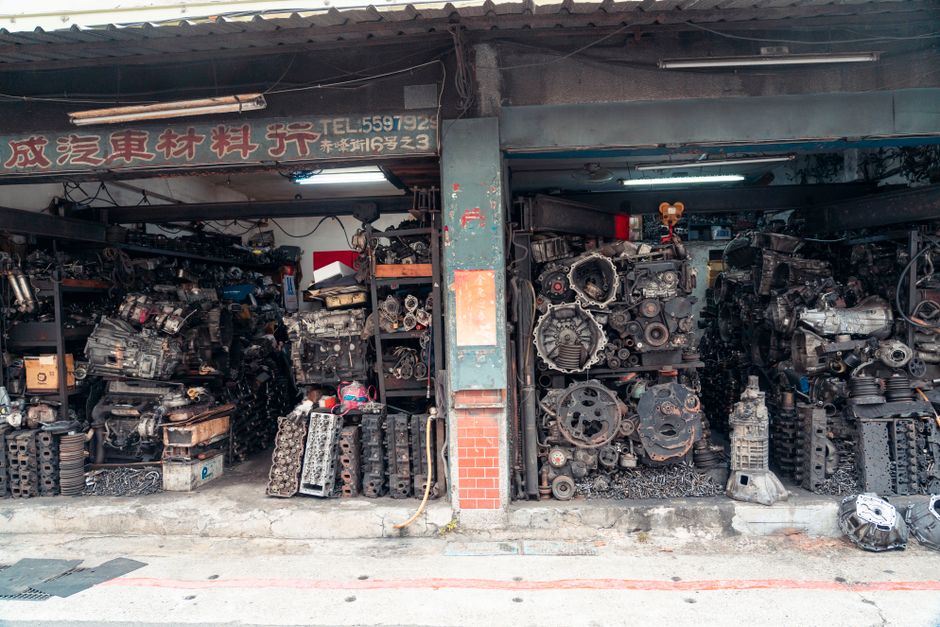
Why does a search for “sell scrap car Singapore” at midnight end up on a WhatsApp thread with a broker, and not with your yard?
That’s the real question, and most junkyard owners never ask it. They watch a Google review come in, see the phone ring once or twice a week, and assume the listing is doing its job. Meanwhile the car that should have landed on your scales went to a syndicate operator who ranks for the generic terms, chats with the seller first, and then shops that same car around to three or four yards, including yours, taking a cut off the price before you ever see the vehicle. You didn’t lose that car to a competitor down the road. You lost it to a middleman who simply showed up first in the search and the chat.
That’s the cost nobody puts in a marketing report: not a missing lead, but a lead that existed, searched, and got intercepted before it reached you. More ad spend doesn’t fix this on its own, because the brokers already bid on the same generic terms and they’re comfortable losing money per click to win the relationship. A new website doesn’t fix it either, if the site still routes people through a contact form nobody checks until the next morning. The fix starts earlier, at the exact point where a search becomes a message, and it’s worth understanding that mechanism before you touch a single setting on your Google Business Profile.
How the search actually moves from “scrap my car” to a WhatsApp chat in Singapore
Picture the two most common triggers. A car owner is a month or two from COE expiry and has decided not to renew, so they’re searching “sell car for scrap Singapore” or “junk car buyer near me” to work out the PARF rebate and get rid of the vehicle before the deregistration deadline. Or a workshop mechanic is hunting a used part, typing something like “second hand alternator Honda Civic Singapore” because the customer doesn’t want to pay for new. Neither of these searchers is browsing. Both want an answer within minutes, not a brochure.
Google serves up a mix for both: the local pack of three map listings, a handful of broker or aggregator sites built specifically to rank for “we buy scrap cars” style terms, and sometimes a Carousell or Facebook Marketplace post that outranks every proper business website in the category. Whoever the searcher clicks first gets the first message. In Singapore, that message is almost never a phone call and almost never a contact form. It’s a tap on a number that opens WhatsApp, because nobody wants to sit on hold explaining a car model over a bad line when they can send a photo and a registration plate instead.
This is where brokers win by design, not by accident. Their sites are built around one job: get the WhatsApp tap before anyone else does, collect the make, model, and condition, then quote a price with margin already built in for whichever yard eventually buys it from them. They don’t need to rank for your yard’s name. They just need to rank for the generic, high-intent phrase a stressed seller types first. If your Google Business Profile is thin, your site loads slowly on mobile data at the roadside, or your WhatsApp number only appears buried in a footer, you’re not losing to a better junkyard. You’re losing to a faster click.
What separates a listing that wins the WhatsApp message from one that gets ignored
A listing that wins starts with the basics done properly, which sounds obvious until you check how many yards get them wrong. Your Google Business Profile category needs to match what the searcher is actually typing, not what sounds most prestigious. “Junkyard” and “Used auto parts store” will often out-rank “Automotive recycling company” simply because that’s the language in the query. Your name, address, and phone number need to be identical, down to the unit number and the way you write “Lorong” or “Ave,” across your website, your Google listing, Yellow Pages SG, and any forum or directory where your yard is mentioned. Inconsistent NAP data doesn’t just look sloppy to Google; it actively confuses the algorithm about whether two listings are the same business, which drags down how confidently you show up in the map pack at all.
From there, trust signals matter more in this trade than almost any other local category, because the buyer is handing over a vehicle or paying for a part sight unseen. Showing your NEA licence details somewhere visible on the site and your Google profile tells a nervous seller you’re not a fly-by-night operator who’ll vanish with their logbook. Real photos of the yard, the scales, and the parts racks do more for conversion than any amount of copywriting, because sellers want to know there’s an actual place with actual staff, not a WhatsApp number running out of someone’s car boot. And the single highest-leverage change most yards skip: putting a direct wa.me link, not just a phone number, on the Google profile, the homepage, and every make or model page you build. A phone number forces a decision. A WhatsApp link removes the friction entirely.
The flip side is just as instructive. Plenty of yards stuff their Google Business name with extra keywords, something like “ABC Scrap Metal Best Cheap Junkyard Singapore,” thinking it’ll help them rank. It usually triggers a suspension review instead, and even when it doesn’t, Google increasingly discounts keyword-stuffed names in ranking. Chasing a bigger review count while ignoring the one-star reviews that complain about lowball offers or slow replies does more damage than the extra five-star reviews repair, because sellers read the negative ones first when the decision involves money. And building a blog full of generic “benefits of scrap metal recycling” content, instead of pages built around the actual makes, models, and part categories people search, burns writing budget on traffic that was never going to convert into a car on your scales or a part off your shelf.
This is also where the handoff after the click starts to matter as much as the ranking itself. If your condition-specific landing pages, the one for “Toyota Altis scrap buyer” or “used Mitsubishi parts Singapore,” bury the WhatsApp link below a paragraph of filler, you’ve recreated the same friction a slow phone line causes. A short look at where mobile visitors actually stop scrolling, using something like HeyLead Insights, usually shows the WhatsApp button needs to sit above the fold, not after three paragraphs explaining what a junkyard does.
If you’re weighing whether to handle this in-house or bring in a partner who already runs local programmes for trades like this, our SEO services for Singapore businesses page walks through what an ongoing local SEO programme actually involves month to month.
Get a free marketing audit. We review your search, ads, and landing pages and send back what to fix first.
Get a free audit

The Singapore local SEO playbook for junkyards
None of this needs to stay abstract. Here’s the order most yards should work through, roughly in priority, starting with the things that win back enquiries brokers are currently intercepting.
Local SEO playbook for Singapore junkyards
- 1Audit your NAP across Google Business Profile, your website footer, Yellow Pages SG, and any forum threads or directory listings that mention your yard. Fix every mismatch, including unit numbers and how the road name is abbreviated. This alone often lifts map pack visibility within a few weeks.
- 2Replace a generic phone number display with a click-to-WhatsApp (wa.me) link in your Google Business Profile website field, your homepage header, and every landing page. Test it on your own phone on mobile data, not office WiFi, before you call it done.
- 3Build separate, short landing pages for your highest-volume searches: scrap car buyer by vehicle type, used parts by make and model, and metal waste collection if you offer it. Each page needs its own WhatsApp link near the top, not buried under copy.
- 4Display your NEA licence information and any relevant certifications on both your site and your Google profile description. Sellers handing over a vehicle, and workshops buying a part, both want proof you're a registered operator.
- 5Reply to every Google review, good or bad, within a day or two, and address specific complaints about pricing or response time directly rather than with a generic apology. Search ranking algorithms and human readers both weigh recency and relevance of responses.
- 6Check what's actually outranking you for your top five search terms, including Carousell, Facebook Marketplace, and broker sites, and note what they're doing that your site isn't, whether that's photos, pricing transparency, or faster-loading pages.
- 7Track which WhatsApp enquiries actually convert into a purchase or sale, even with a simple shared spreadsheet the counter staff update. Without this, you're optimizing a ranking you can't connect to revenue.
DIY tools for this section
None of these steps are complicated on their own. What makes them hard is doing all seven consistently, month after month, while the brokers keep adjusting their own pages and ad spend to stay ahead of you. That’s the part most yards underestimate: local SEO in a category this competitive isn’t a project you finish, it’s a position you have to keep defending.
What yard managers say once WhatsApp becomes the real front door
“We used to think the website was decoration and the phone was the business. Now half our sales come from someone tapping a green button on Google before they ever dial a number, and if that button isn’t there, they’re already messaging the next yard on the list.” — Owner, scrap metal yard, Singapore
“The thing that changed our numbers wasn’t a flashier site. It was putting our licence number and real yard photos where sellers could see them before they messaged, because half our calls used to start with someone asking if we were even a real company.” — Counter manager, used auto parts yard, Singapore
FAQ
How long does it take for a junkyard’s Google Business Profile to start ranking better in Singapore? Fixing NAP consistency and category errors can show movement within a few weeks. Building out landing pages and earning fresh, specific reviews tends to take two to three months before it compounds into a steady position in the local pack. Anyone promising overnight rankings in this category hasn’t looked at how aggressively brokers defend their own positions.
Should I list my NEA licence number on my website and Google listing? Yes. Sellers handing over a vehicle and workshops buying a part both want reassurance they’re dealing with a registered operator, not an unlicensed collector. It costs nothing to display and it directly addresses the hesitation that stops someone from messaging in the first place.
Is it worth running Google Ads alongside local SEO, or will brokers just outbid me? Brokers often can afford a higher cost per click because they resell every lead across multiple yards. Running ads on very specific terms, a particular make and model or a part number, usually costs less and converts better than competing on the generic “scrap car buyer” terms where the brokers live.
Does posting my scrap prices publicly hurt my negotiating room? It can, but a rough range by vehicle category usually builds more trust than it costs you, because sellers comparing quotes from unlicensed buyers are specifically looking for a number that looks legitimate. You can still finalize the actual offer after inspecting the vehicle or part.
Why do my Carousell or Facebook Marketplace listings sometimes outrank my own website? Those platforms carry strong domain authority and update frequently, which Google rewards. The fix isn’t to abandon them, it’s to use them as a feeder channel that points back to your own landing pages and WhatsApp link, rather than letting the marketplace post be the only place someone can reach you.
Putting it to work
Start this week with the NAP and WhatsApp audit from the playbook above. Pull up your Google Business Profile, your website, and the last three directories or forums where your yard is mentioned, and check that the name, address, phone number, and WhatsApp link match exactly across all of them, then click that WhatsApp link yourself from a phone on mobile data to make sure it actually opens a chat instead of dialing a number nobody answers. That single check usually takes under an hour and tells you exactly where a seller or a workshop is currently falling through.
The part that’s hard to sustain alone is everything after that first fix: rebuilding landing pages by make and model, tracking which WhatsApp enquiries actually become sales, and keeping your listing ahead of brokers who adjust their own pages constantly. HeyLead runs that as an ongoing local SEO programme, handling the technical rebuild, the content, and the tracking so you’re not losing cars and parts to a faster click. Chat with us on WhatsApp.
Free marketing audit, or reach Martin directly:
Get a free audit Connect on WhatsApp · [email protected]